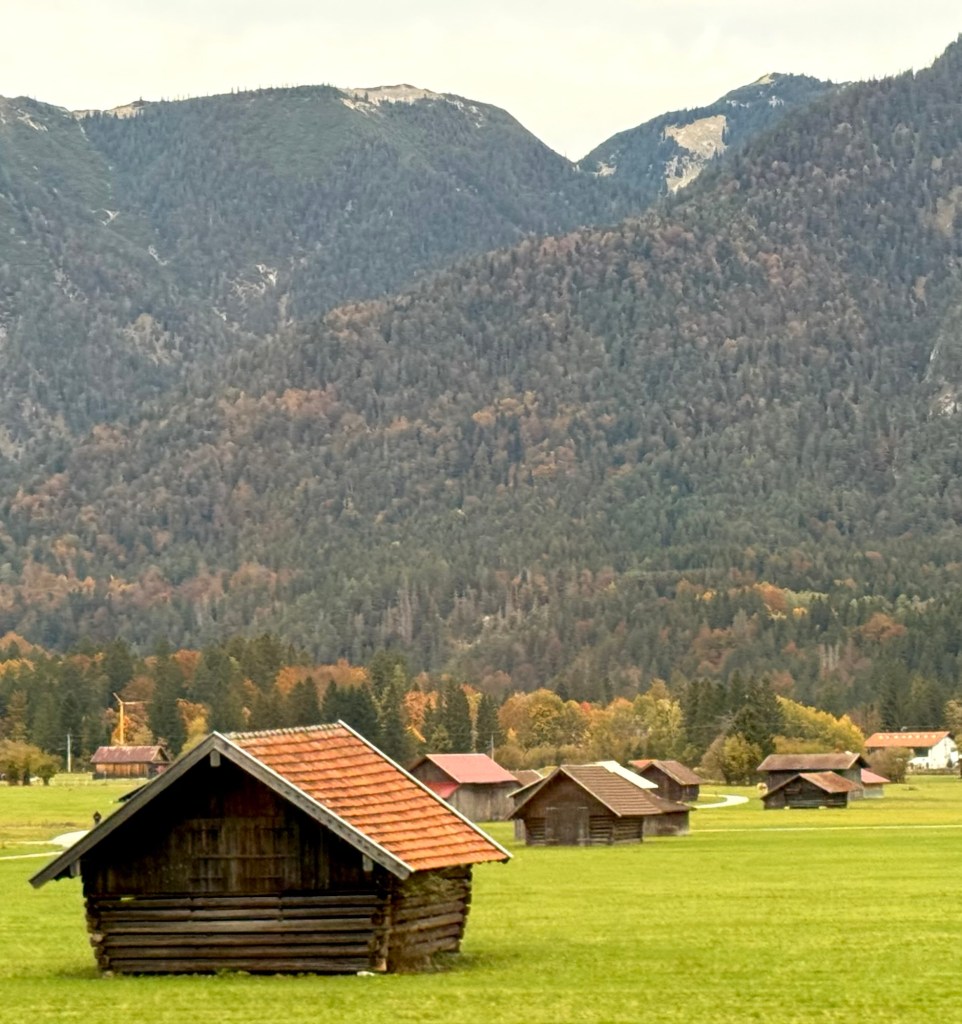
We were excited to arrive in Garmisch-Partenkirchen, where we would be settling into BergDream, a lovely Alpine apartment with a full kitchen, for nine nights. After moving from place to place, we were looking forward to unpacking, doing some cooking, and having a home base for a while. Garmisch-Partenkirchen, surrounded by the Bavarian Alps, is a wonderful jumping-off point for exploring the mountains, lakes, villages, and castles of southern Bavaria.
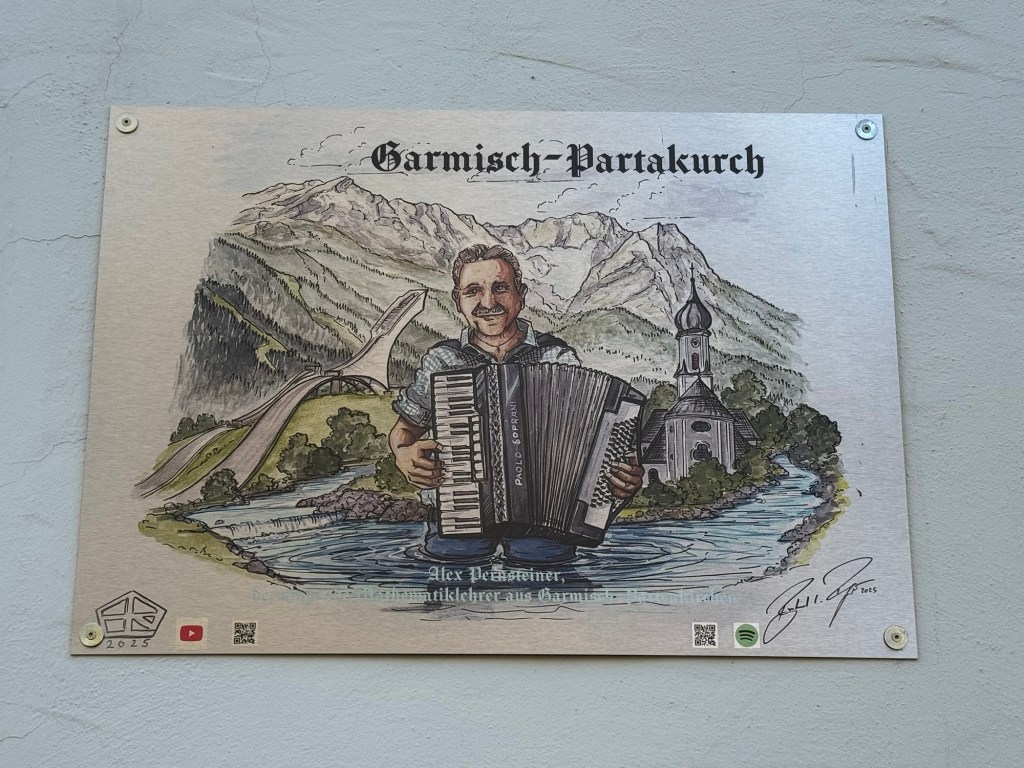
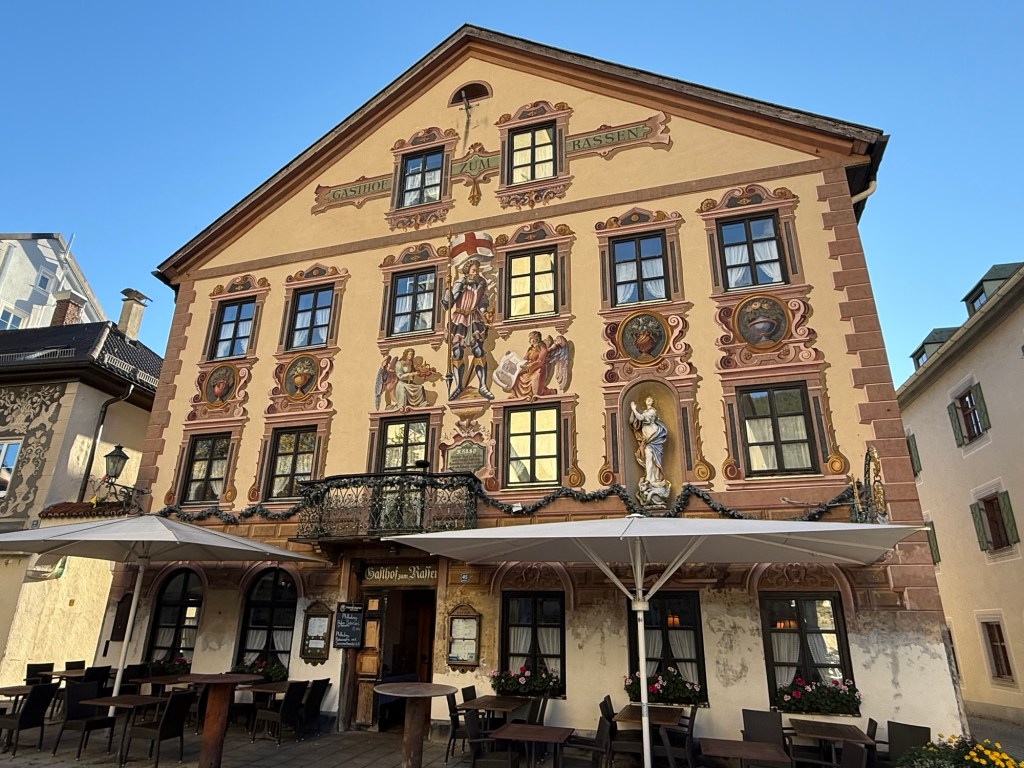
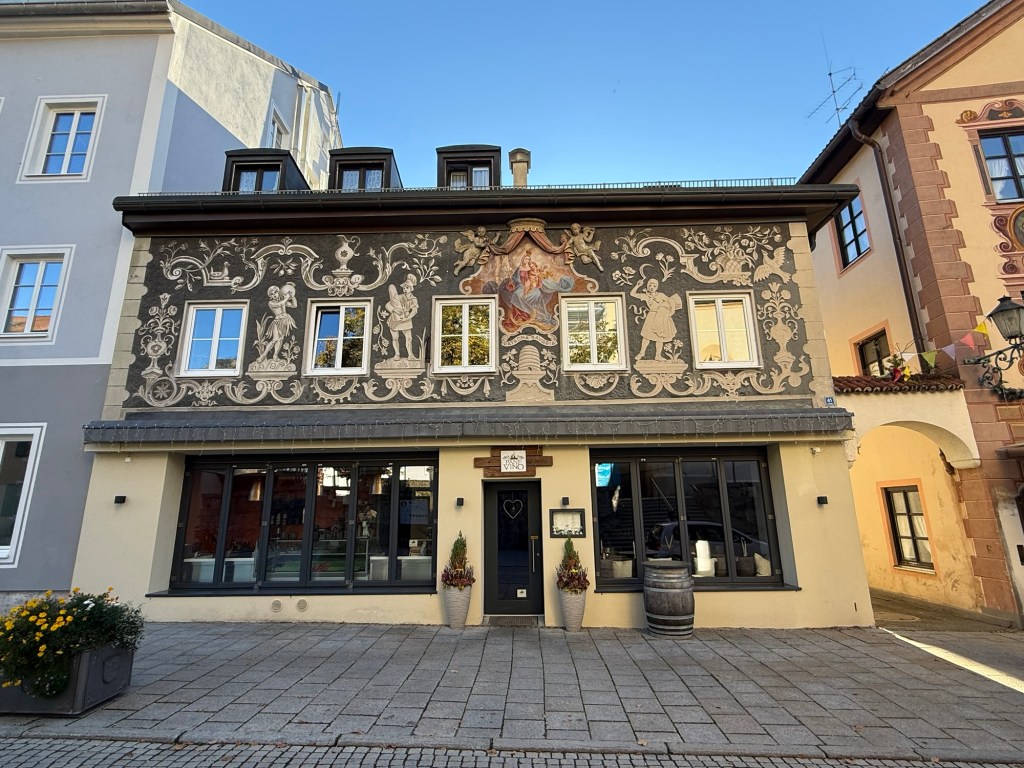
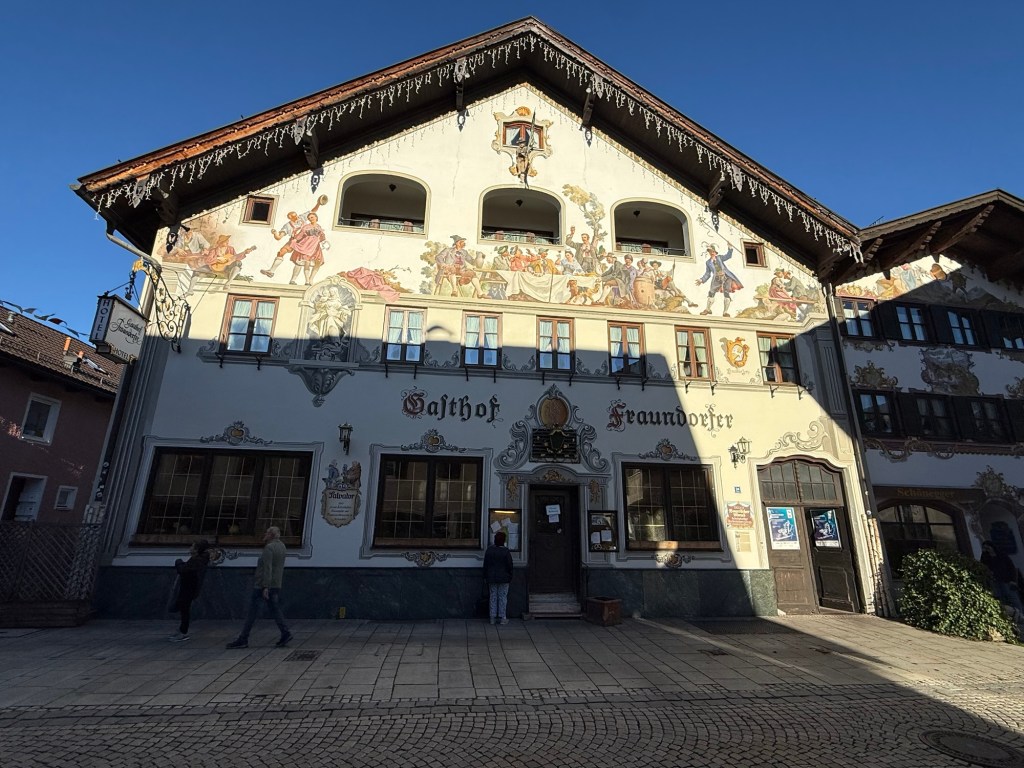
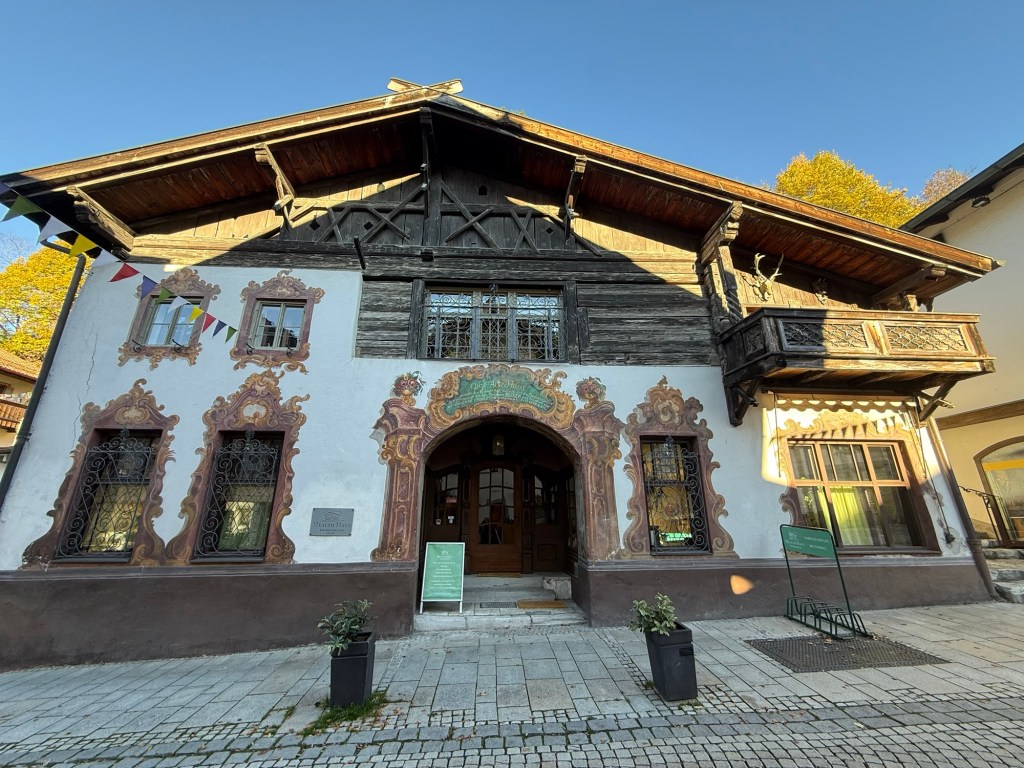
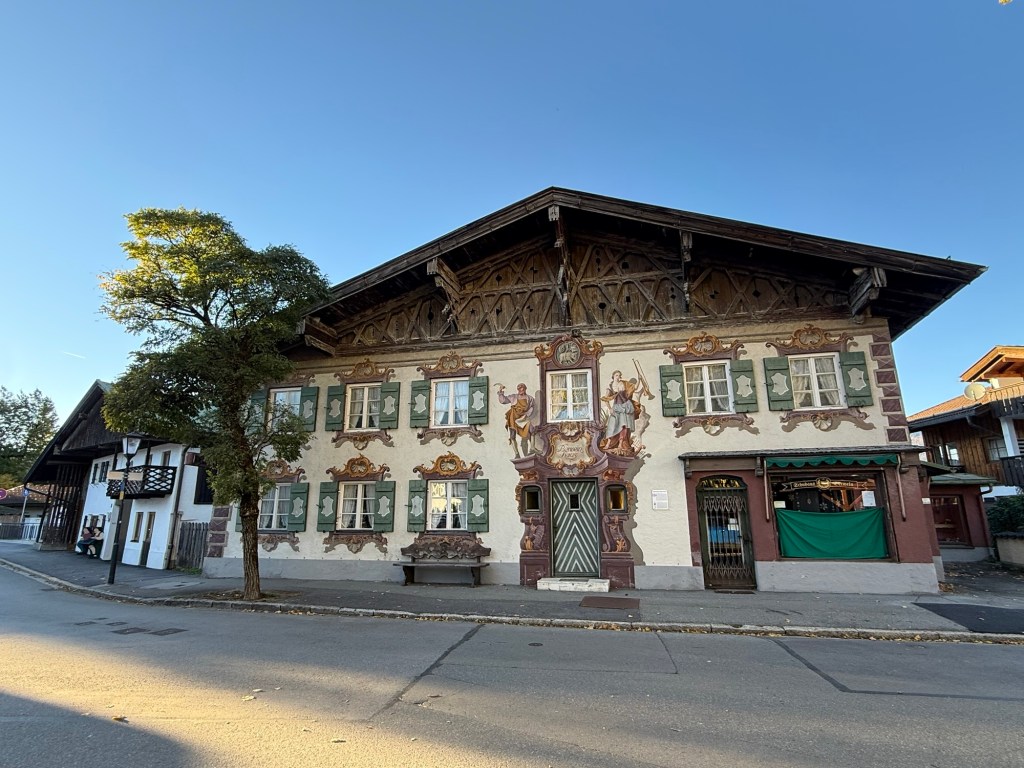
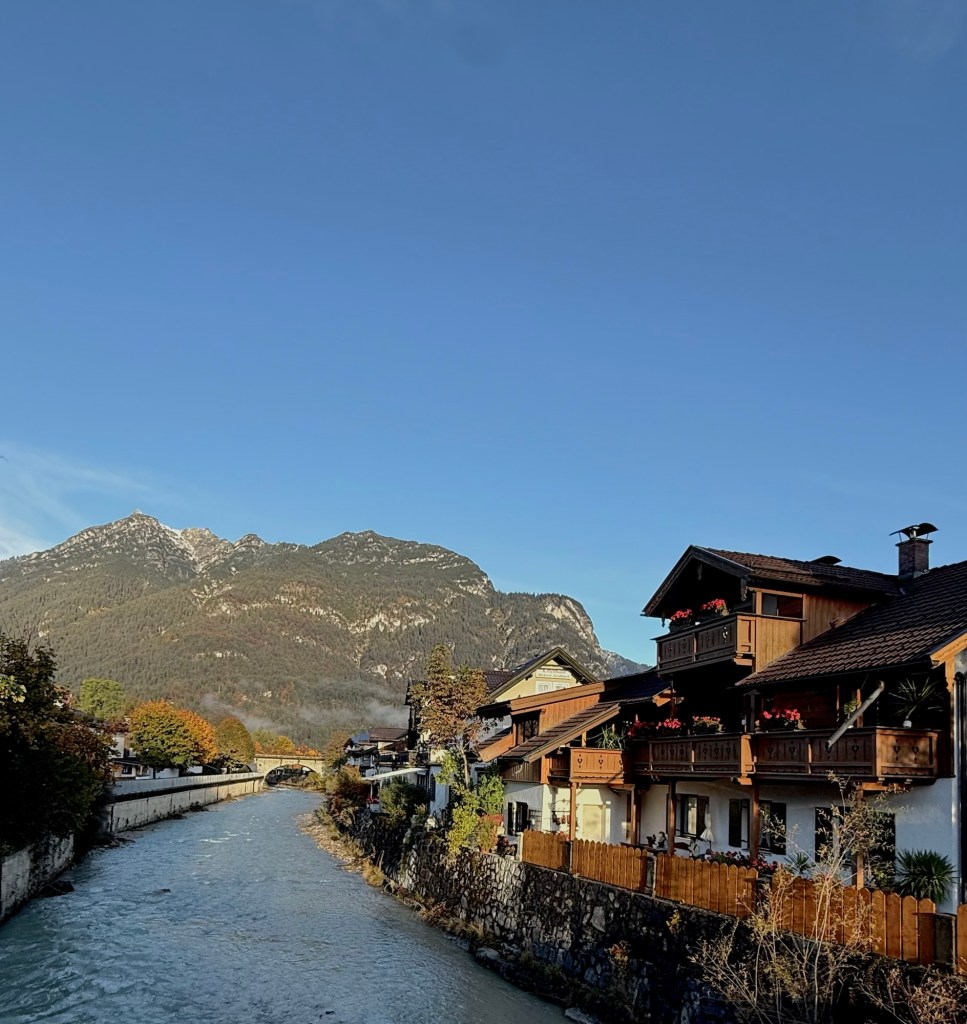
Garmisch and Partenkirchen were originally two separate towns, joined in 1935 ahead of the 1936 Winter Olympics. They still have different personalities. Garmisch is the livelier resort center, with shops, restaurants, and cafés, while Partenkirchen has retained more of its traditional Bavarian character. We loved wandering along historic Ludwigstraße in Partenkirchen, admiring the colorful buildings decorated with Lüftlmalerei, the fresco paintings that tell stories, depict religious scenes, or create the illusion of architectural details. With their flower-filled balconies, painted façades, and mountains rising behind them, the streets looked like something from a storybook.
Garmisch Classic: A Slippery Start
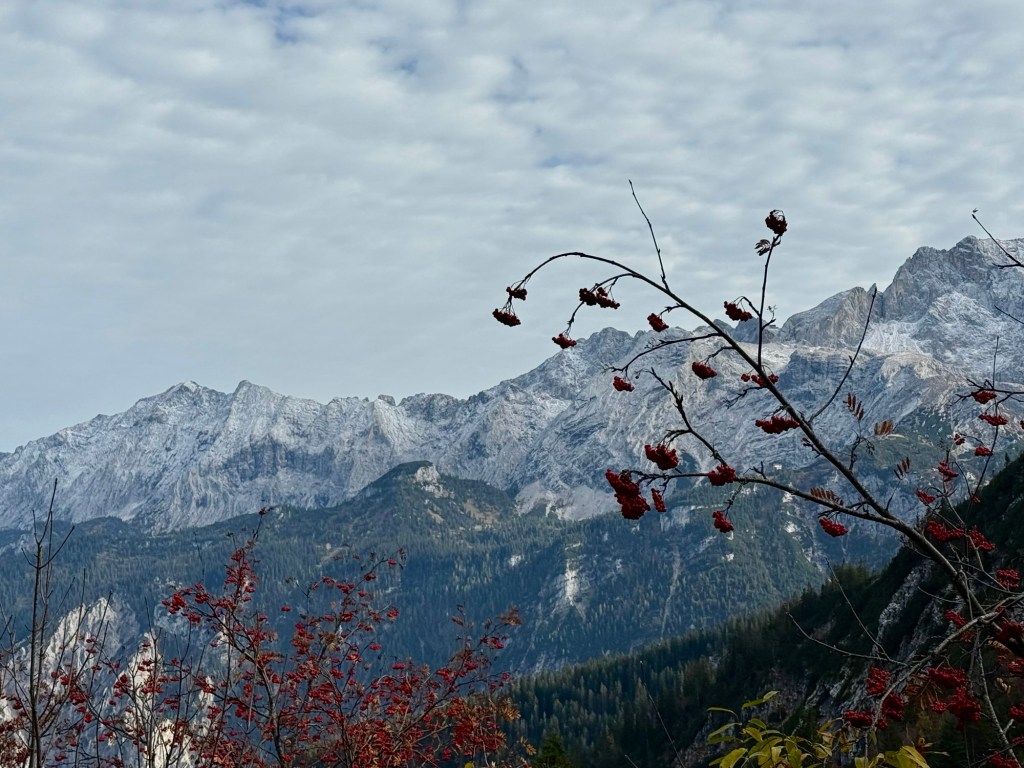
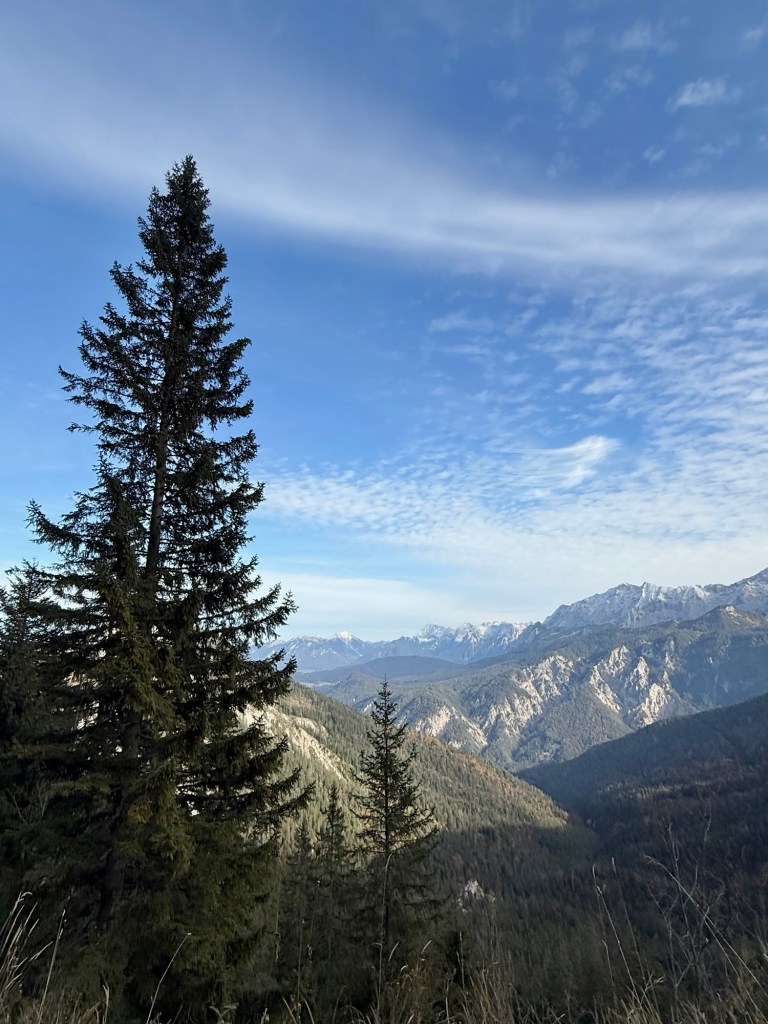
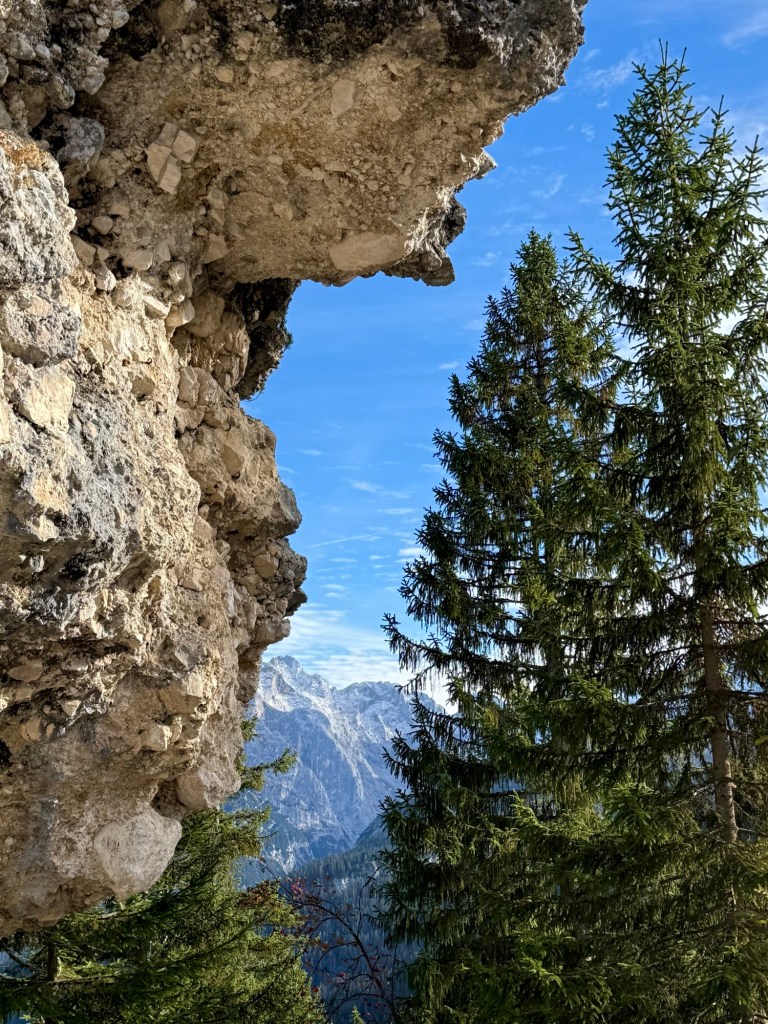
We woke up eager to get into the mountains, but the forecast promised even clearer skies the following day, so we saved the Zugspitze and decided to tackle the Garmisch Classic instead.
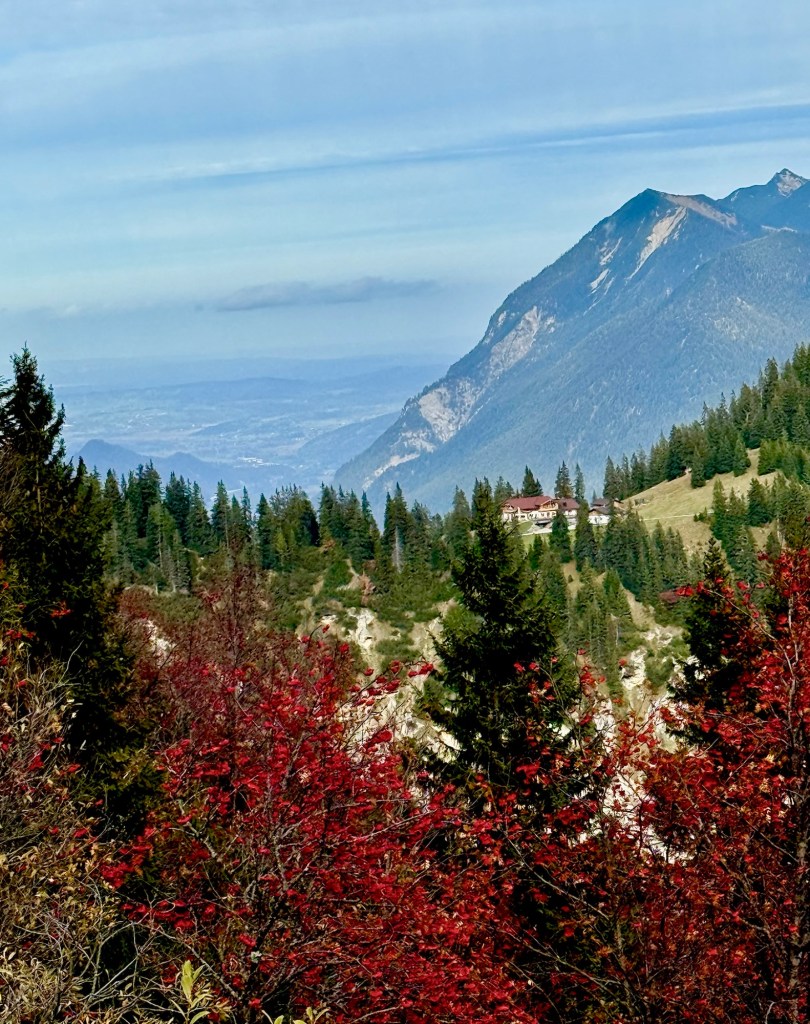
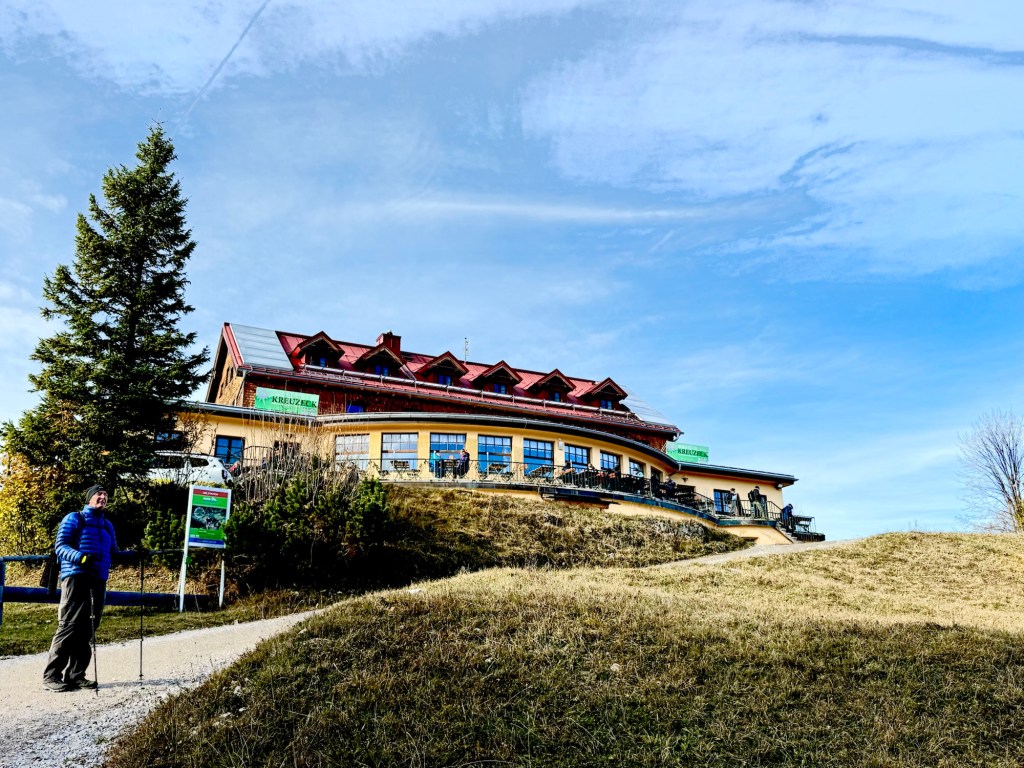
The parking area gave us access to two cable cars, and our plan seemed straightforward: take the Alpspitzbahn up to Osterfelderkopf, at about 6,730 feet, walk across and down to the Kreuzeck area for lunch, and then ride the Kreuzeckbahn back to where we started.
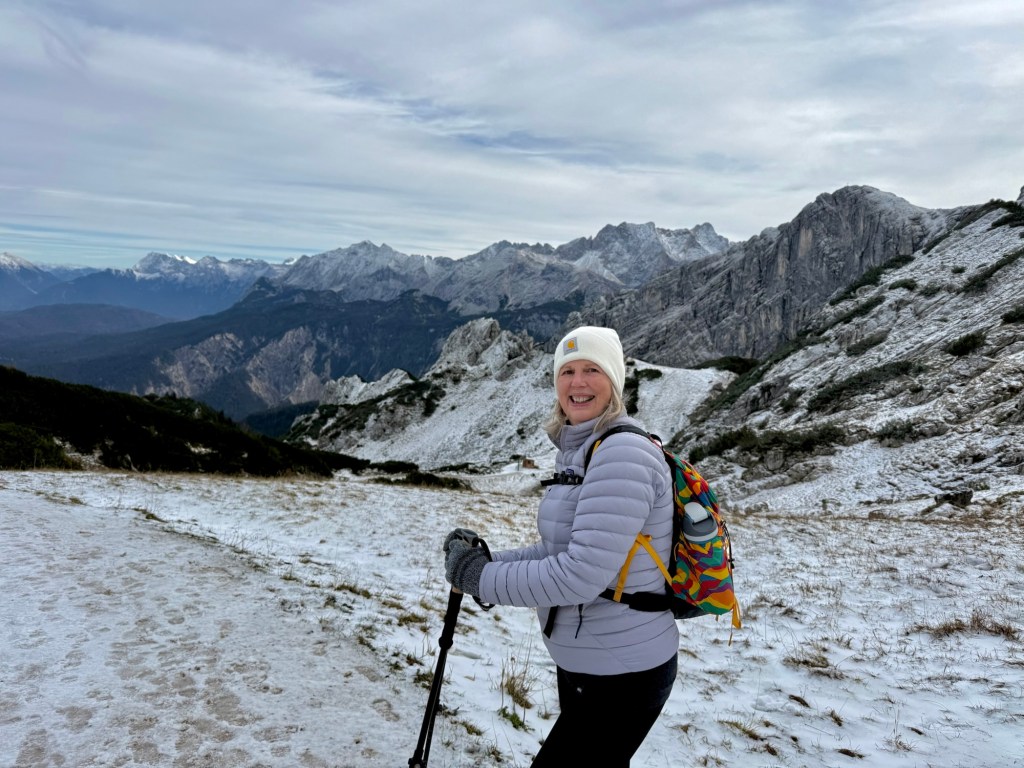
A perfectly reasonable plan. Until we reached the top and discovered that the ground was solid ice!
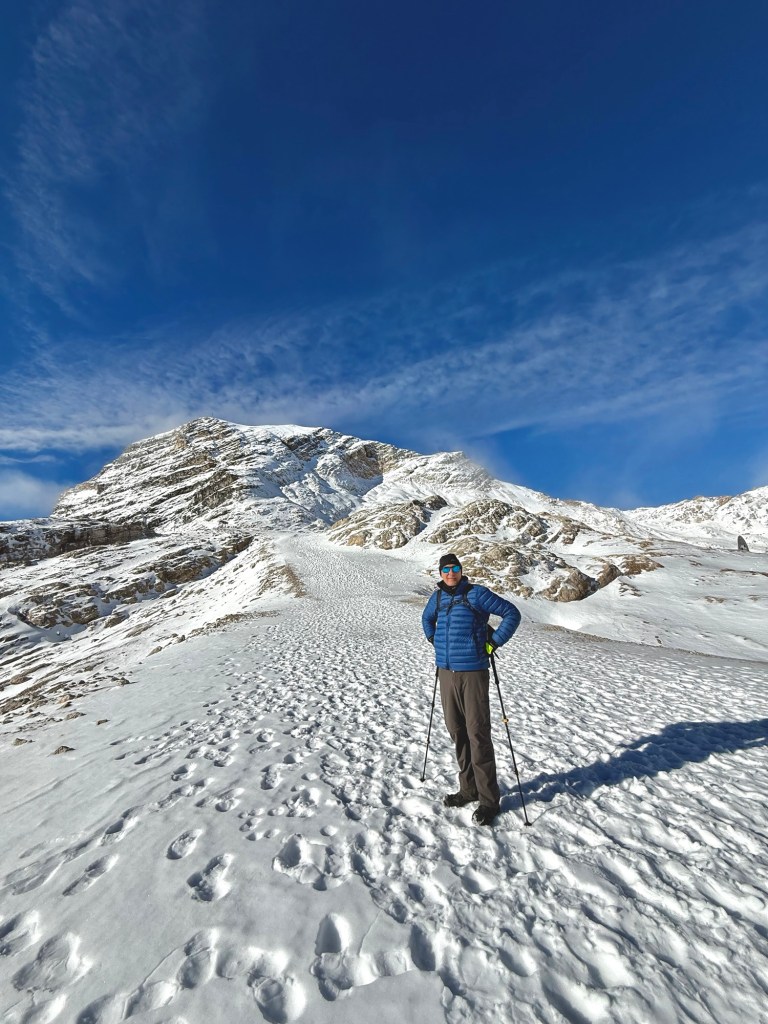
The walk looked manageable at first. There were no ladders, ropes, or technical climbing sections, just a mountain trail. But walking on ice is one thing; walking on ice that’s slanted sharply downhill is quite another. We slid, sidestepped, and carefully picked our way along, sometimes wondering how we were going to manage the next stretch. What should have been a relatively easy downhill walk, with roughly 1,300 feet of elevation to lose, took us about three times as long as expected.
But we made it, without a single fall!
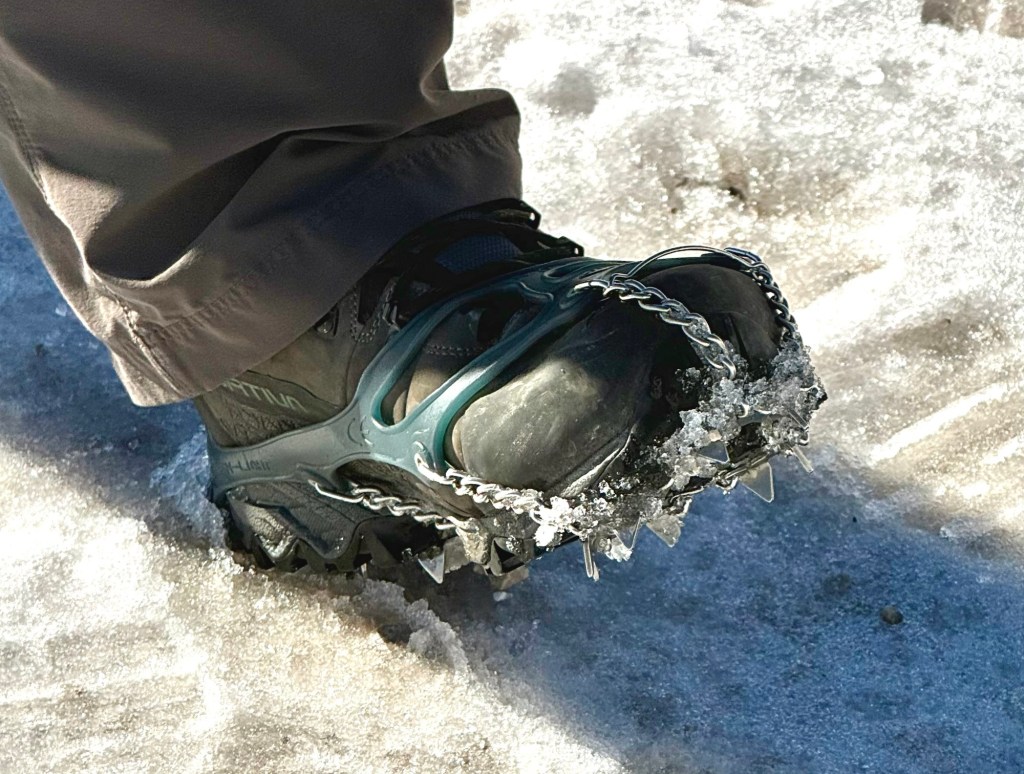
By the time we reached the restaurant at Kreuzeck, I was more than ready for lunch. I ordered a glass of wine to recover from our adventure, and we sat enjoying the mountain views, feeling quite pleased to be off the ice. Then we took the cable car back down into Garmisch and headed straight to a sporting goods store to buy microspikes. We weren’t going to make that mistake twice!
Zugspitze: The Top of Germany
The next morning brought exactly the weather we had hoped for: bright sunshine and beautiful clear skies. We headed to the Zugspitzbahn station to begin our journey to the highest mountain in Germany, Zugspitze, at 9,718 feet.
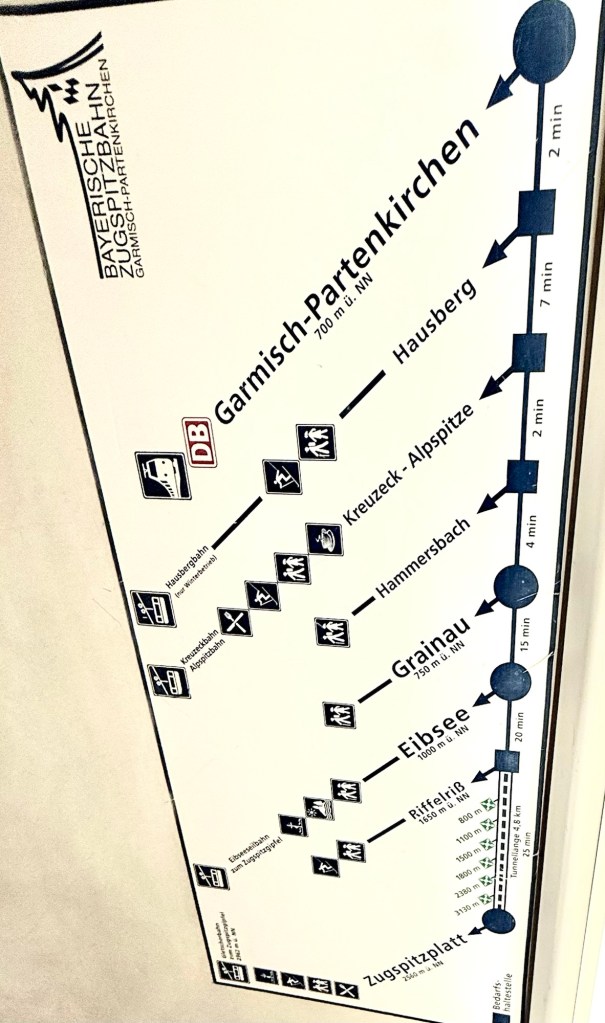
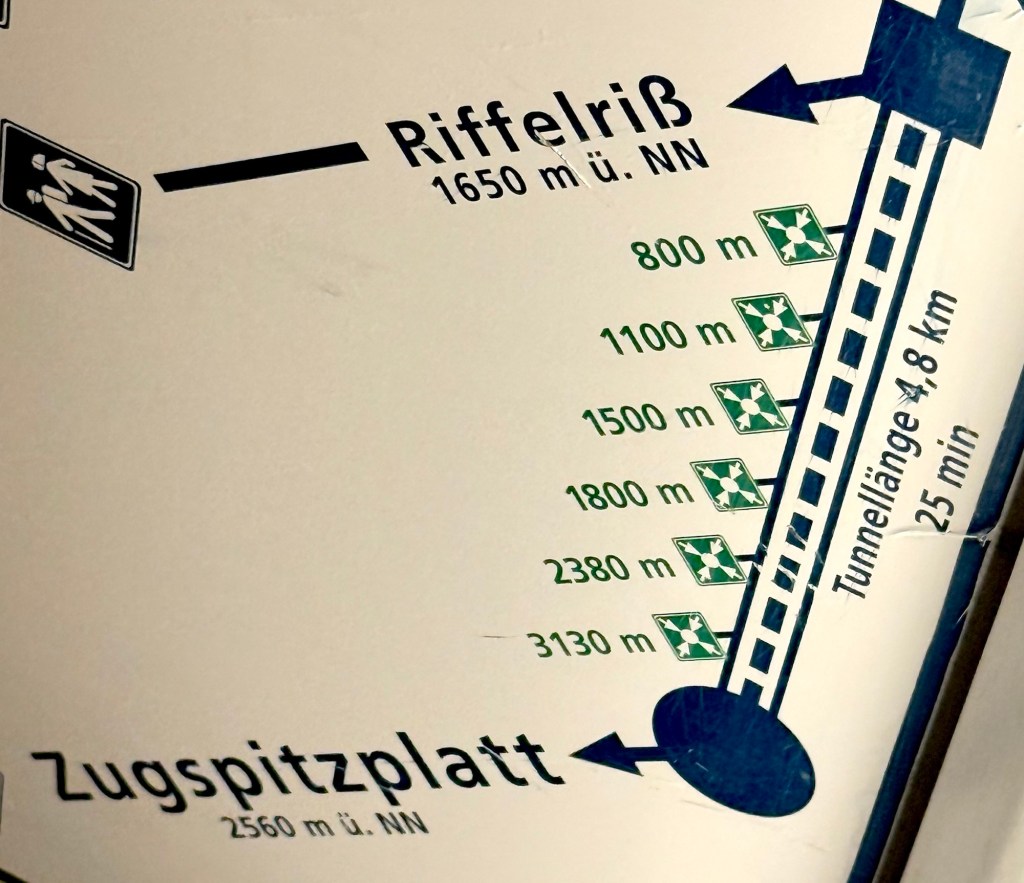
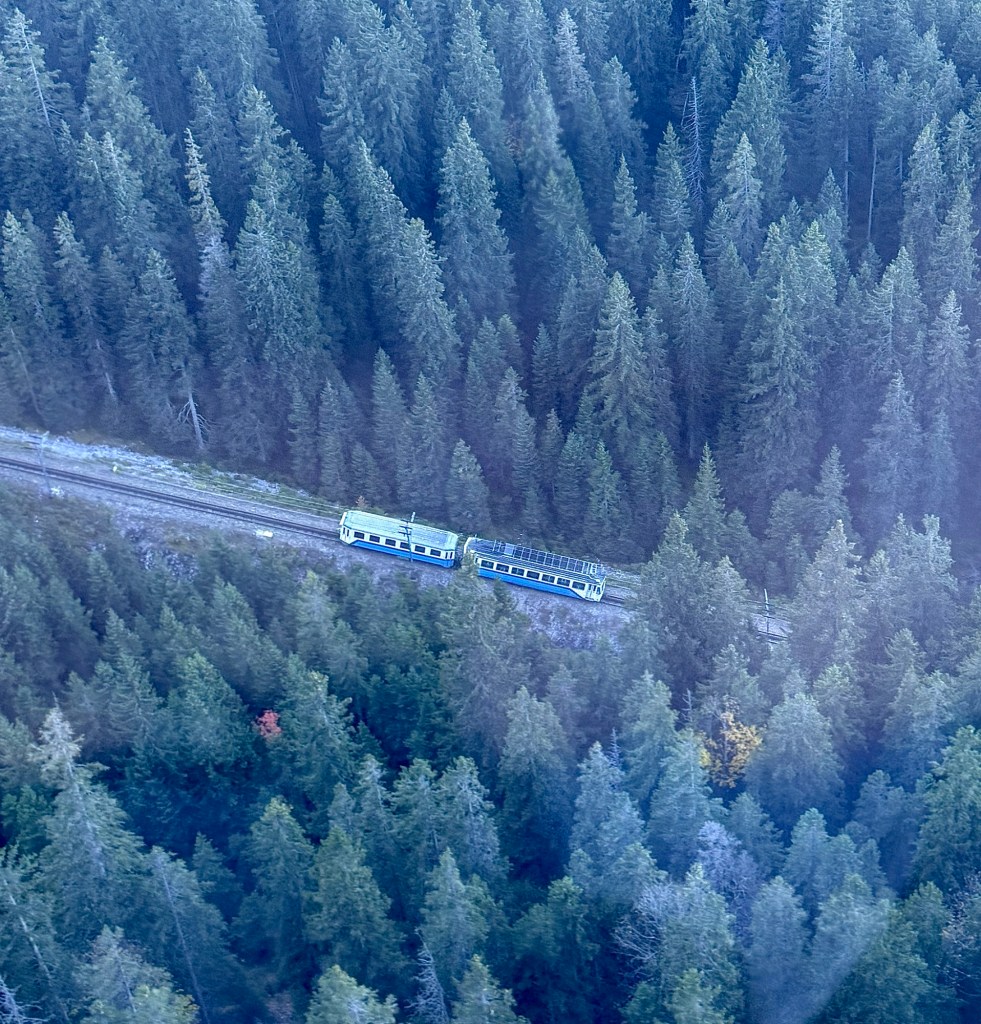
The adventure begins aboard the Bavarian Zugspitze Railway, a historic cogwheel train that has been carrying passengers into the mountains since 1930. The final section disappears into a long tunnel carved through the mountain, climbing dramatically before arriving at the Zugspitzplatt station, high above the valley. One of our photographs shows just how much elevation the train gains during that underground stretch.
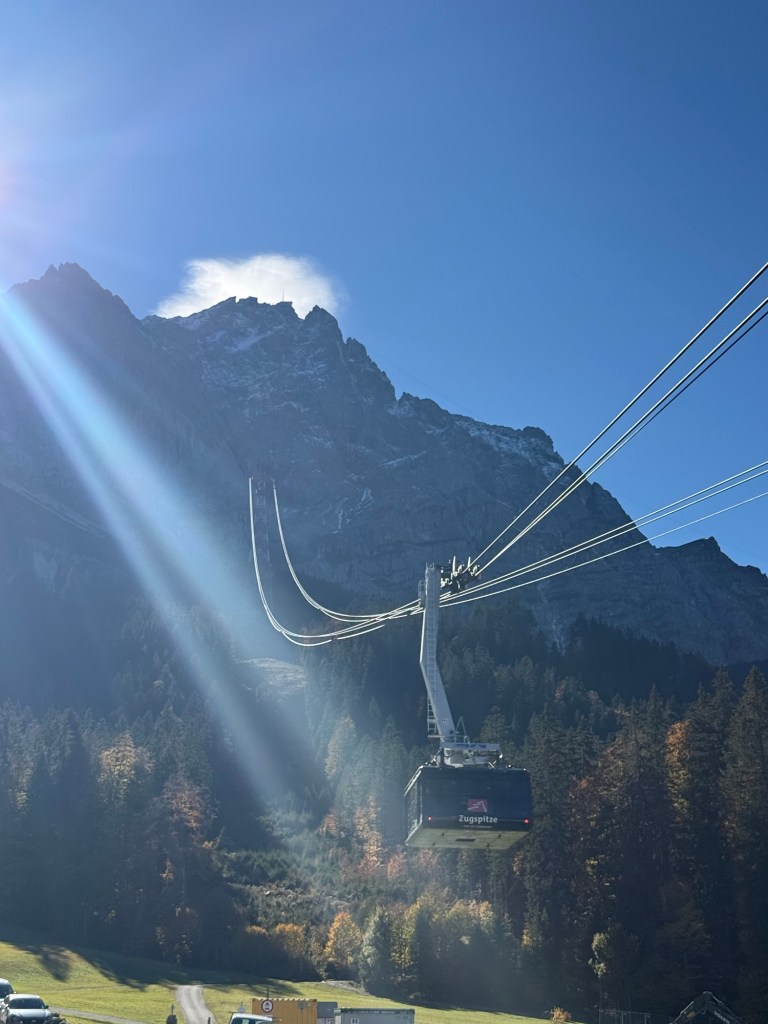
From Zugspitzplatt, we boarded the Gletscherbahn cable car for the final ascent to the summit.
The name Zugspitze is associated with Lawinenzüge, or avalanche tracks, on the mountain’s slopes. It seemed an appropriate name for such a dramatic place.
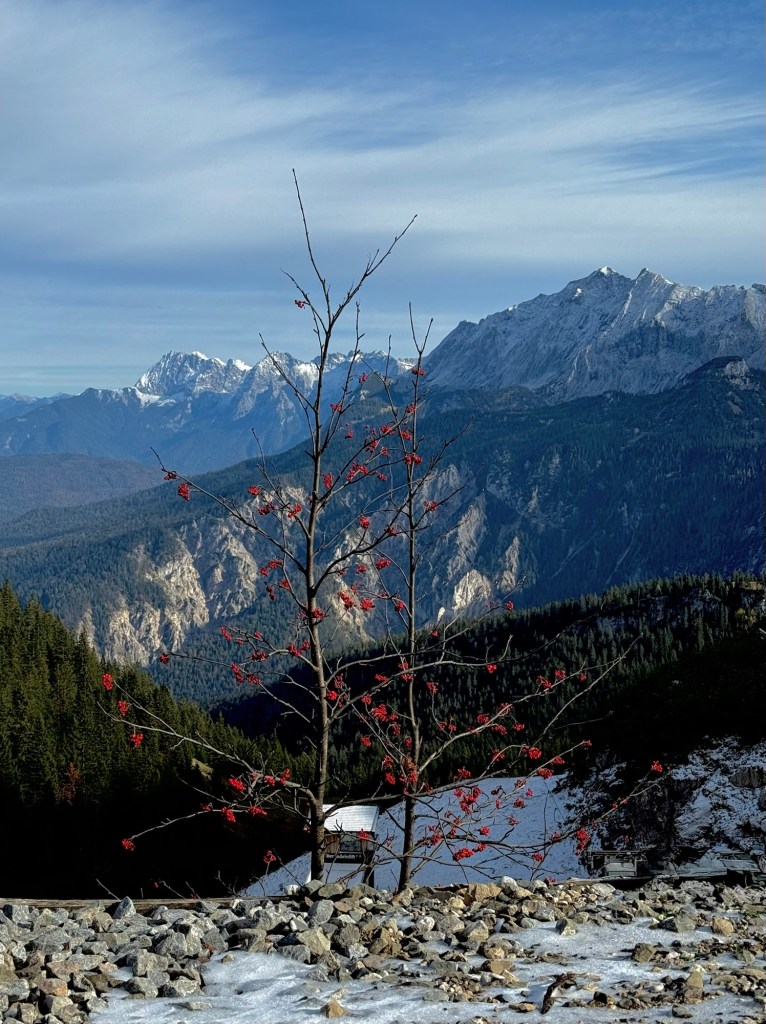
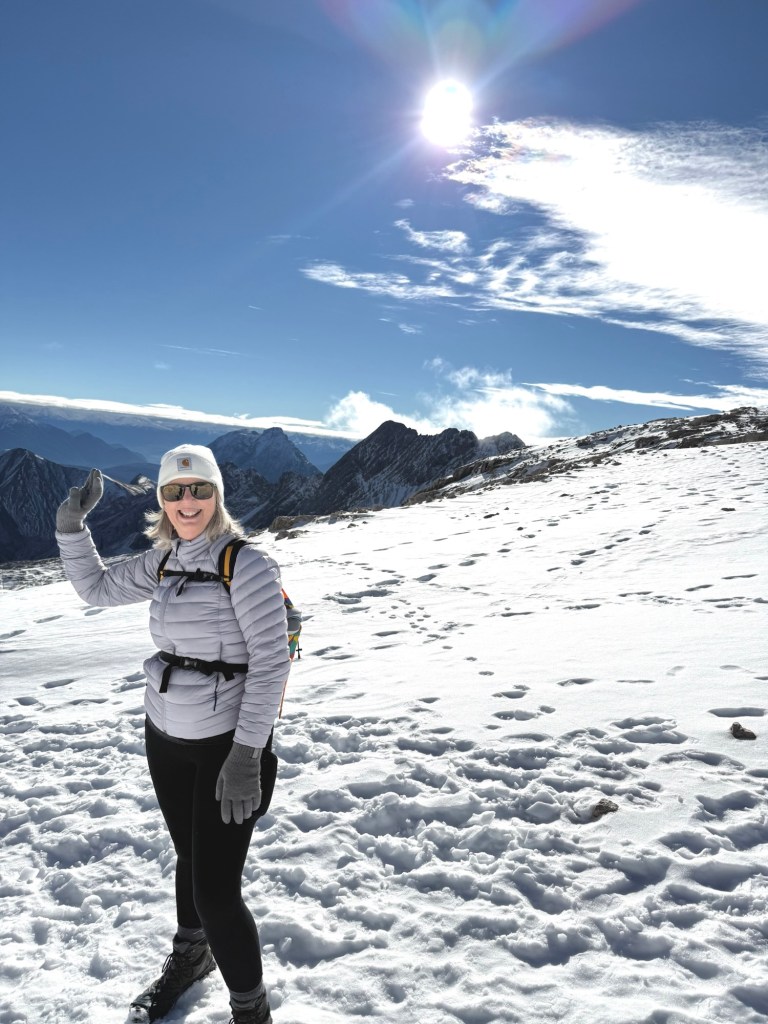
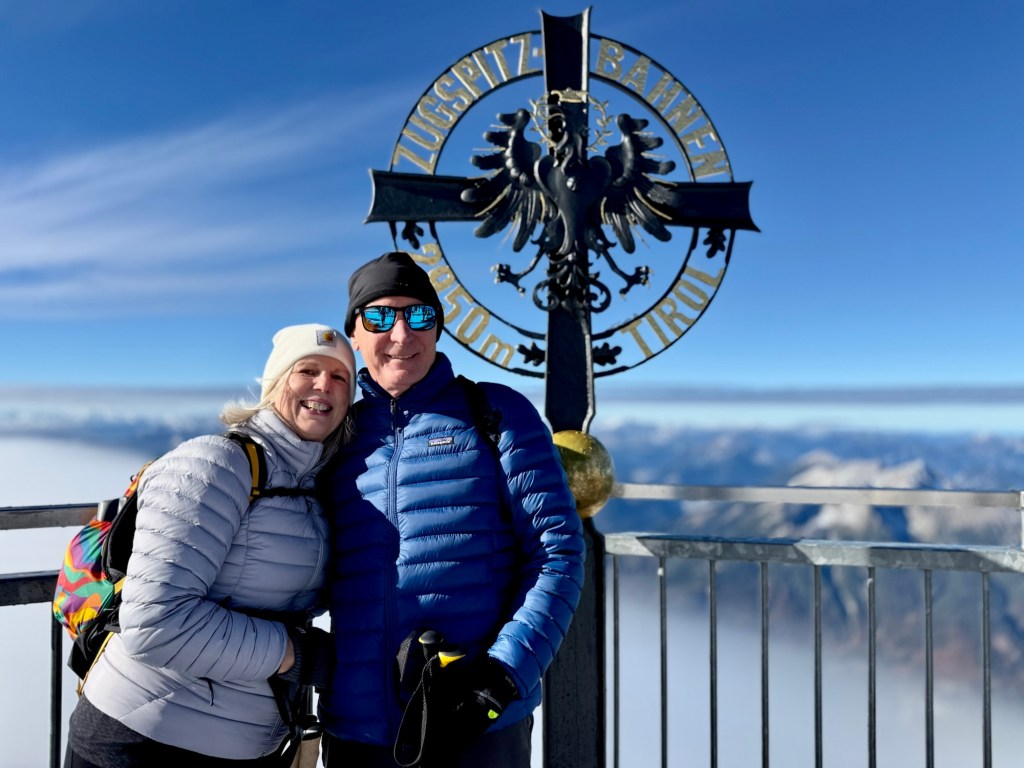
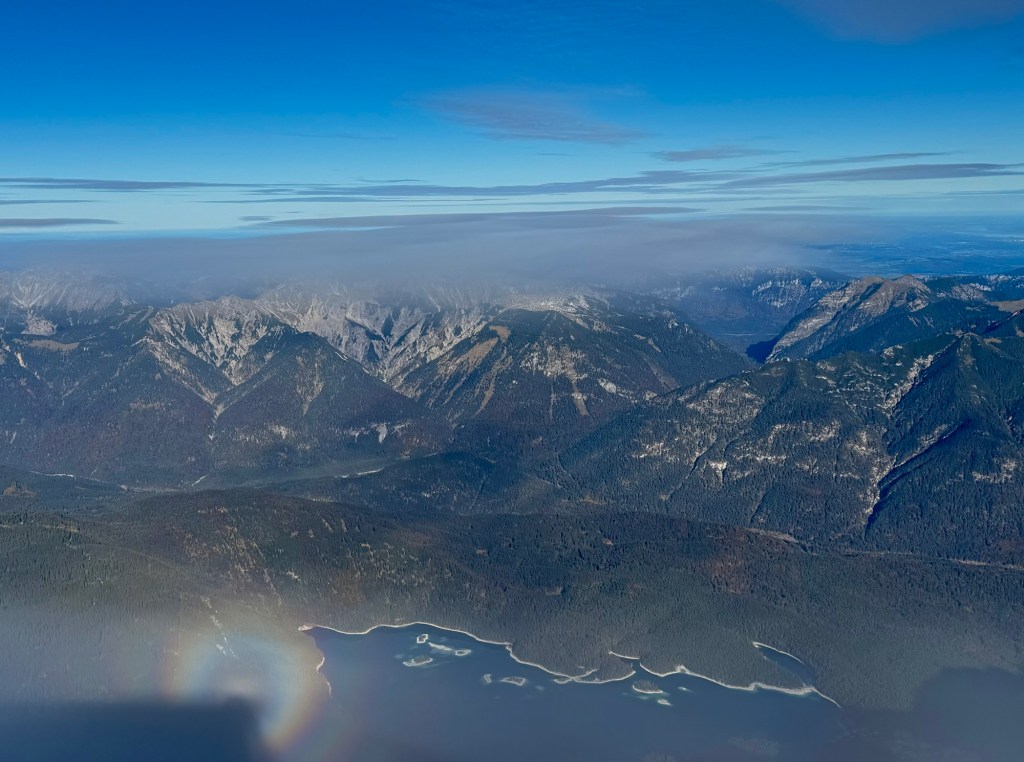
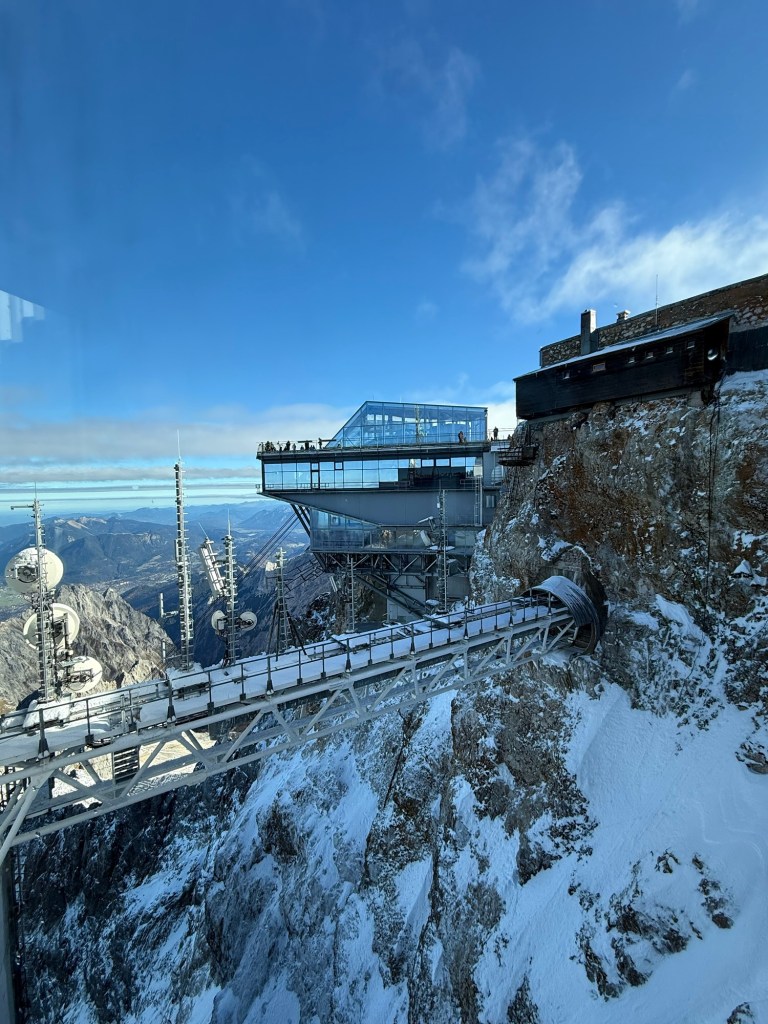
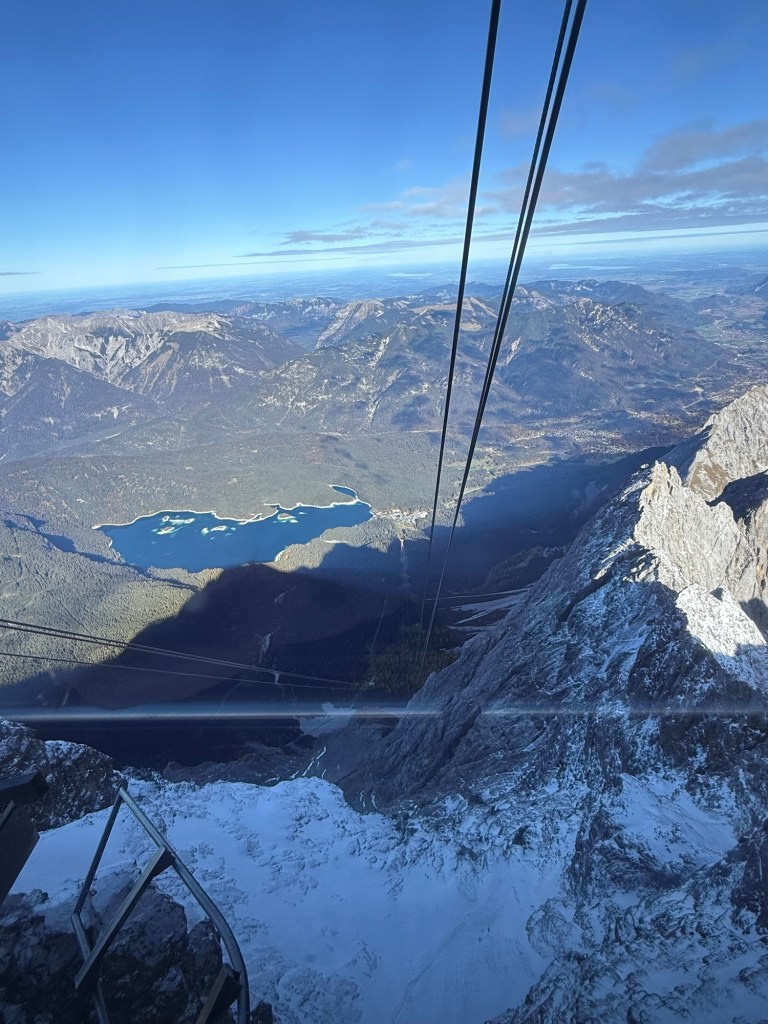
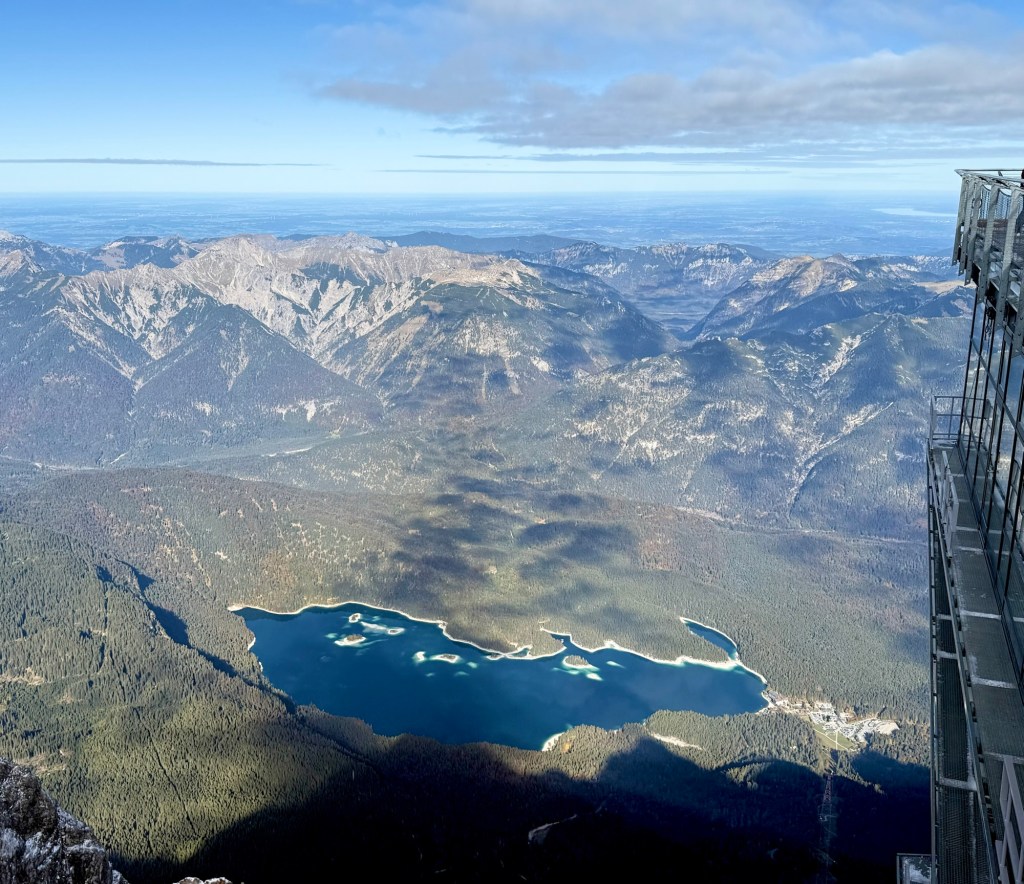
At the summit, we were standing at the border between Germany and Austria, with viewing terraces offering a spectacular 360-degree panorama. We wandered from one side to the other, looking out over seemingly endless mountain peaks. On a clear day, the views extend across four countries, and we could see for miles in nearly every direction.
And then we spotted something extraordinary: a circular rainbow in the clouds below us! It was one of those unexpected moments that made an already wonderful day even more memorable.
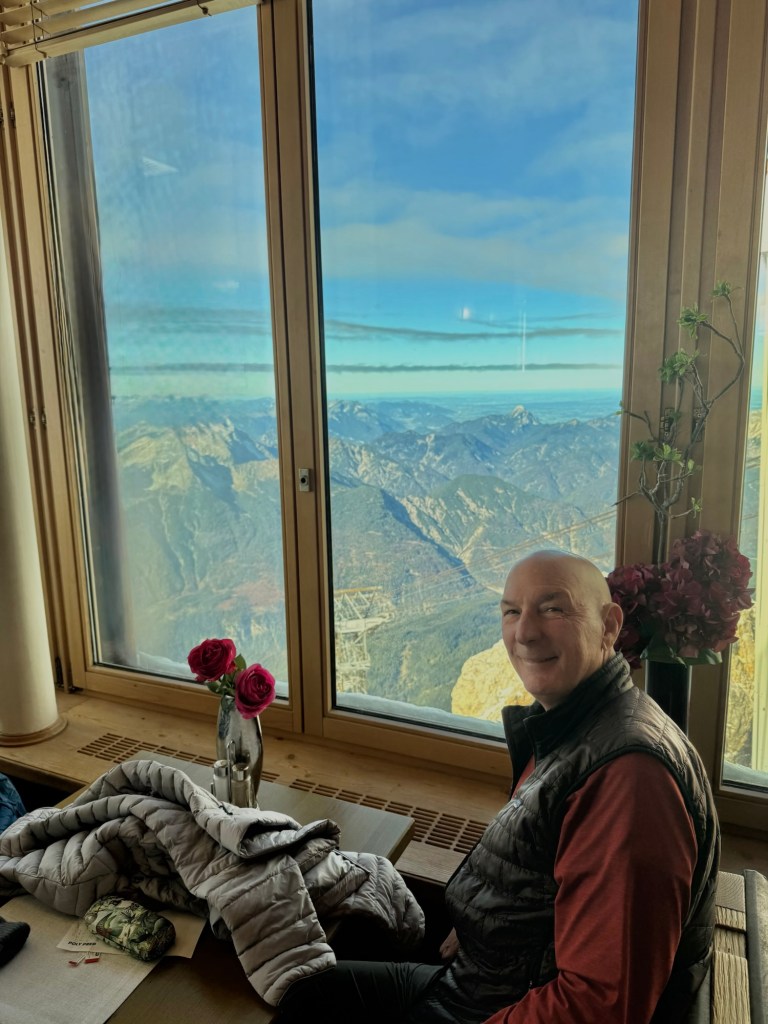
We lingered over coffee, reluctant to leave the views, before heading for the next part of our adventure.
Eibsee: A Lake That Hardly Looks Real
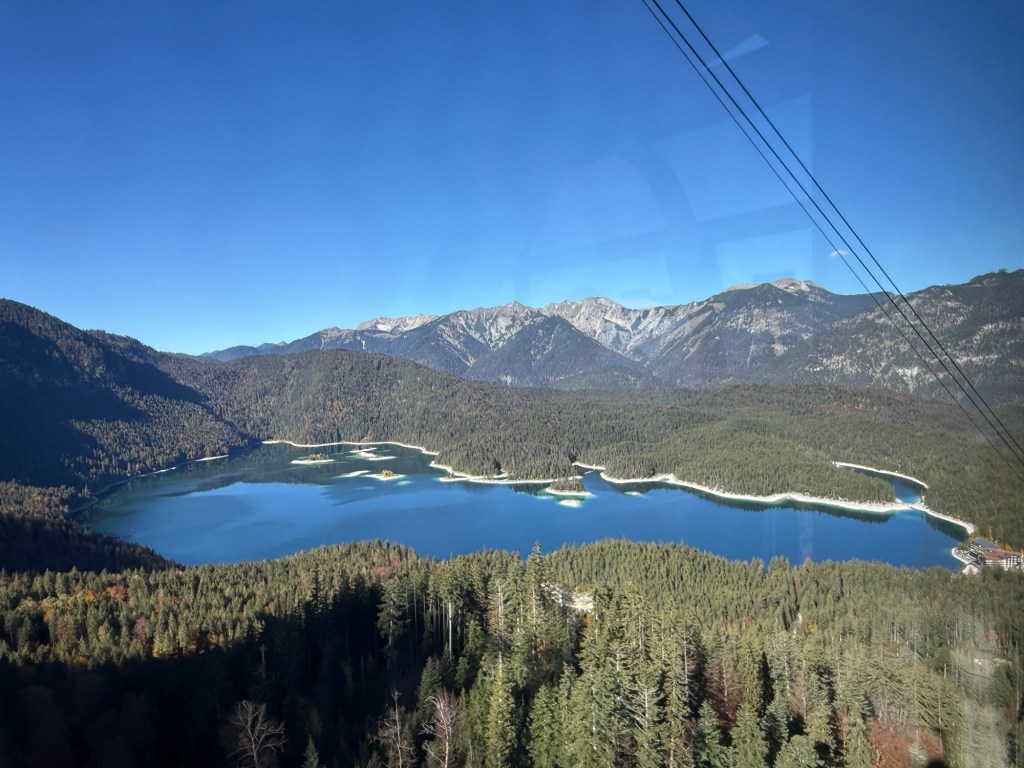
Rather than retracing our route, we took the spectacular Cable Car Zugspitze directly down to Eibsee, the glacial lake at the foot of the mountain. The cable car descends nearly 6,400 vertical feet, and the journey is an experience in itself. Our cabin even had a glass panel in the floor, allowing us to look straight down at the enormous drop beneath our feet!
And then there was Eibsee.
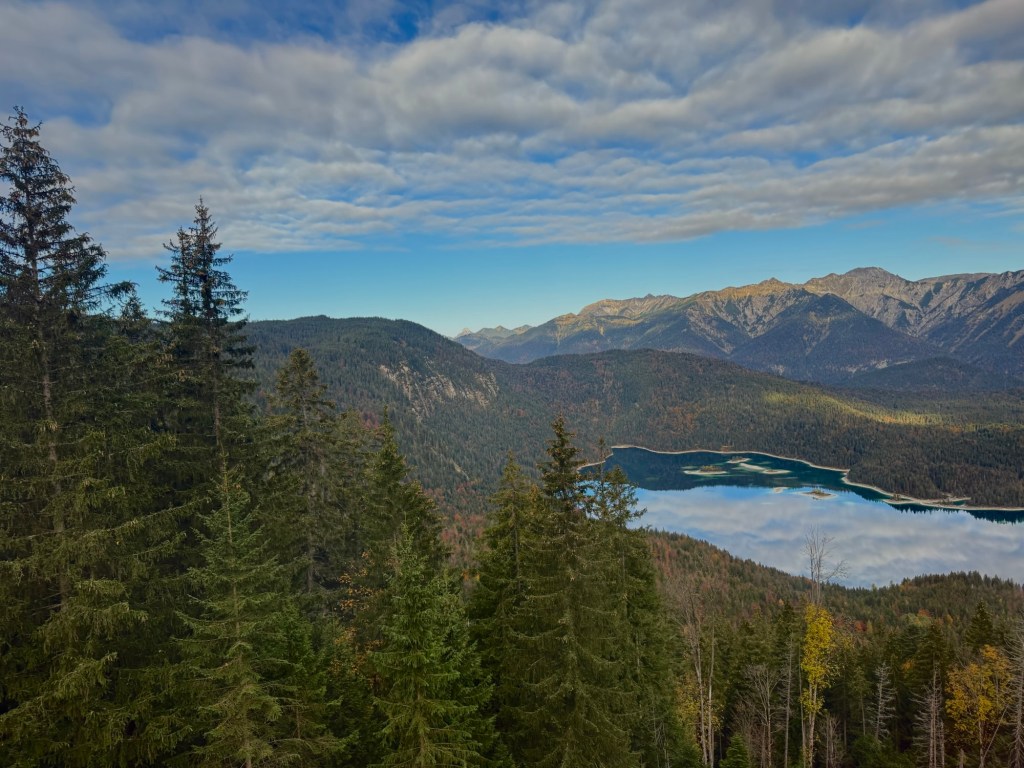
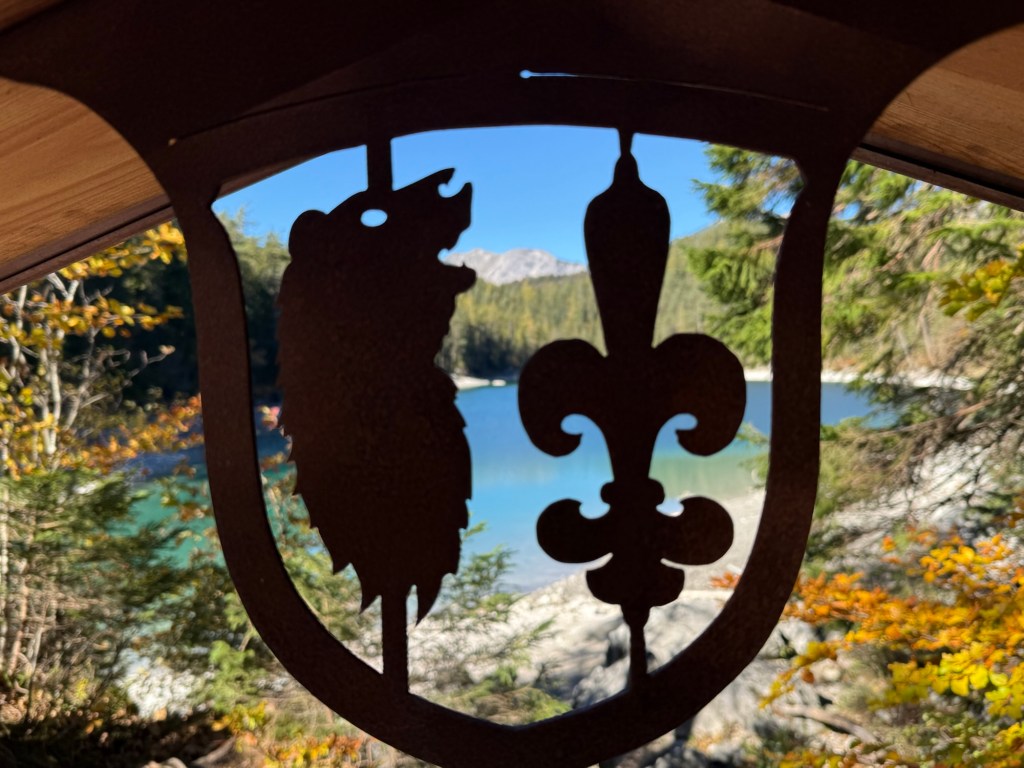
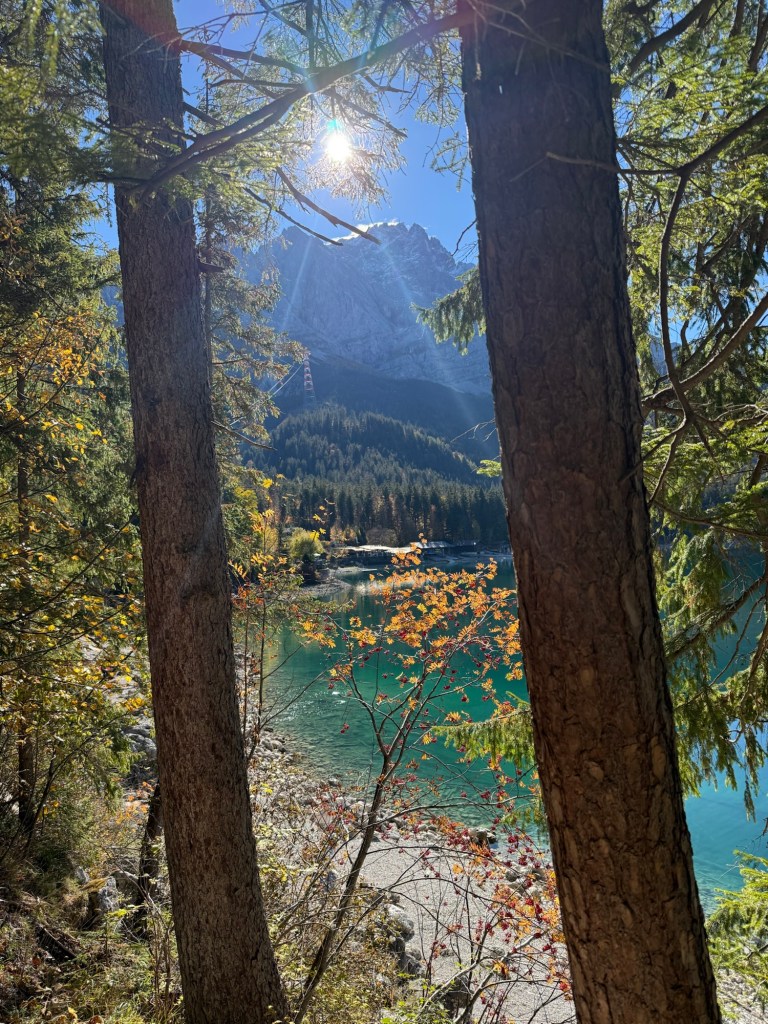
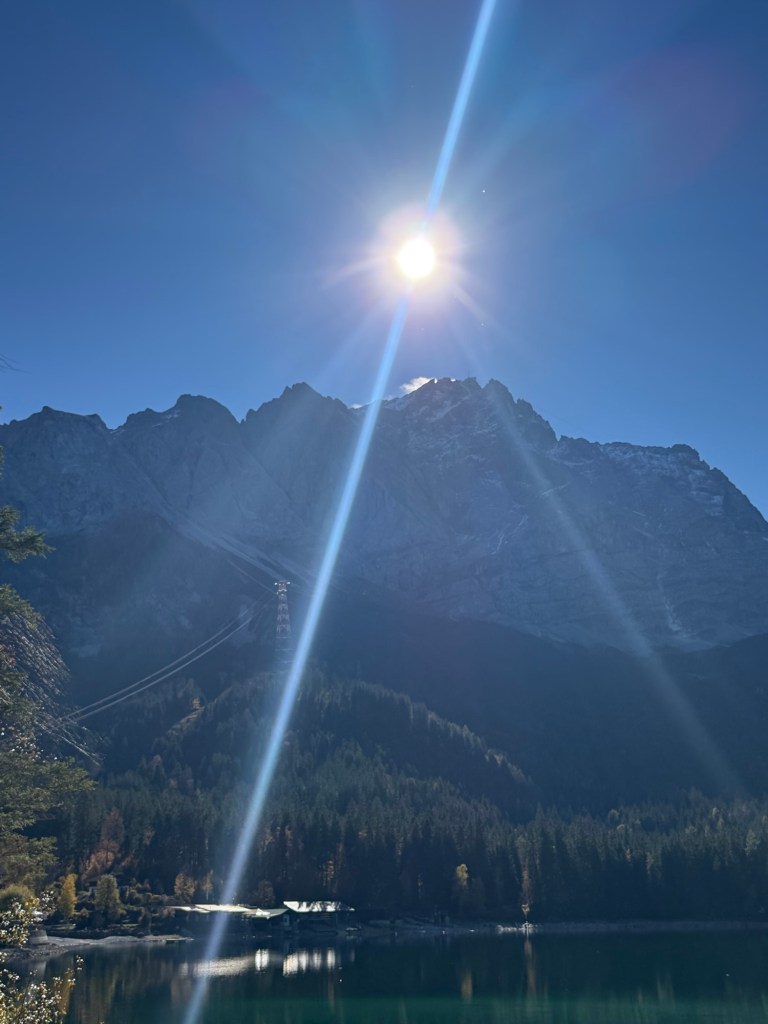
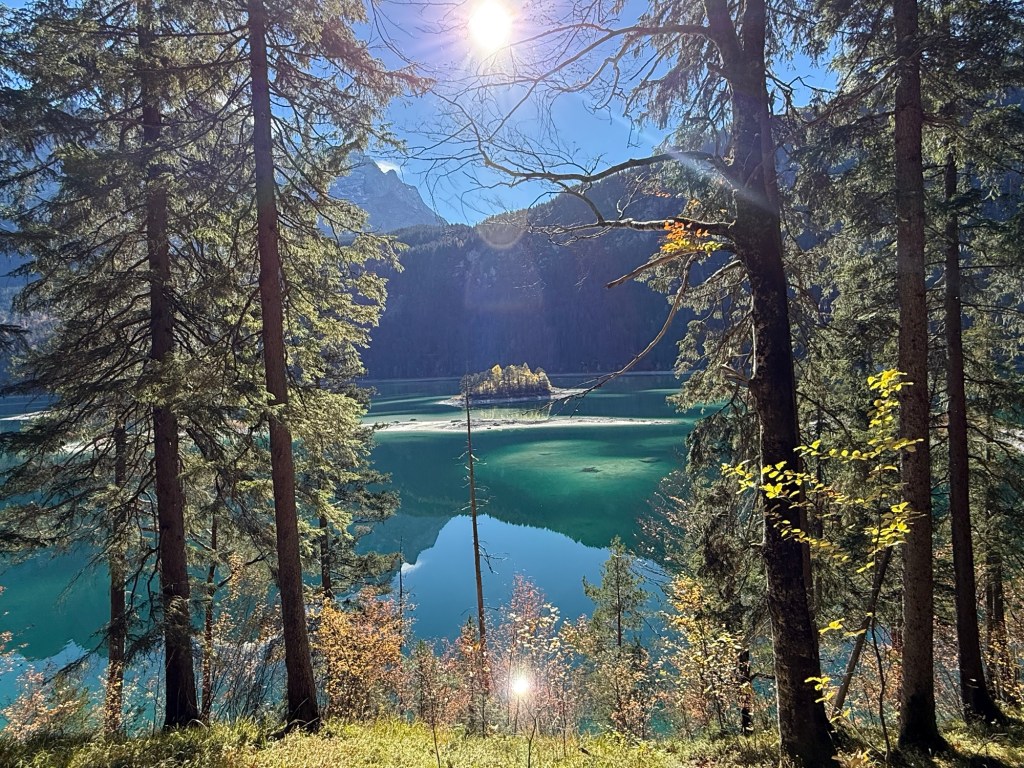
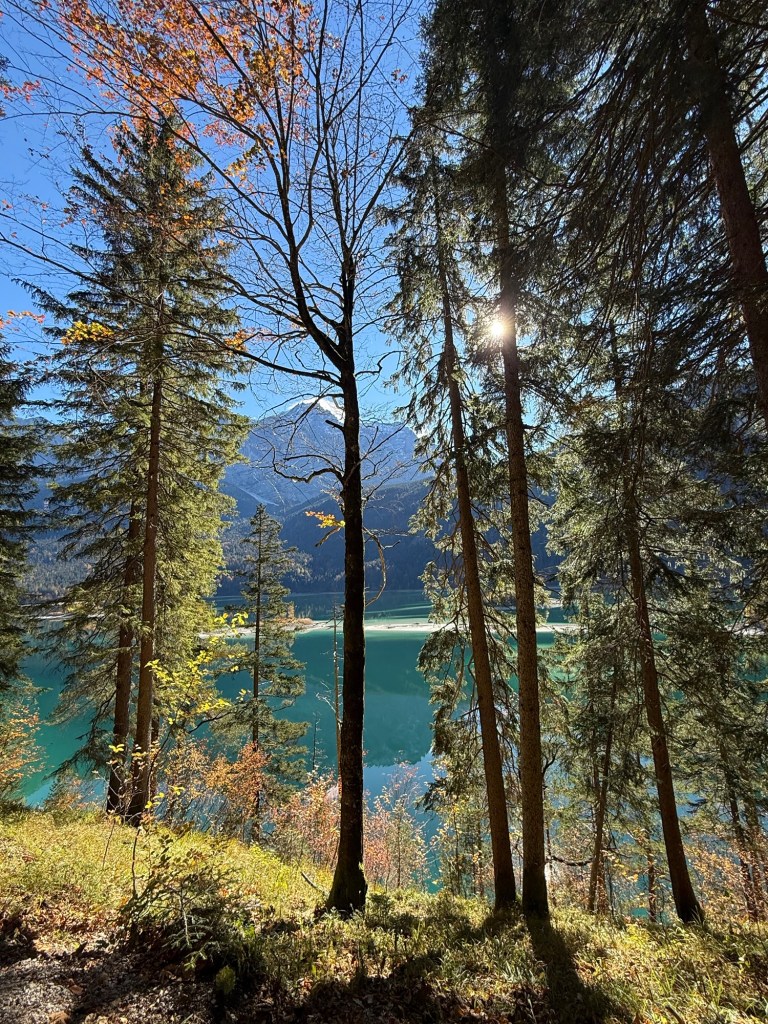
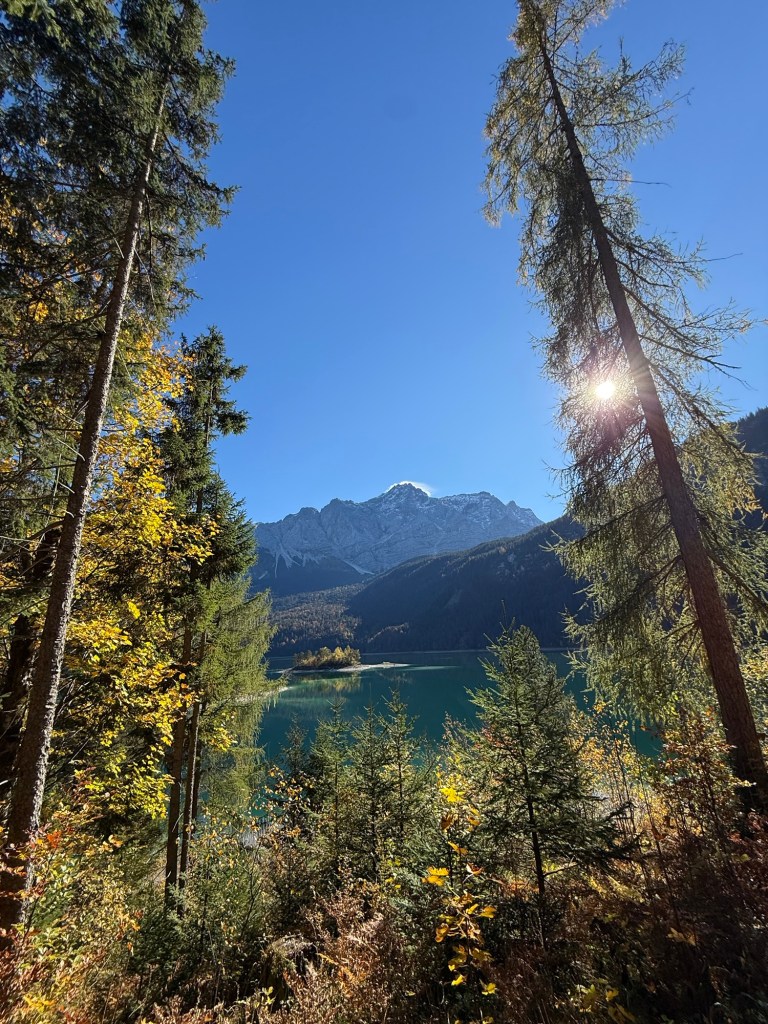
It’s hard to describe the color of this lake without sounding as though we’re exaggerating. The water is an almost unbelievable turquoise and emerald green, so clear that you can see rocks beneath the surface. Small wooded islands dot the lake, and the surrounding mountains are reflected in the still water. Around every bend, the view seemed even more beautiful than the last.
We set off on the roughly four-and-a-half-mile loop around the lake, which should have been a fairly straightforward walk. But I kept stopping to take pictures. Every few minutes there was another perfect reflection, another view of the mountains, or another patch of blue-green colored water. The walk took far longer than expected, and the photographs here are only a handful of the many I took!
We finished the loop with just moments to spare before our transportation back to town. We practically ran for the train and bus connection, huffing and puffing as we squeezed aboard among the last passengers.
What a day! We were exhausted, but so incredibly happy.
King Ludwig II and His Castles
After two days in the mountains, a change of pace seemed in order. We picked up our rental car and set off to visit two of Bavaria’s famous royal castles, Hohenschwangau and Neuschwanstein.
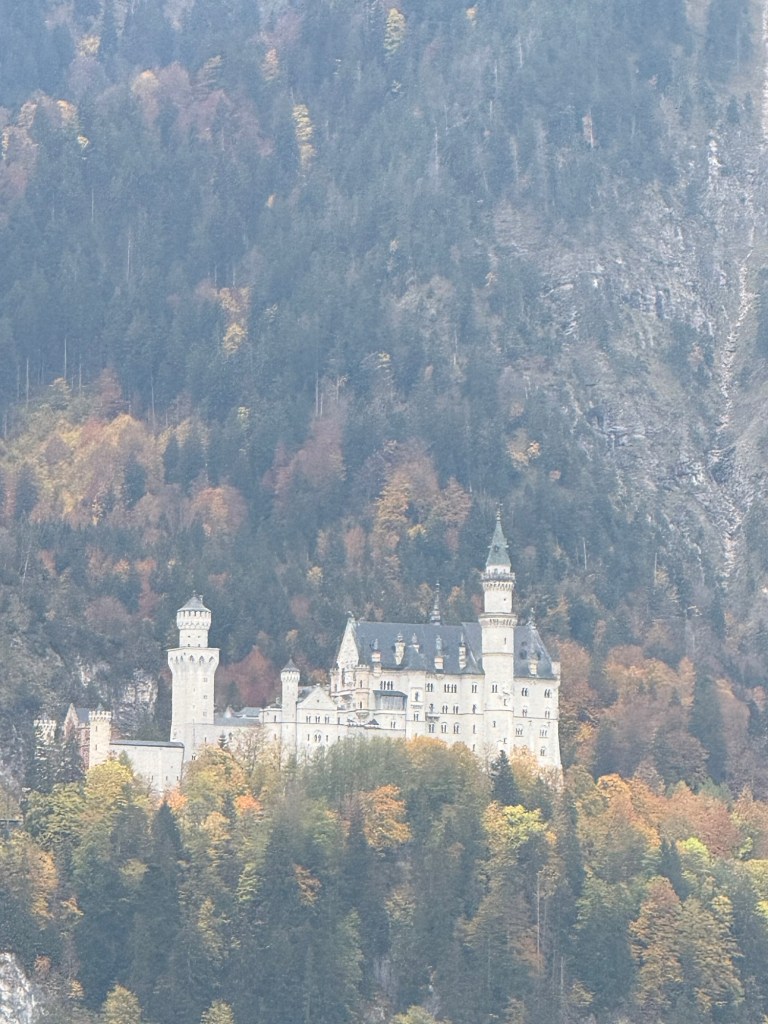
Both are closely connected to King Ludwig II of Bavaria, who became king in 1864 at eighteen years old. Ludwig was a dreamer, fascinated by medieval legends, music, and grand architecture. He poured huge sums into building palaces, particularly Neuschwanstein, which became the inspiration for Disney’s Sleeping Beauty Castle. His projects helped drive him deeply into debt, and in 1886 he was declared unfit to rule. Just days later, he died under mysterious circumstances in a lake near Munich, at only forty years old.
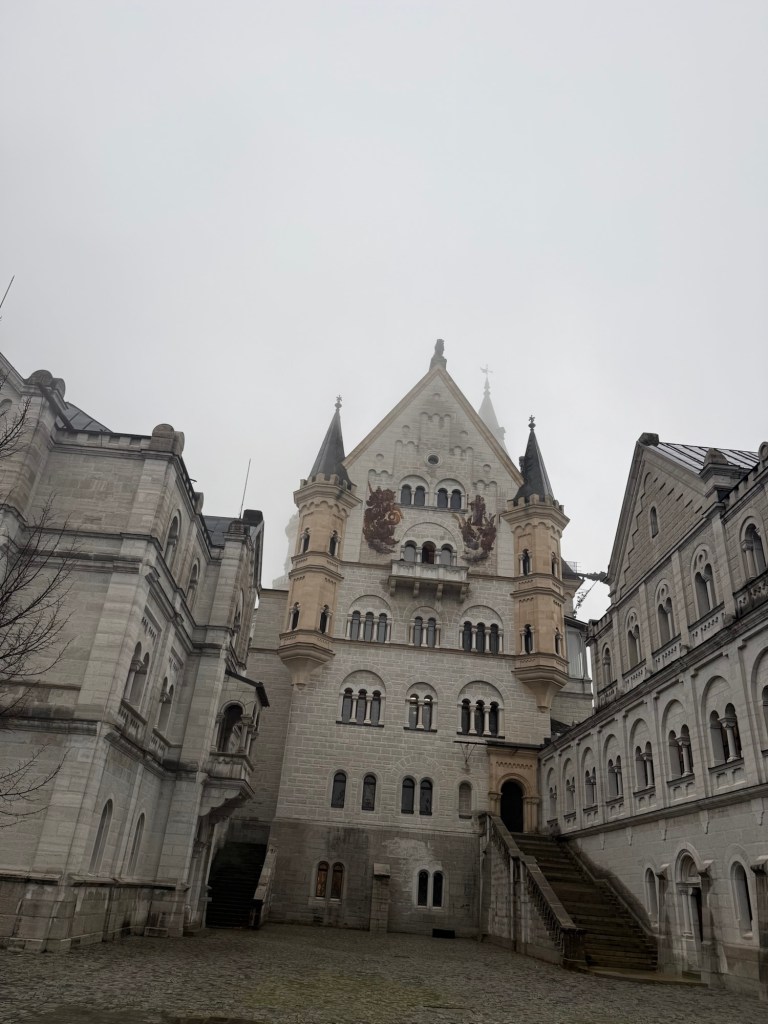
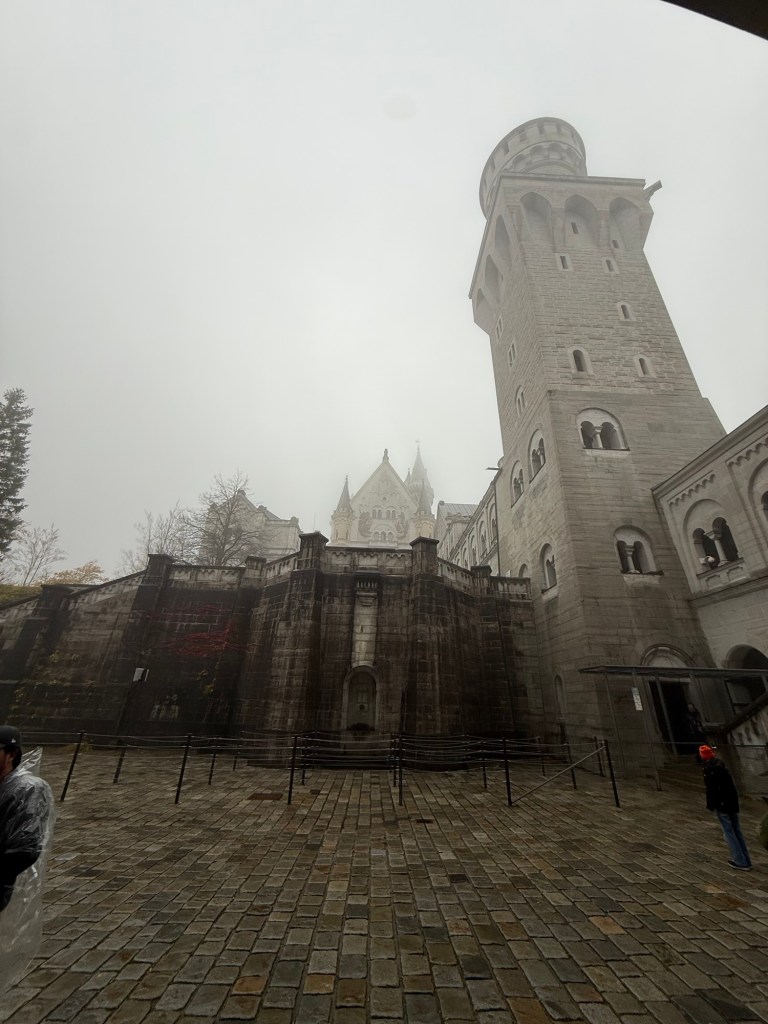
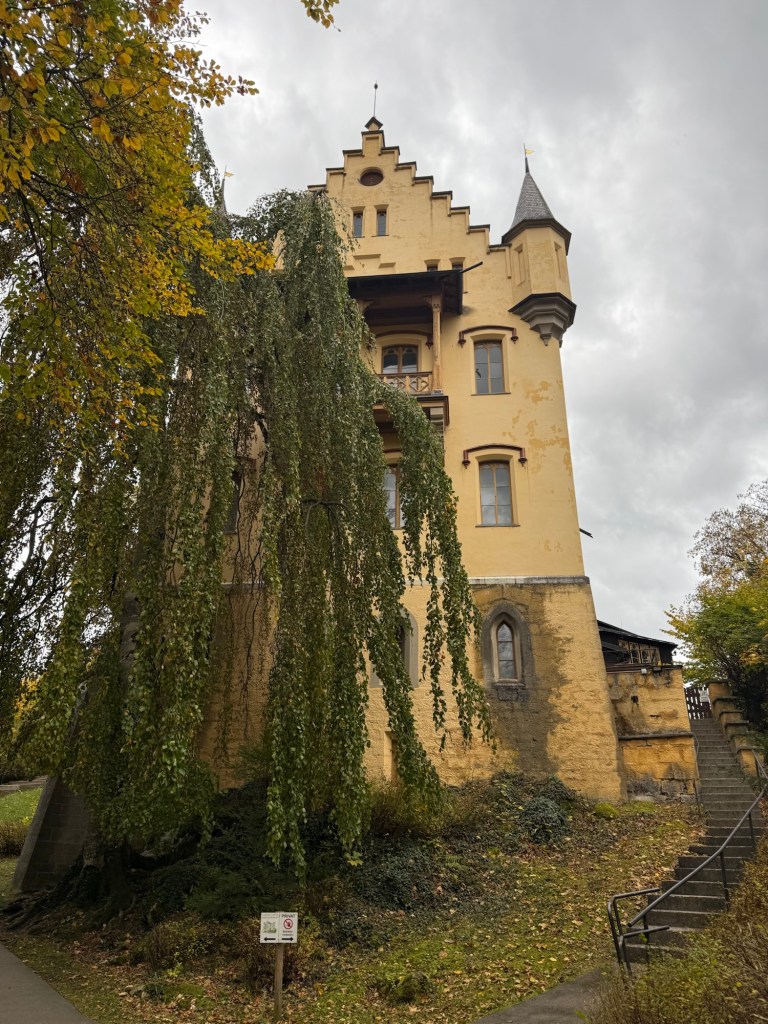
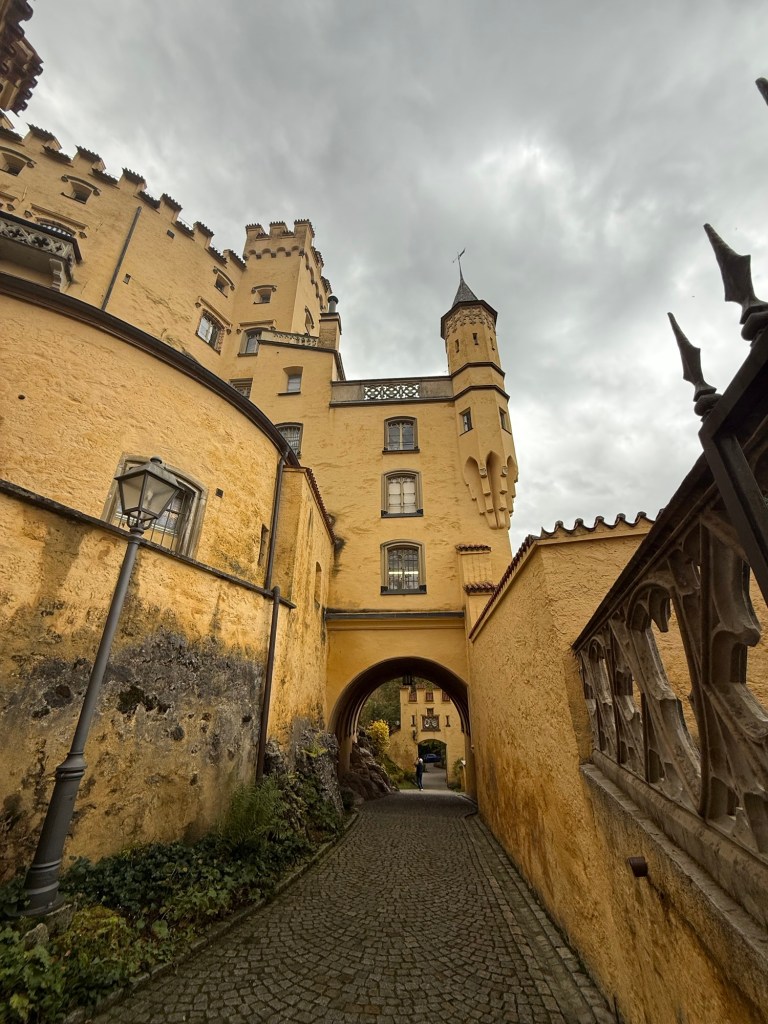
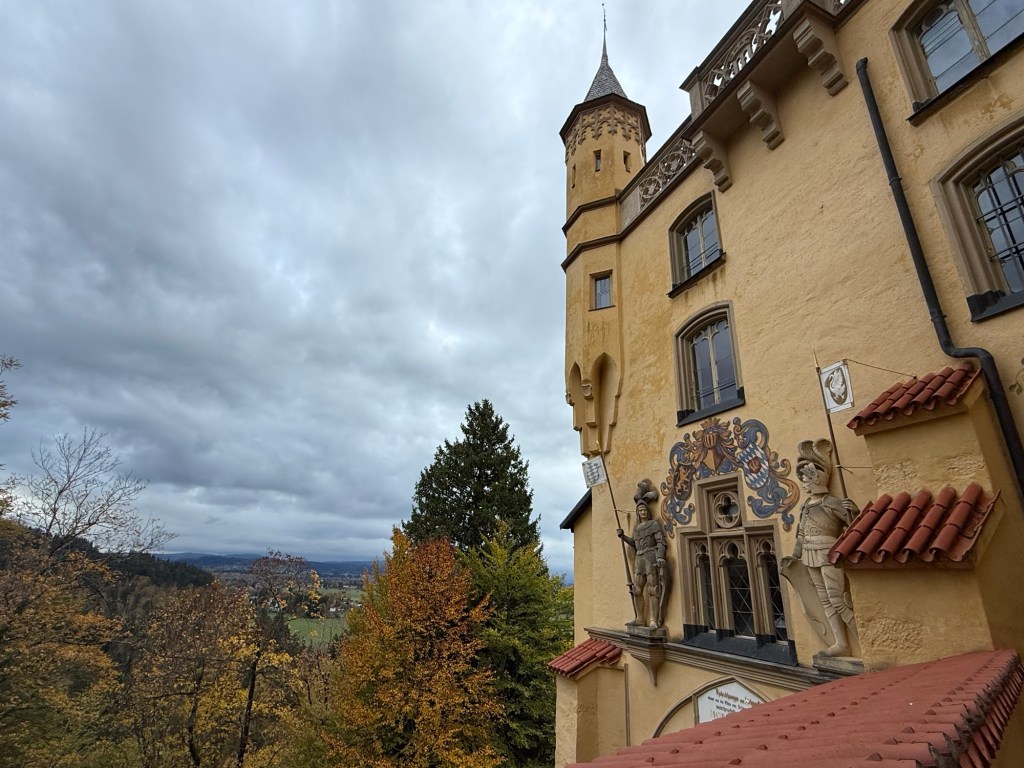
Hohenschwangau, where Ludwig spent much of his childhood, gave a glimpse into the royal world in which he grew up. Neuschwanstein was something else entirely, a spectacular creation of towers, turrets, elaborately decorated rooms, and grandeur, perched high above the surrounding countryside.
It was a full day of beauty, excess, and sadness. The castles are magnificent, but knowing something about Ludwig’s life made them feel much more complicated than simple fairytale palaces.
We had rented the car for two days, and our next adventure would take us to Linderhof, the smaller, more intimate palace where Ludwig actually spent much more of his time.
Coming next: Linderhof Palace, scenic valleys, and more Bavarian adventures.

