After visiting Neuschwanstein and Hohenschwangau, and learning more about King Ludwig II’s complicated life, we decided that a visit to Linderhof was the perfect way to spend the second day of our car rental. It was the only one of his grand palaces completed during his lifetime, and the one where he actually spent much of his time. After seeing the extravagance of Neuschwanstein, we were curious to see what his more personal retreat would be like.
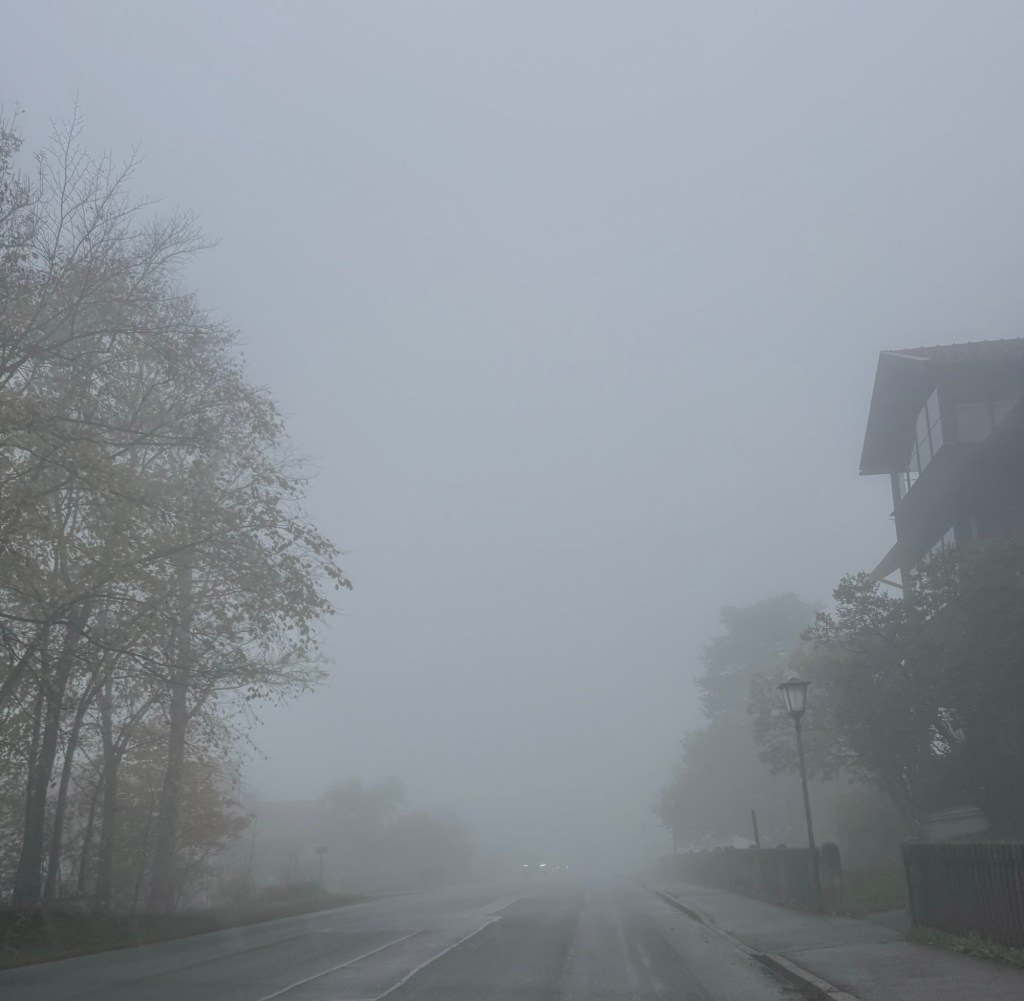
We set off through low clouds, driving along winding mountain roads where visibility was sometimes reduced to just a short distance ahead.
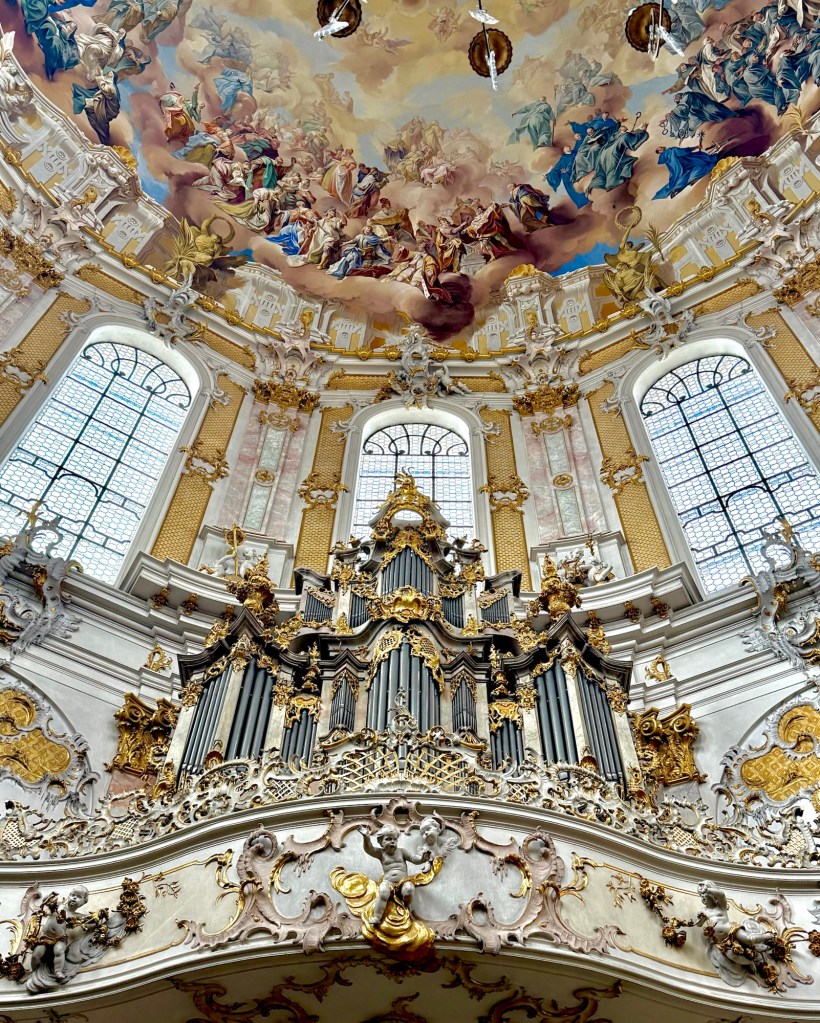
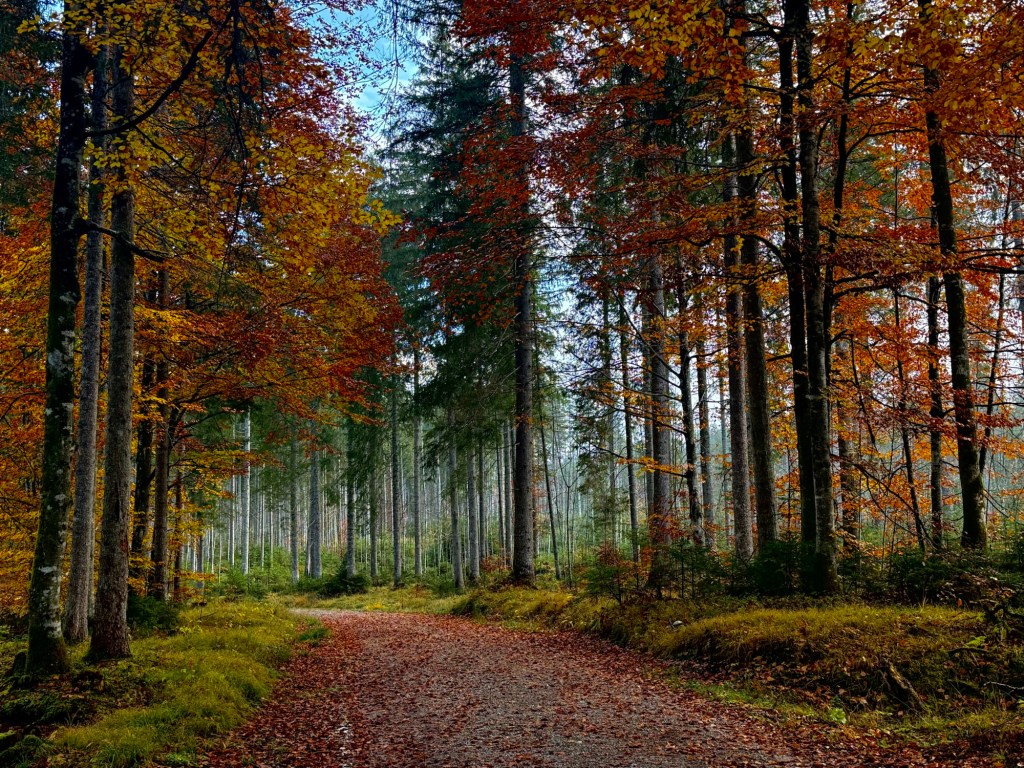
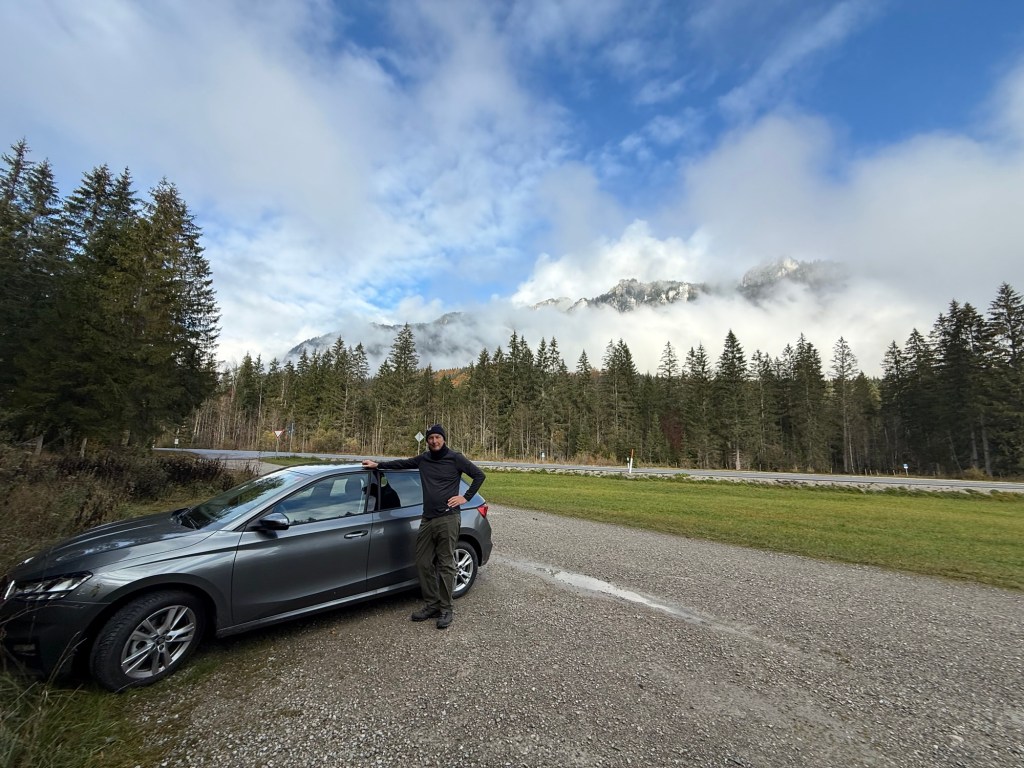
Before visiting Linderhof, we stopped for a walk through the Graswang Valley. At first, it was just a lovely forest walk, with towering pines, thin white-barked trees, and hunting stands hidden back in the woods. We enjoyed the quiet, but wondered what made the walk so special.
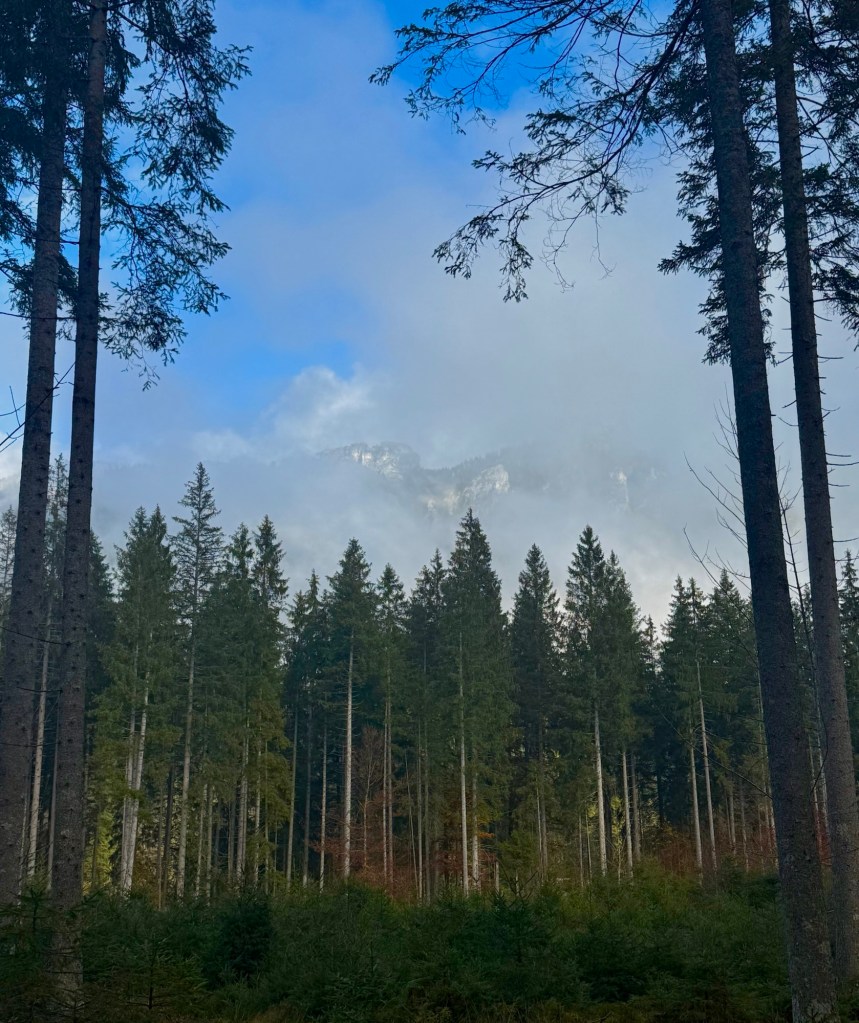
Then the clouds began to lift.
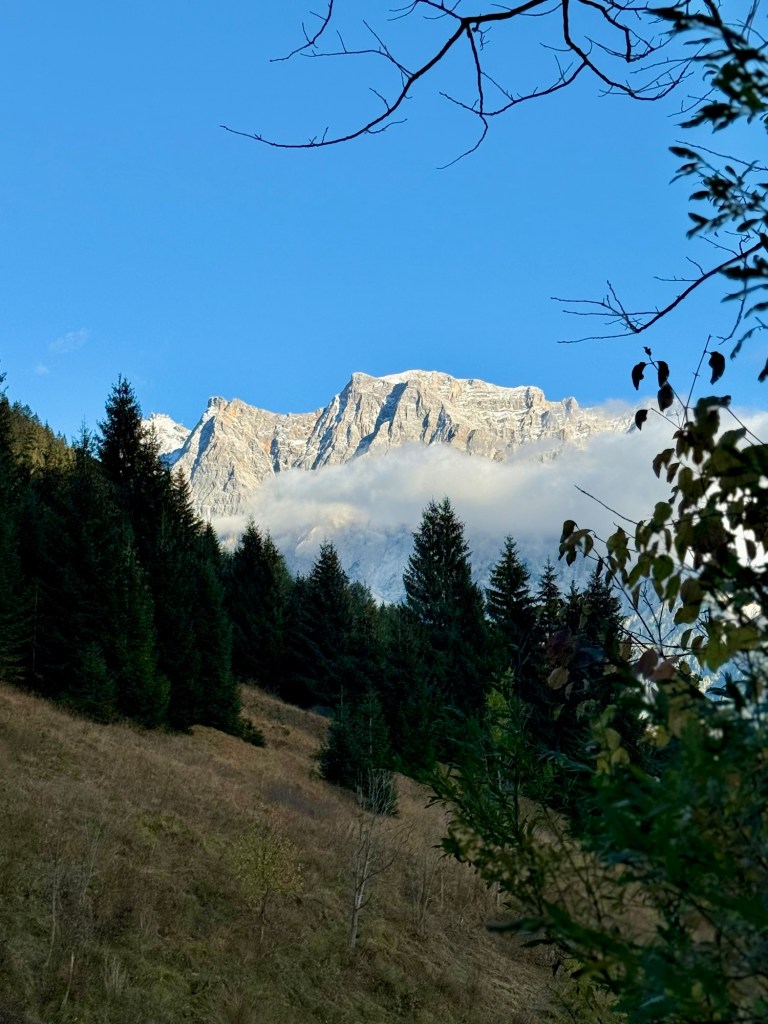
Suddenly, we could see the mountains surrounding the valley, their peaks appearing through the last wisps of morning mist. What had seemed like an ordinary woodland path opened into a beautiful Alpine landscape. We were glad we’d come, and even more glad we’d waited long enough for the mountains to make their appearance.
Linderhof: A Palace for One
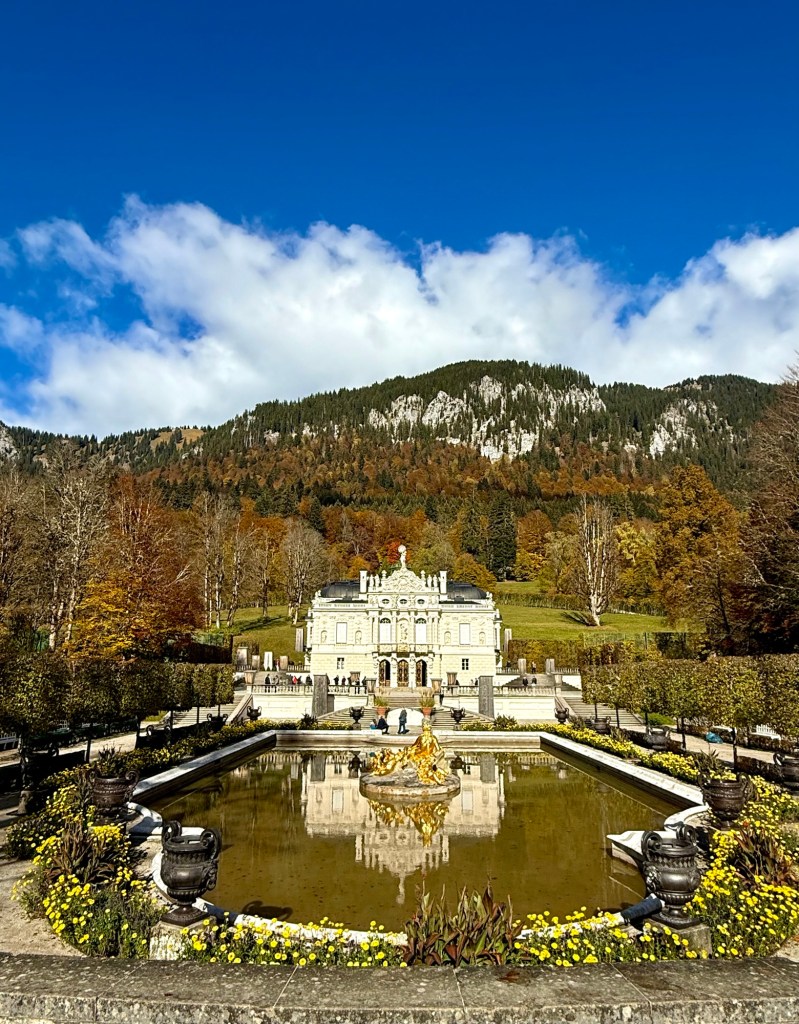
Linderhof was just a short drive away, and the approach through its grounds was beautiful. The palace itself takes you by surprise. After the enormous scale of Neuschwanstein, Linderhof seems very small, surrounded by formal gardens, fountains, and terraces.
But small doesn’t mean modest!
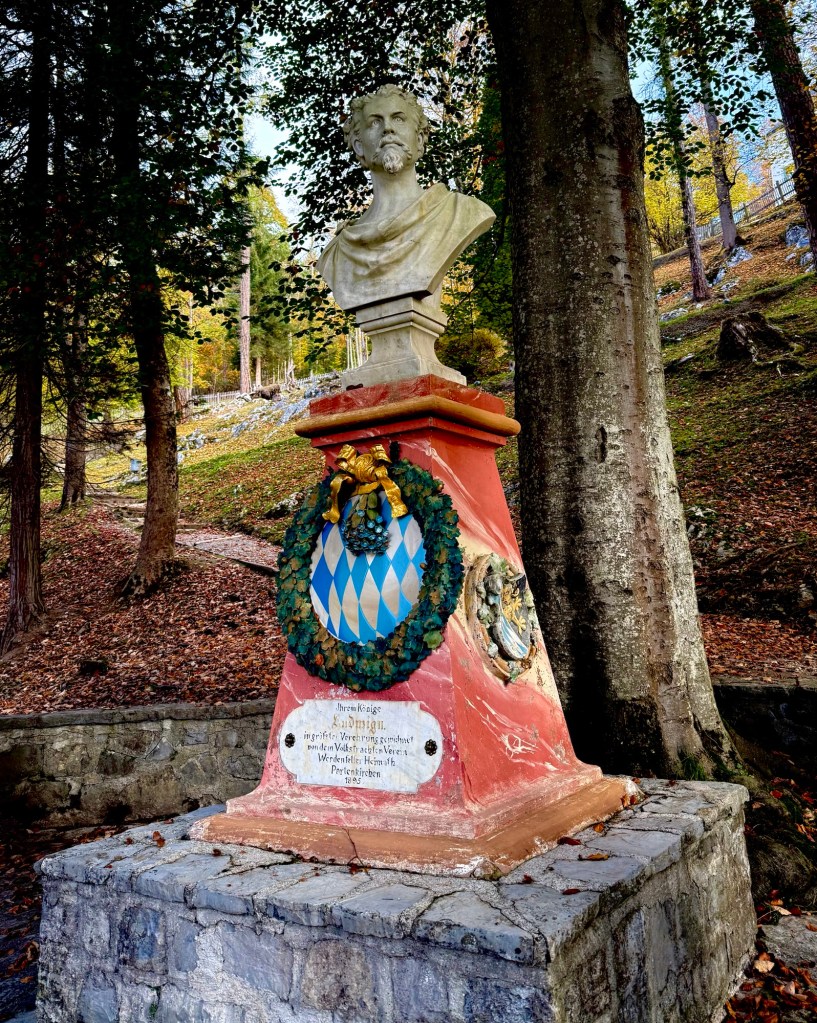
Ludwig admired King Louis XIV of France, the Sun King, and got his inspiration from Versailles. Linderhof was his own version of royal excess, filled with gilded decorations, mirrors, chandeliers, and furniture.
Every room was more extravagant than the last. The bedroom was particularly outrageous, with its enormous, richly decorated bed, lavish textiles, and gold everywhere.
In the dining room, Ludwig had a special table that could be lowered through the floor into the room below, set with food, and raised again so he could dine without seeing the servants. He preferred to eat alone, sometimes pretending to be in the company of long-dead French royalty.
It was all a little sad. The more we learned about Ludwig, the more his palaces seemed like fantasy worlds he had created to escape the real one.
Plansee: A Lake of Changing Colors
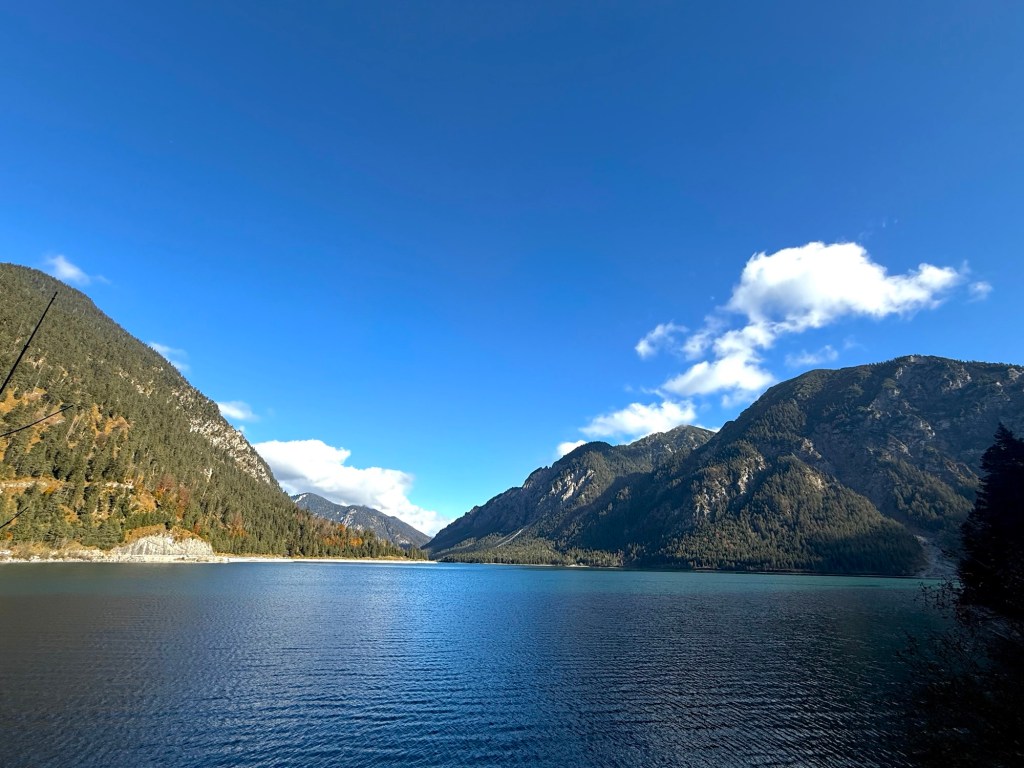
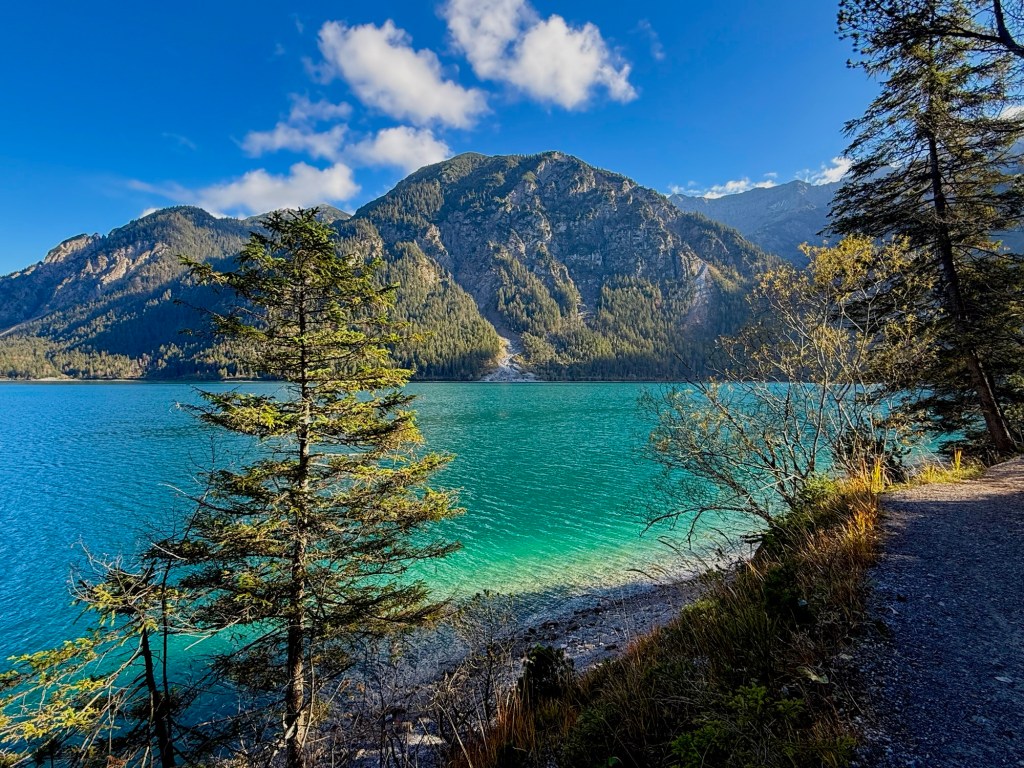
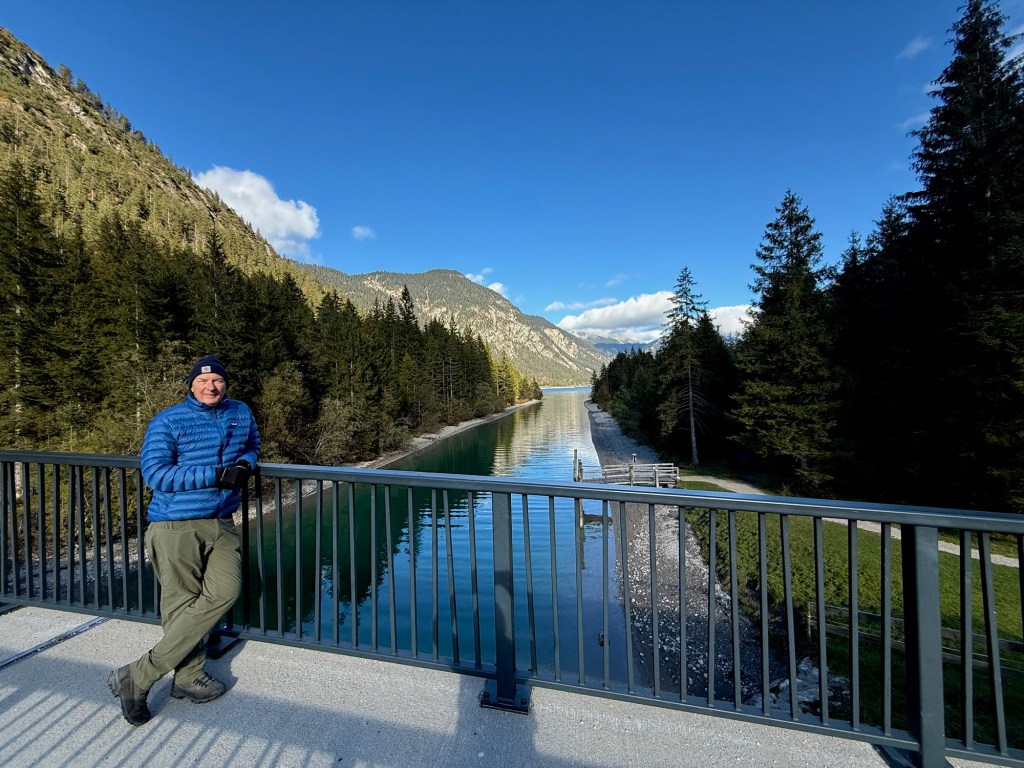
We still had the afternoon and a rental car, so we drove into Austria to visit Plansee, a long, narrow Alpine lake surrounded by mountains.
We walked along the shore, and the changing colors of the water were incredible. Around one bend it was deep blue, around another brilliant turquoise or green, depending on the angle of the sunlight and the reflections from the mountains.
By the time we got back to our car, the sun was setting behind the mountains. We passed people just starting their walk, and couldn’t help feeling a little sorry for them. The vibrant blue-green water we’d been admiring only a couple of hours earlier had turned a rather ordinary gray. What a difference the light made!
A Different View of Zugspitze
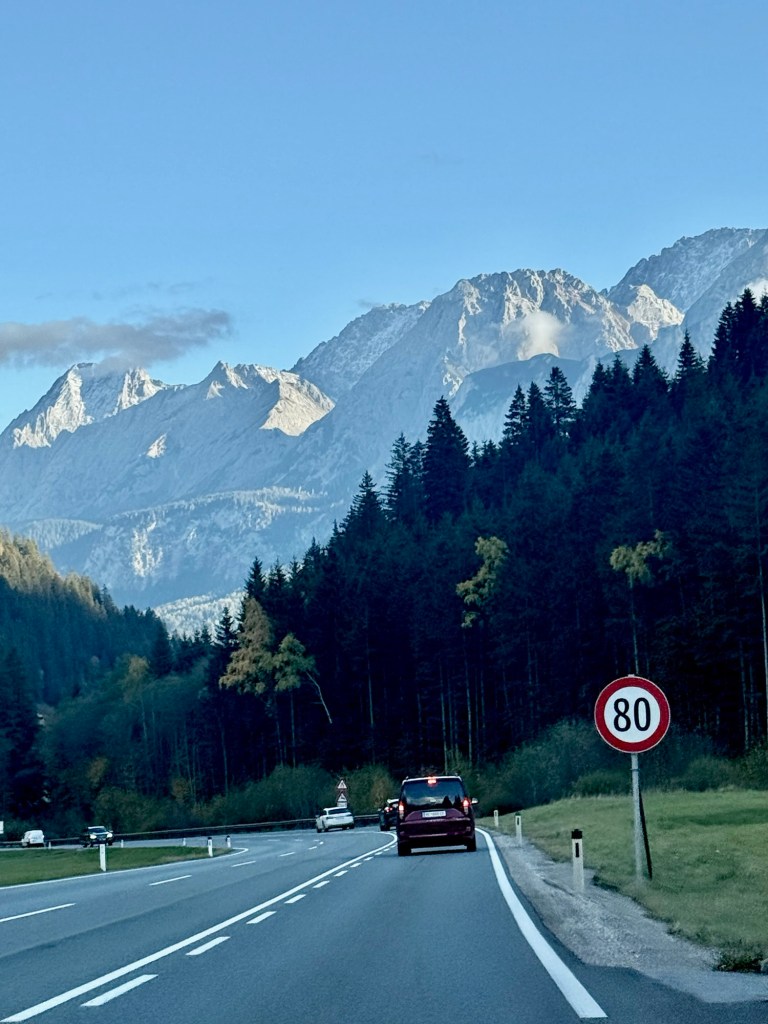
With a little bit of daylight remaining, we continued through the Austrian villages of Lermoos and Ehrwald, determined to see Zugspitze from the opposite side. We’d stood on its summit the day before, looking down into Germany, and now we wanted to see that same mountain rising above the Austrian landscape.
Near Lermoos, we followed a narrow dirt road way up to a viewpoint, and there it was! Zugspitze looked completely different from this side, an enormous wall of rock and ice rising above the valley.
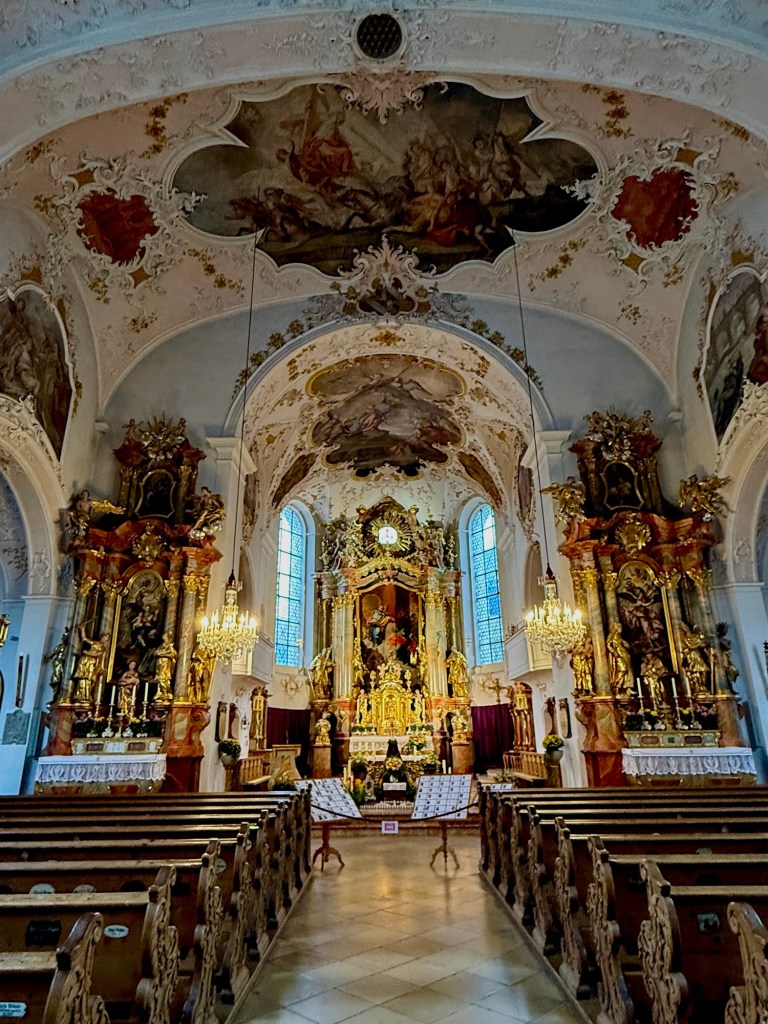
We also stopped in Ehrwald, where we visited a tiny church before continuing our drive.
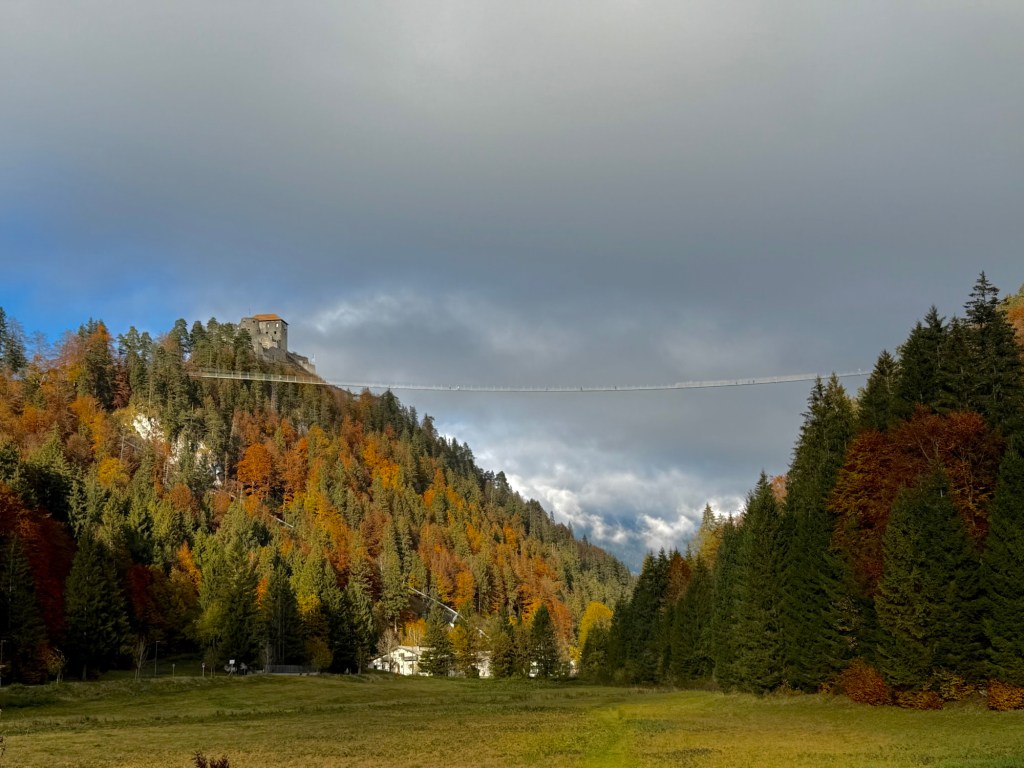
Our final sight was the Ehrenberg Castle ruins and Highline179, one of the world’s longest pedestrian suspension bridges, stretching 1,332 feet across the valley. We could see the castle ruins high on the hillside and the narrow bridge suspended between the mountains.
By the time we headed back to Garmisch-Partenkirchen, we’d had a day of monasteries, castles, forests, lakes, mountain views, and a few unexpected discoveries. Having the car for two days allowed us to explore places we might otherwise have missed, and the changing weather made each stop a little different from what we’d imagined.
A Few More Trails Before the Weather Turned
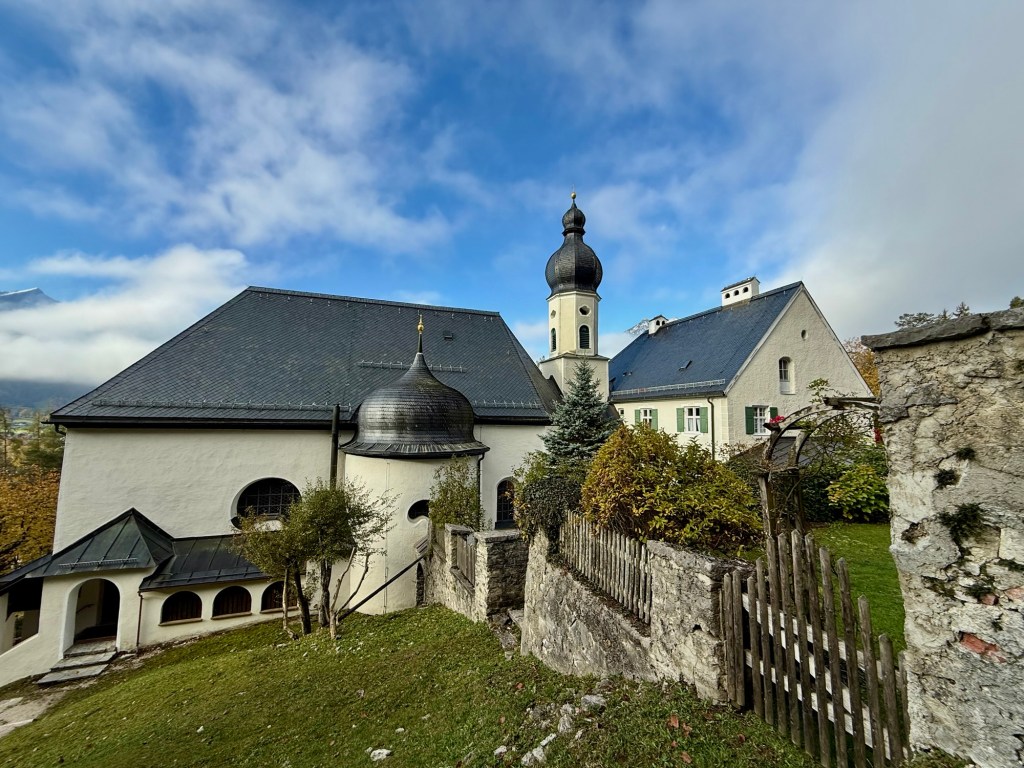
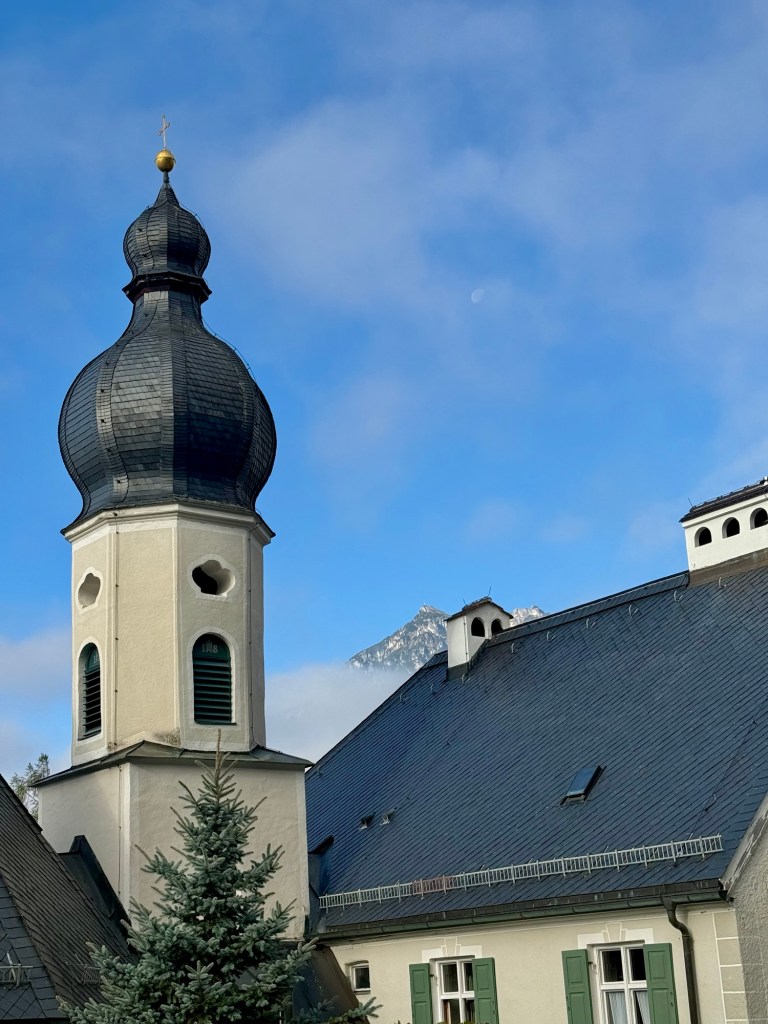
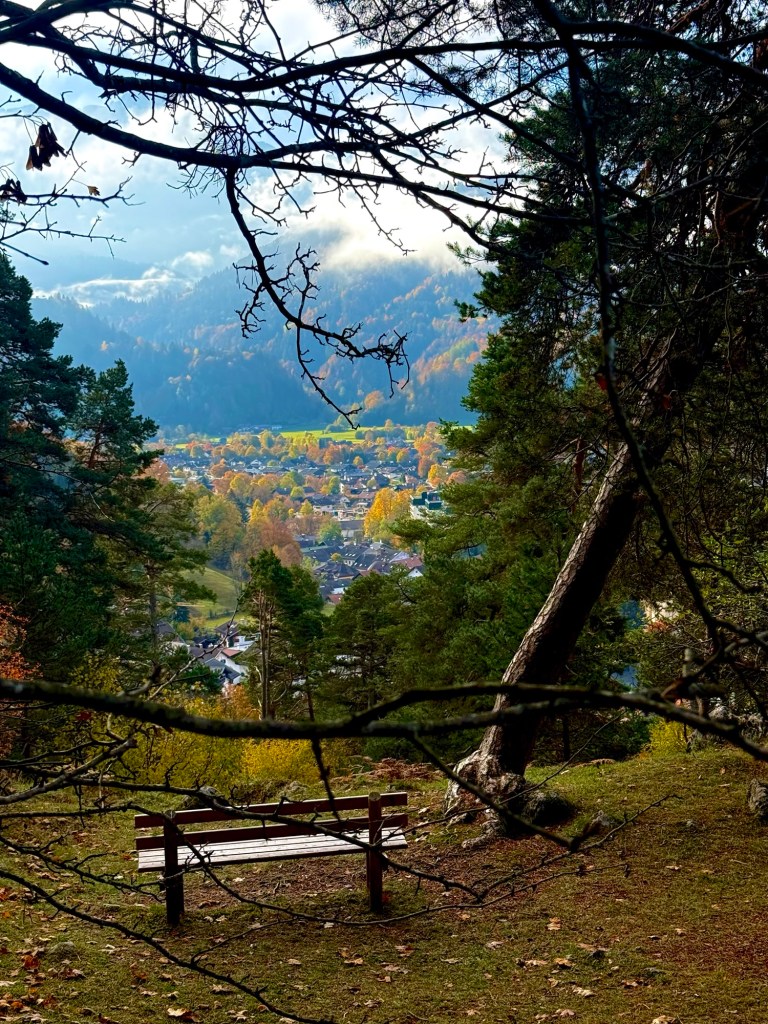
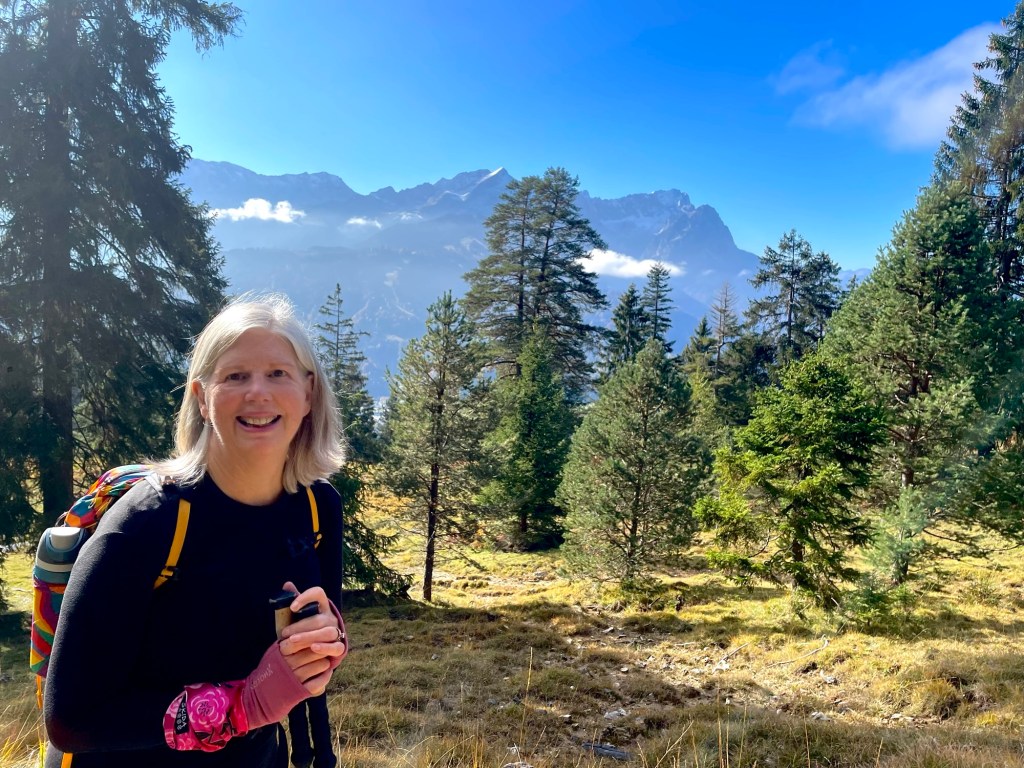
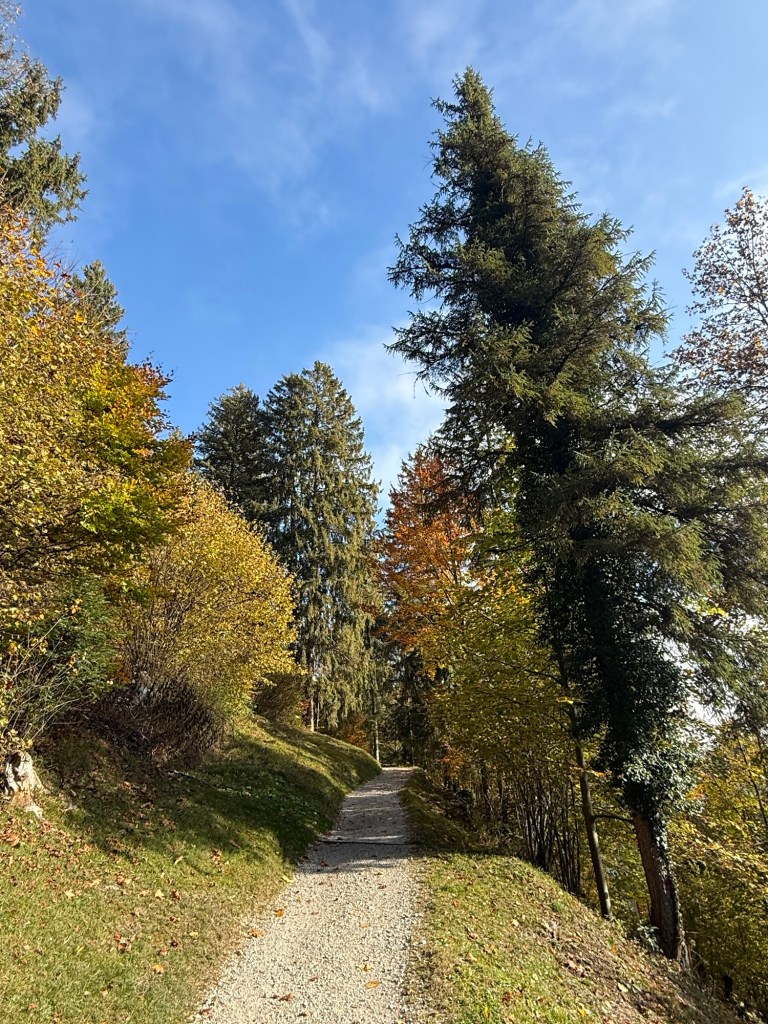
With a couple of sunny days remaining in Garmisch-Partenkirchen, we headed back into the mountains. We started along the Philosophenweg, or Philosophers’ Path, a wooded walkway above Partenkirchen leading toward St. Anton, a pilgrimage church perched on the hillside.
The Wank
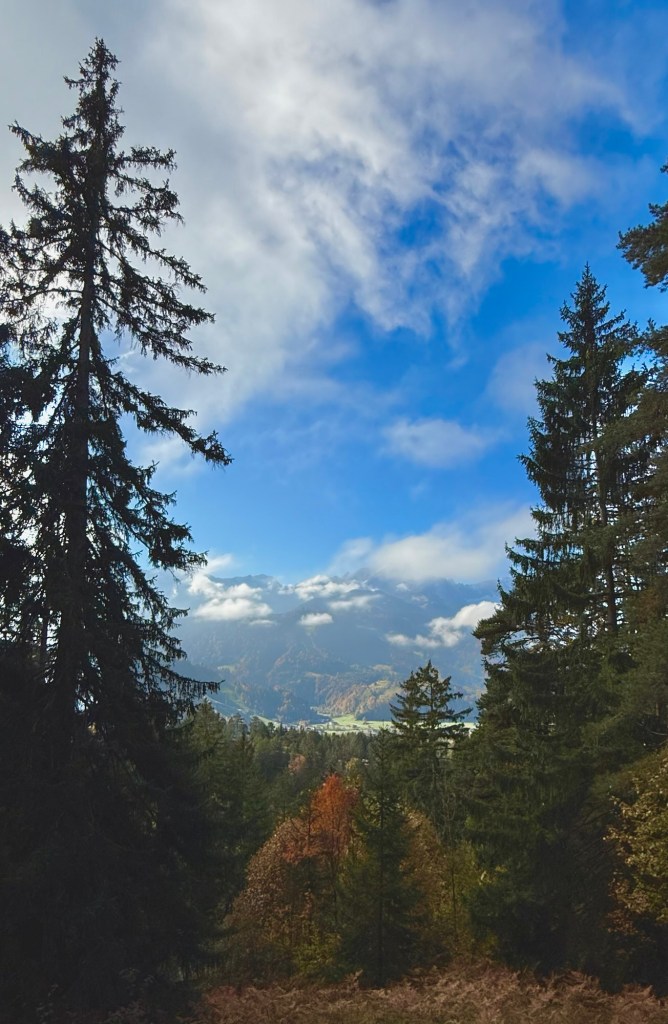
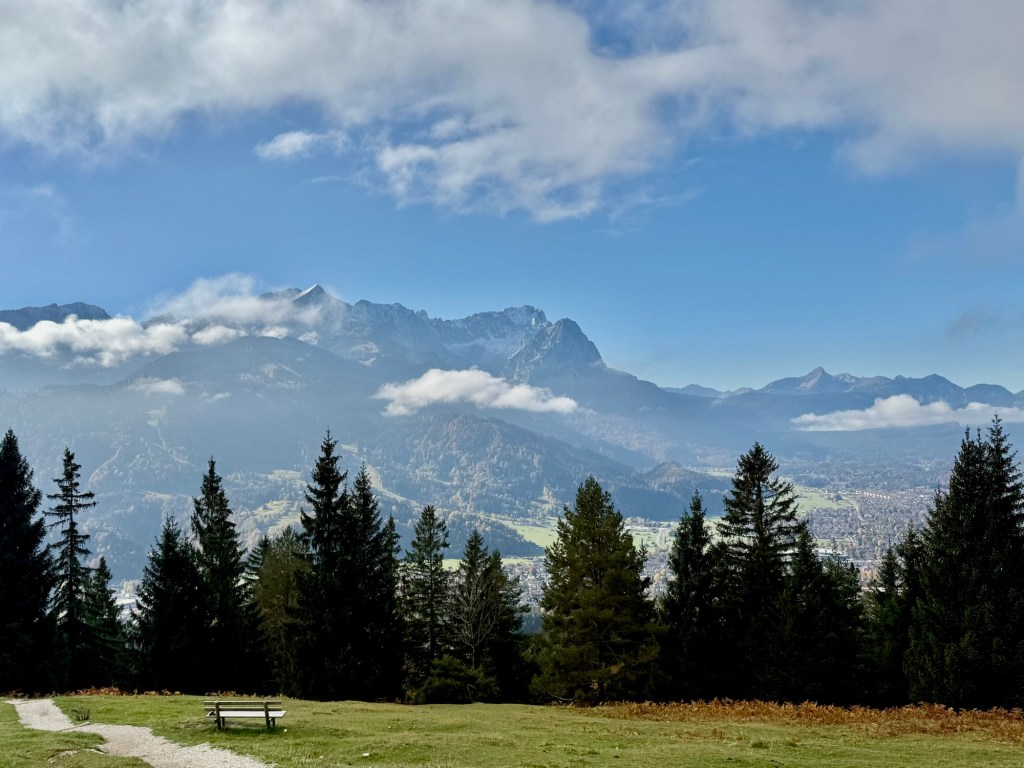
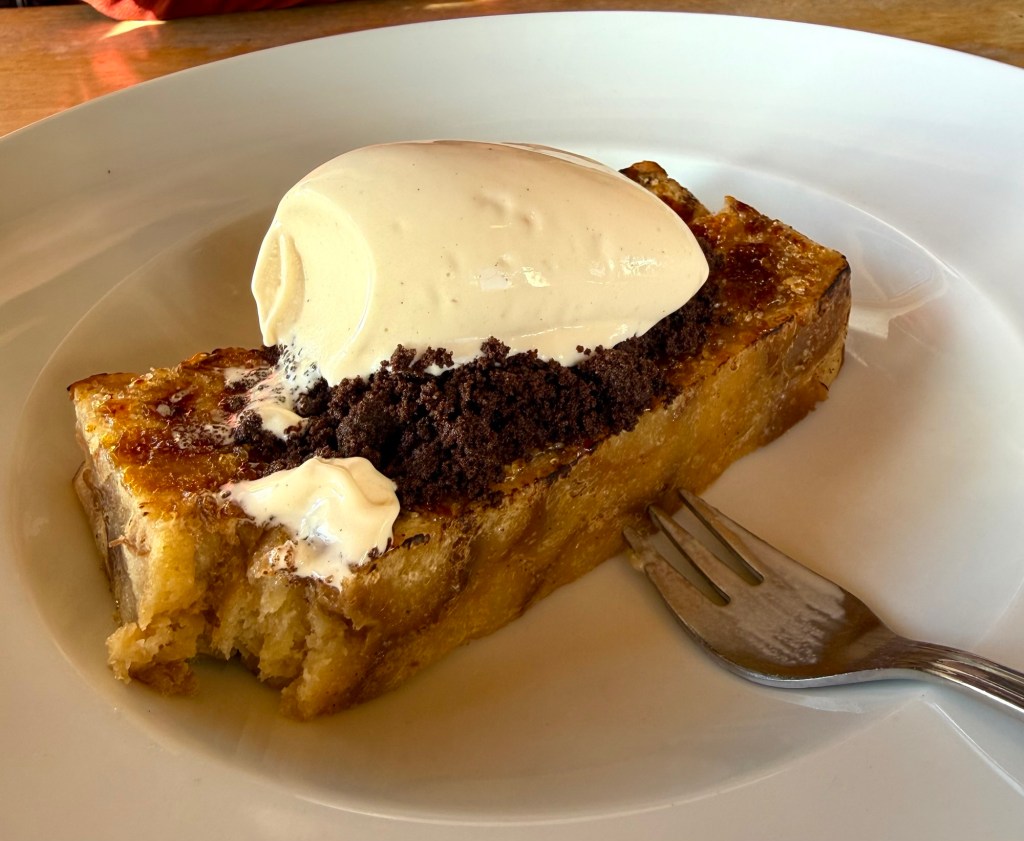
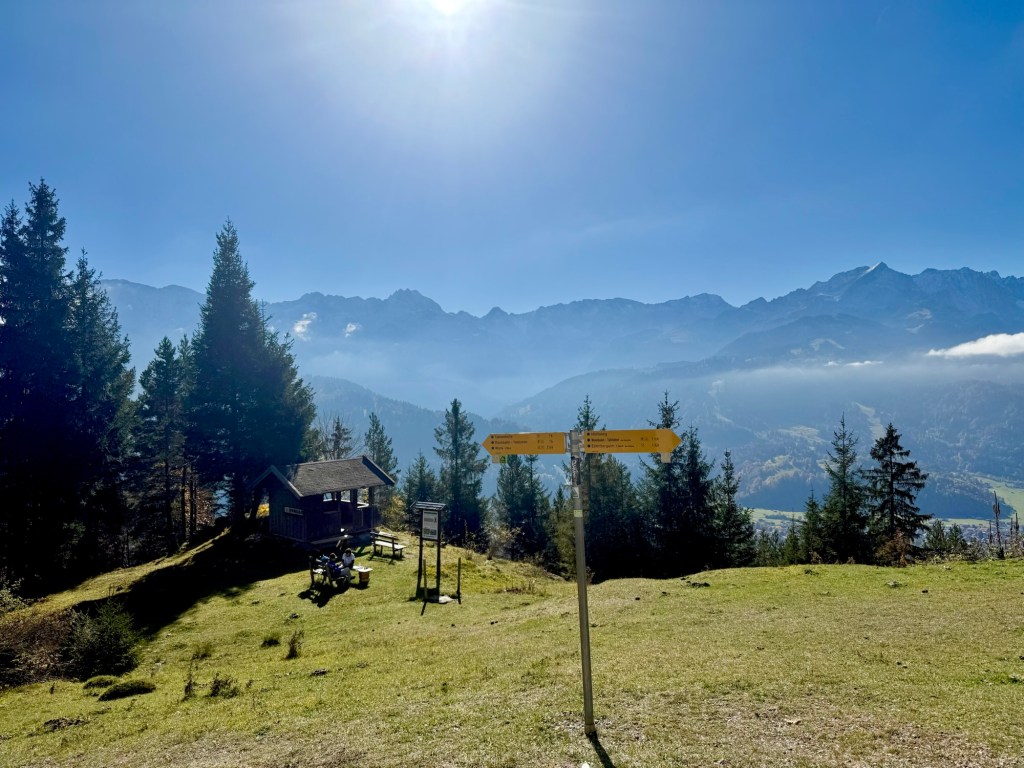
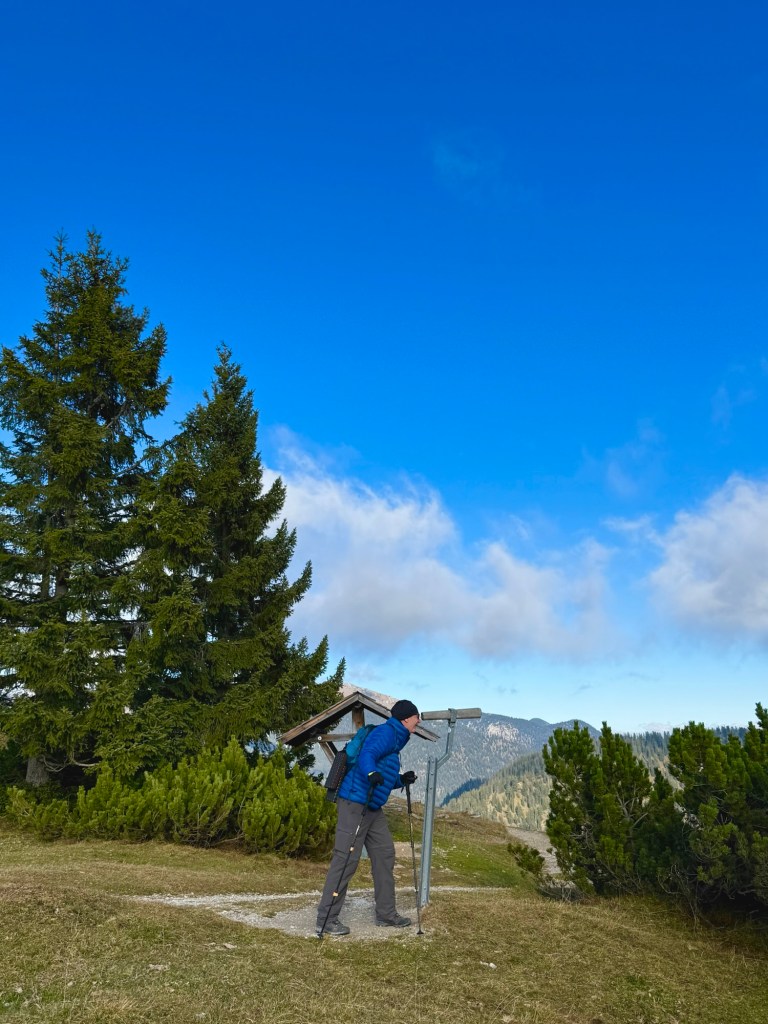
From there, we followed a rolling trail through the woods toward the middle station of the Wankbahn and took the cable car to the summit of Wank. We admired the panorama of the Wetterstein mountains and Zugspitze while enjoying our first Bavarian bread pudding made with pretzels!
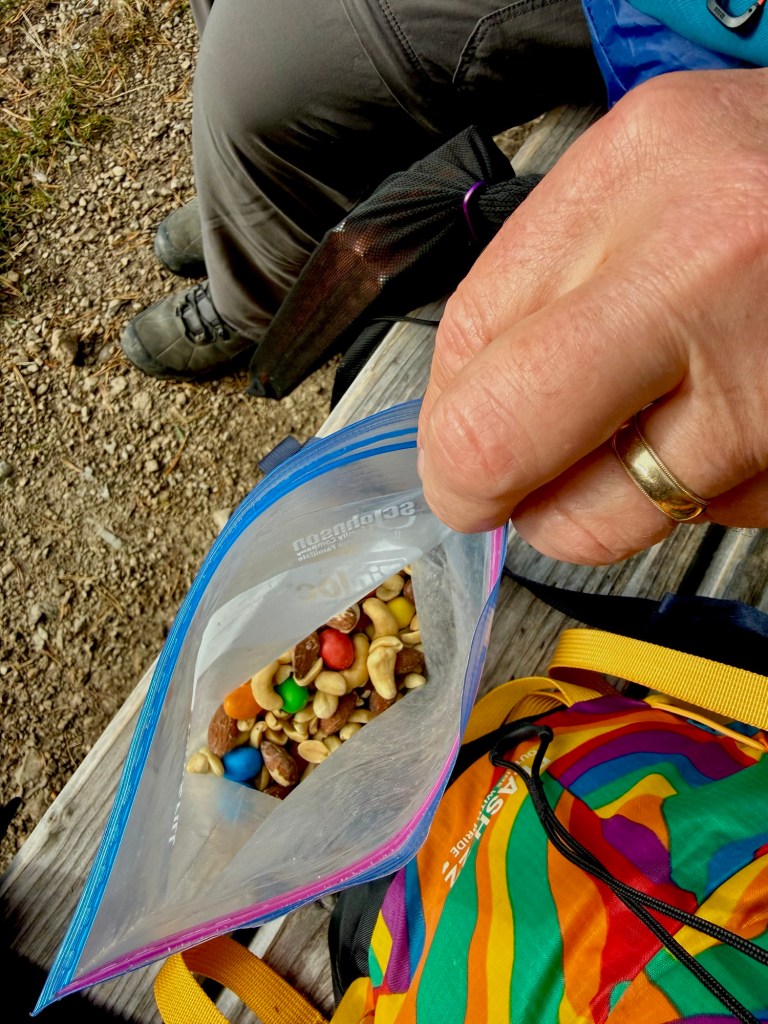
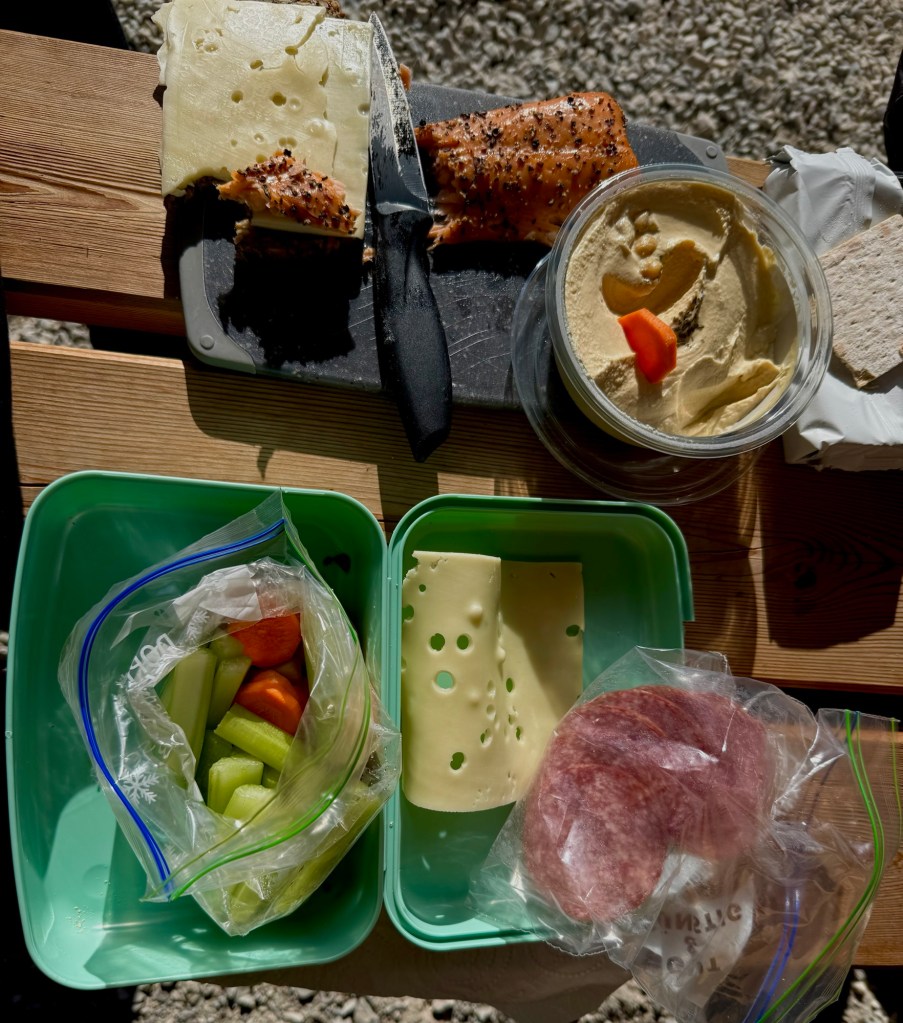
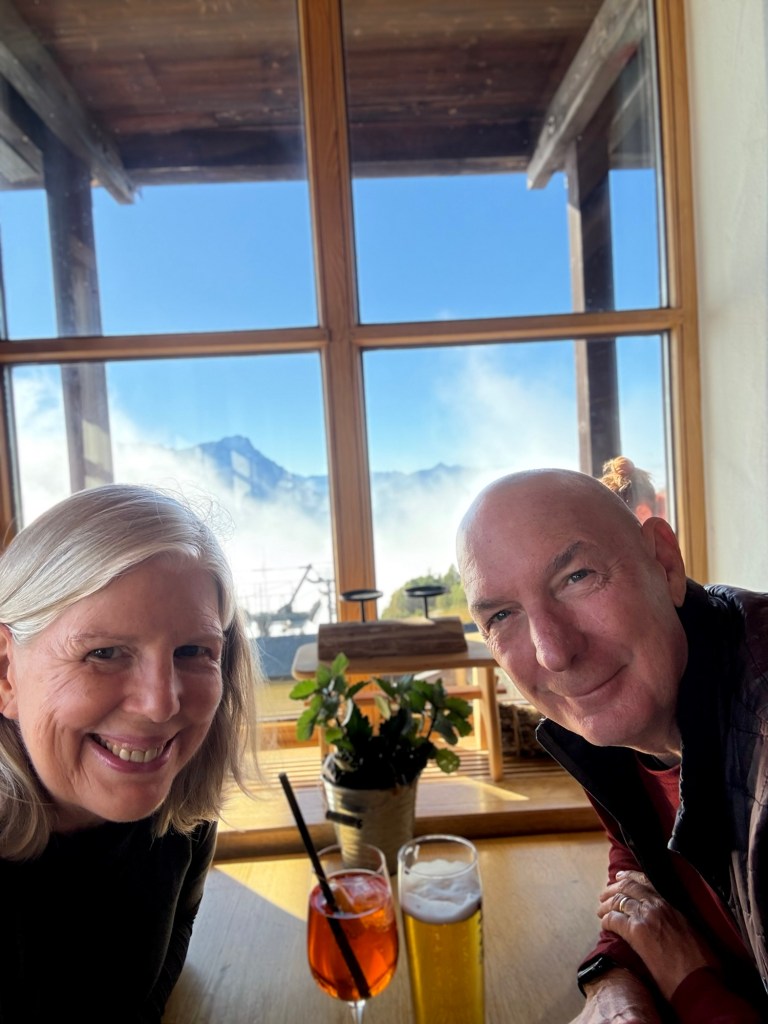
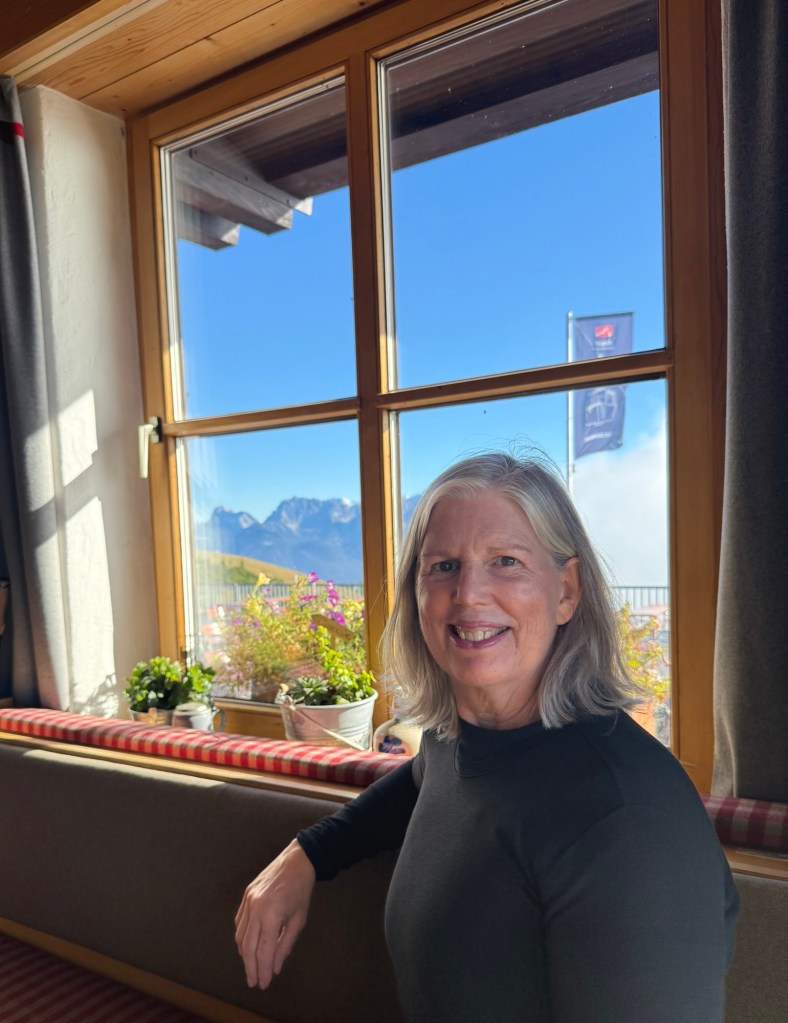
One of our favorite things about hiking in Bavaria has been stopping at the mountain Almen, traditional Alpine huts where hikers can enjoy a beer, coffee, or something homemade. Sitting by a window with a view after a walk, with a little treat and nowhere to hurry, is hard to beat. So is Pete’s homemade trail mix, which has accompanied us on every hike!
One Last Look at Bavaria: Murnau, Mittenwald, and Oberammergau
We stayed in Garmisch-Partenkirchen for more than a week, so our adventures continued with visits to the nearby villages of Murnau, Mittenwald, and Oberammergau. While our priority is almost always being out on the trails, we’re glad we made time to explore these towns, each with its own history, traditions, and character.
Murnau: Art, Gardens, and a Little History
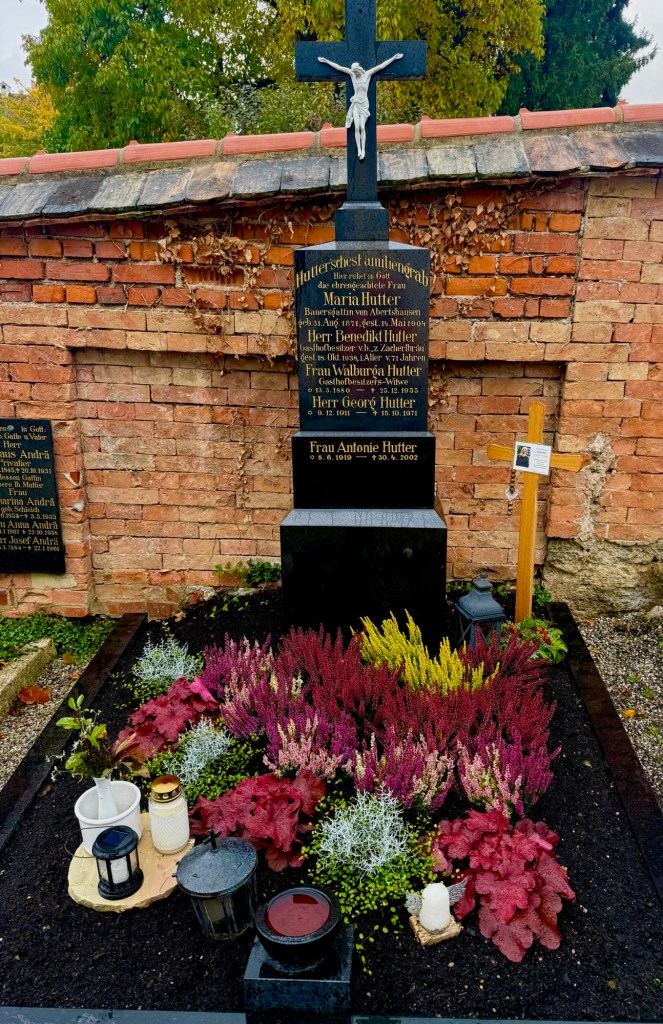
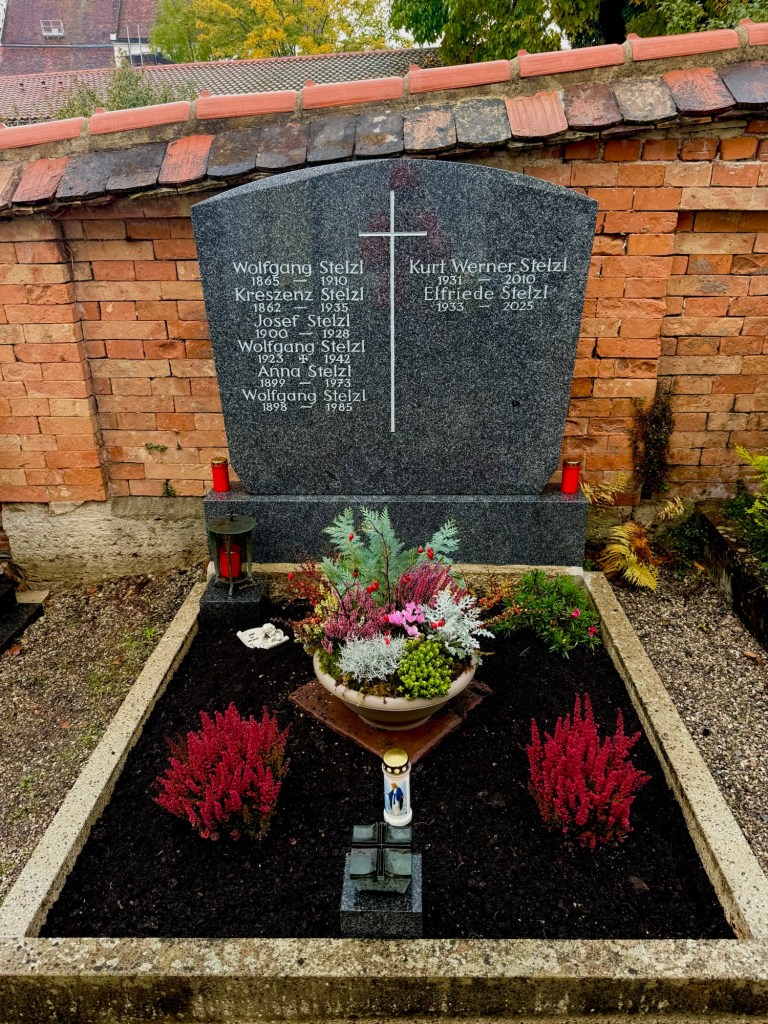
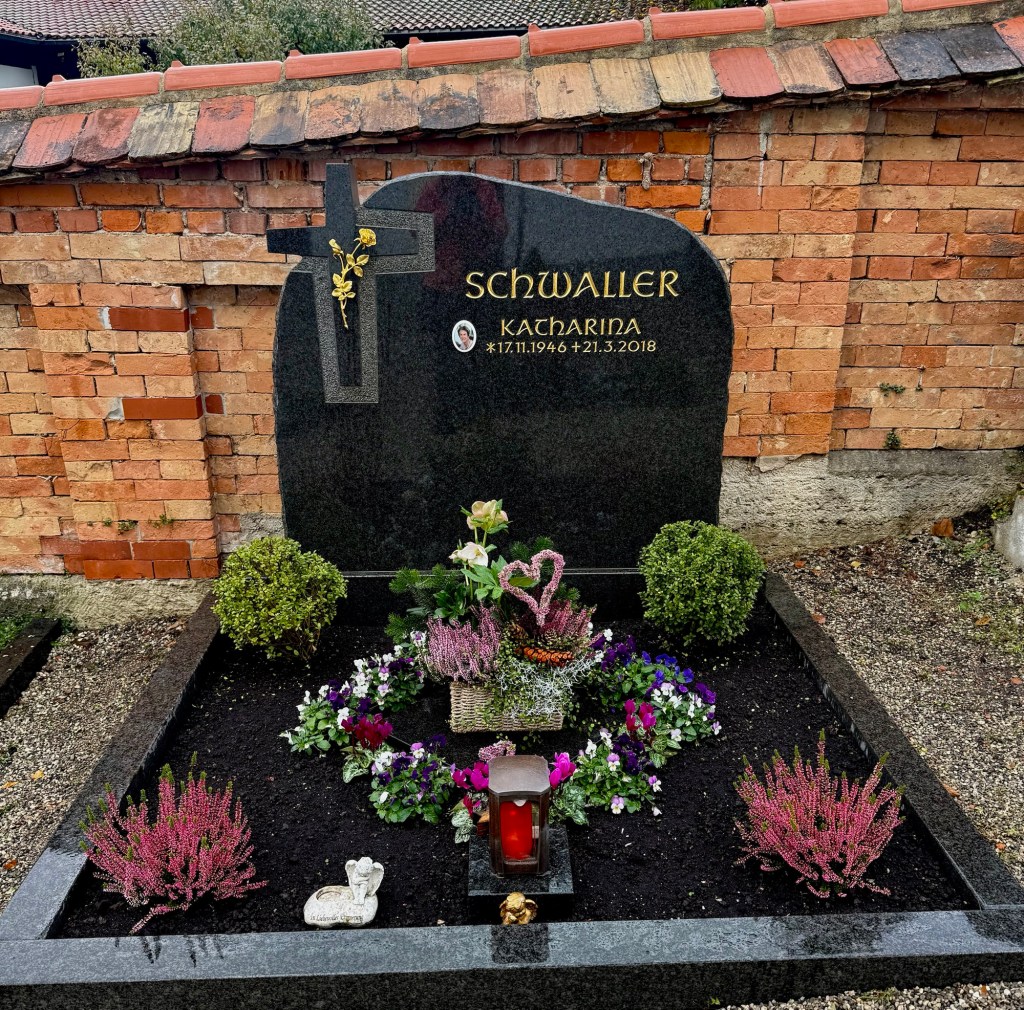
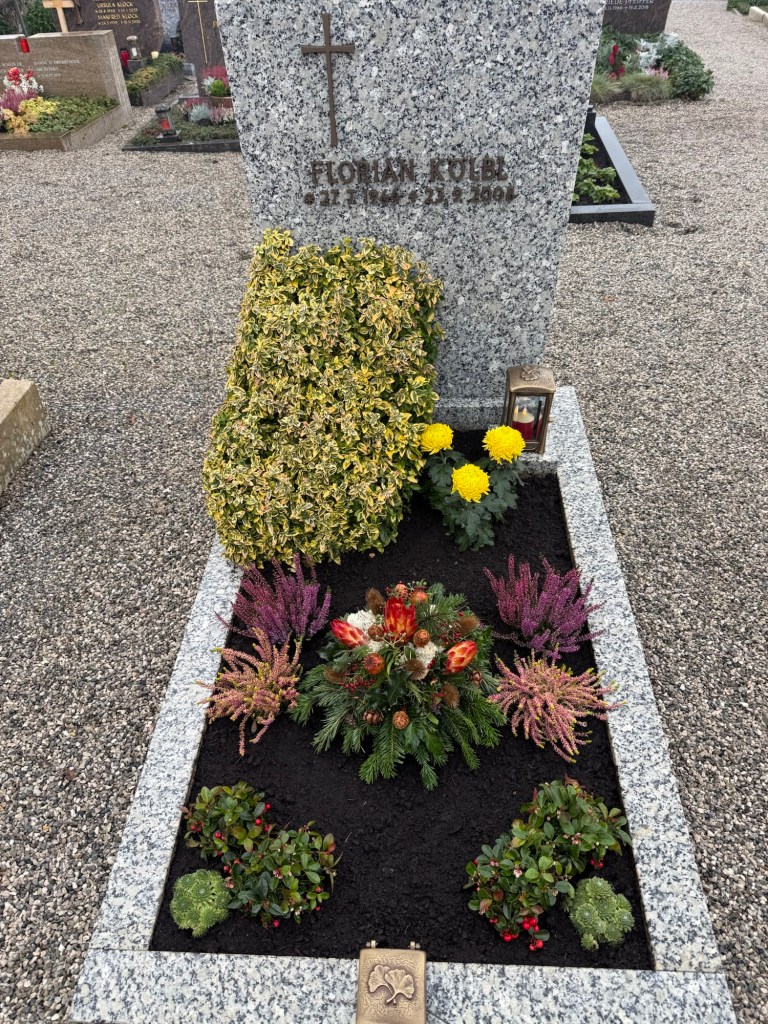
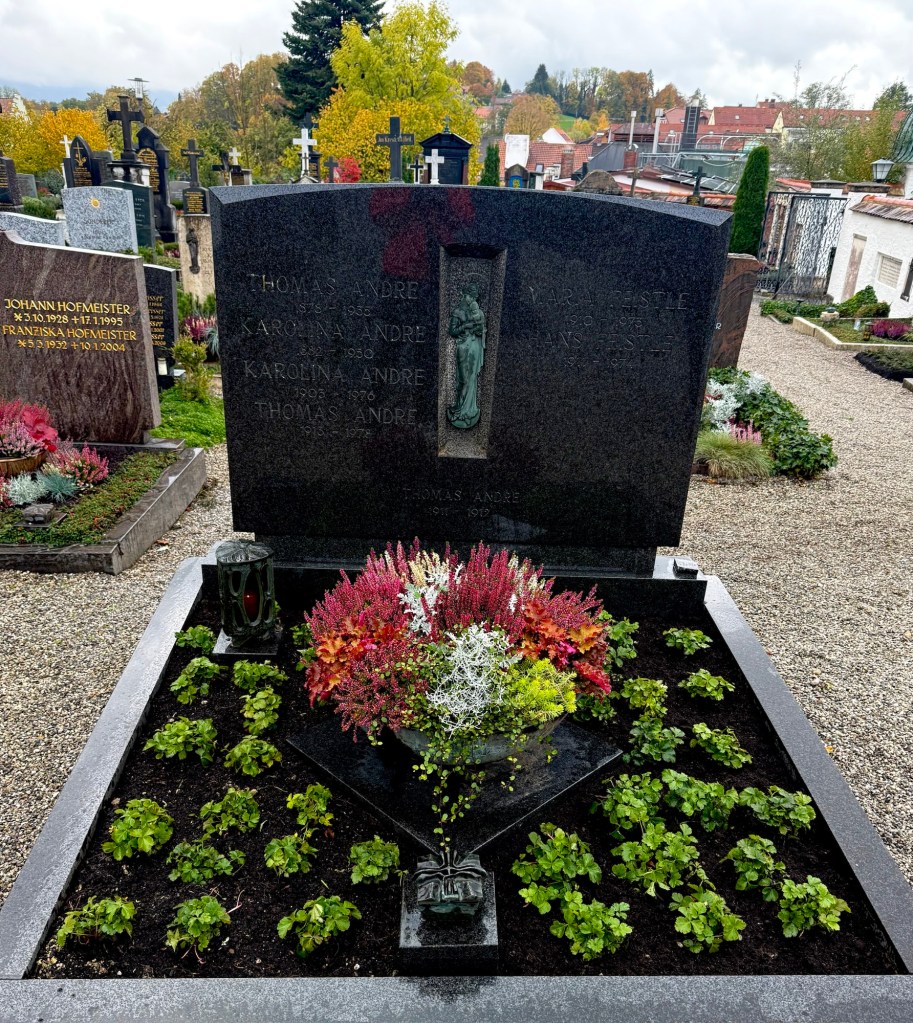
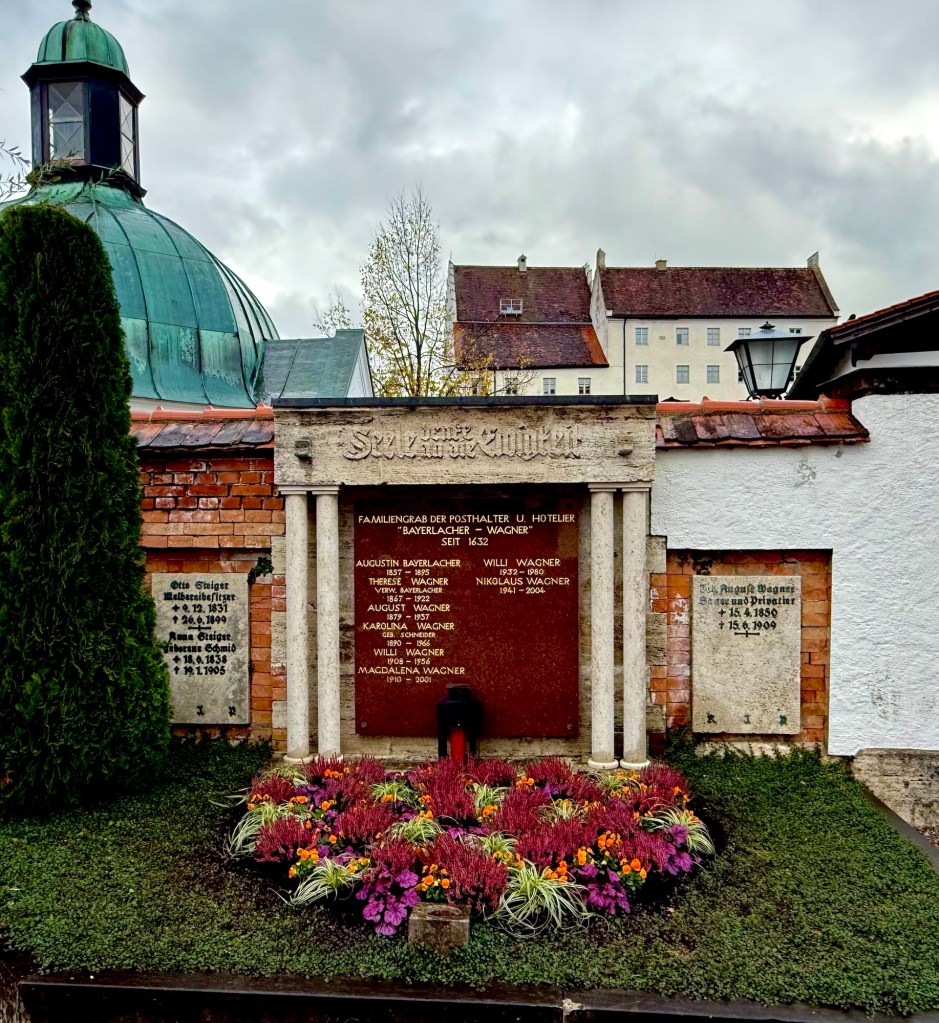
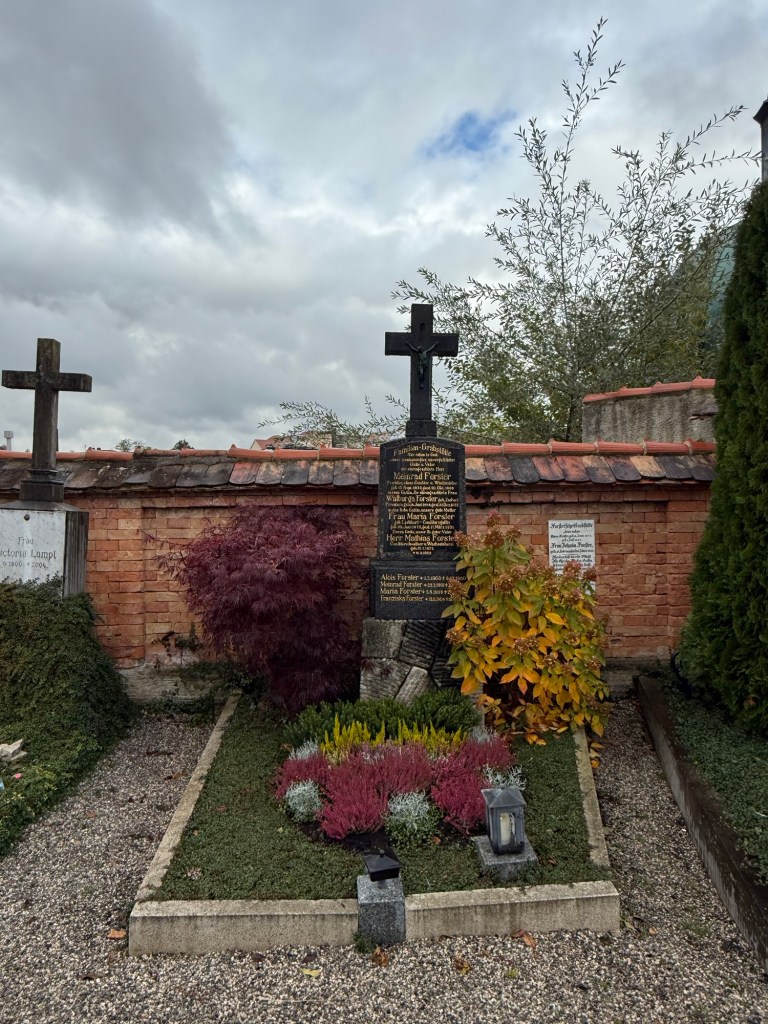
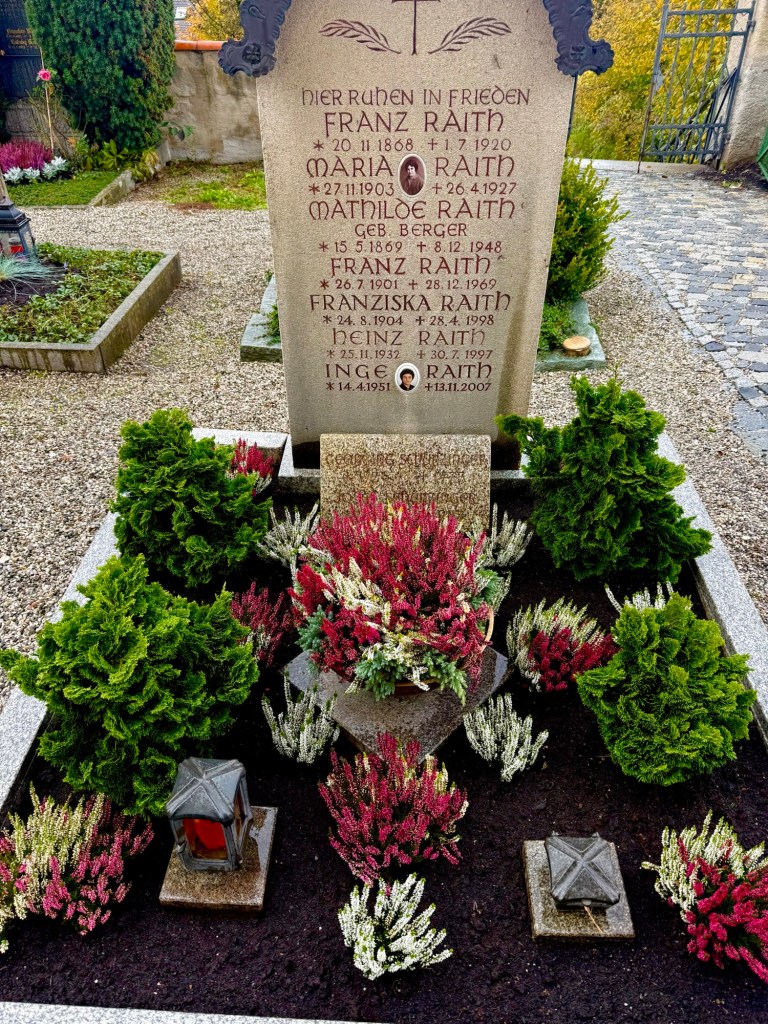
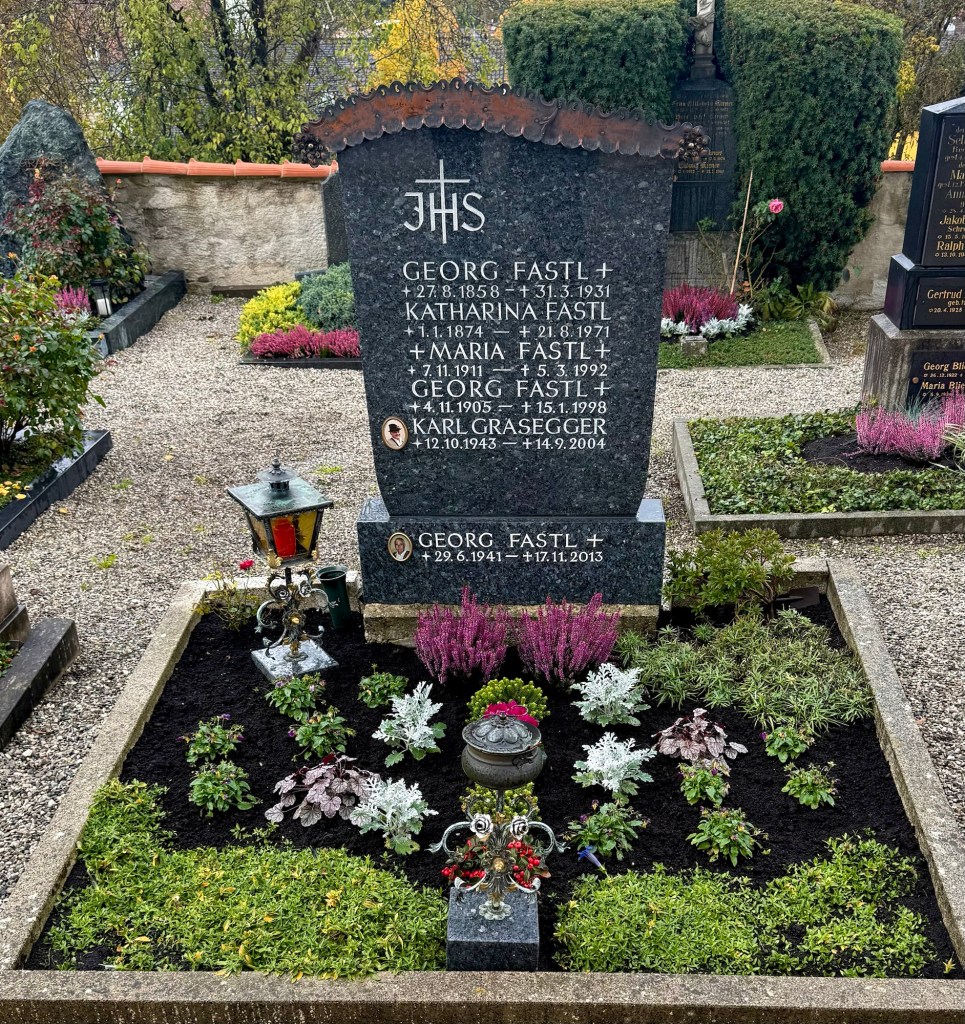
We arrived in Murnau on a rainy morning and headed uphill toward the Schlossmuseum, an art and local history museum housed in a former medieval castle. We took a little longer than expected to get there because we wandered through the churchyard cemetery beside St. Nikolaus Church.
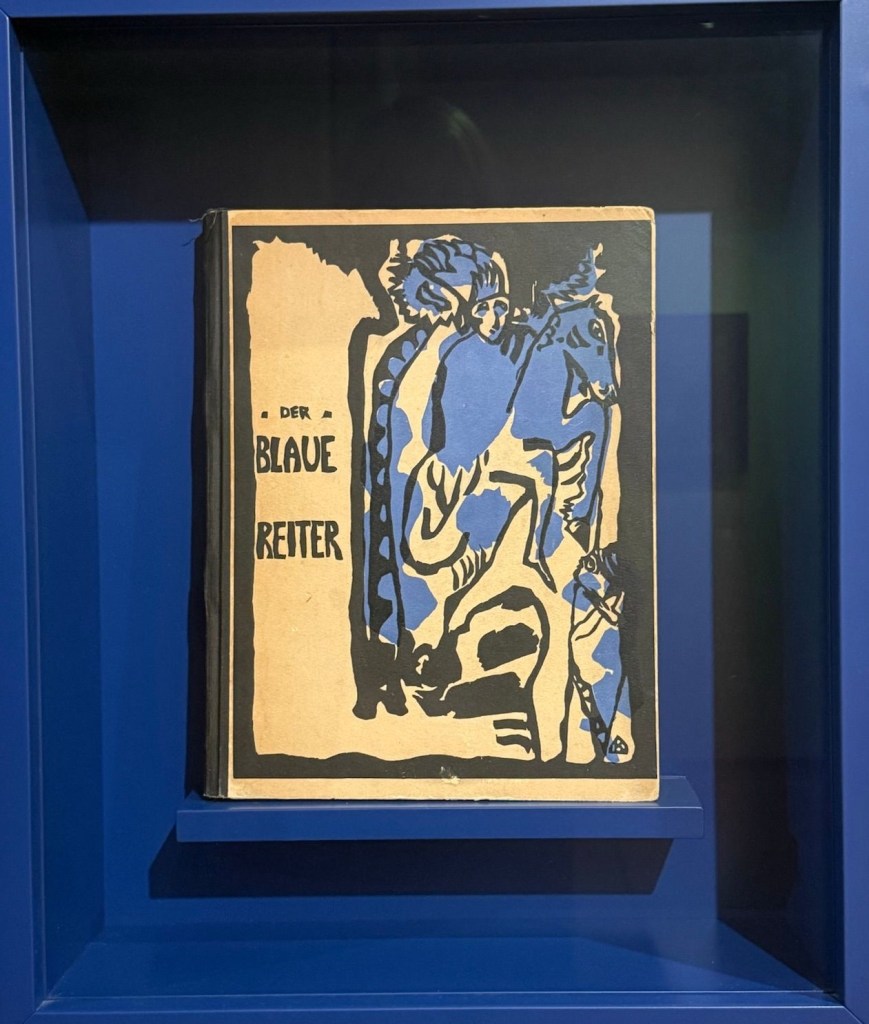
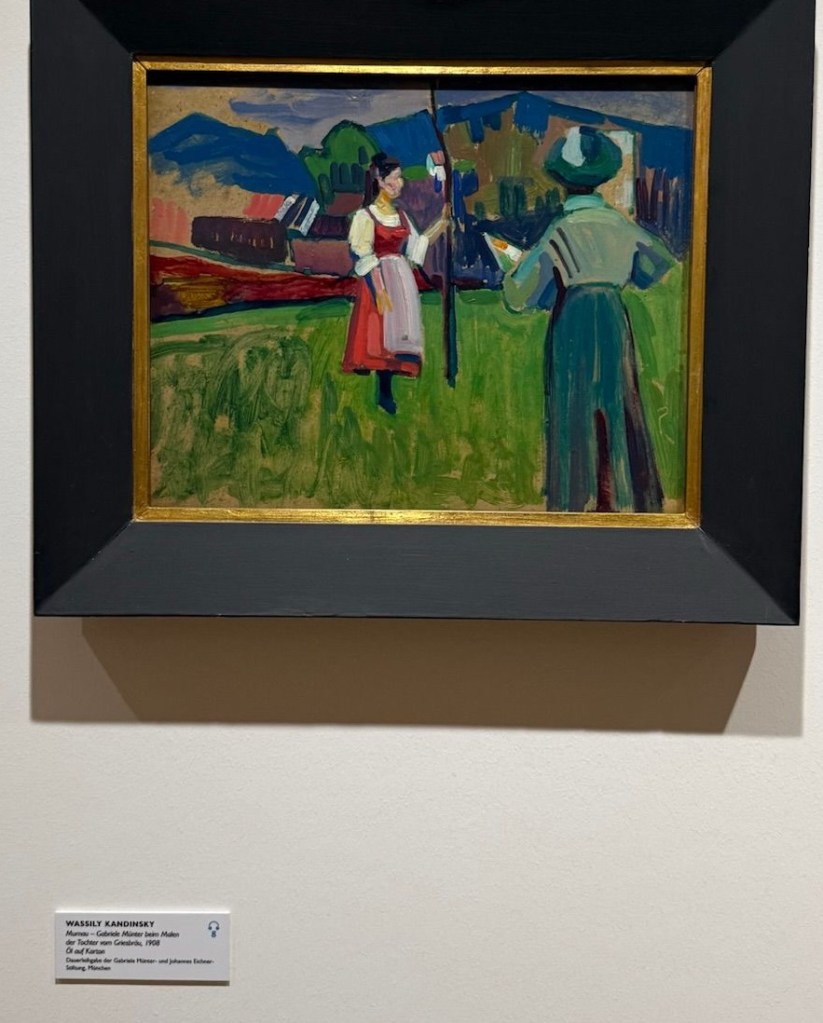
The Schlossmuseum introduced us to the artists who made Murnau an important center of modern art in the early 20th century.
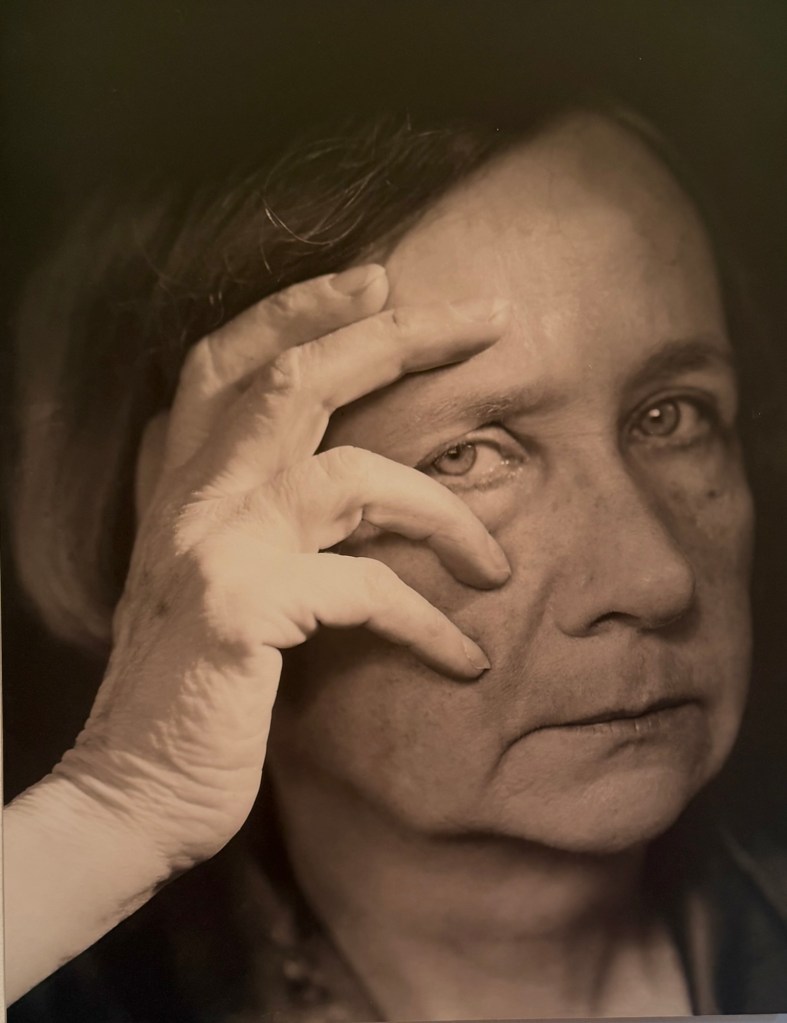
We then walked over to the Münter House, where Münter and Kandinsky lived and worked together between 1909 and 1914.
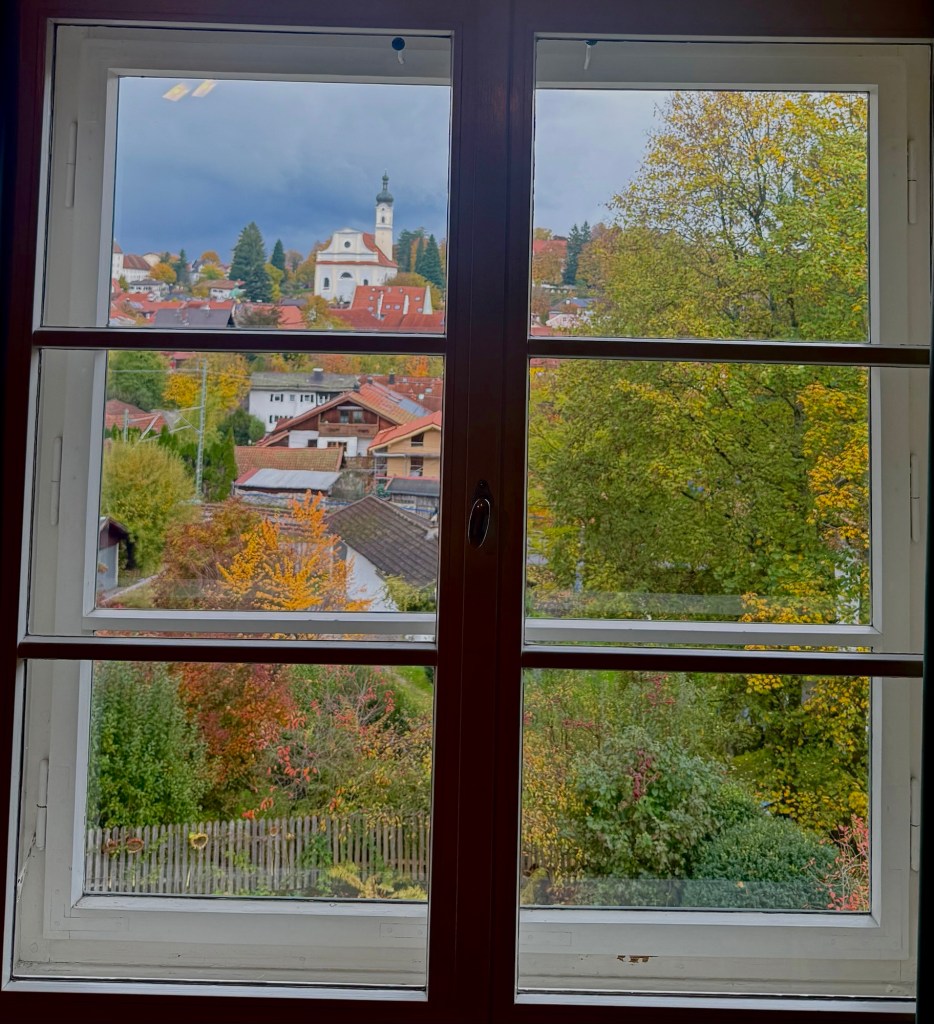
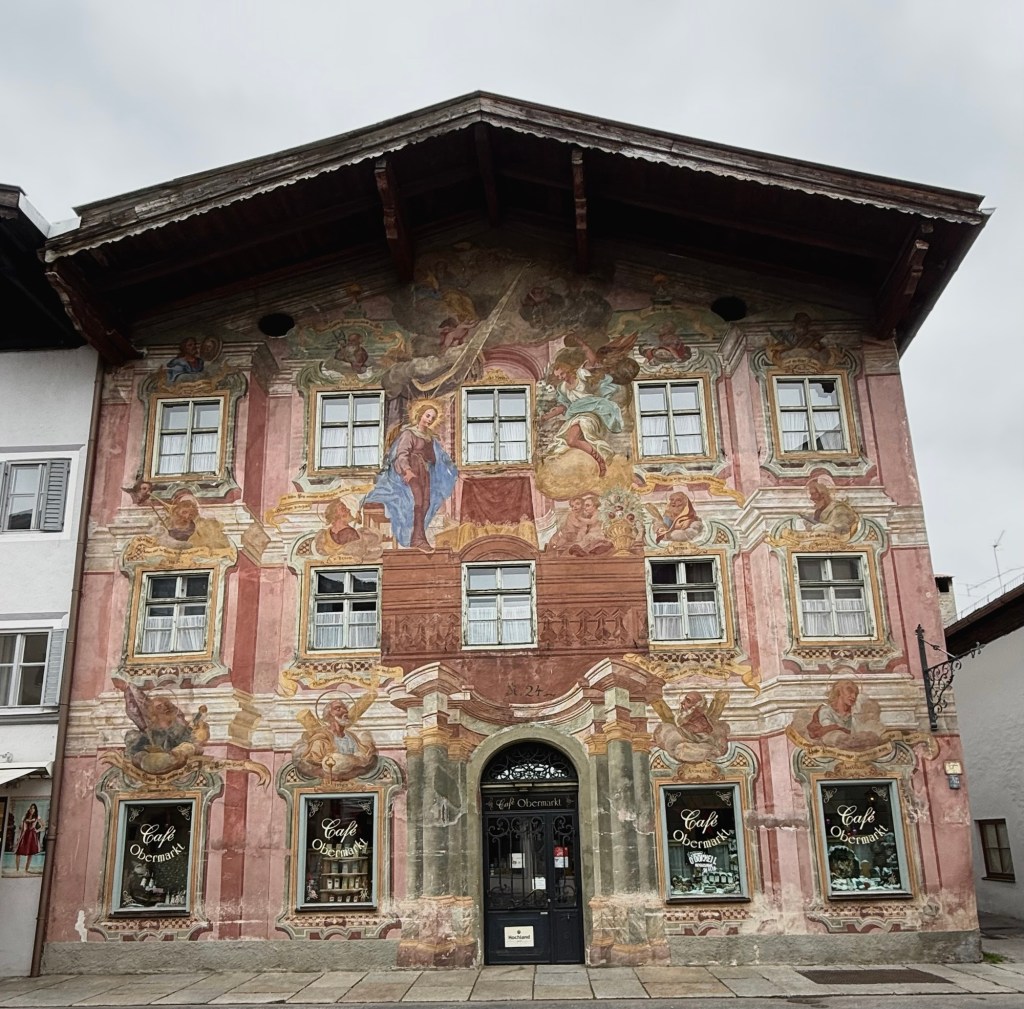
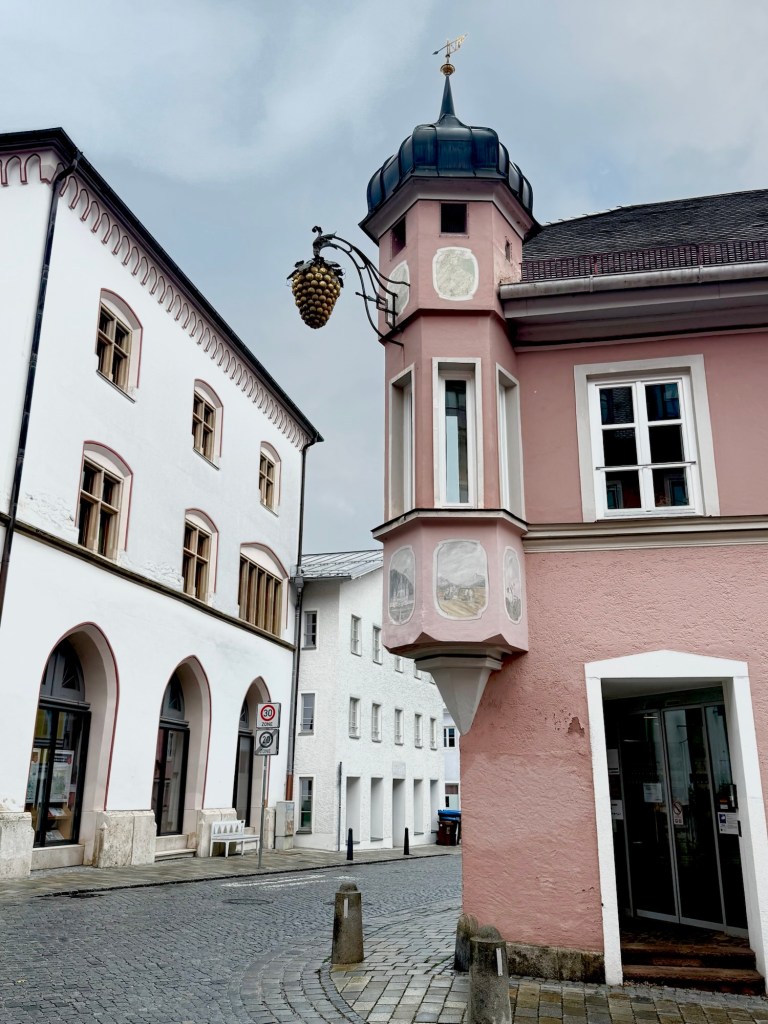
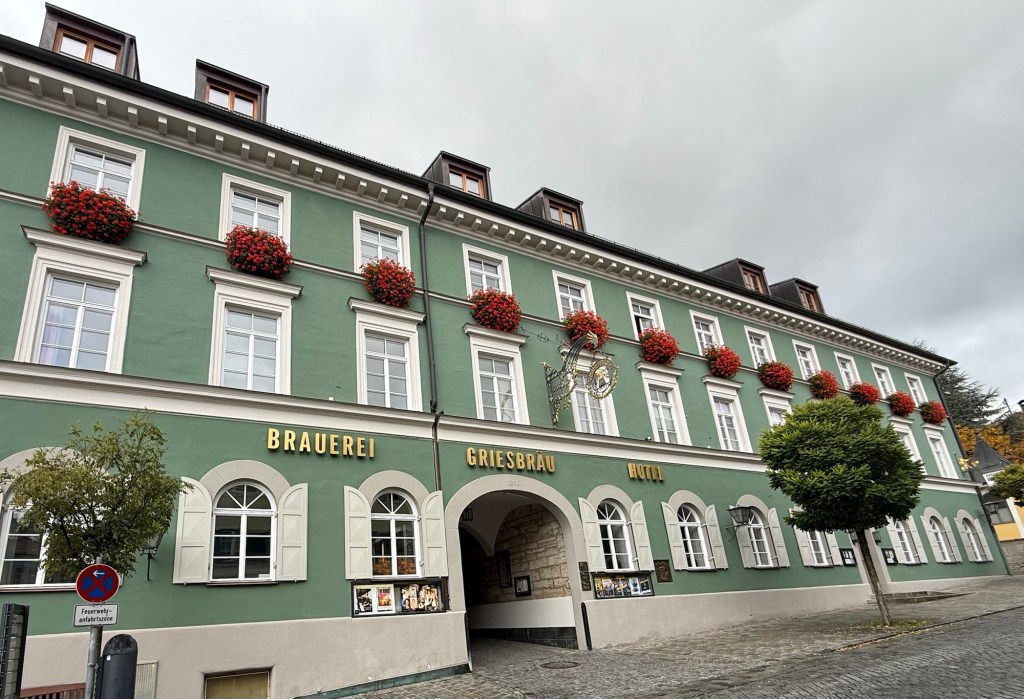
Murnau is an elegant town, particularly along Obermarkt, its historic main street. The storefronts were beautifully painted, the shop windows with merchandise, and flowers still spilled over the window boxes despite the chilly weather.
Oberammergau: Woodcarving and a Family Story
Oberammergau was our first stop. The town is famous for its Passion Play, first performed in 1634 following a vow made by villagers during an outbreak of plague. The production has continued for nearly four centuries, generally taking place every ten years and involving most of the community
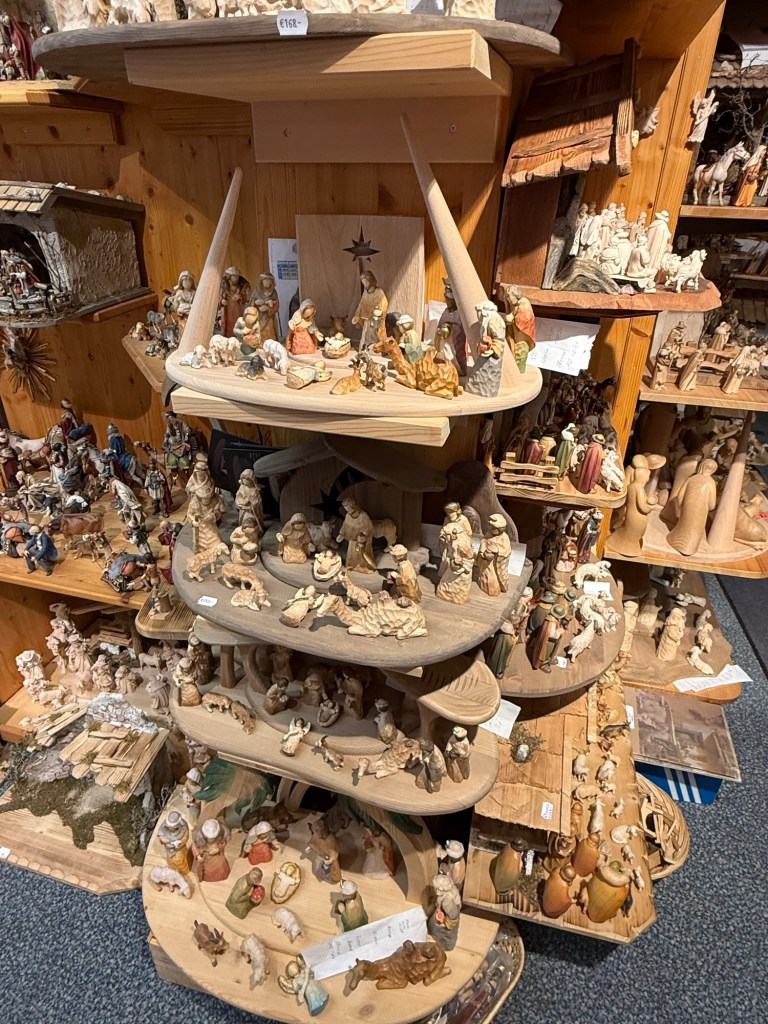
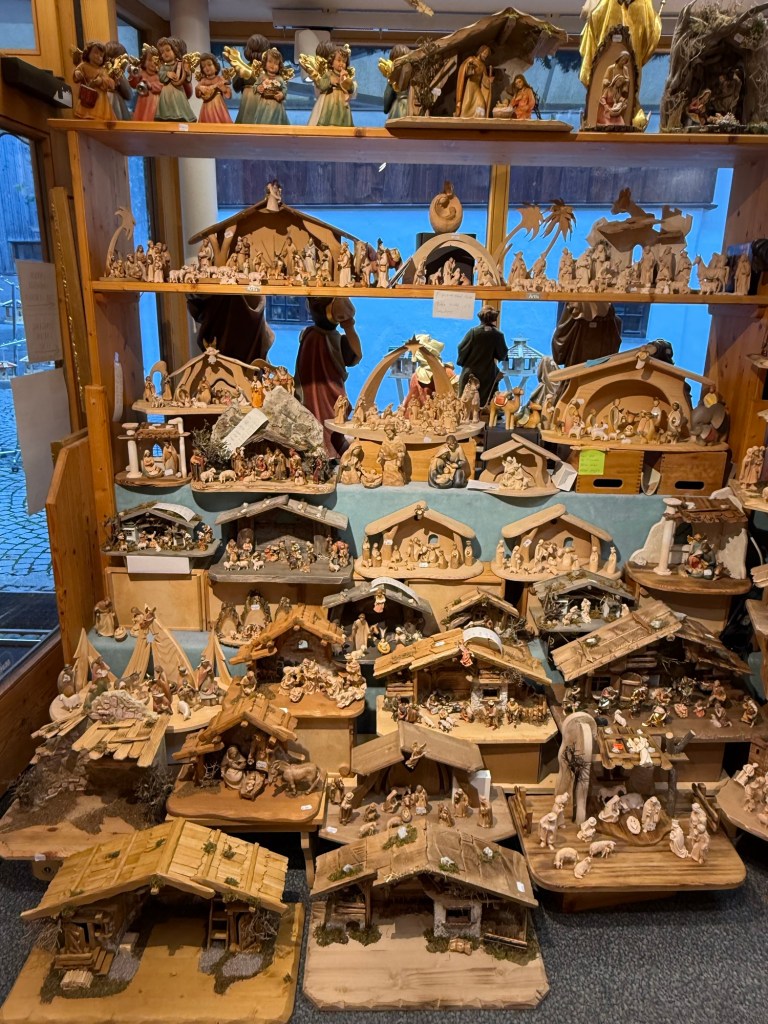
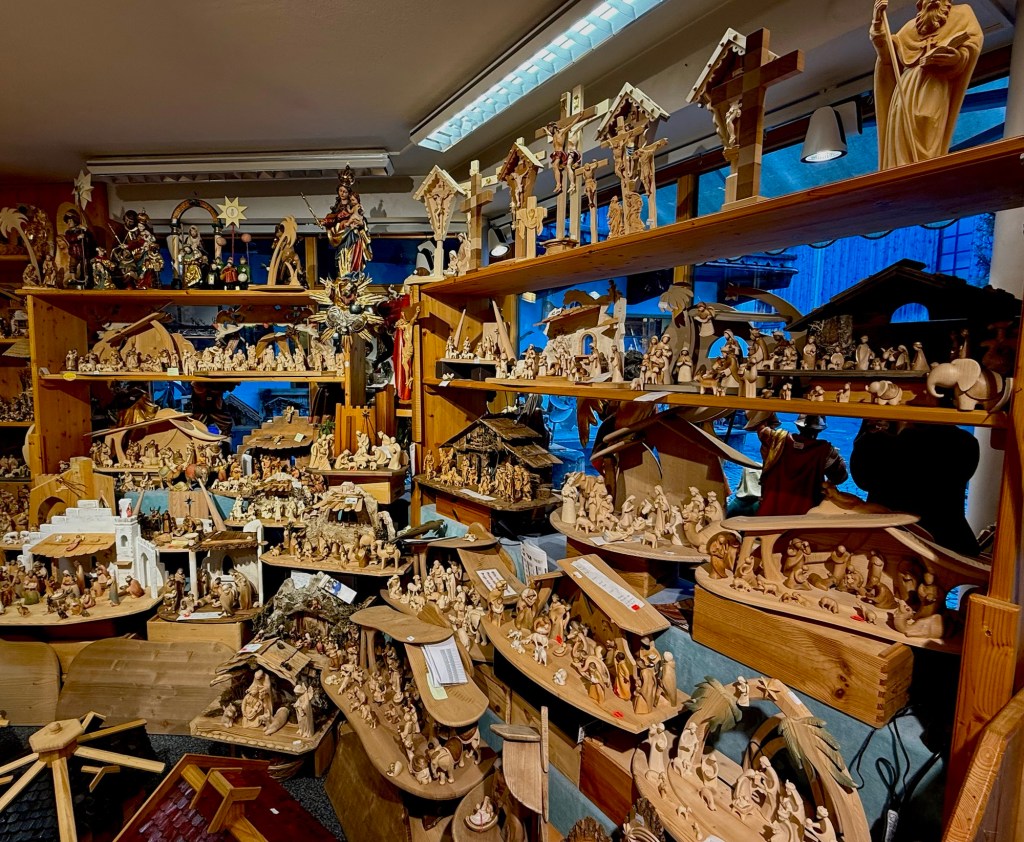
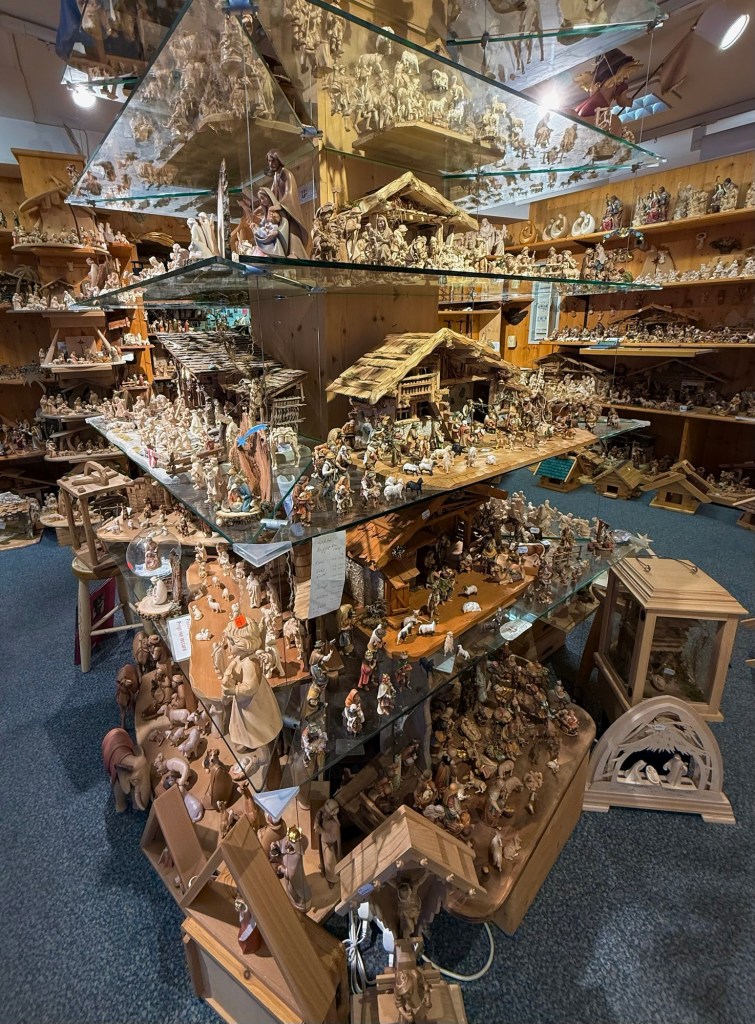
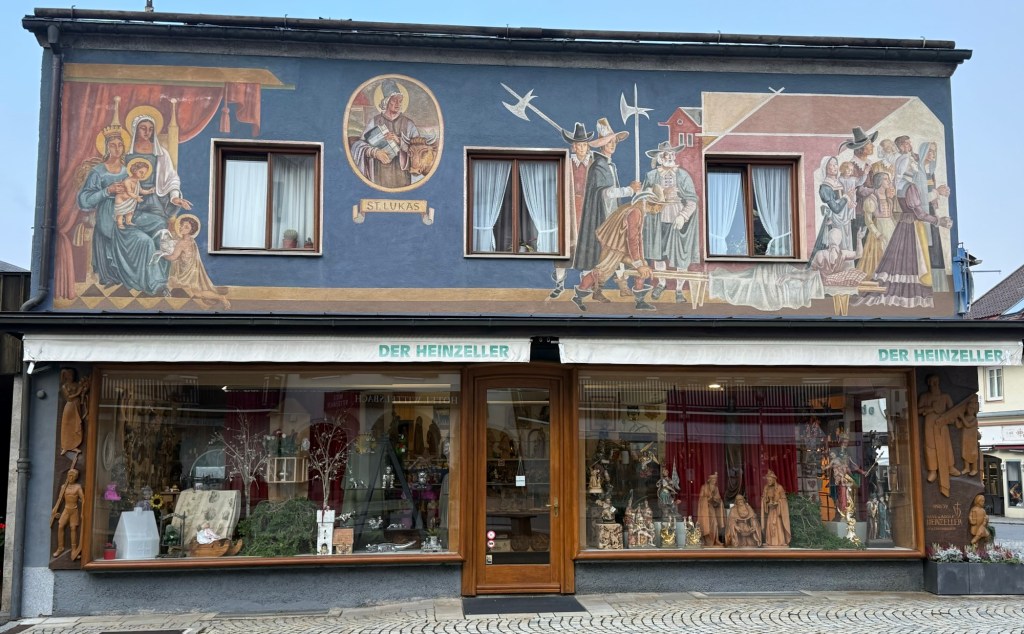
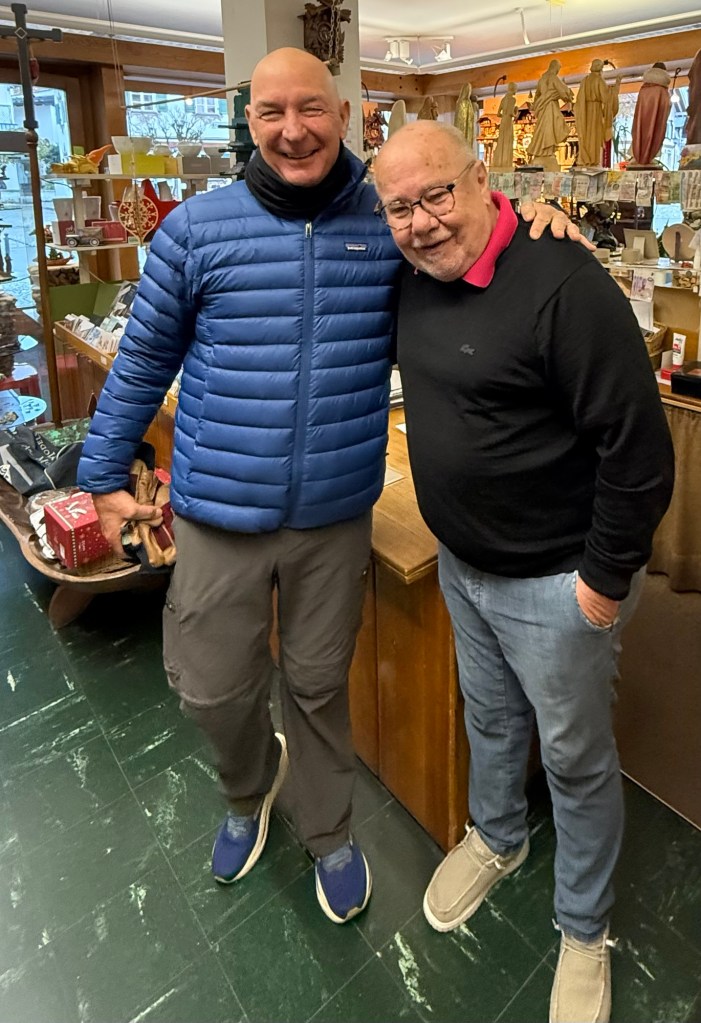
He told us that his grandfather had worked on wooden prosthetic arms and legs for wounded soldiers during World War II, using designs developed by the German surgeon Ferdinand Sauerbruch. After the war, Hans returned to Oberammergau and established his own woodcarving business in 1945. His son Adolf joined him in 1949, and the shop is now in its third generation.
The family’s carvings have traveled far beyond Bavaria, including a nativity scene made for Westminster Abbey in London.
The building itself has an equally interesting story. Hans Heinzeller commissioned the striking façade painting, designed around Oberammergau’s Passion Play tradition, from the artist Karl Gries. Johannes told us that the painter was very selective about his commissions and preferred to work from sunrise until noon to avoid comments from tourists watching him work!
We had to laugh at that detail, especially as tourists who had been stopping constantly to photograph the painted buildings.
It was fun to hear the history directly from someone whose family had helped shape the town’s traditions.
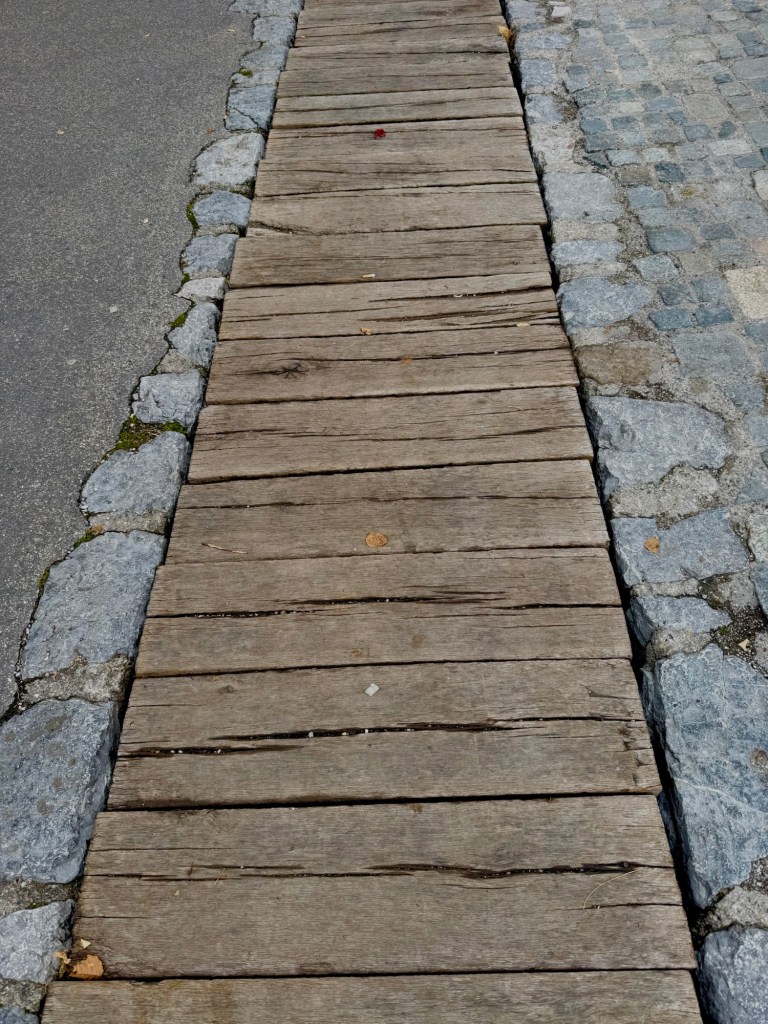
Mittenwald: Violins, Painted Houses, and a Curious Wooden Walkway
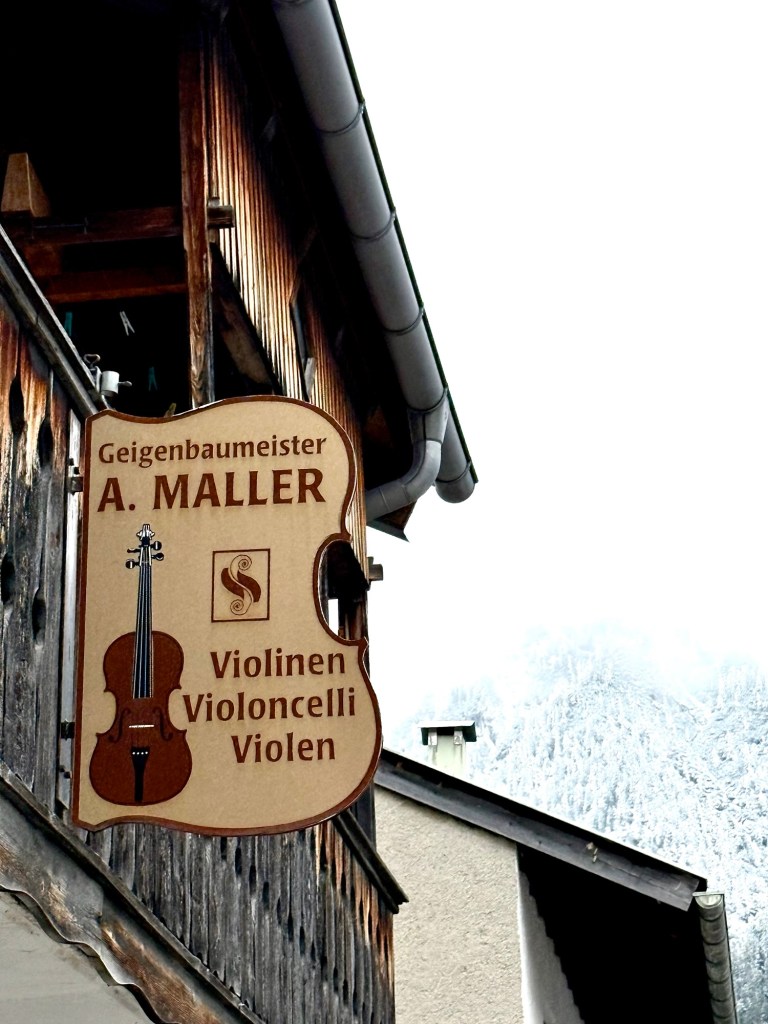
Our afternoon outing took us to Mittenwald, a town near the Austrian border known for its centuries-old violin-making tradition.
Mittenwald’s main street is lined with buildings decorated in Lüftlmalerei, the elaborate painted façades we’d come to admire throughout Bavaria. Religious scenes, architectural illusions, and decorative flourishes turn ordinary buildings into works of art.