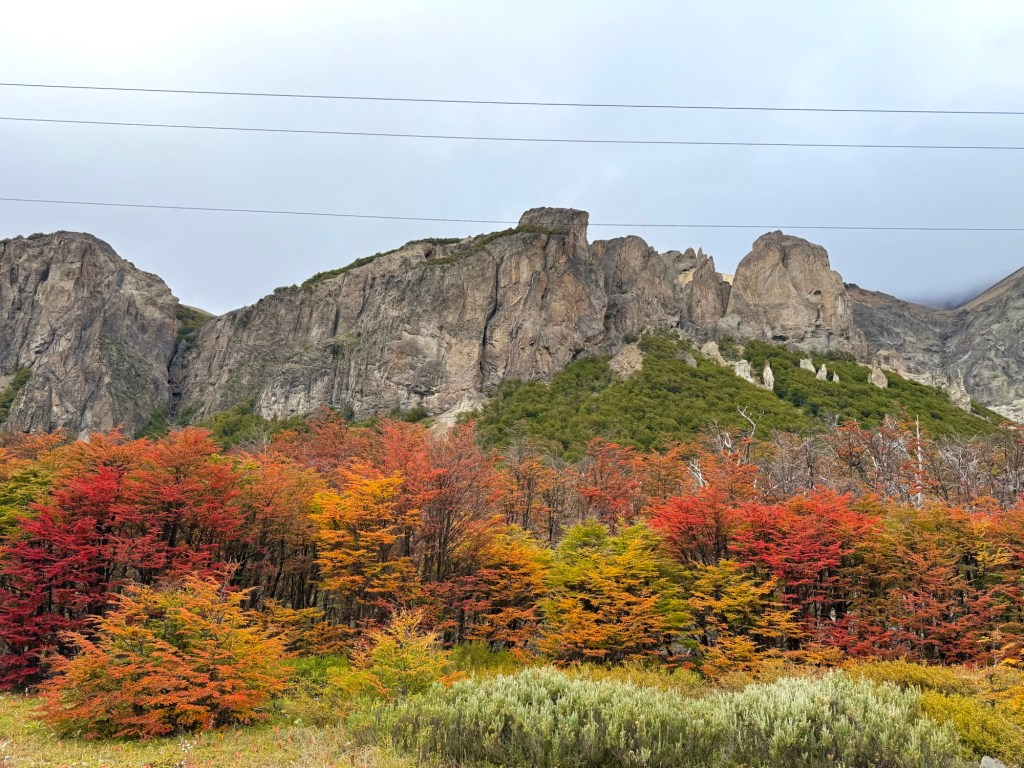
Our final week heading back north on the Carretera Austral began a day early thanks to a great weather forecast for Tuesday. We had skipped Futaleufú on the way south due to heavy rain, but when we saw the forecast for a full day of sun, we decided to get there in time for a rafting trip. Higher elevations showed some early fall colors before we hit rain on our way there, but it didn’t matter—we had a good day ahead.
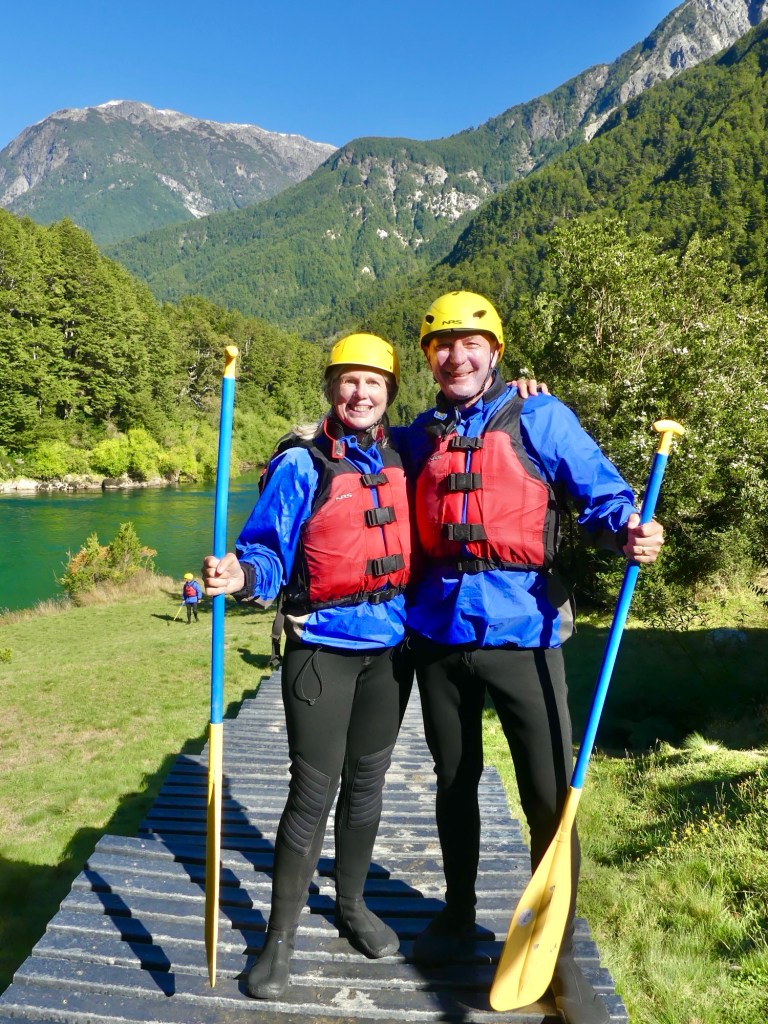
The Futaleufú River is one of the top three whitewater rafting destinations in the world, alongside the Colorado River in the Grand Canyon and the Zambezi River in Africa. Each offers something different, but all are legendary among adventure travelers. We had no idea what we were in for when we booked the Bridge to Bridge section.
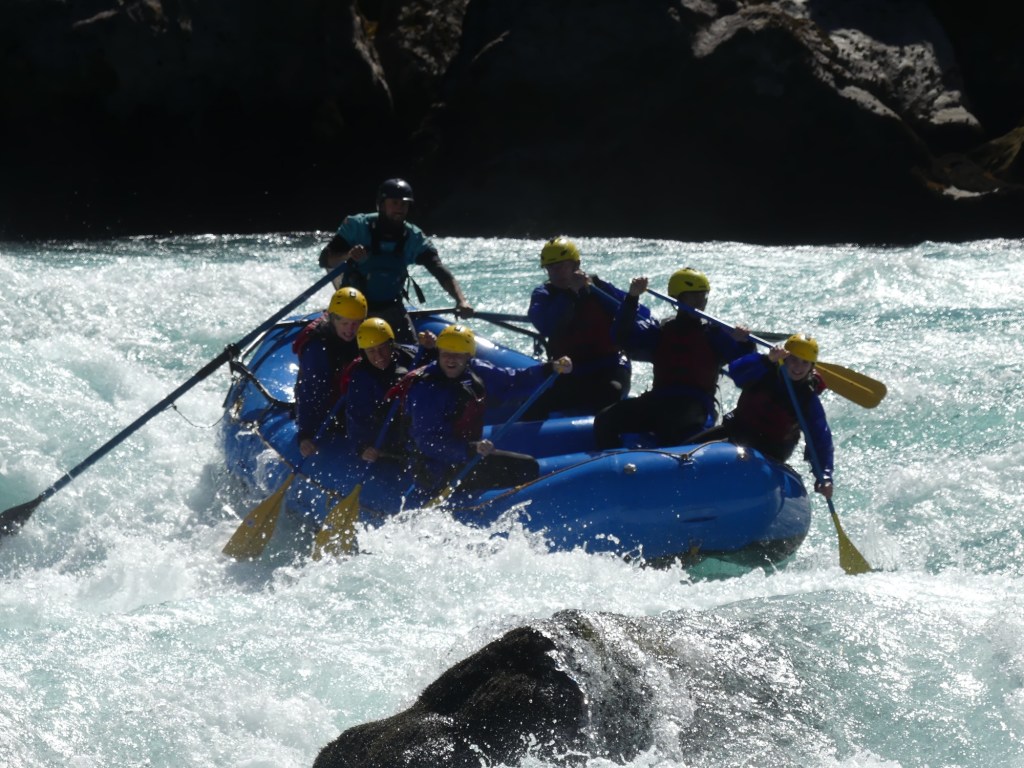
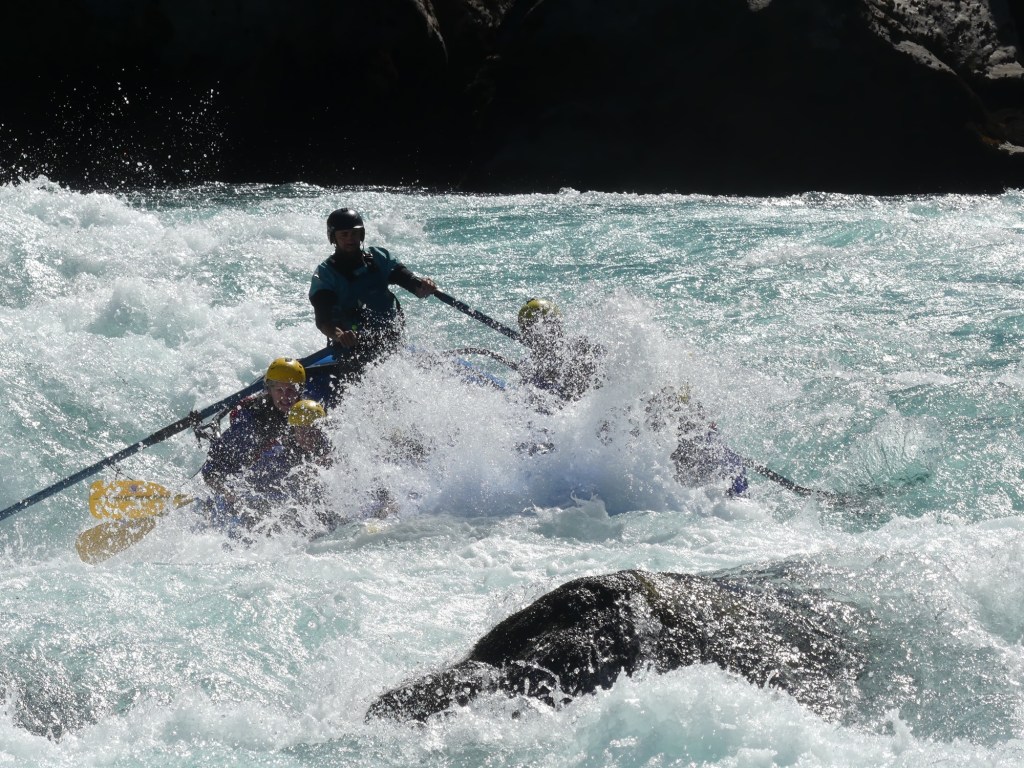
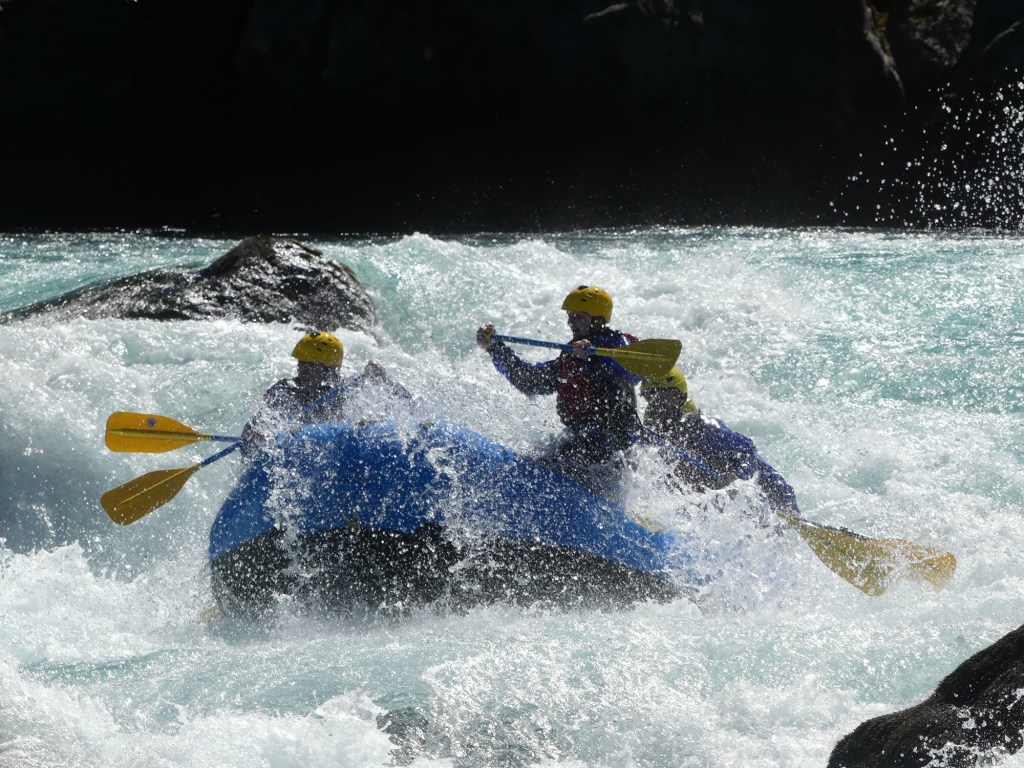
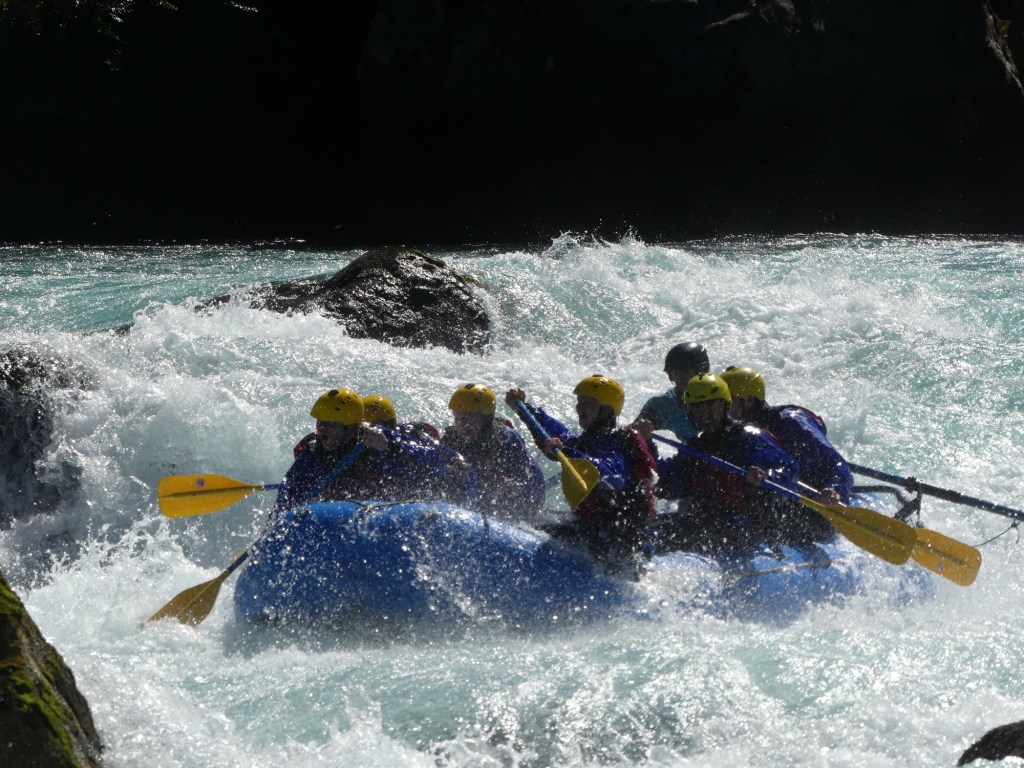
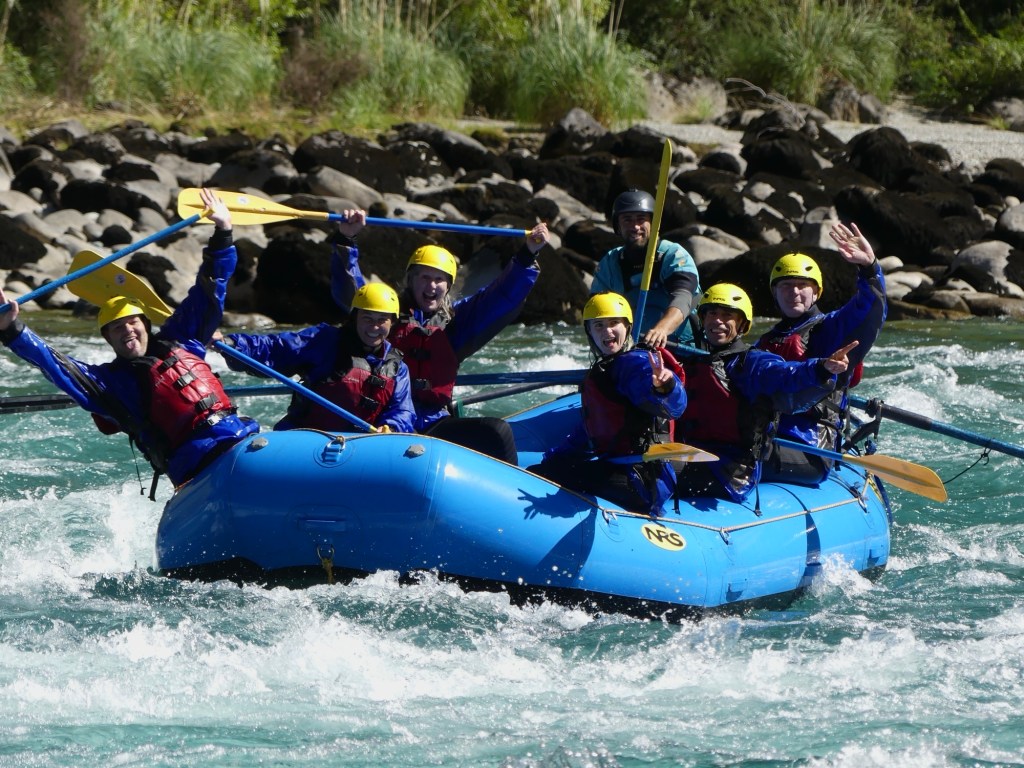
We’d rafted whitewater before, but from the first rapid, it was clear this was a different level. Our guide led us through tight maneuvers—diving to the floor of the raft to stay in, jumping to the opposite side to keep it from flipping. The rapids required precise execution, with clear instructions on how to get through safely. There were more than a few instance where our raft was vertical, water going crazy all around us. The photographer captured a full sequence on one rapid—entering, navigating, emerging on the other side.
After 14 rapids, many Class 4 and 4+, we had the choice to exit or continue onto the Marcal section for more. No hesitation—everyone stayed in. Two hours later, we hit shore, changed into dry clothes, and laughed with our raft-mates like old friends. Nothing bonds a group faster than a wild ride down a river.




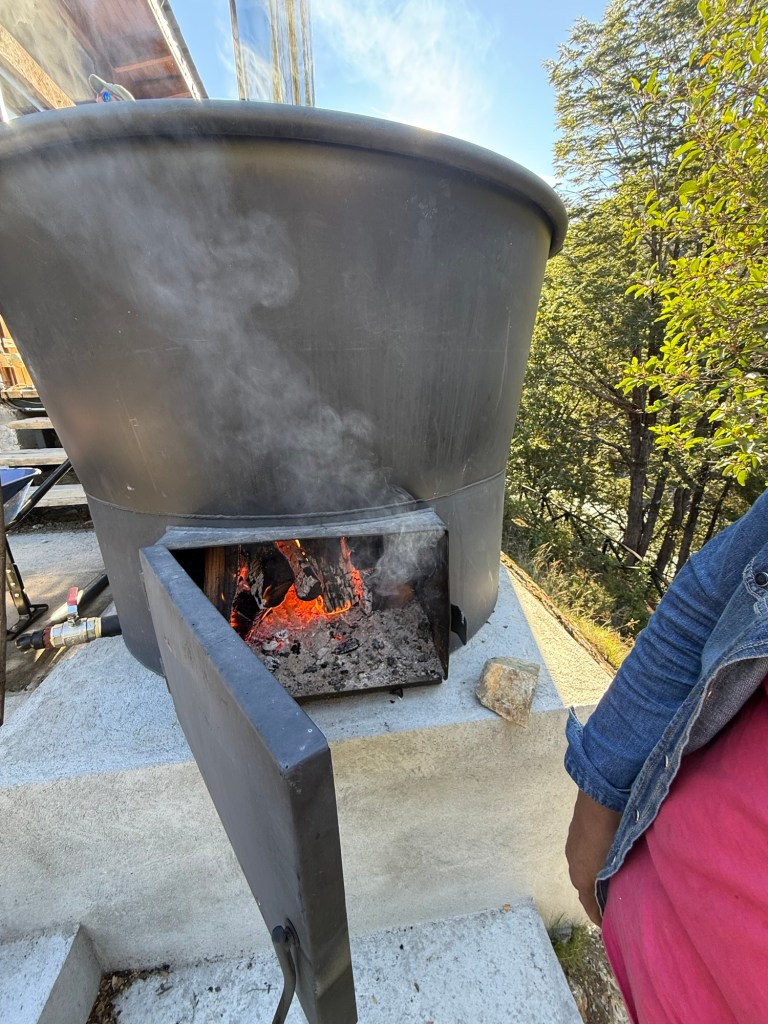
We stayed in a house on the Río Espolón, a fast-moving river too shallow for rafting but perfect for falling asleep to. The owners had built two decks—one behind the house overlooking the water and another right at the river’s edge. One evening, the caretaker, Marisa, fired up the wood-burning stove to heat the steel hot tub, and we soaked under a sky so clear we could see the entire Milky Way. Like most places in Chile, there were dogs—usually border collies—always eager to tag along on our walks. Pete was taken with every one of them, and they rarely left our side, trotting ahead on hikes, tails wagging nonstop.




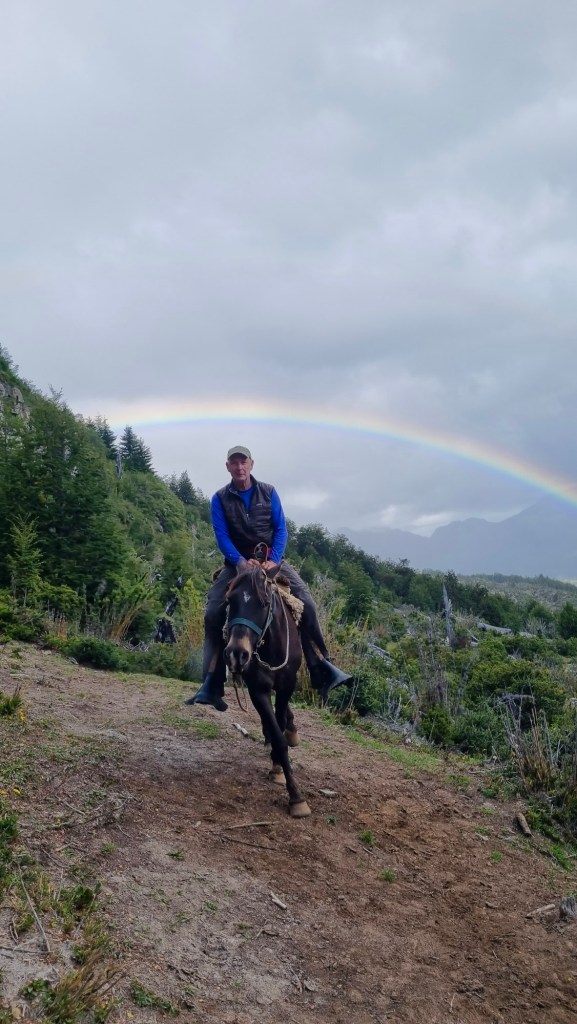
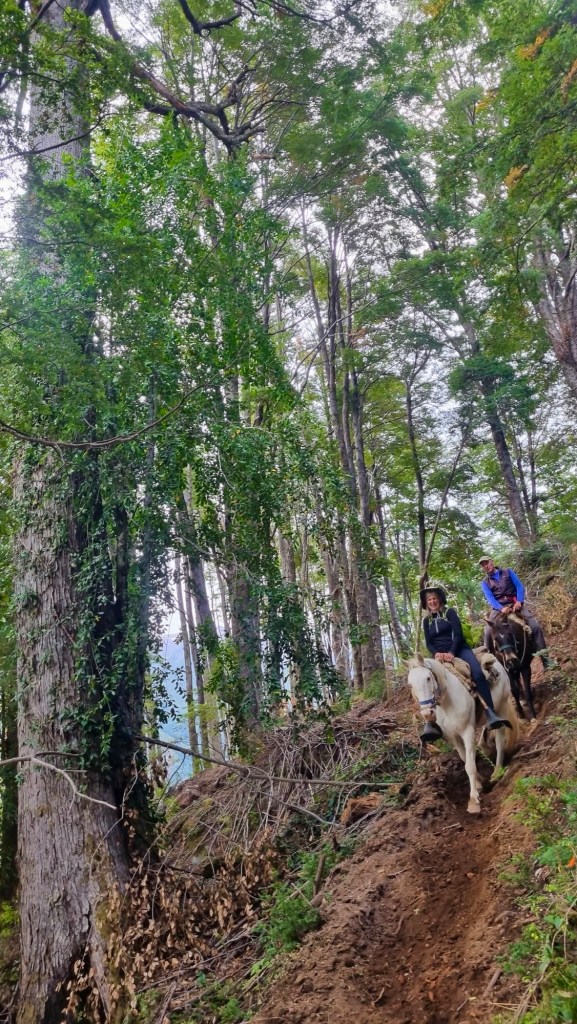
On our last day in Futa, we rode into the mountains with a local gaucho, trading our hiking boots for horseback. We’ve ridden before, but always on ranches—this was different. The trails were steep, the kind that would challenge us even on foot. A few times, the horses hesitated at the toughest sections, but with some encouragement, they pressed on, stepping over fallen trees and big rocks. At the top, a wide rainbow stretched across the horizon, a perfect moment to take in before the long ride down. By the end, our legs were stiff, but it was worth it—riding with a gaucho was an experience we wouldn’t have wanted to miss.


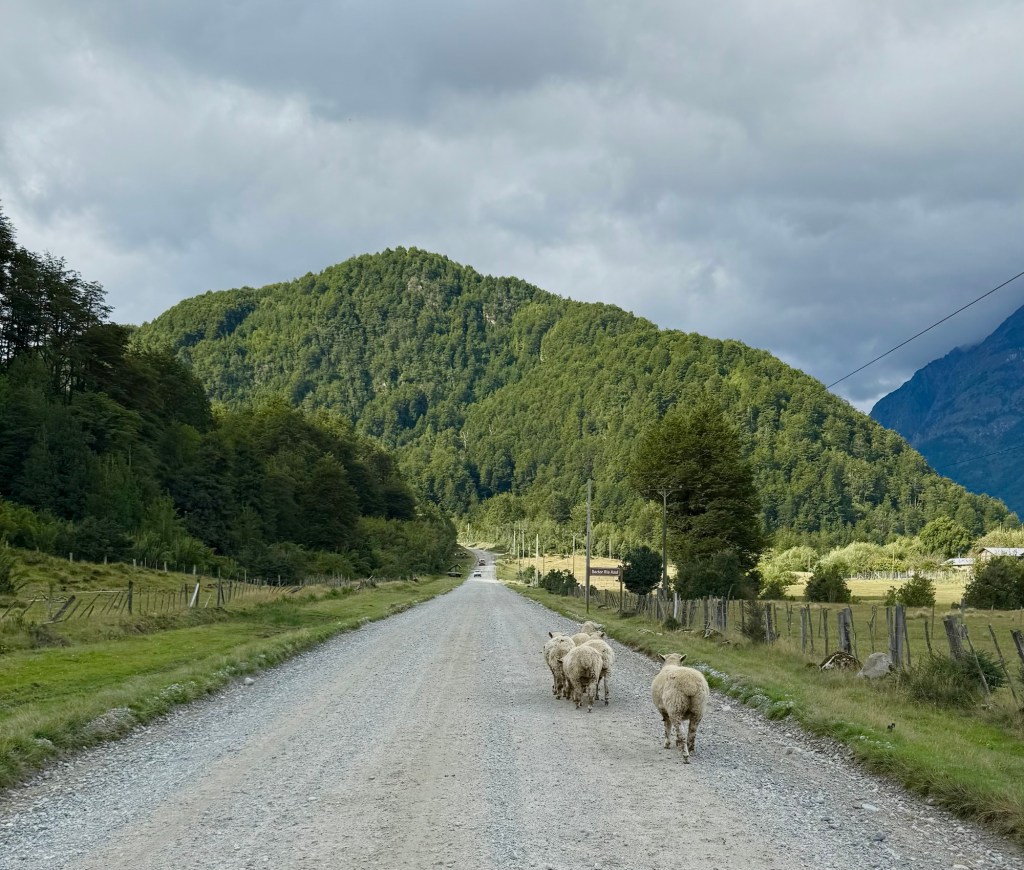

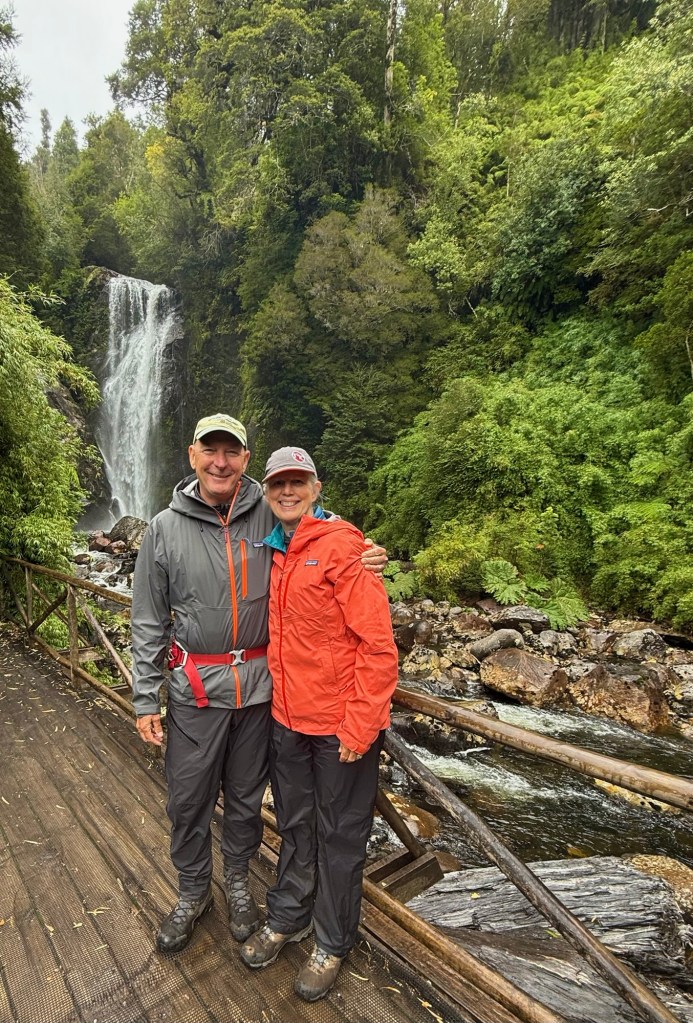
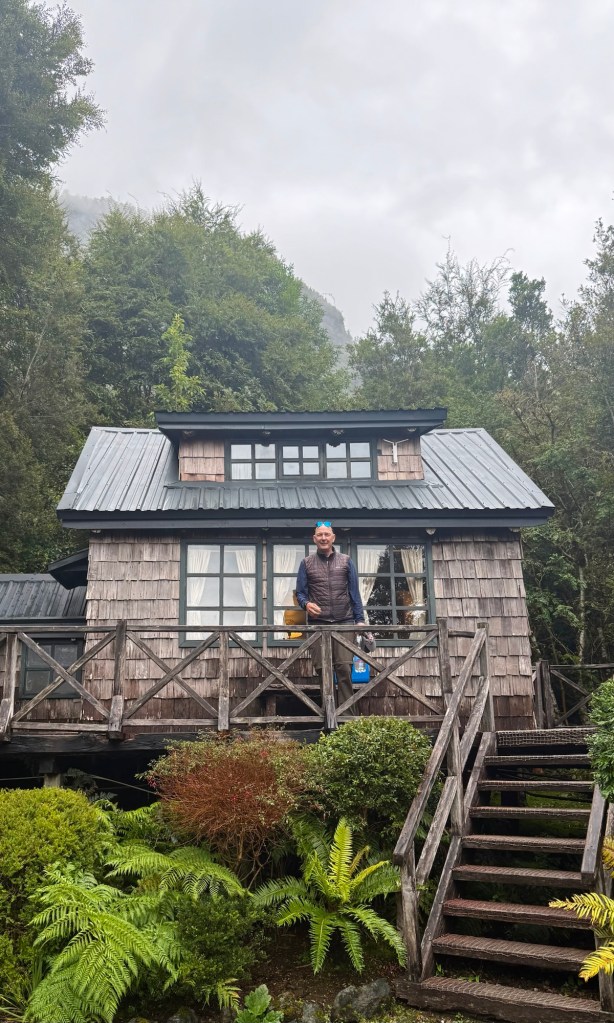
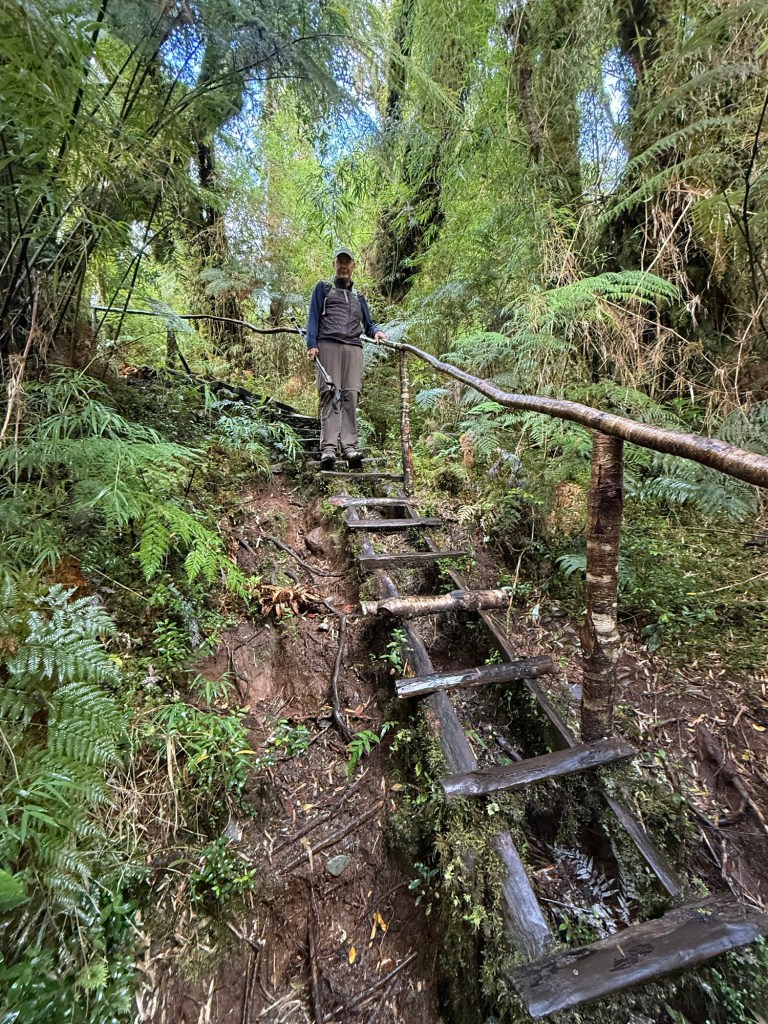
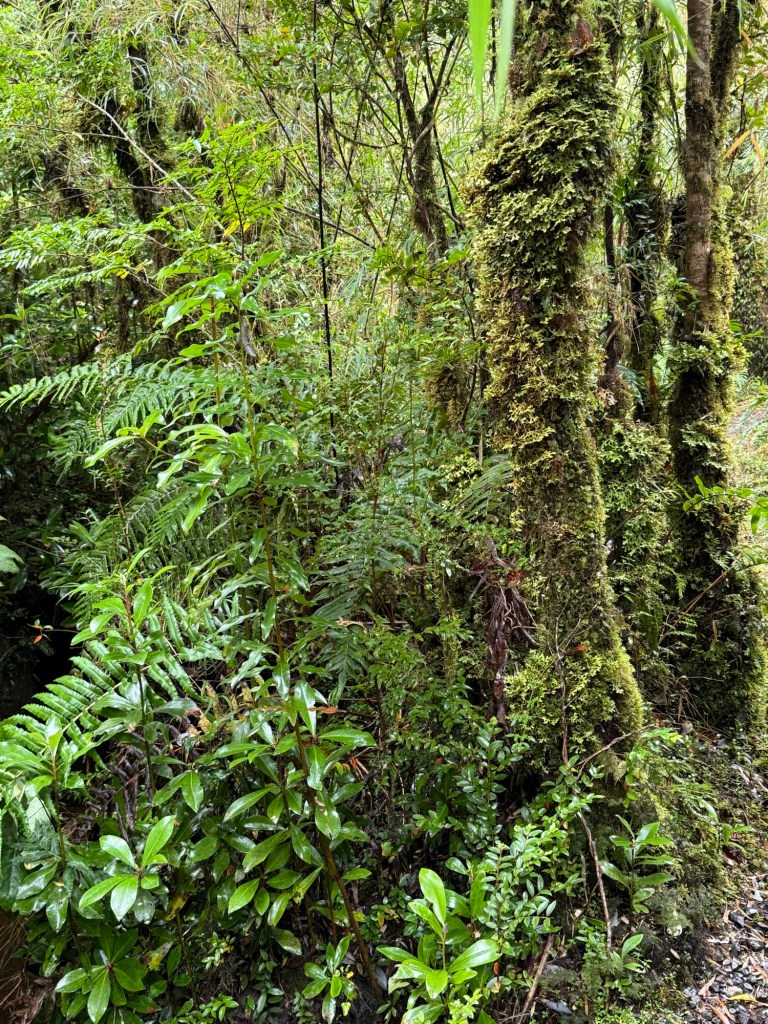
We stayed an extra night in Futa before heading north for two nights at the lodge in Caleta Gonzalo, where we’d catch the ferry on Saturday. The lodge, part of Douglas Tompkins’ conservation work, had just ten cabins set deep in the rainforest. We spent our last days on the trail, walking through dense, wet forests, every shade of green surrounding us. I hope the memory of it all stays with me.


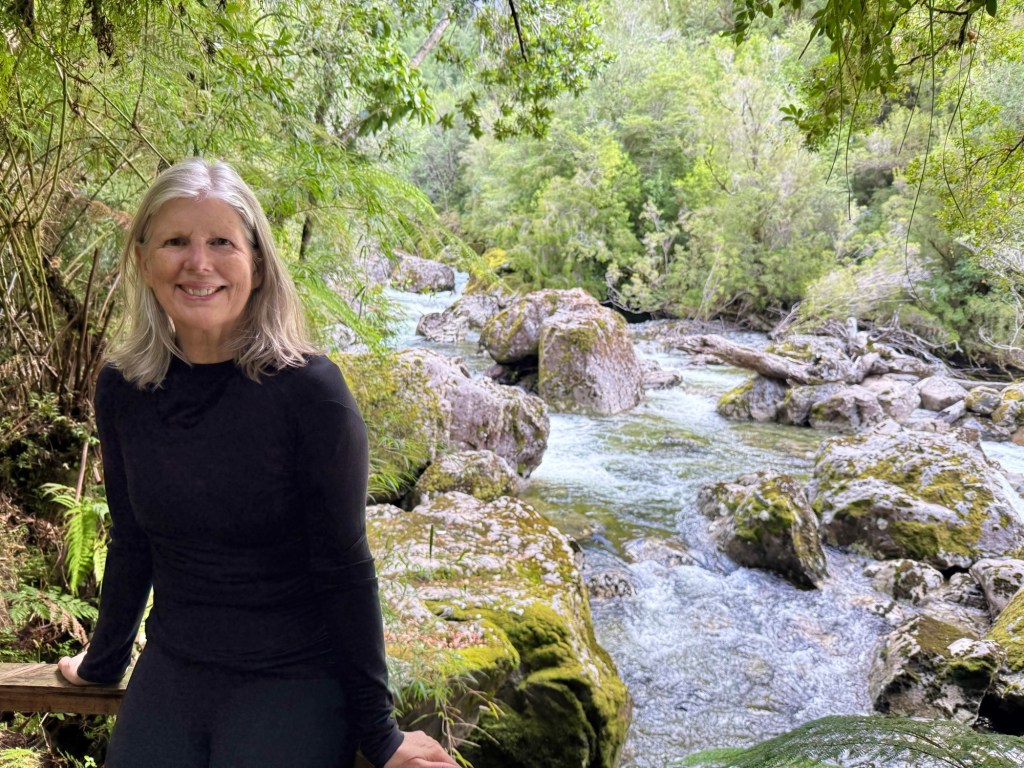
We boarded the ferry on Saturday, spent a quick night in Puerto Montt, and then made our way to Santiago for the long flight home. Six weeks on the road, and every day brought something unexpected—stunning landscapes, chance encounters, and .a great appreciation for the remoteness and challenges of Patagonia We met fellow travelers eager to swap stories, shared moments with generous Chileans (including a woman who welcomed us into her home for breakfast—eggs fresh from her chickens and warm, homemade bread), and took in the beauty of Patagonia at a pace that let it sink in. But the best part? Experiencing it all together, just the two of us, every step of the way.

 Pete & Lori's Retirement adventures