We left Puyuhuapi heading south. The night before, I had read about the 33 hairpin turns of Queulat Pass but didn’t mention them to Pete until we were in it. The road climbs and descends the Andes, switching between pavement and gravel. We crept through at 10-15 mph for hours, knowing we’d face it again on the way back.
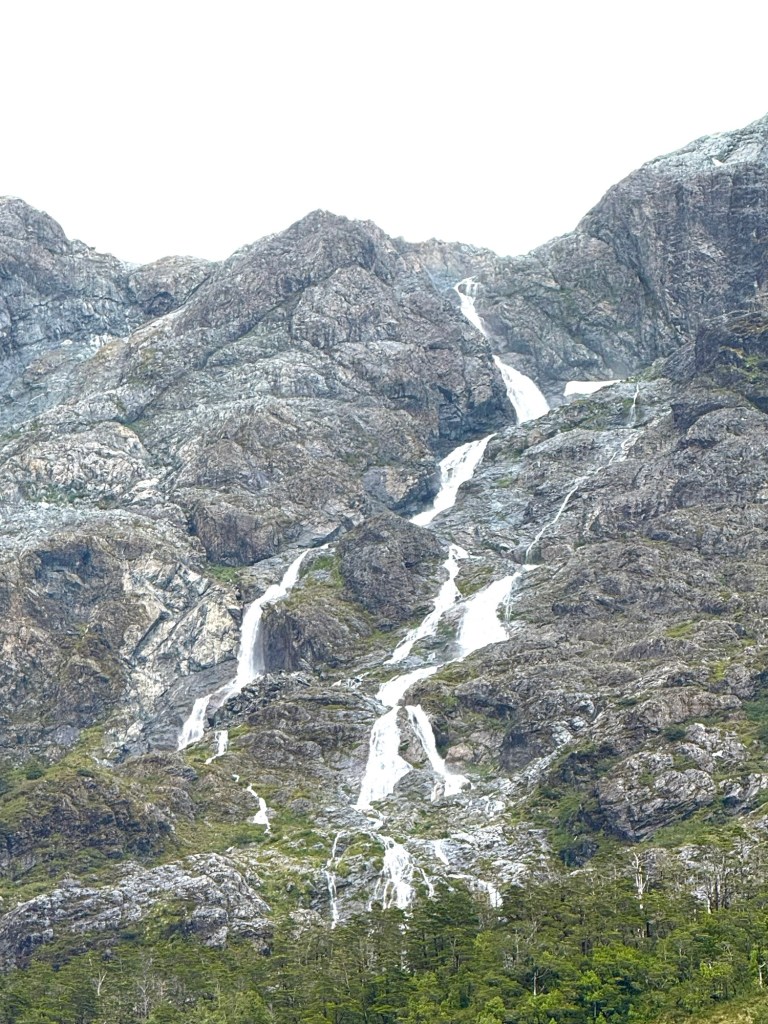
Pete has done all the driving, navigating blind turns on one-lane, two-way roads. Locals fly through with confidence, while tourists pull over when possible—unless the only option is a cliff, in which case, you back up. The route winds through steep, snow-capped peaks, past dozens of waterfalls, with the landscape changing at every turn. It’s remote, unpredictable, and truly spectacular.



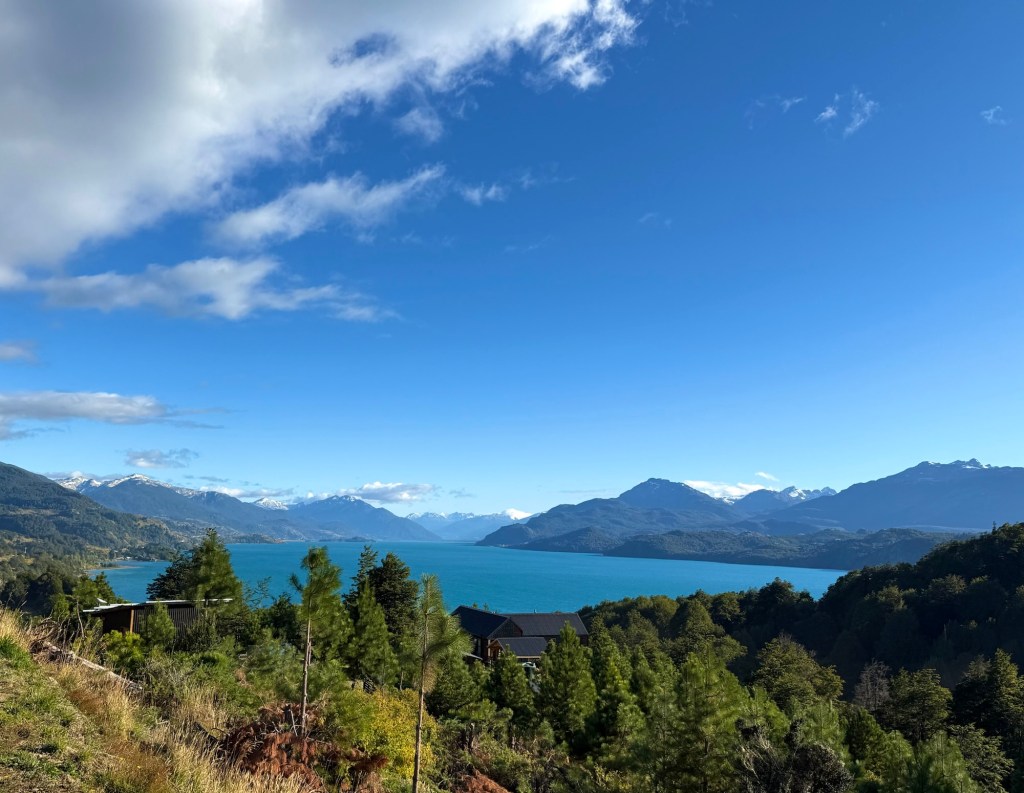
We settled into our cabin for a three-night stay overlooking Lago General Carrera in Puerto Tranquilo. The lake’s color, created by glacial melt and sediment, shifted between incredible shades of blue and green. Each evening, we spent a couple of hours on the deck, resting between the day’s activities and dinner, just watching the water. The rain had finally cleared, leaving behind a bright, clear sky, which lasted for days!

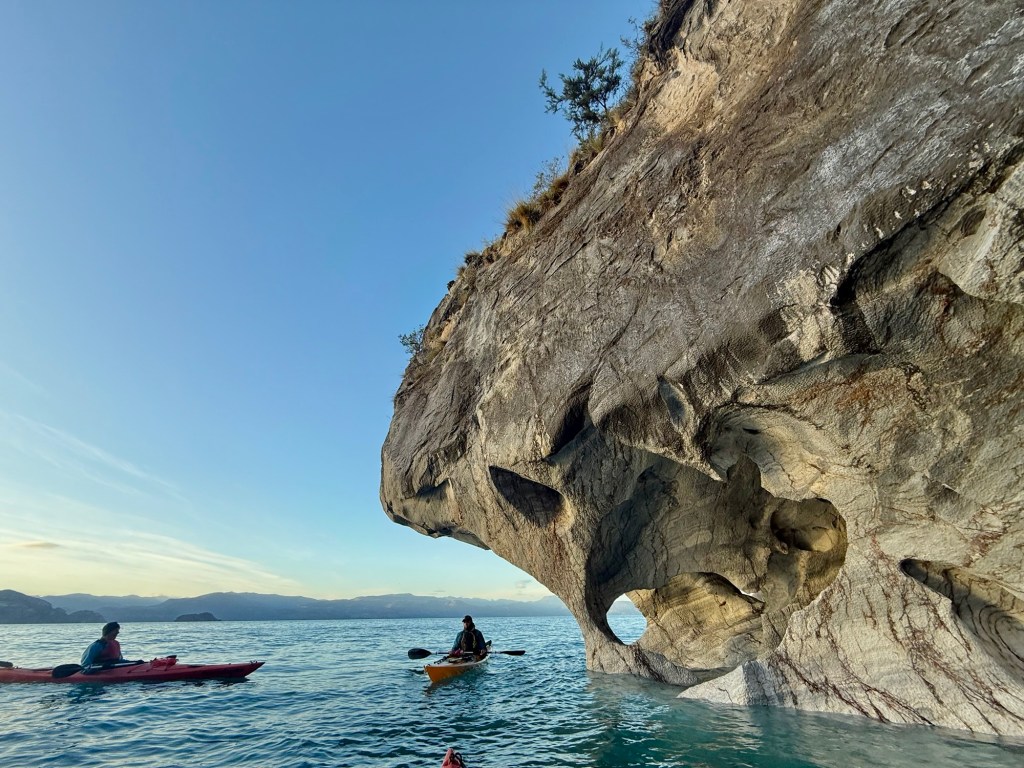
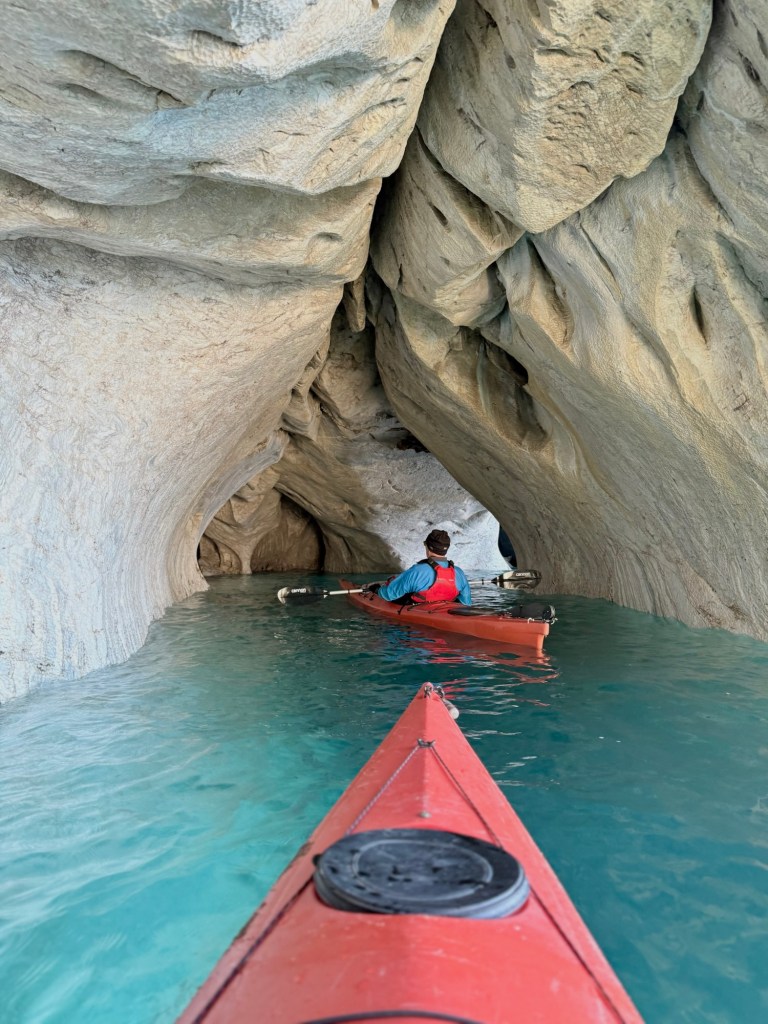
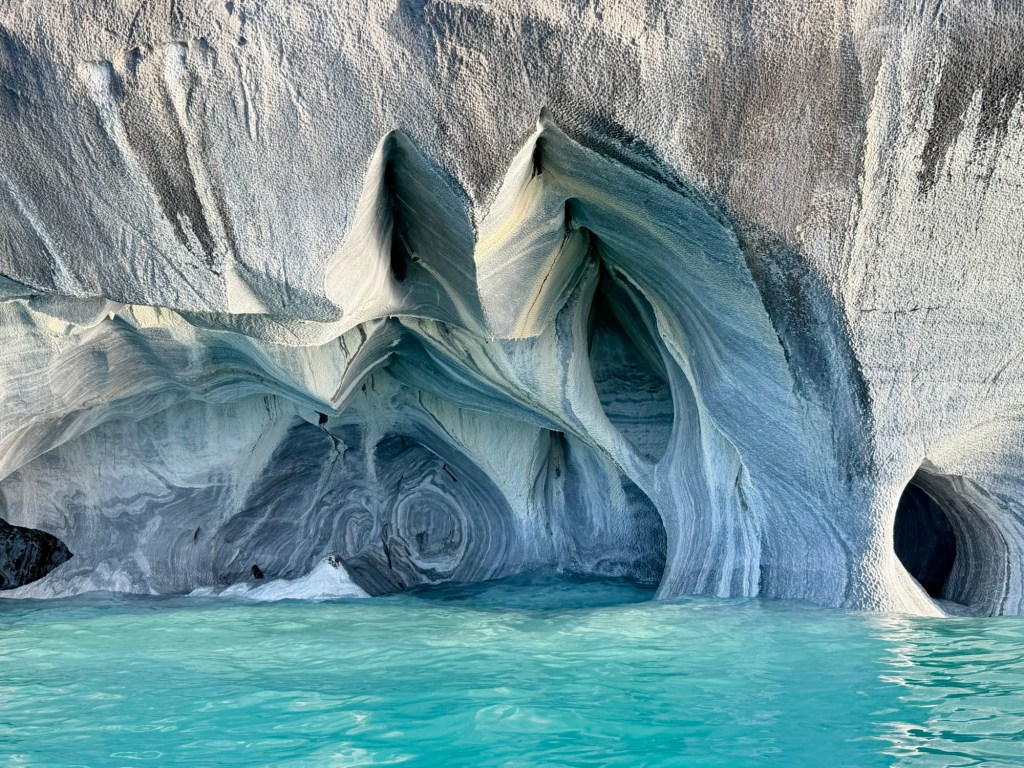
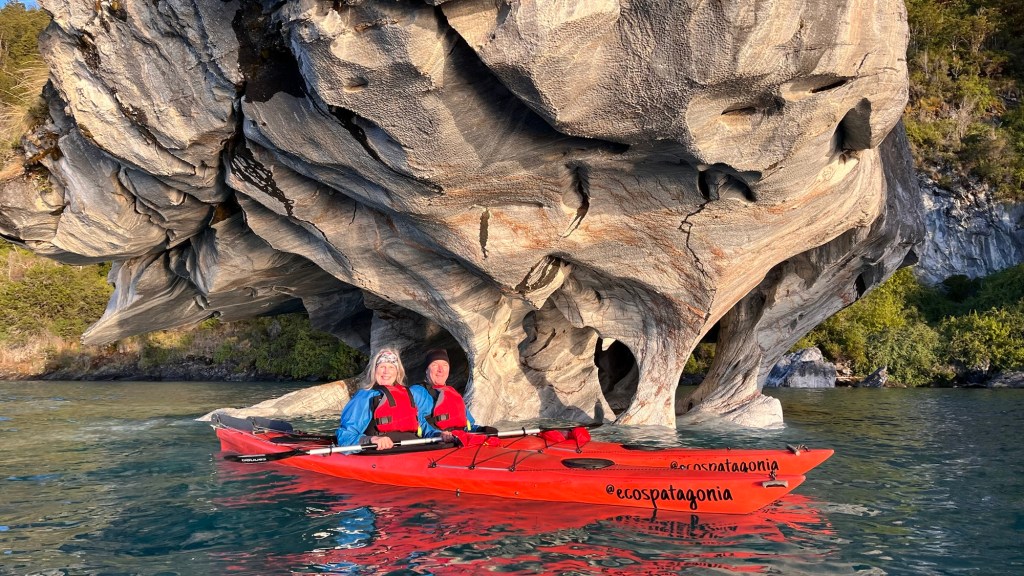
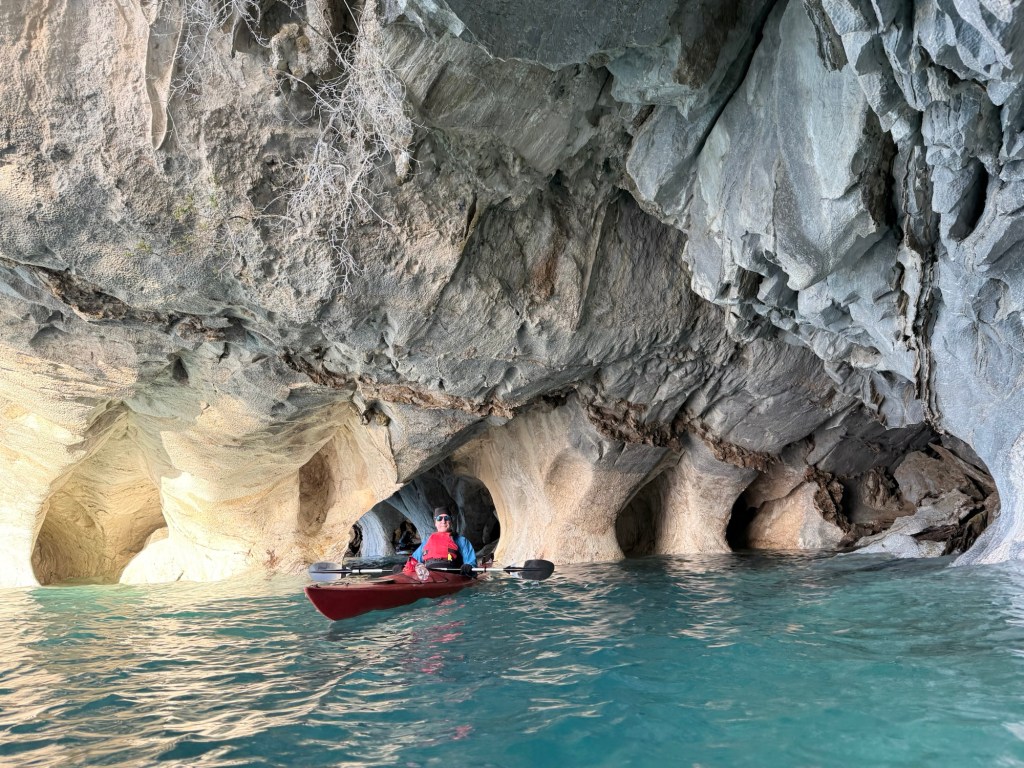
The day started early in Puerto Río Tranquilo—gulping coffee at 5 a.m., then off to meet our guide for a sunrise kayak to the Marble Caves. The lake was still and silent, the surface like glass as we paddled out, only the three of us on the water.
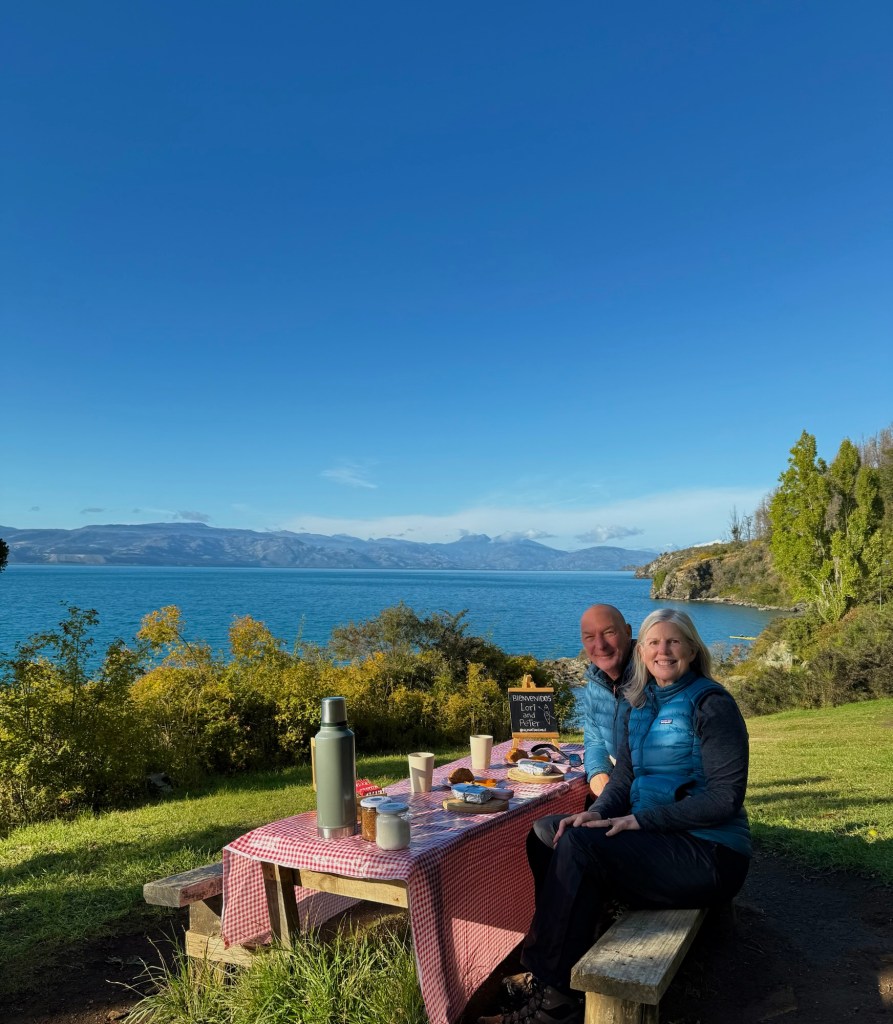
At the caves, we paddled through tunnels and arches carved by years wind and water. The marble’s swirling patterns were stunning in the morning light, and reflected perfectly in the water. After a couple of hours exploring, we paddled back to shore, where breakfast waited with a view of the lake’s unreal blue.
That afternoon, we drove south and hiked to a viewpoint over one of the glacier-fed lakes spilling from Lago General Carrera.
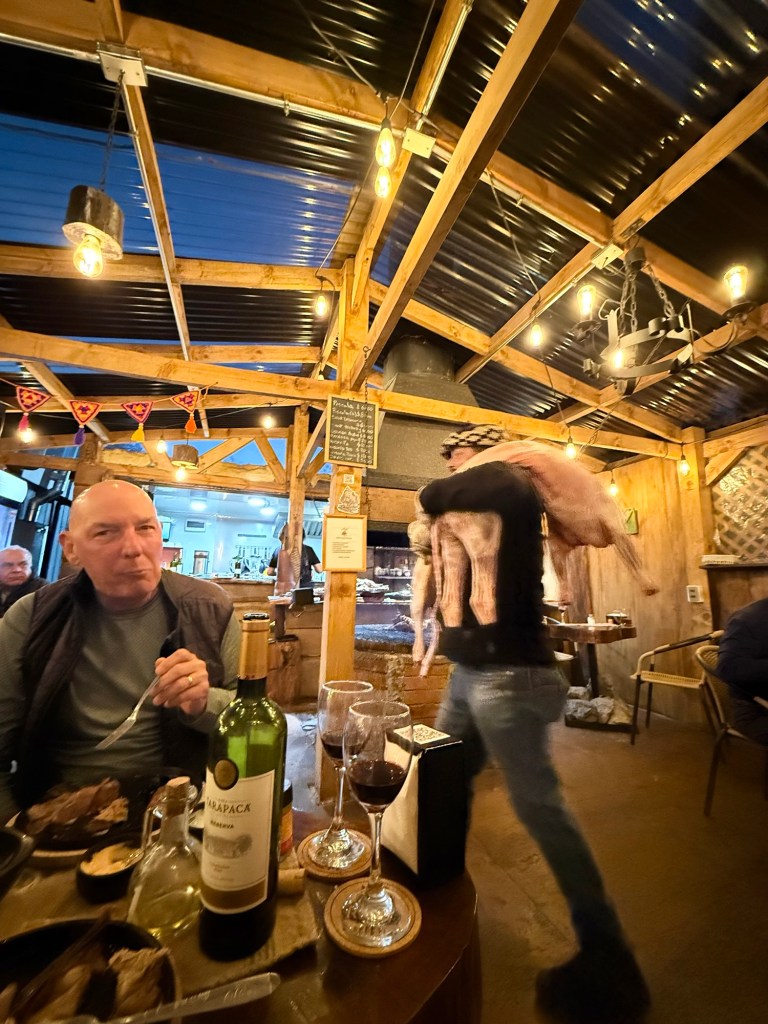
Dinner was a lamb joint with one option: a plate piled high with roasted lamb, potatoes, and salad, served with beer or wine. As we finished, a pickup truck pulled up, the owner walked out, opened the back door of the truck, and then walked through the restaurant carrying two fresh lambs over his shoulder. Not a place for vegetarians!

The next day, we ventured into Laguna San Rafael National Park for a hike to the Exploradores Glacier. The trail was steep, but we took our time, determined to get there. As we climbed higher, the dense forests gave way to rugged rock formations. When we finally reached the viewing platform, the sight was breathtaking. One massive glacier stretched down to meet the water, its blue surface bright in the light, while others came down from the mountains above. It was a view that made every bit of sweat worth it.

Four days of sunshine in a row—a miracle—set the stage for our journey to the confluence of the Río Baker and Río Neff. That day, the Río Baker’s blue waters stole the show, churning through the canyon with force. We spent time by the rapids, excited about the rainbows made by the mist, and enjoyed lunch with one of Patagonia’s most spectacular views as our backdrop.


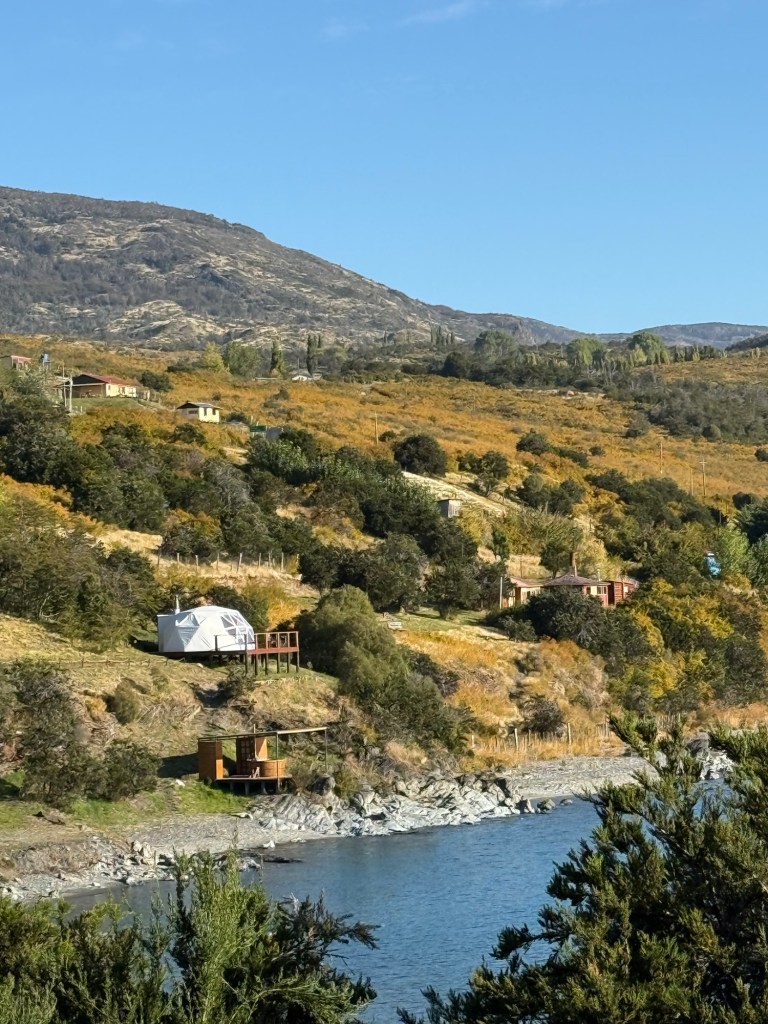
We headed over to this other side of the incredible blue lake and checked into our dome ten, where we would spend three sunny days and clear nights.


Another sunny day in Patagonia set the perfect stage for our visit to Patagonia National Park, a desert-like landscape that felt almost like a safari. On our way in, we met a father and son who had been waiting since before sunrise, hoping to spot a puma. They eagerly shared stunning photos of one crouched low in the grass, eyes locked on a guanaco, poised to strike. Puma love guanaco, and we found the evidence on our hike.
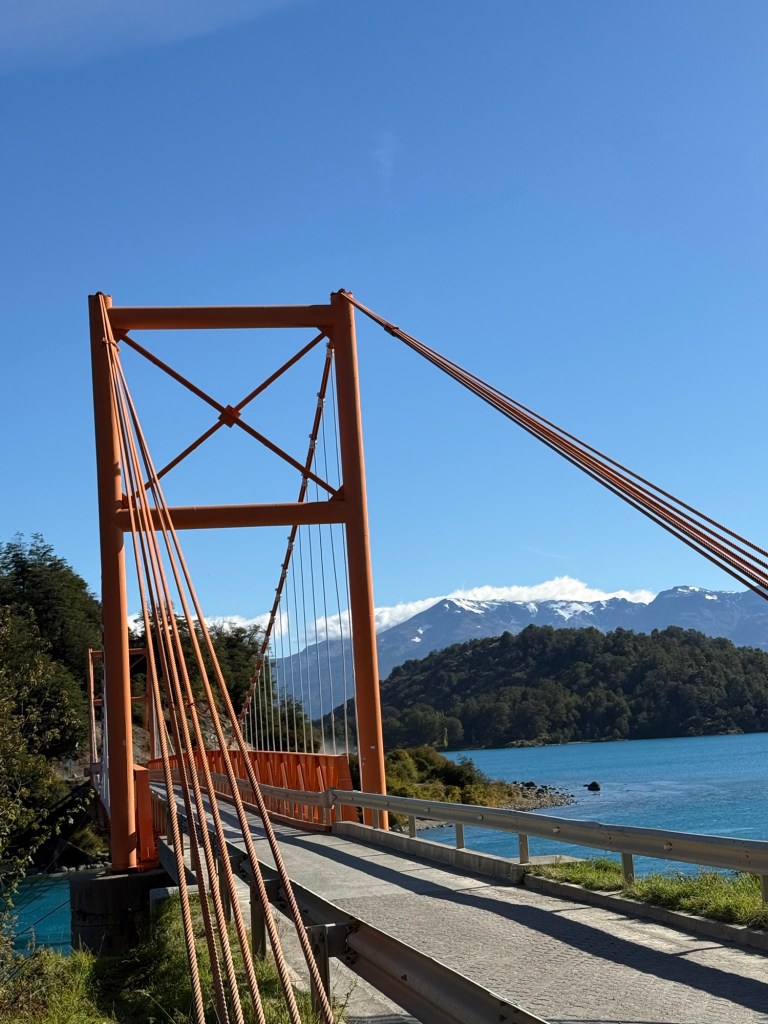
Our hike led us across vast grassy plains and rolling hills, where guanacos roamed by the dozens. Eventually, we reached a 100-yard suspension bridge swaying over a deep, rushing gorge. Of course, we had to cross—knowing full well we’d have to do it again on the way back.
Wandering through the park, nearly alone, made the experience even more immersive. It felt like stepping into Patagonia’s remoteness, where the wildlife was plentiful, and we were just quiet visitors.


The turnaround to north the next day, a week before we head home, was bittersweet. Even though the clouds had rolled in, the hairpin turns kept everything exciting. Along the way, we passed a roadside worship spot for Saint Sebastian. While we stopped to have a look, we noticed that every car that passed us gave a honk to pay tribute. Here’s what I found online:
- Sanctuary of Yumbel:
The Sanctuary of Yumbel, near Puerto Aysén and Coyhaique, is a place of worship dedicated to Saint Sebastian, where devotees, especially truck drivers and tourists, honk their car horns as a tribute.

 Pete & Lori's Retirement adventures