Crossing through Puerto Montt, we were eager to leave the city behind and finally hit Ruta 7—the legendary Carretera Austral. This 700-mile road, a relatively recent feat of engineering, winds through some of the most remote areas in Patagonia. Some stretches are paved, while others are nothing more than gravel, full of potholes. To handle the challenge, we rented a 4×4, ready for whatever we encountered.
Our first stop was Hornopirén, a small village set between fjords and mountains, where we spent the night before an early start to catch the ferry. The four-hour ride across the water took us to Caleta Gonzalo and the entrance to Pumalín Douglas Tompkins National Park. This 700,000-acre rainforest was once privately owned by Douglas Tompkins—the founder of North Face—who later gifted it back to Chile as a protected wilderness. Now, it’s a special place for hikers.
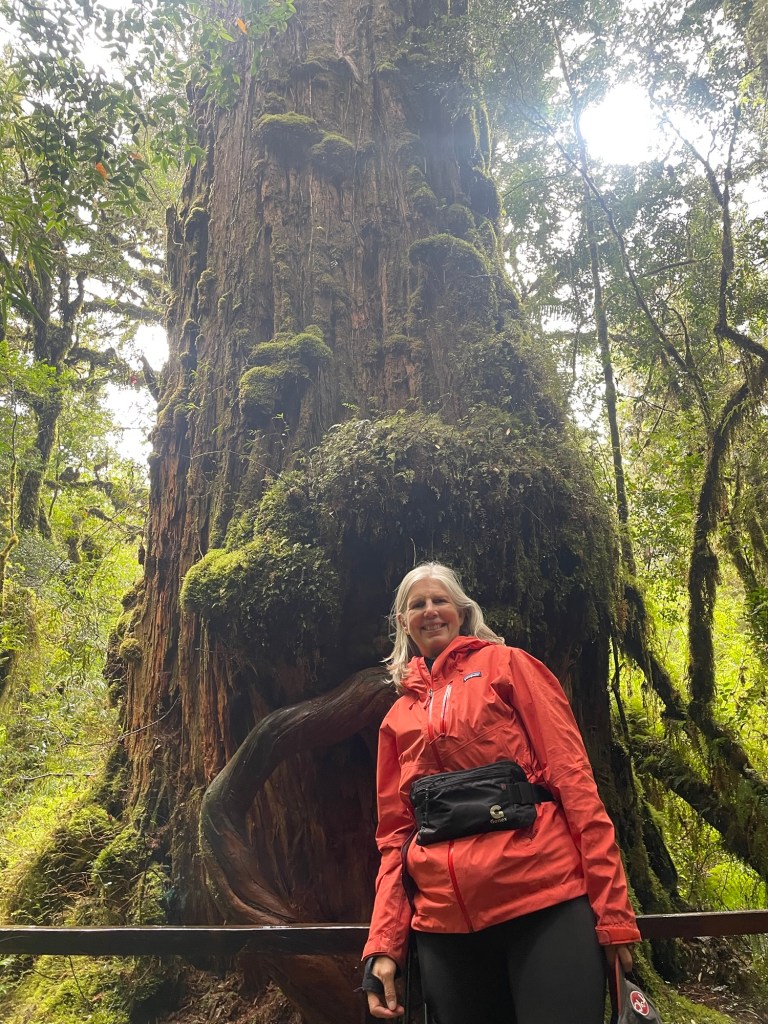
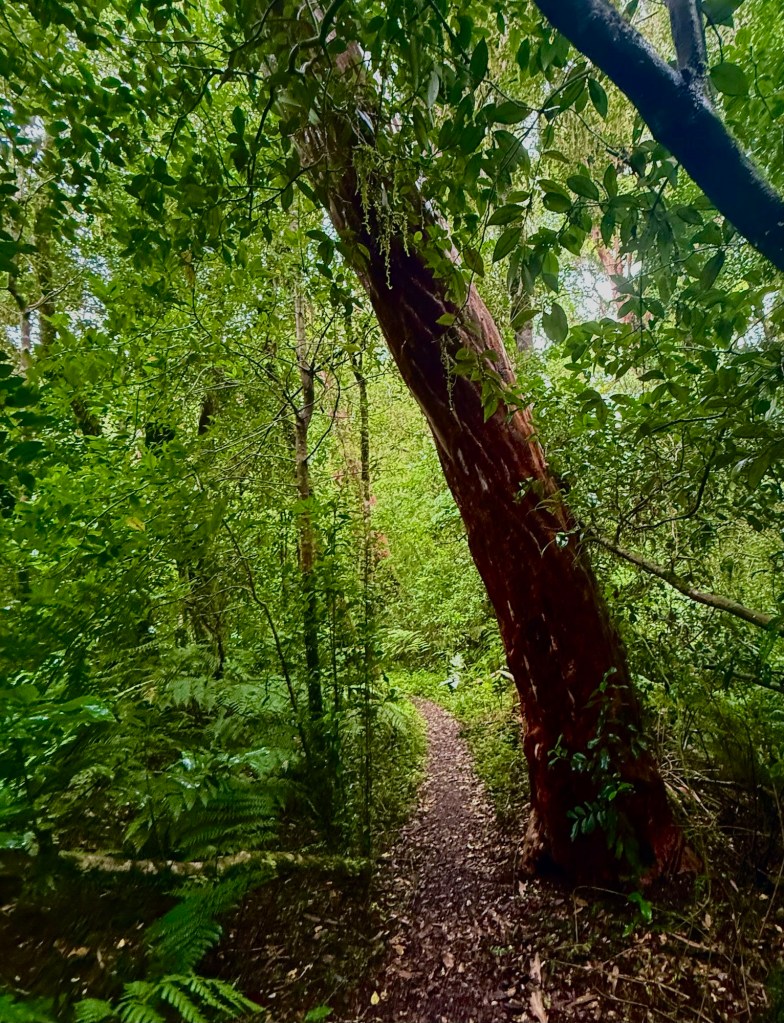
After bumping along the crazy potholed road leading out of Caleta Gonzalo, we were ready to stretch our legs, so we set out on the Los Alerces trail, one of Pumalín’s most stunning hikes. The path wound through an ancient rainforest, where giant Alerce trees—some over 3,000 years old—stood tall along the trail. As we hiked, we passed rushing streams, tons of ferns, and jagged peaks through the treetops. The trees were magnificent, and the quiet of the rainforest was just what we needed.

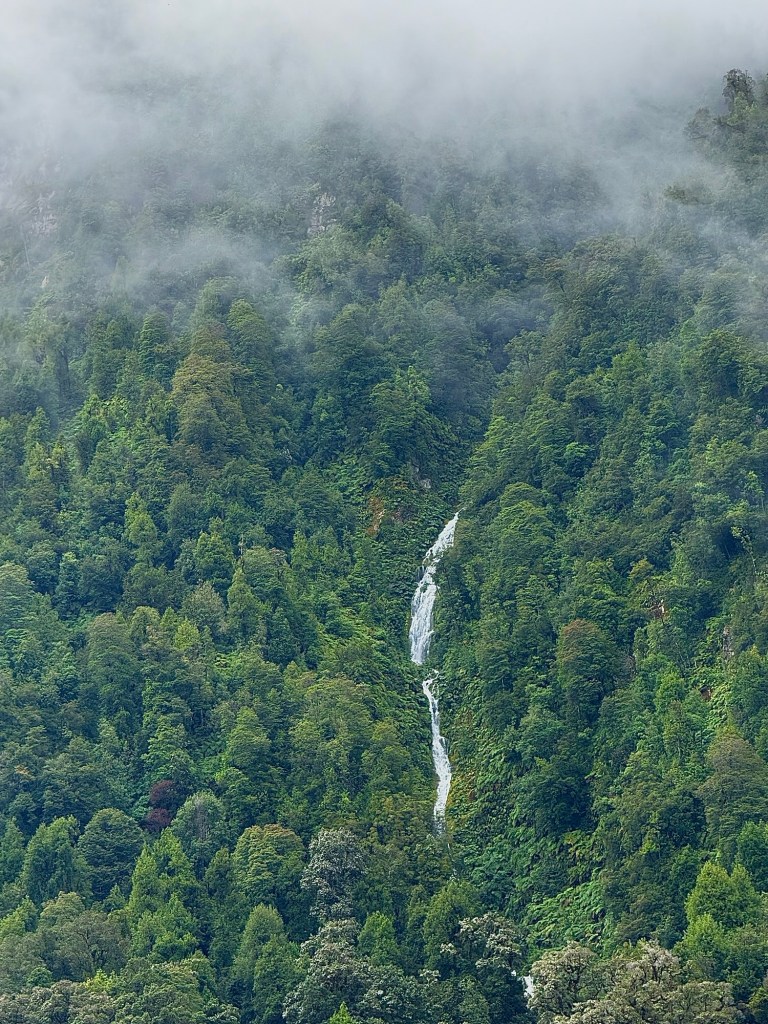
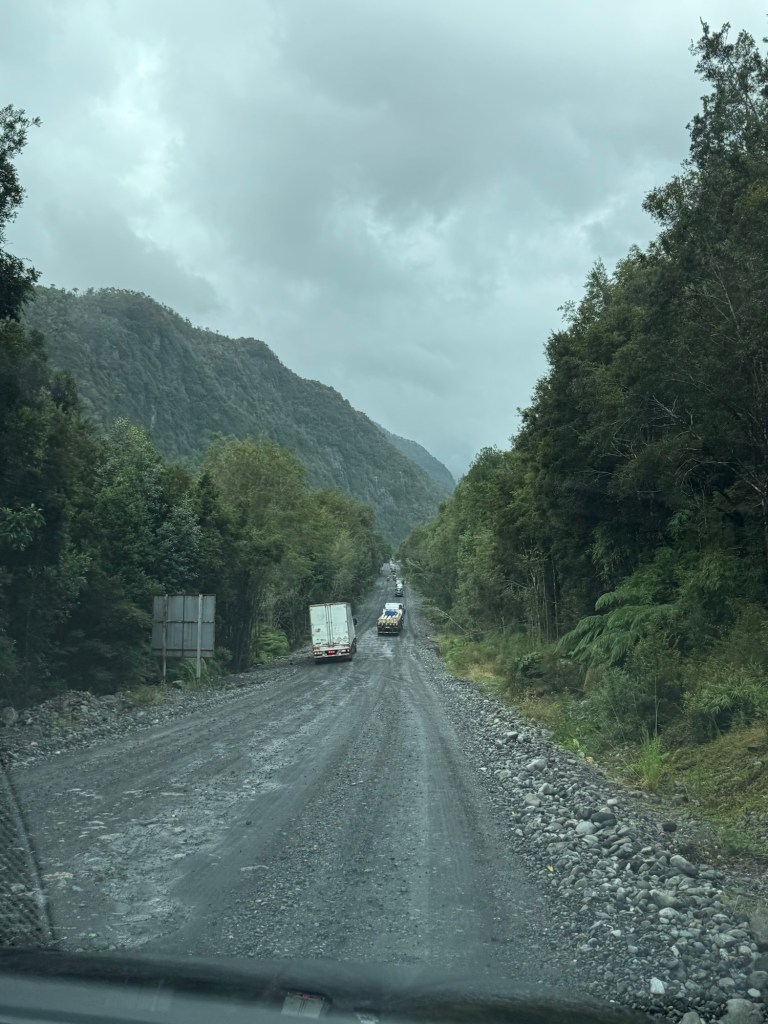



Pete and I hopped back in the car and reached the paved section of the Carretera Austral in about 15 minutes. There’s still plenty of rough gravel ahead, but we were happy to zip along to Chaitén for the night. Dinner was a treat—fresh Merluza (hake), caught that very day. It was absolutely delicious, and the generous portion cost only about $10!
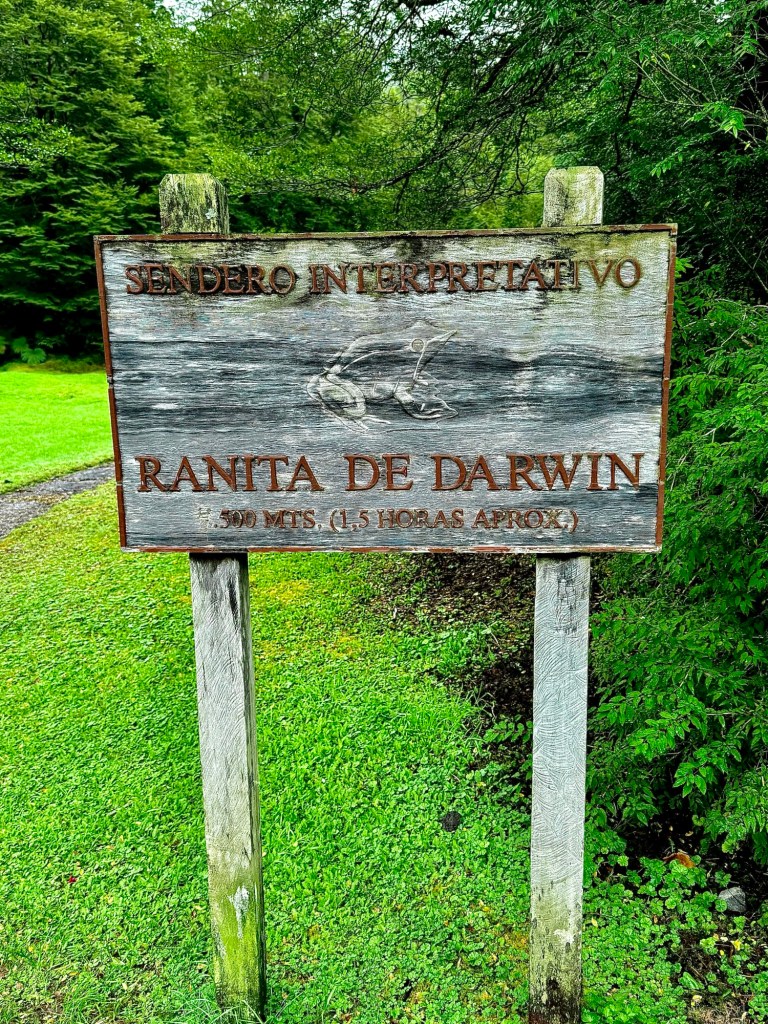
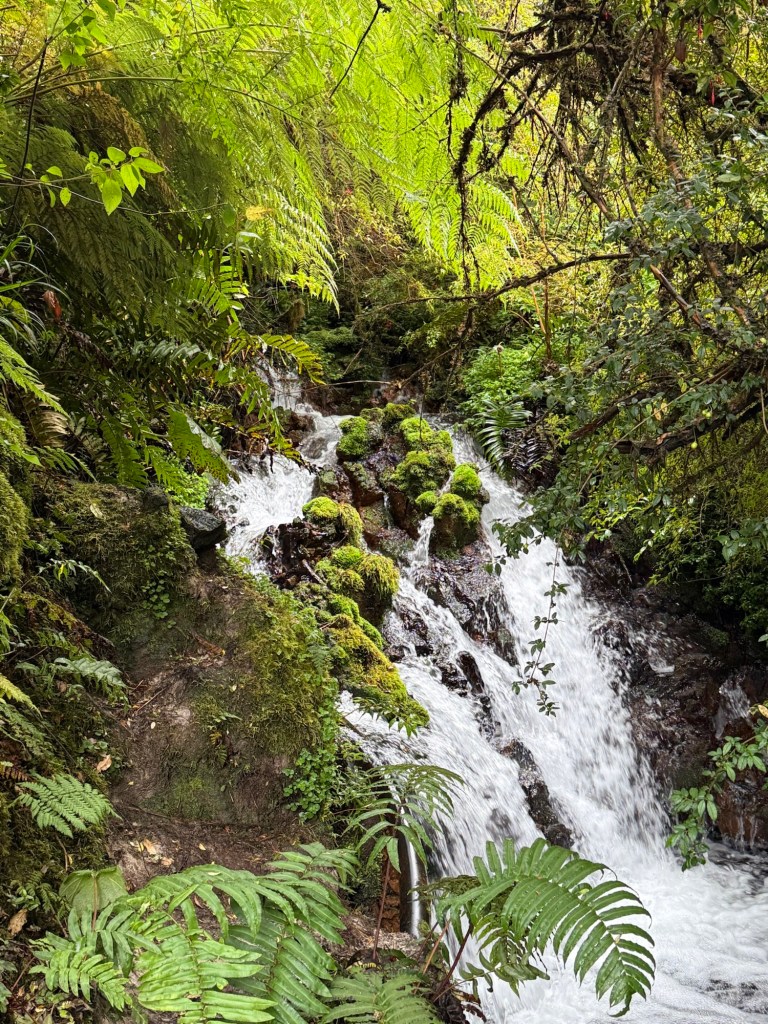
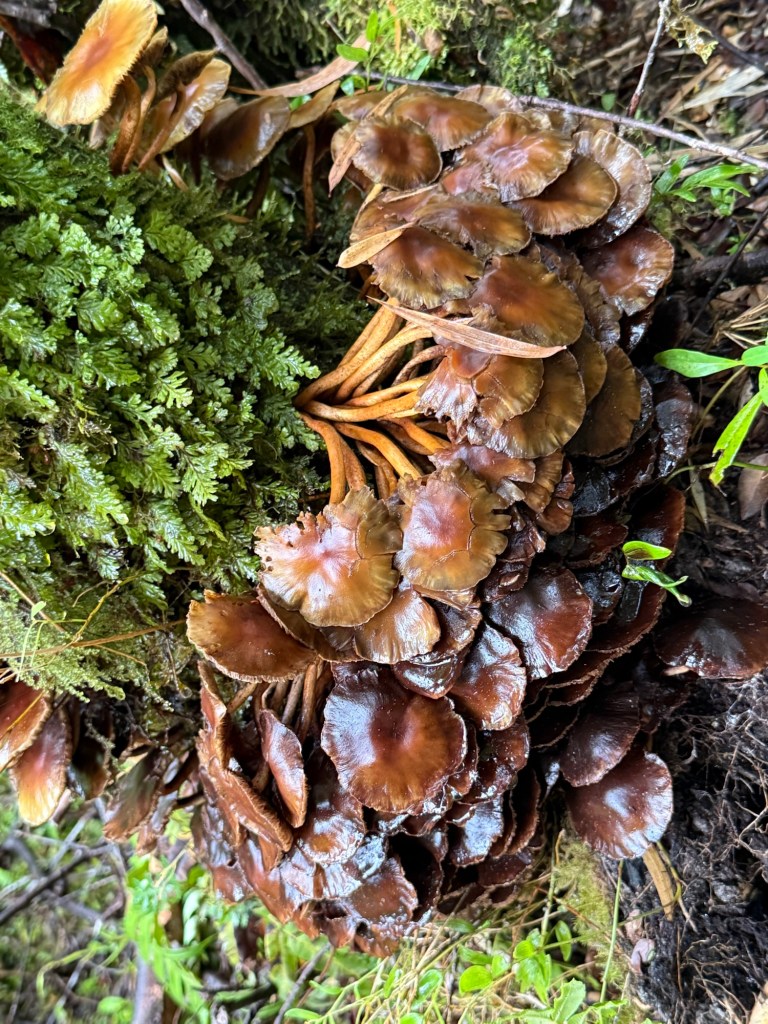
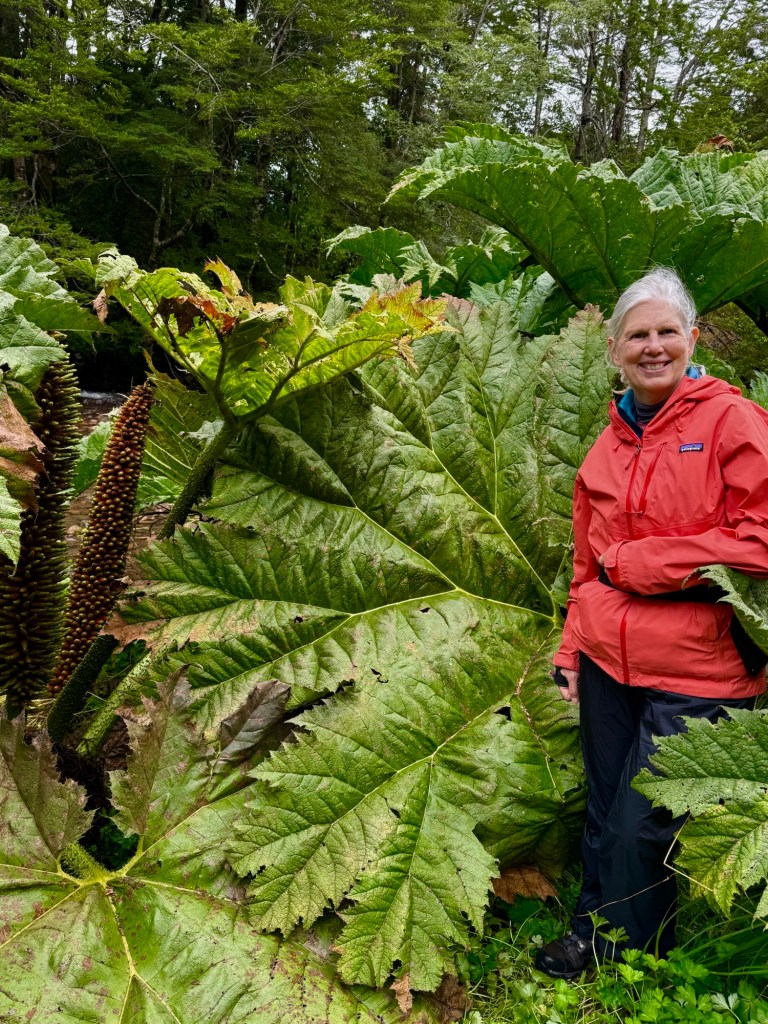
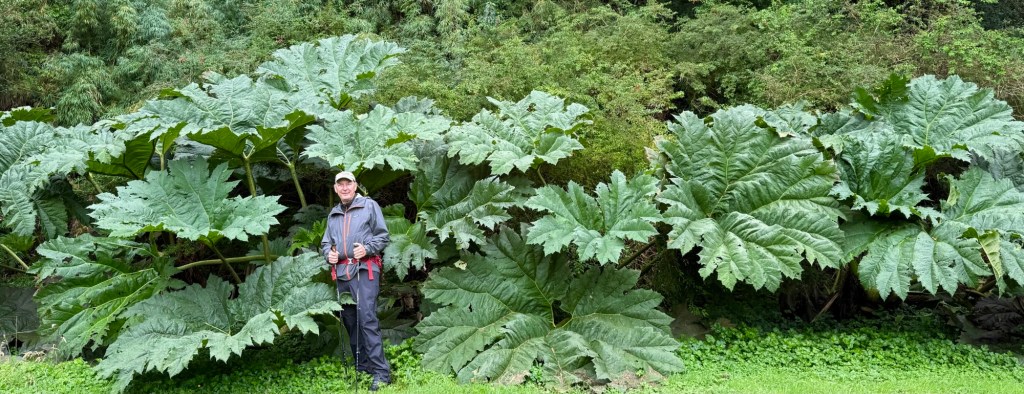
Rainy days can be a vacation killer, but here in the Patagonian rainforest, it just adds to the experience. The next day, we hiked the Darwin’s Frog Trail in Pumalín National Park. No luck spotting the tiny endangered frogs, but we spent a few hours surrounded by bright green foliage and hearing the calls of birds. The Chilco (Fuchsia magellanica), also called the Patagonian bleeding heart, added pops of red, while the enormous leaves of the Nalca made the forest feel almost prehistoric.




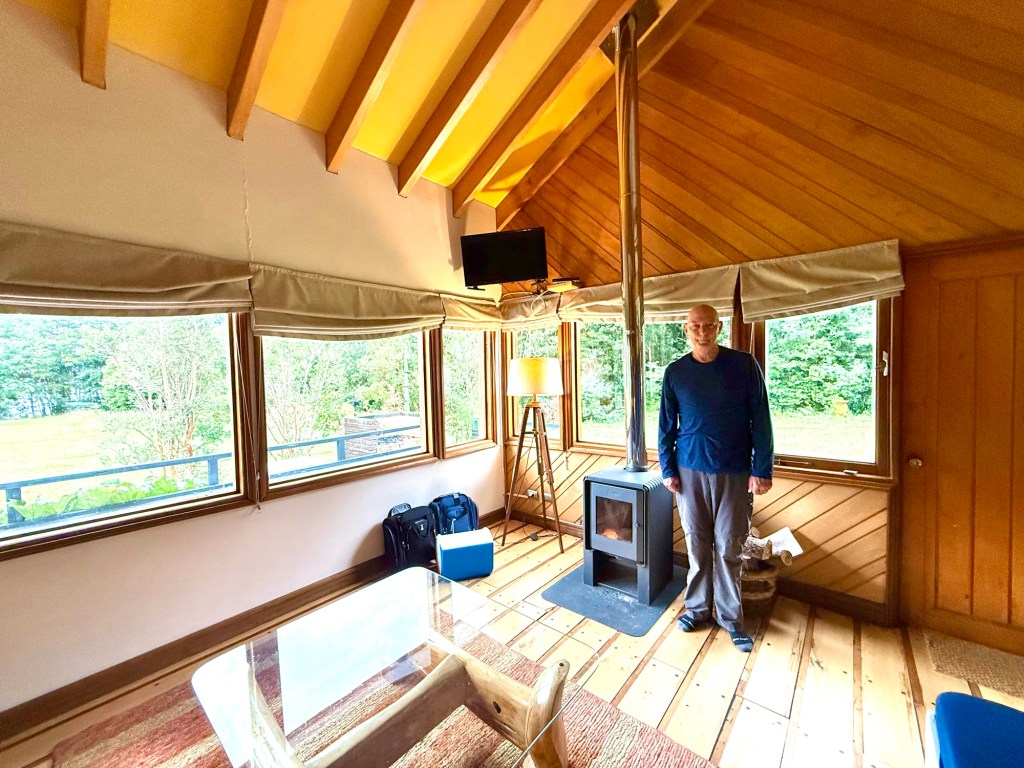
The following two nights were spent lakeside between two national parks at a premier fly-fishing resort—pure bliss. Our three-story, two-bedroom, two-bathroom cabin (the only one available, and we’re not complaining!) has a wood burning stove and views of the stunning Laguna Yelcho. What a dream!


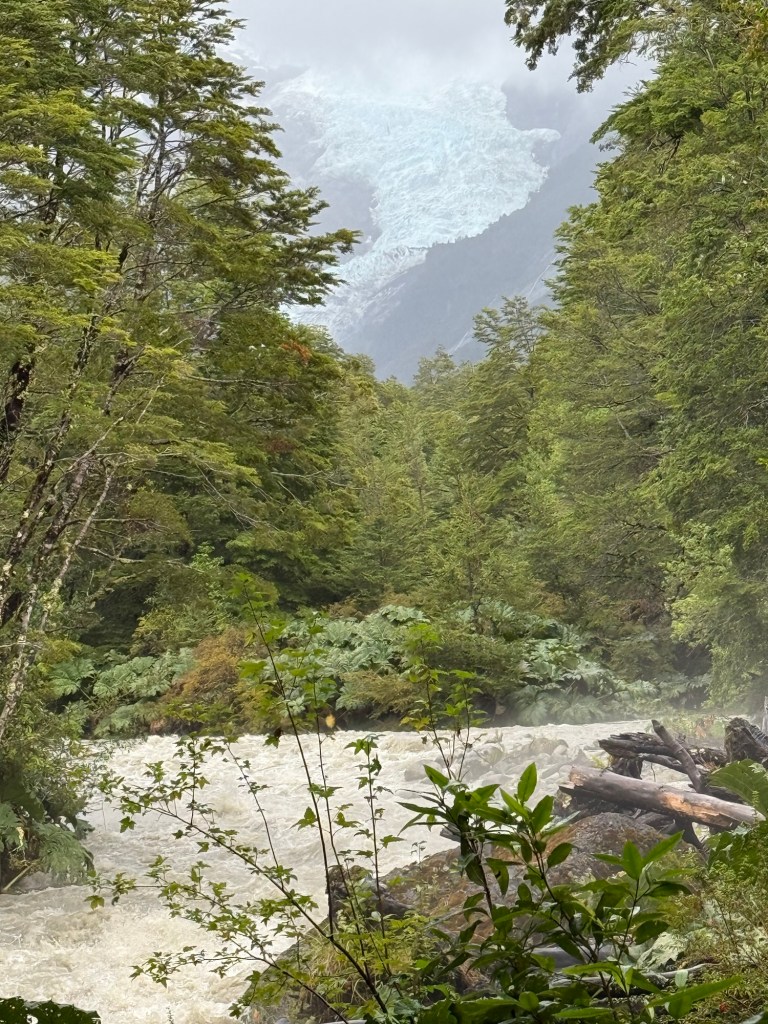
After an overnight downpour, we set out for the trail by the hanging glacier along the Yelcho River, expecting mud but finding the path flooded, even the walkways underwater. As we hiked, we heard what sounded like thunder rolling through the valley. A pair of campers told us it wasn’t the sky—it was boulders tumbling down the river, carried by the force of the water. The trail wound through thick forest, ending with a wide, open view of the glacier. Wet boots, muddy clothes, and all, it was worth it.


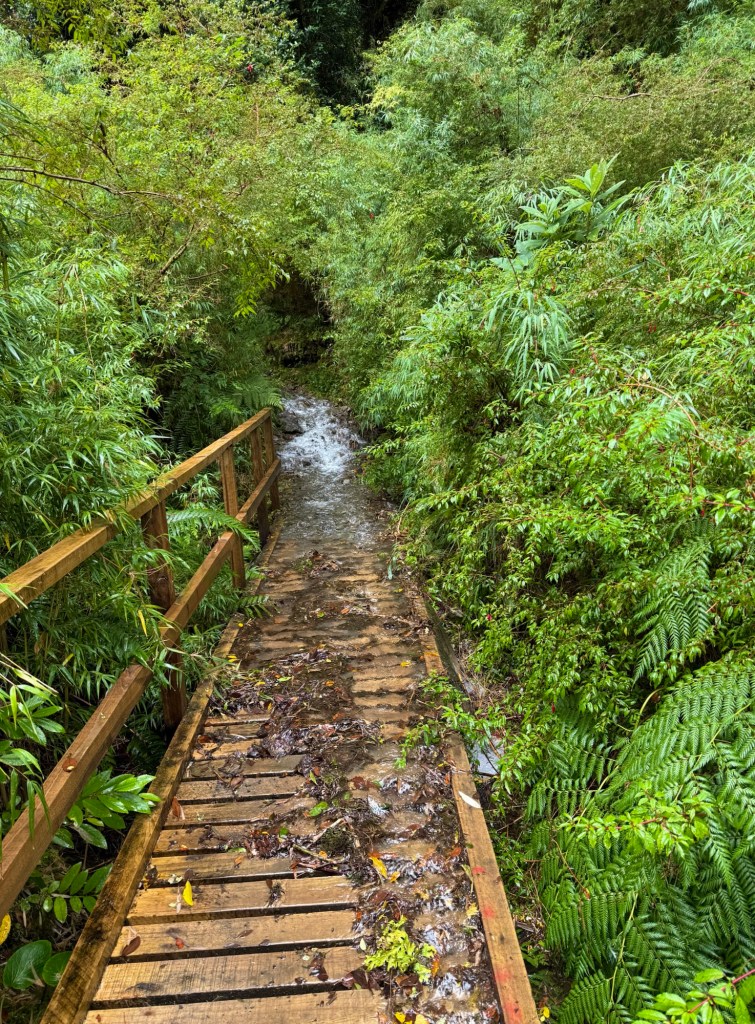
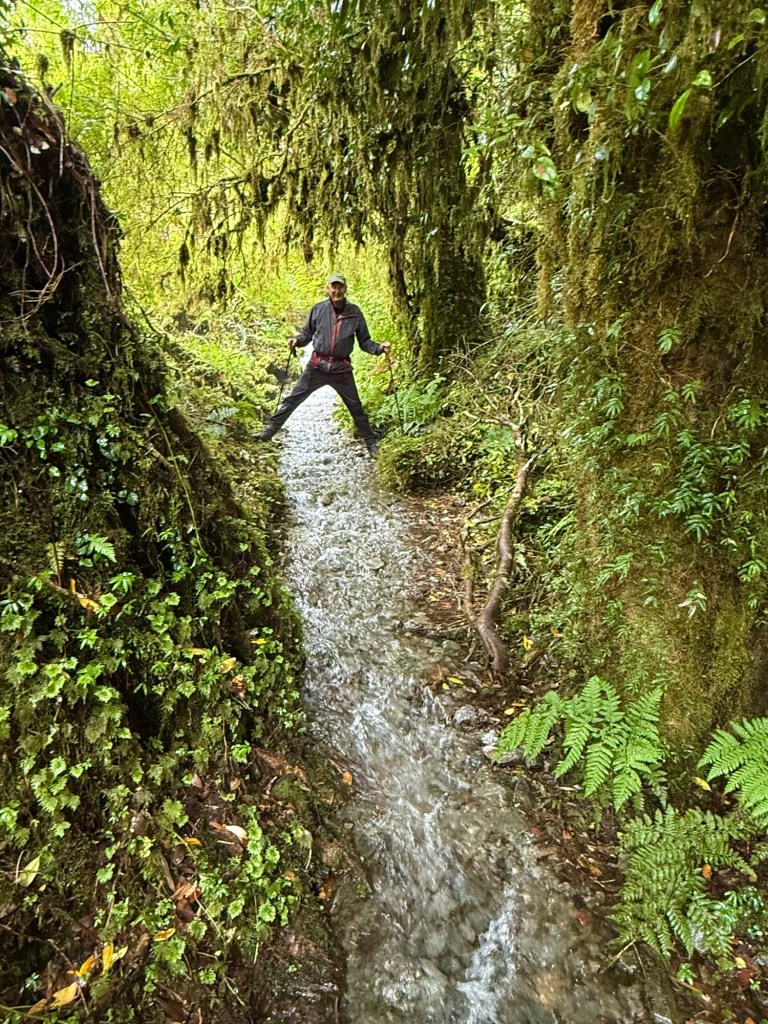


After leaving Lake Yelcho, we detoured to Puerto Raúl Marín Balmaceda, a remote village of 300 people. The turnoff from Ruta 7 led to a 36-mile gravel road that took two hours to drive—one lane, full of potholes, blind curves, with no one behind us and only two cars passing us in the other direction. Along the way, we passed waterfalls, spotted a huemul—a small, elusive deer—and drove beneath towering cliffs.
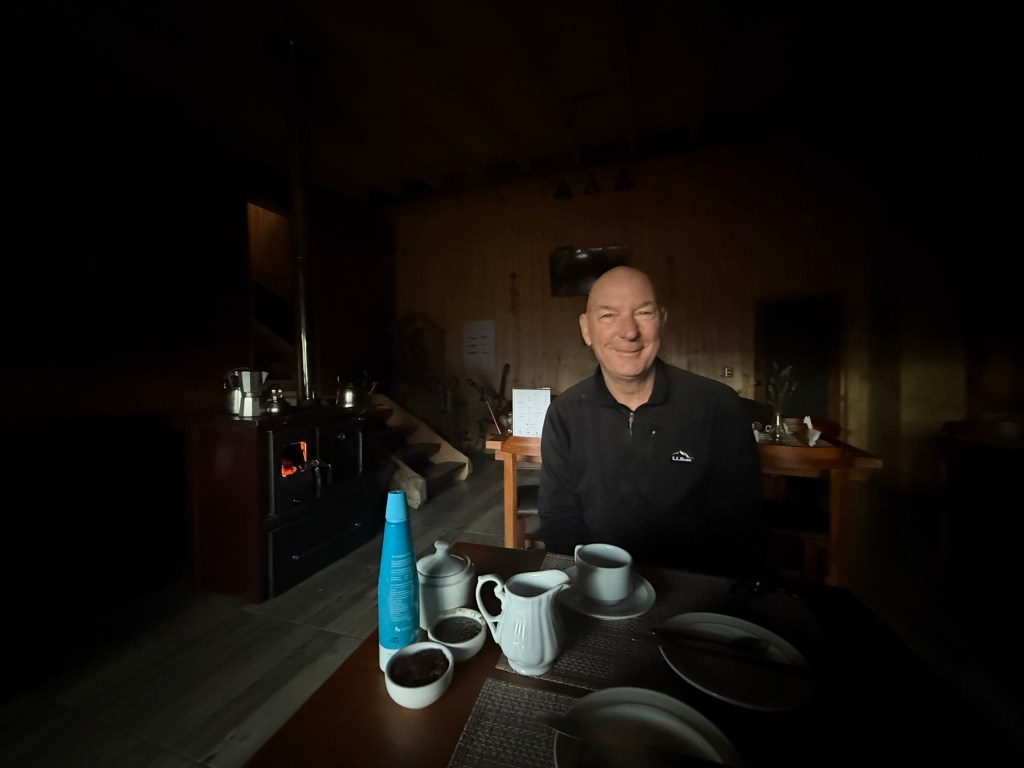
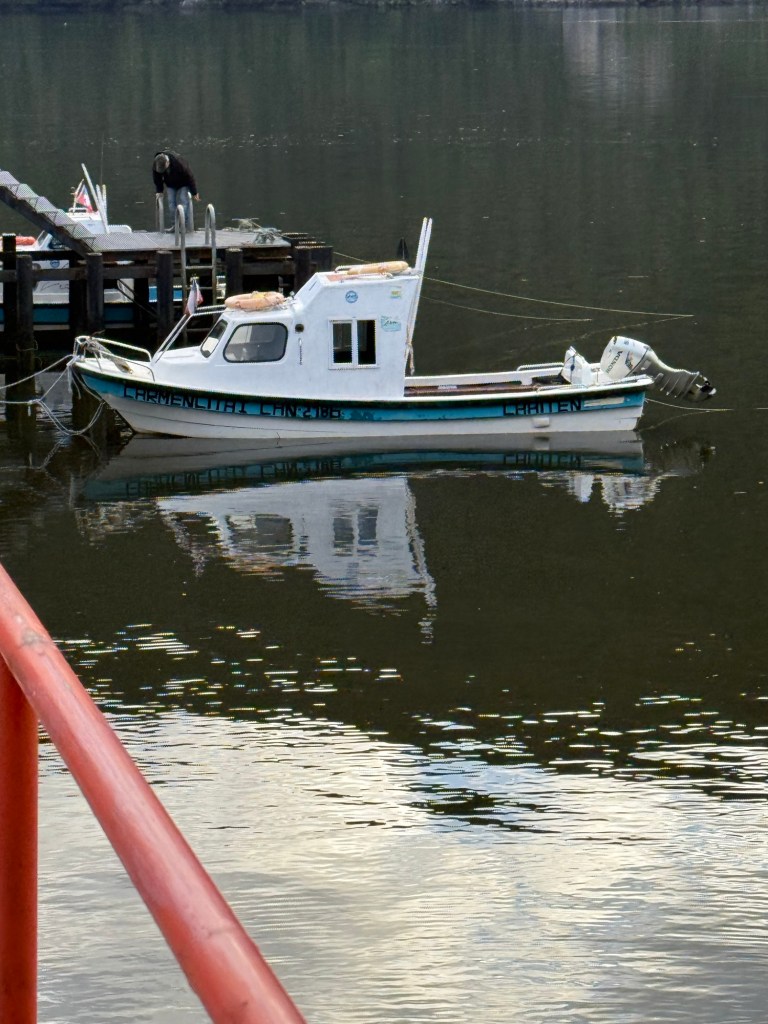
At the end of the road, a two-car carrying ferry crossed the water to the village, one of the most isolated spots on the already remote Carretera Austral. The town only runs electricity from 7 am until 11 pm, but when we were there it was off until 2 pm, so coffee and getting ready was in the dark. We stayed in a nearly empty hotel, with only one other guest, and saw just a handful of travelers. On a forest hike, we didn’t pass a single person.
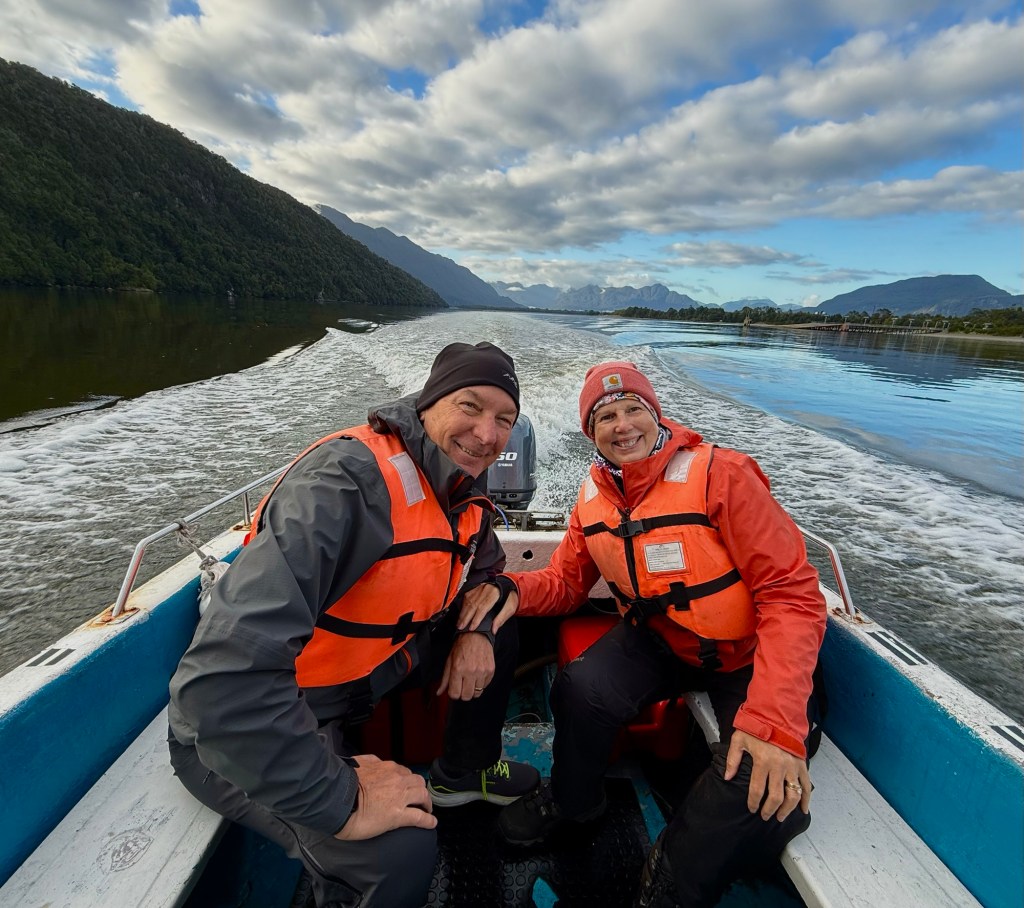
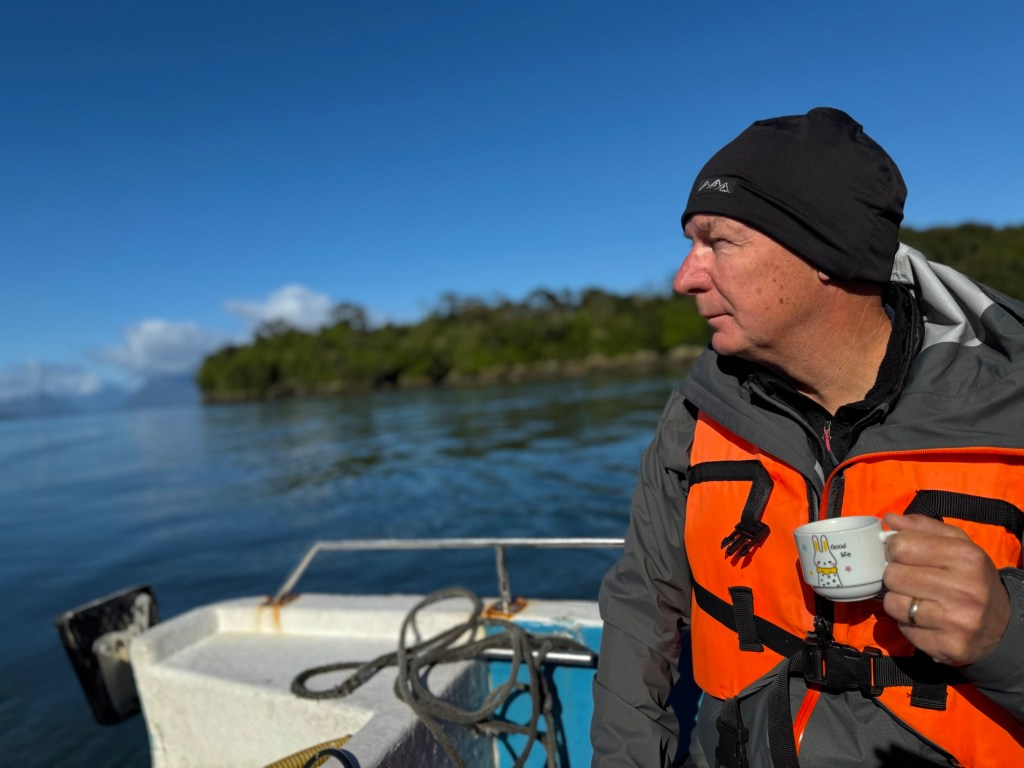
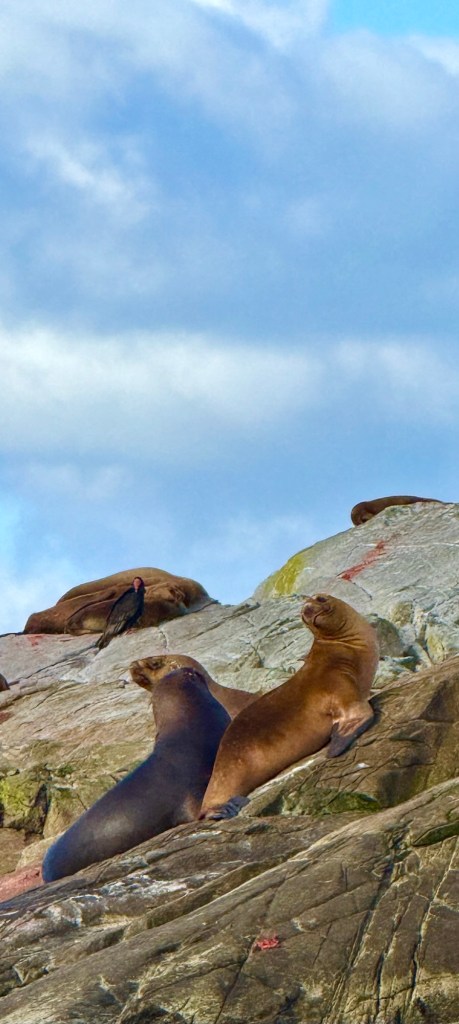
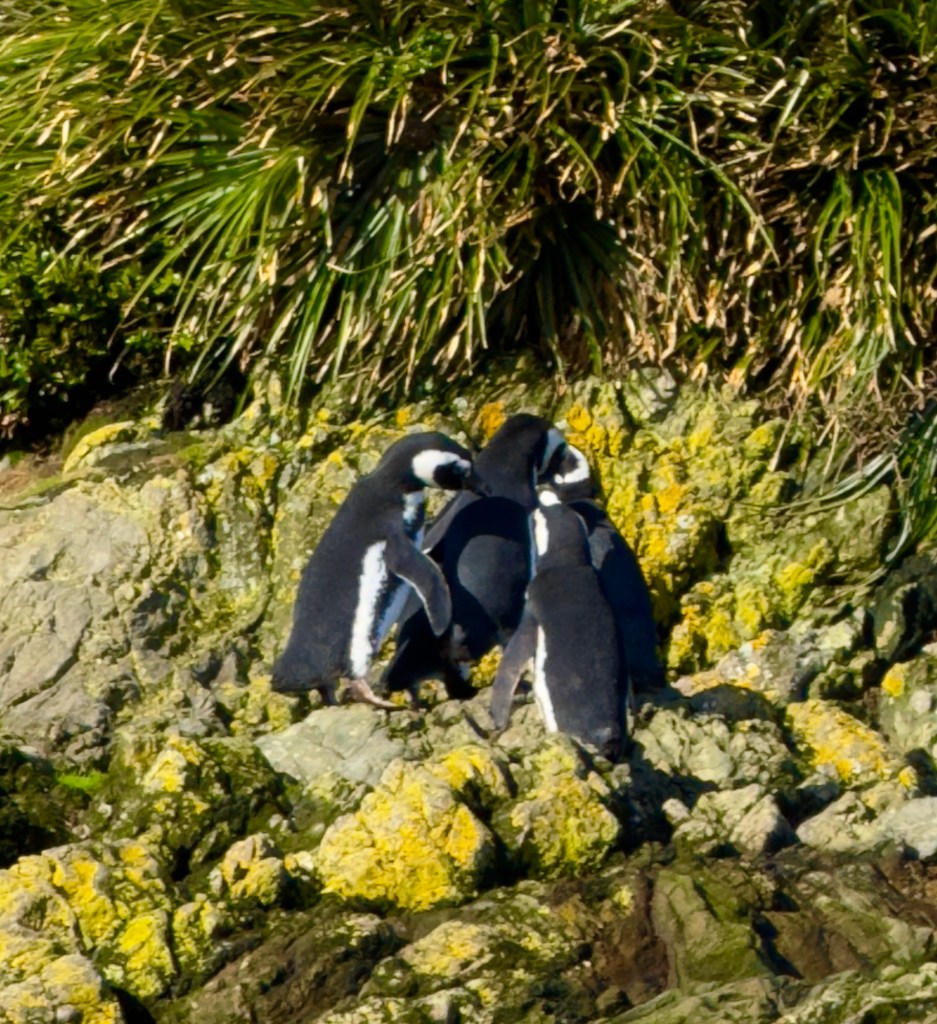
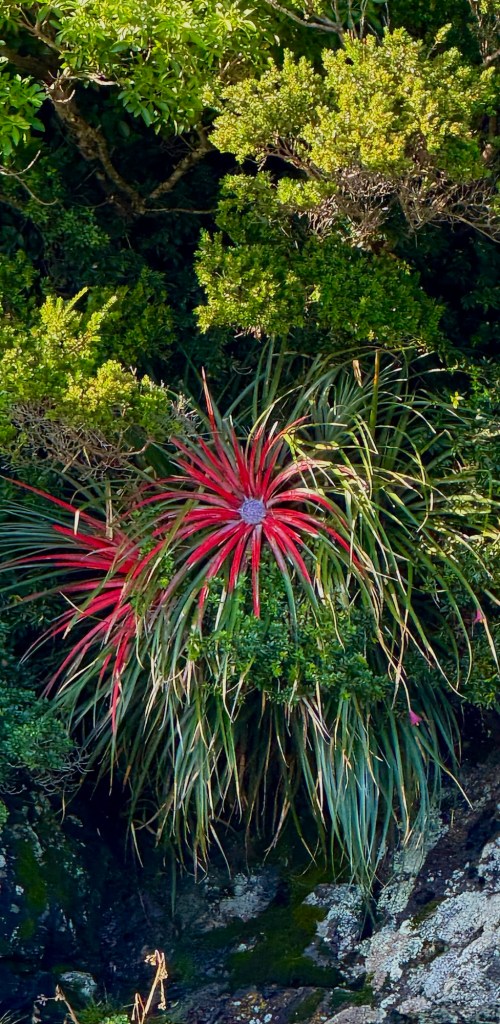
The highlight came at sunrise when we set out on a small boat toward a cluster of rocky islands in the Pacific. The islands were covered in green vegetation and bright flowers, an unexpected contrast to the rugged coastline. The islands teemed with life—sea lions basked on the rocks, penguins tended to their young, Chilean geese floated in pairs, and cormorants filled the treetops. A pod of dolphins swam alongside our boat. For two hours, we circled the islands with the open ocean behind us before turning back toward the village and retracing our slow, winding route to the highway.









A three-hour drive south brought us to Puyuhuapi, next to Queulat National Park. The main draws here are the Ventisquero Colgante, or hanging glacier, and the Enchanted Forest. The forest trail was closed due to a landslide, but we were still able to hike up a steep, muddy slope—with some sections of stairs—to reach a great viewpoint of the glacier. We didn’t see anyone else on the way up, took plenty of photos at the top, and then carefully made our way down, trying to avoid slipping in the deep mud. At the bottom, we followed a well-maintained tourist path to another viewpoint, but it didn’t compare to what we had seen earlier.
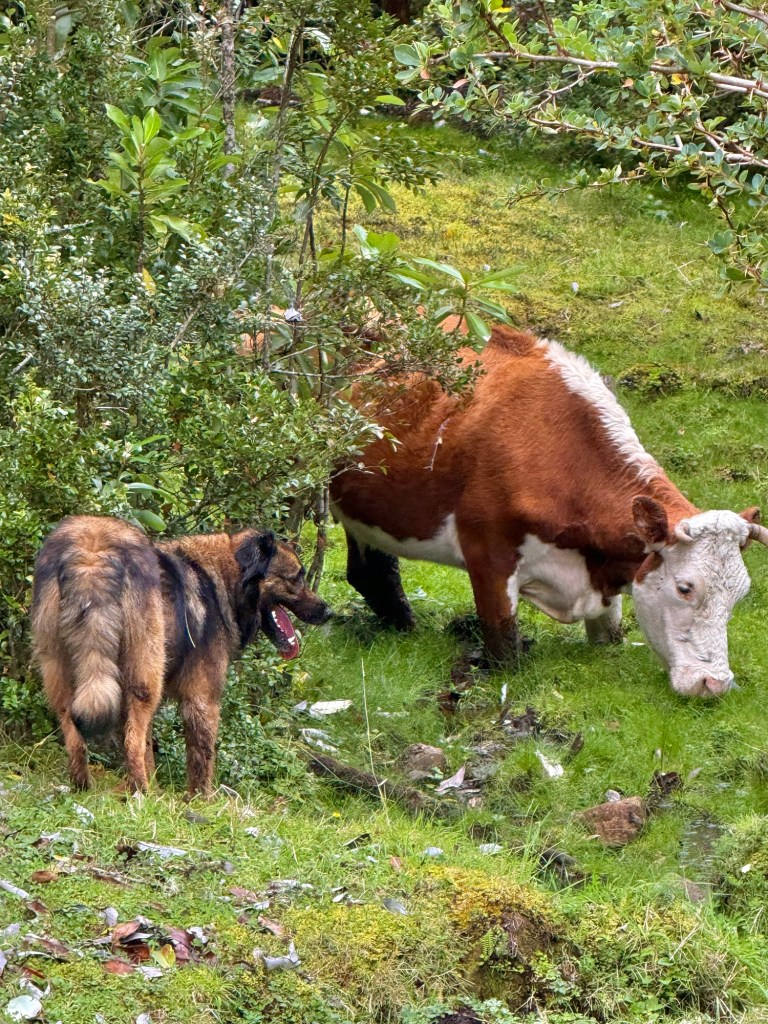
In the afternoon, we came across a small trail on a cattle farmer’s land. As we started in, he met us at the fence and collected a dollar each for access. The trail led through a pasture—dodging cow pies along the way—across a log bridge, and through a short stretch of woods. On the other side, a few cows were grazing on a hillside. While taking a photo of one standing behind a tree, we noticed a dog nearby, watching. When the cow stepped forward and sank into the mud, the dog sprang into action, barking wildly. Three more dogs quickly arrived, circling behind the cow and barking even louder. Eventually, the cow managed to struggle free, and the dogs immediately turned their attention to us, leading the way up the trail. At the top, they flopped down to rest while we took in the view. On the way back, they stayed with us, only barking to nudge a stray cow back into place. Watching them work—and seeing the life they had out here in Chile—was something we wouldn’t forget.
The next morning, we set off on an eight-hour drive further south, not sure what was ahead.



 Pete & Lori's Retirement adventures
Leave a comment