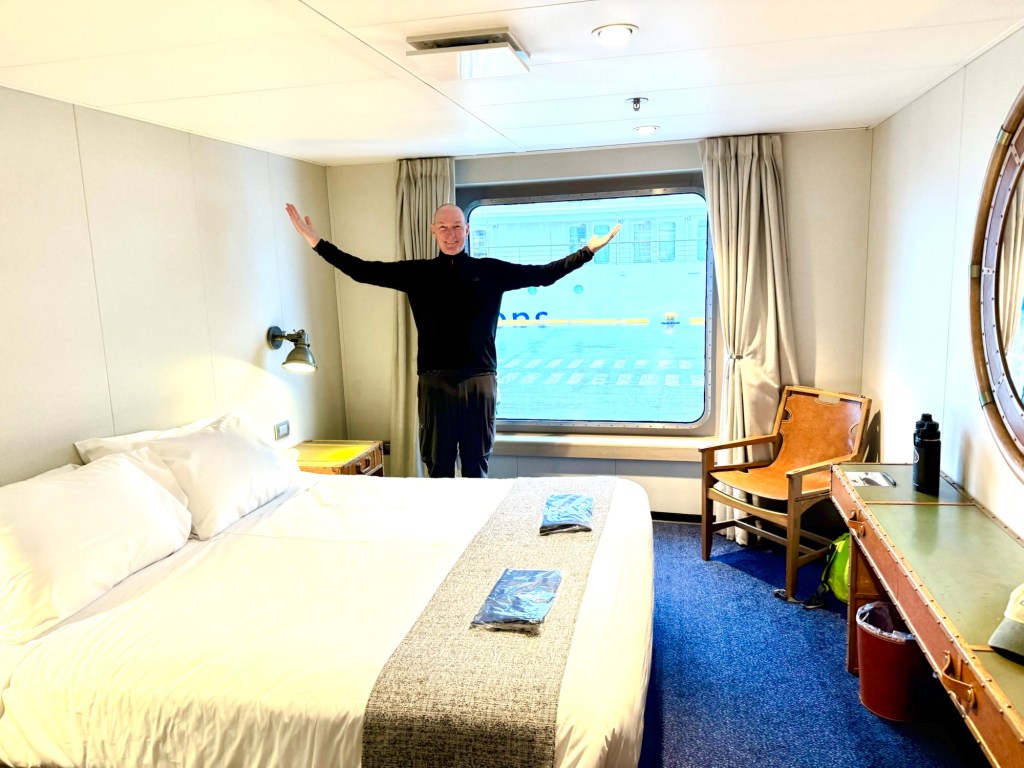
We boarded the ship in the pouring rain, ready for our first cruise. Our cabin was more spacious than expected, with a large window looking out to the water. After a welcome toast, we had our first meal on board—delicious. We were a smallish group of about 100.
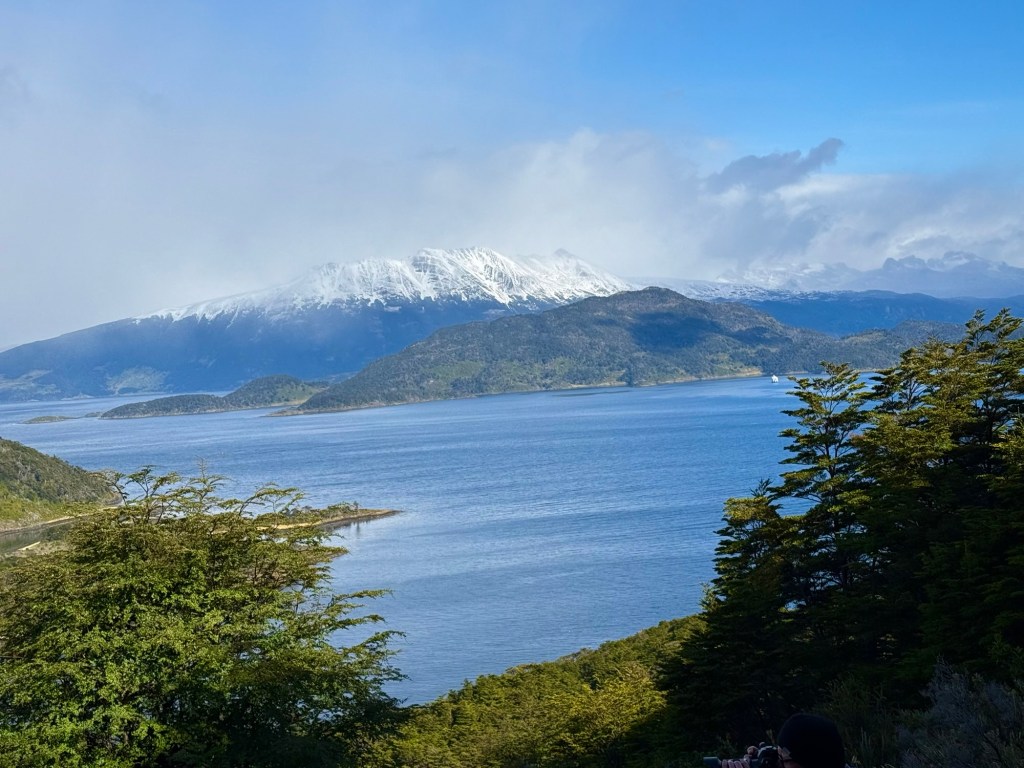
The next morning, we boarded on the zodiac to Wulaia Bay, where Darwin once explored. Our guide shared the history of the Indigenous people who lived there for thousands of years as we hiked to a lookout with a sweeping view of the bay. From above, the ship looked small in the distance.
Later, before our excursion to Cape Horn—the last land before Antarctica—Pete and I sat in the quiet lounge at the front of the ship, watching seabirds. As the sky cleared, a full rainbow appeared straight ahead.
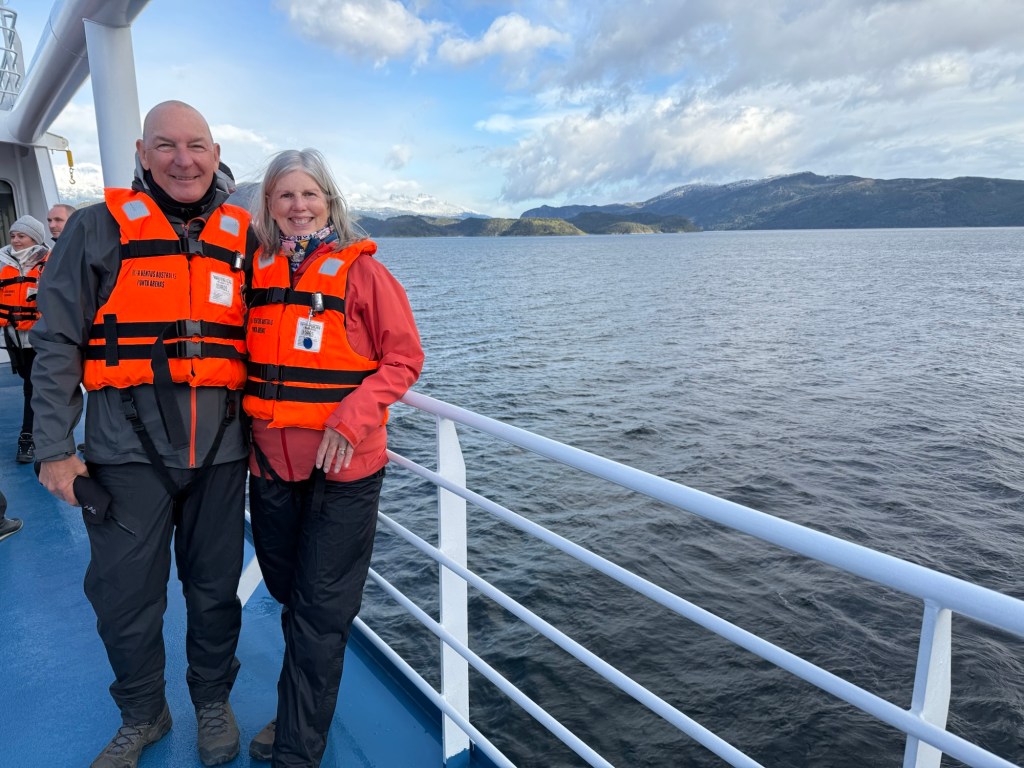

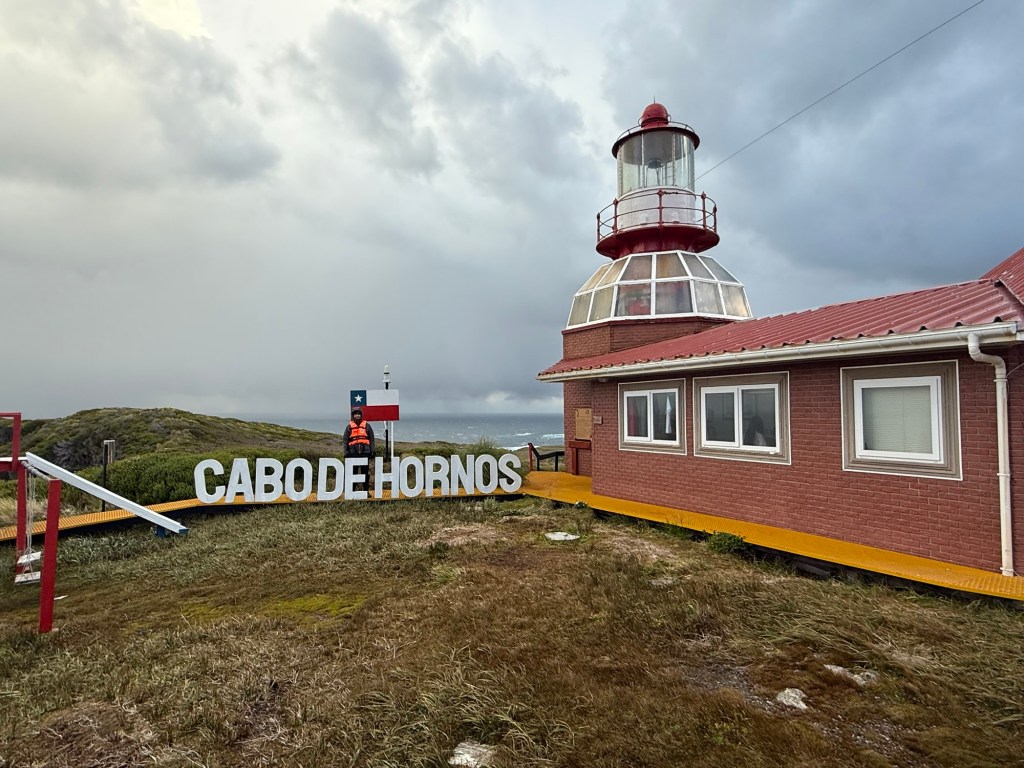
It was a close call whether we’d make it to Cape Horn. The seas were really rough, but the ship pressed on, hoping for a break in the weather. As we neared, the clouds thinned just enough for the sun to peek through, and that was our cue. Pete and I climbed into one of the first zodiacs, eager to set foot on this legendary island.
We made our way up to the monument, then the lighthouse, taking in the raw, windswept beauty of it all. But just as quickly as the weather had cleared, it turned again. The ship’s horn sounded—time to go. Cape Horn, the last scrap of land before Antarctica, is notorious for keeping visitors at bay. Fewer than half of those who try actually get to land. We felt lucky to be among them.

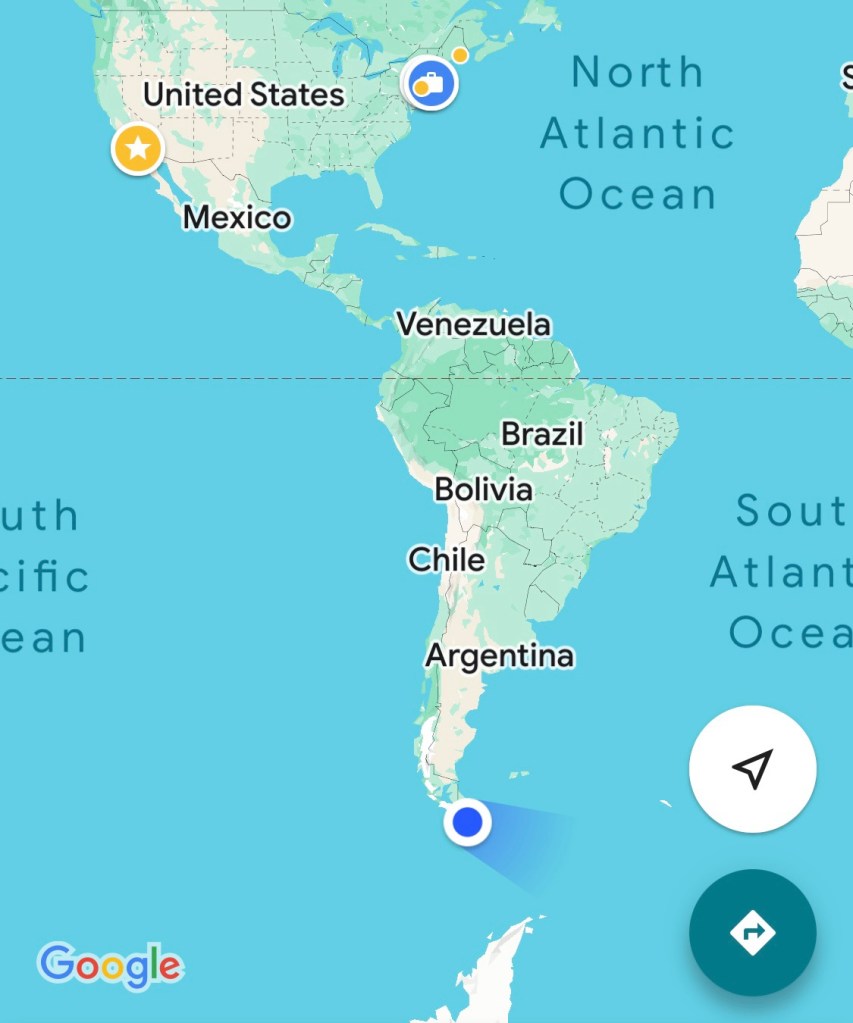
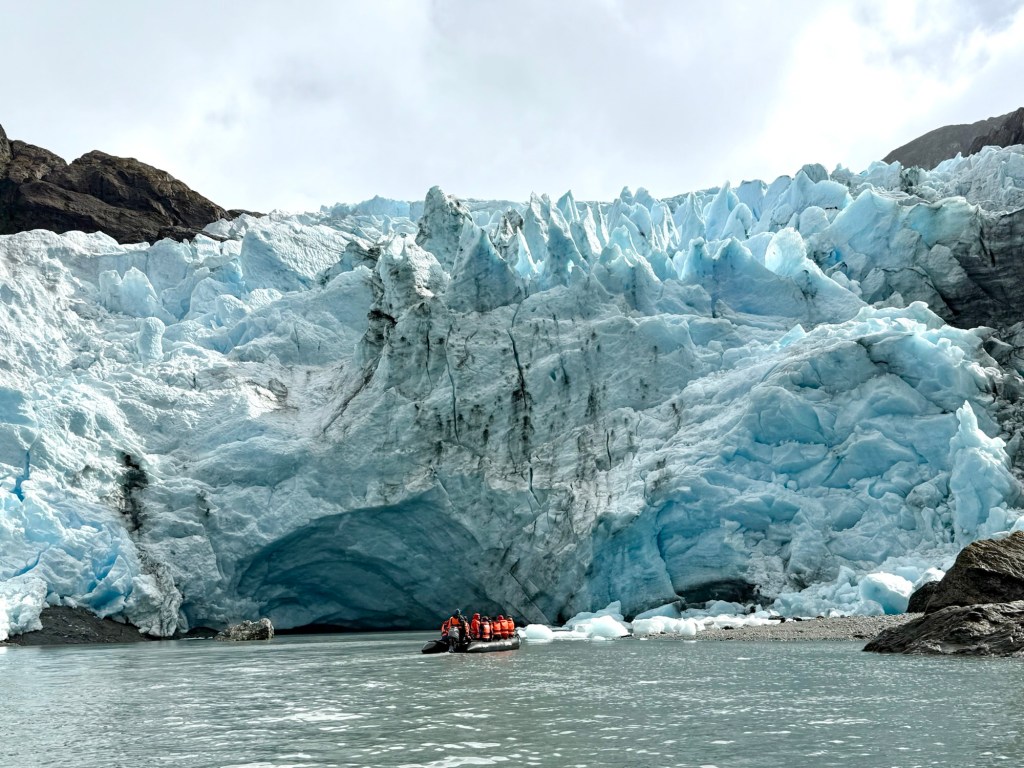
Wednesday was a full glacier day, starting with a ride to Pia Glacier, where we hiked up to a lookout point for a sweeping view. Chile has around 27,000 glaciers, each unique, and Pia is especially tall and active. In the afternoon, we took the zodiac out again, this time to Porter Glacier, getting up close to its towering ice face. A sea lion lingered near our boat, and we pulled a few ice chunks from the water to examine. I’m getting more comfortable on the zodiac, though I still keep a firm grip on the side rope—useless in a real emergency, but reassuring! With icebergs all around and the ever-present cold, I can’t help but stay aware of how quickly the water could turn dangerous.


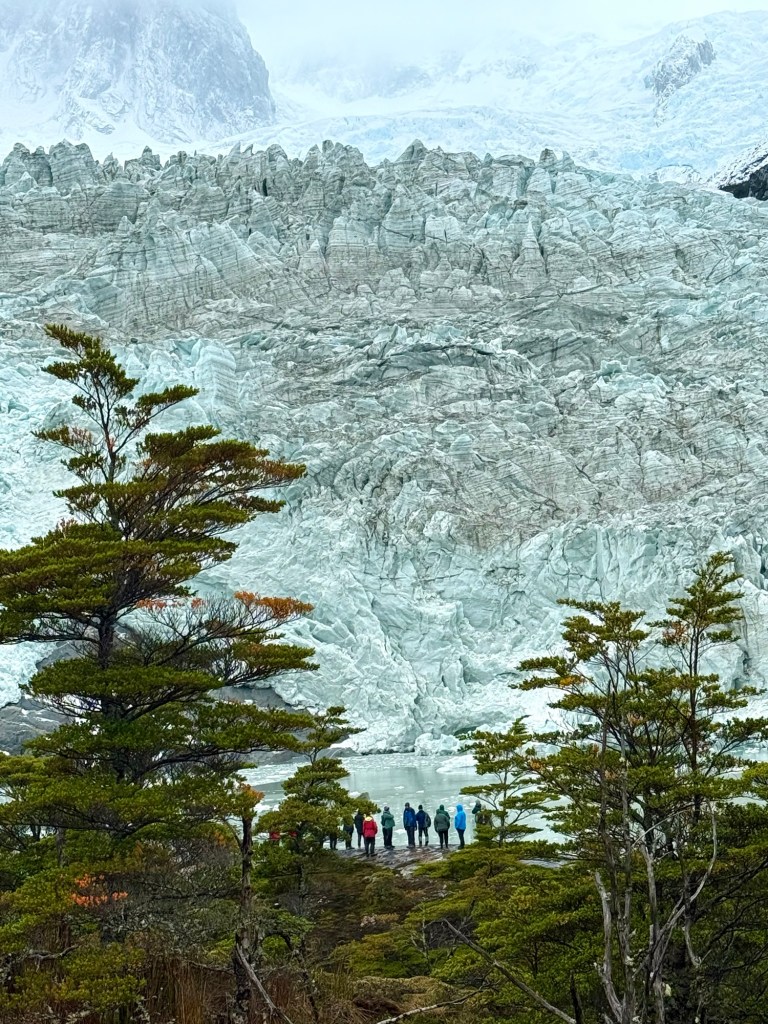
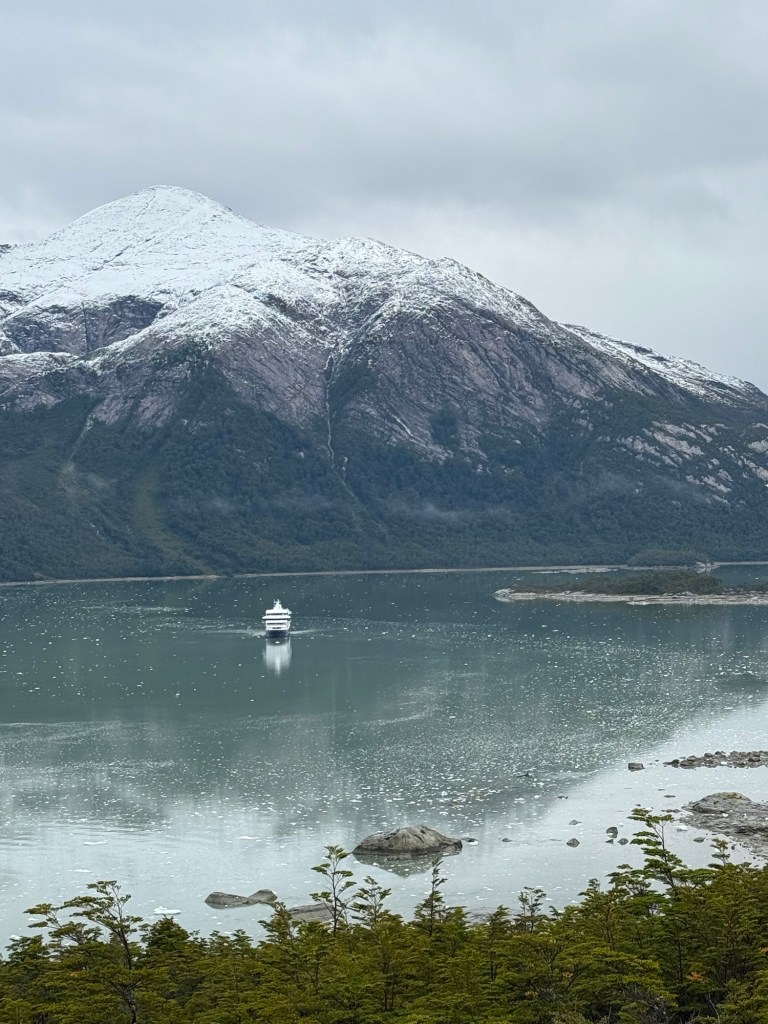
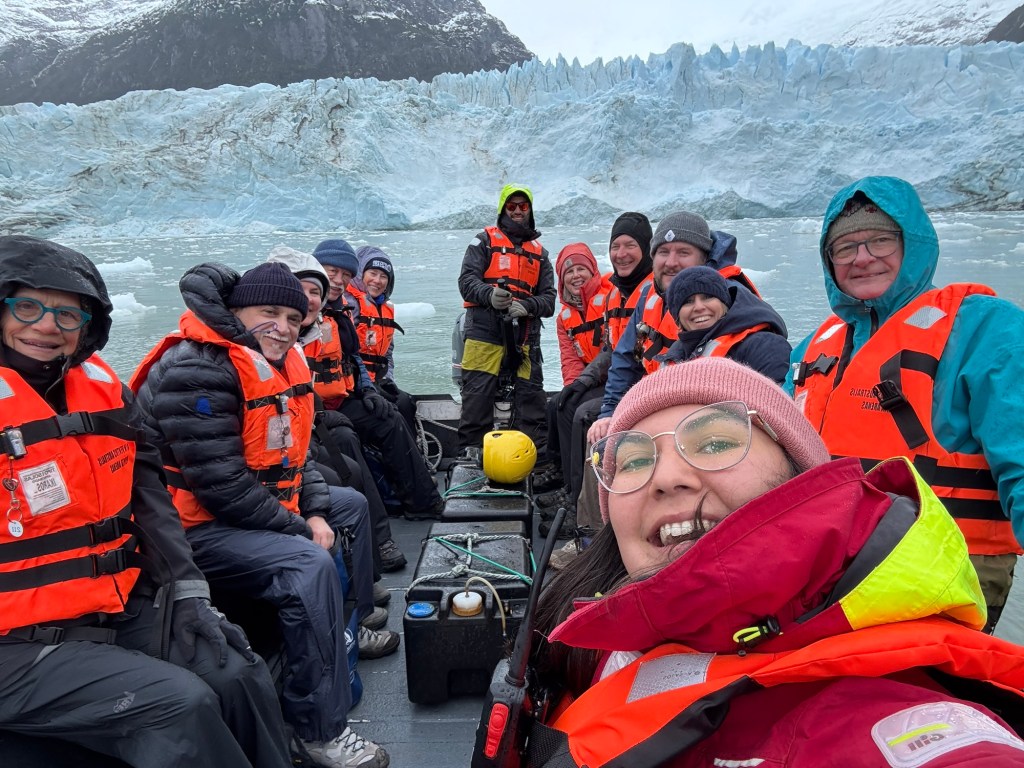

This morning started with a zodiac ride to Águila Glacier. To reach the ice, we hiked along the edge of a fjord, weaving through a patch of rainforest and past mussel colonies and bright sea plants. Then, just around a bend, there it was—massive, streaked with deep blue, standing silent and powerful.
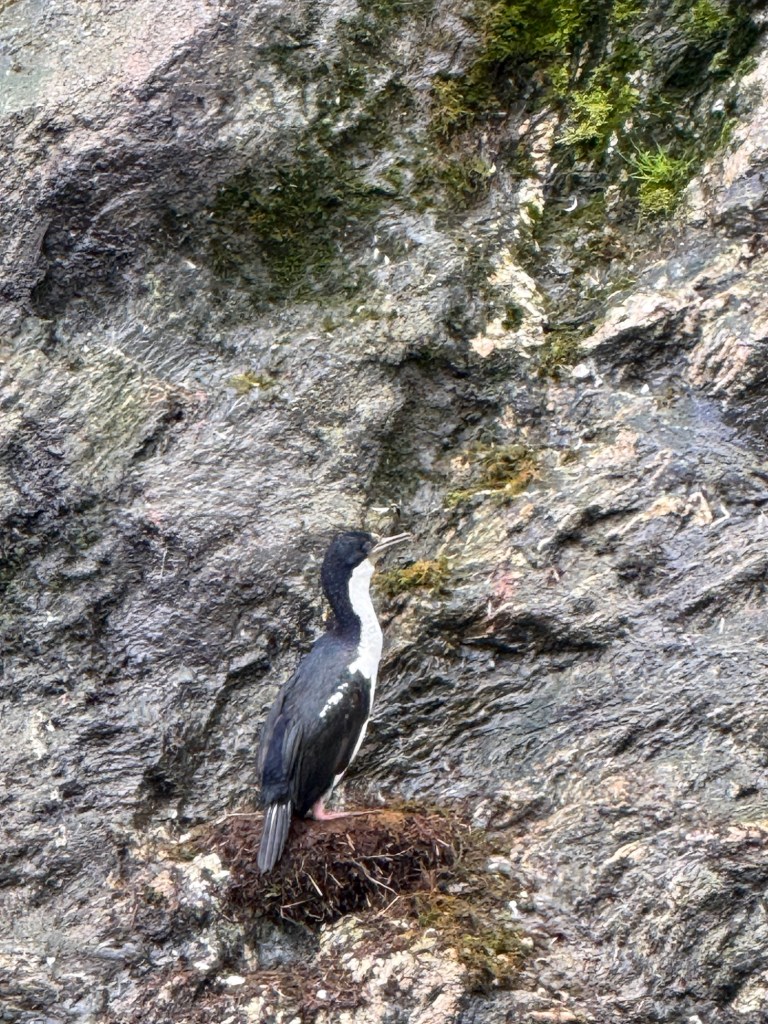
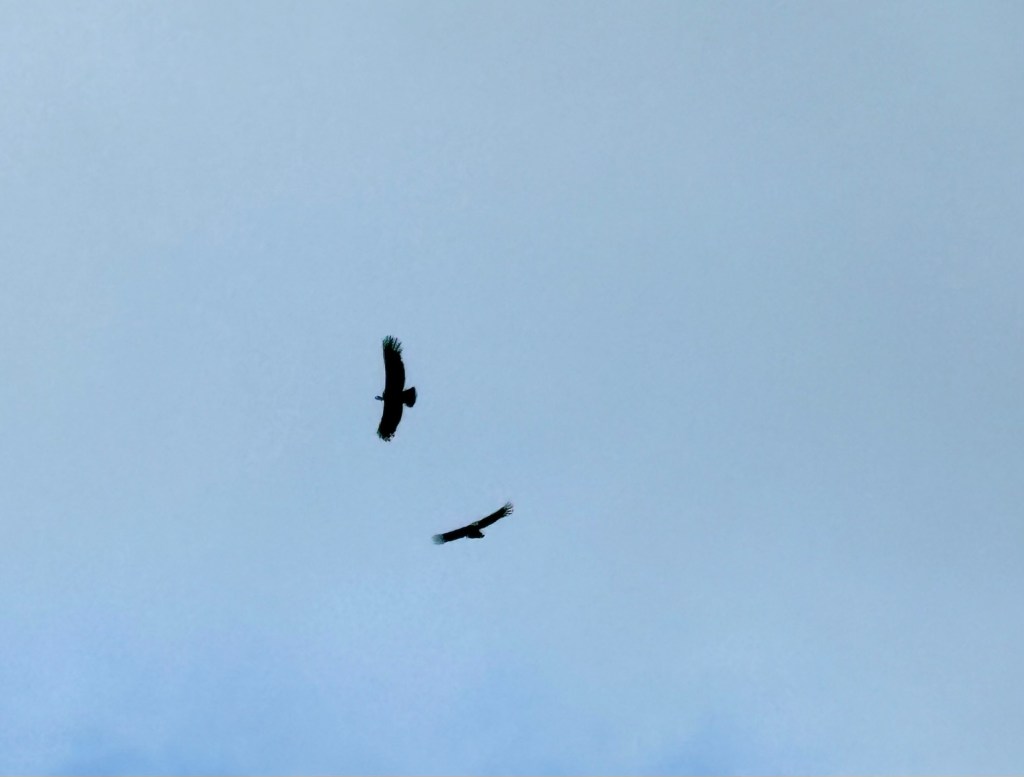
In the afternoon, we set off again, half-thinking, another glacier? But Condor Glacier was something else. As we approached, we saw it had a tunnel running straight through the middle, framing the sky beyond. Too unstable to enter, but we got close enough to take it in before circling the bay to a towering waterfall and cliffs packed with nesting Imperial Cormorants. Overhead, condors soared. The whole place felt wild, remote—like stepping into another world.





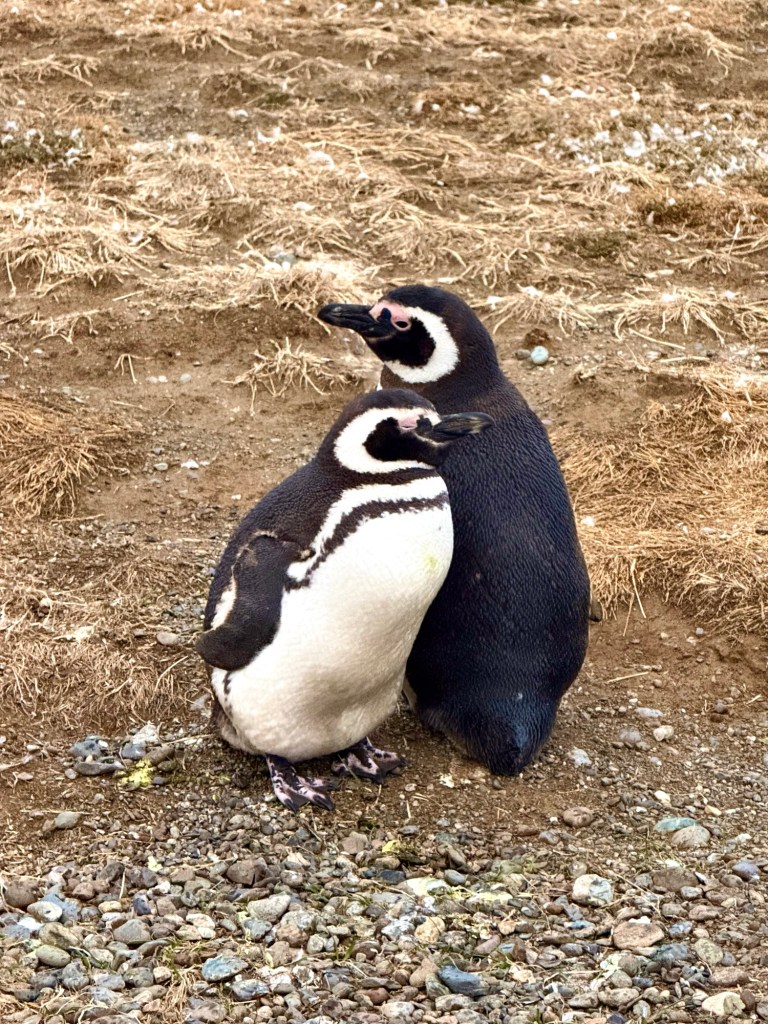
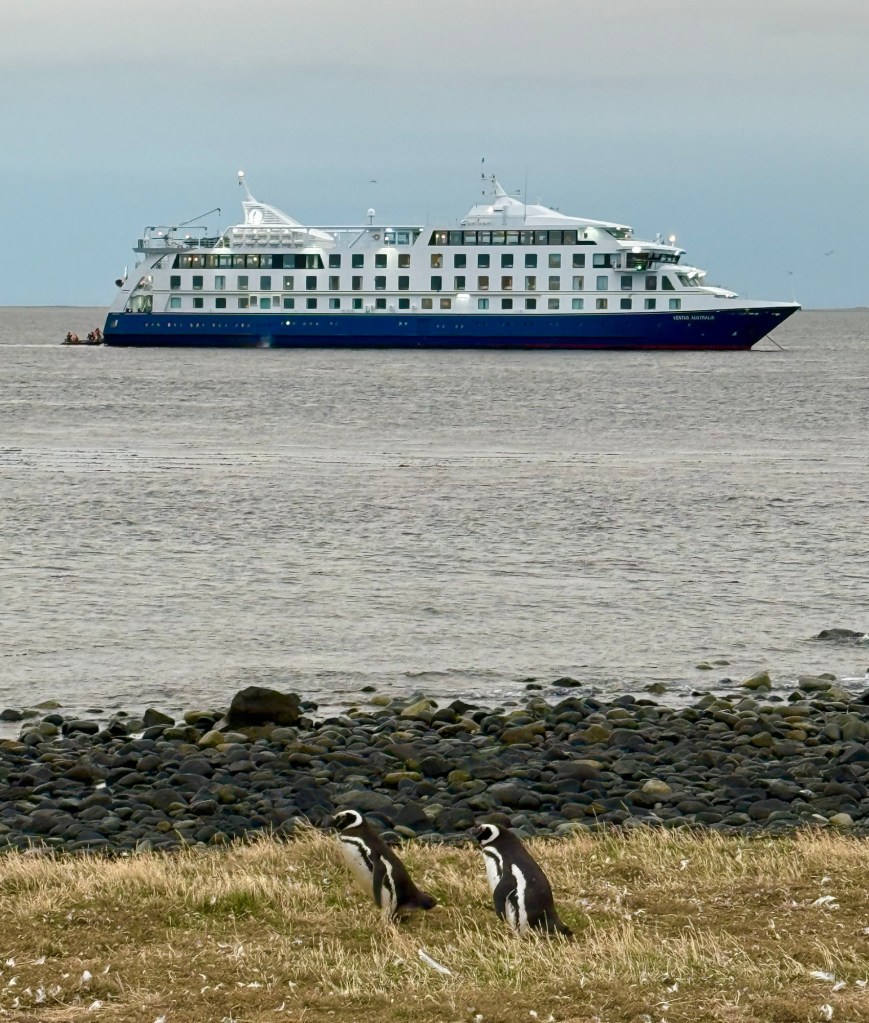
After our final excursion, we made our way back to Punta Arenas, wrapping up this part of the journey with a visit to Magdalena Island. The island was teeming with Magellanic penguins, here to nest, hatch their chicks, and raise them before heading back to sea for the winter. A few seagulls and skuas hovered nearby, but the penguins stole the show. We spent about an hour watching them waddle, call to each other, and go about their daily routines before boarding the boat for the return trip. Another unforgettable leg of the adventure—this place exceeded all expectations.


 Pete & Lori's Retirement adventures