After more than a week in Bavaria, enjoying every minute, we were ready to head into Switzerland for the final part of our European Peaks fall tour. First, a two-day stop in Lucerne before continuing to Zermatt.
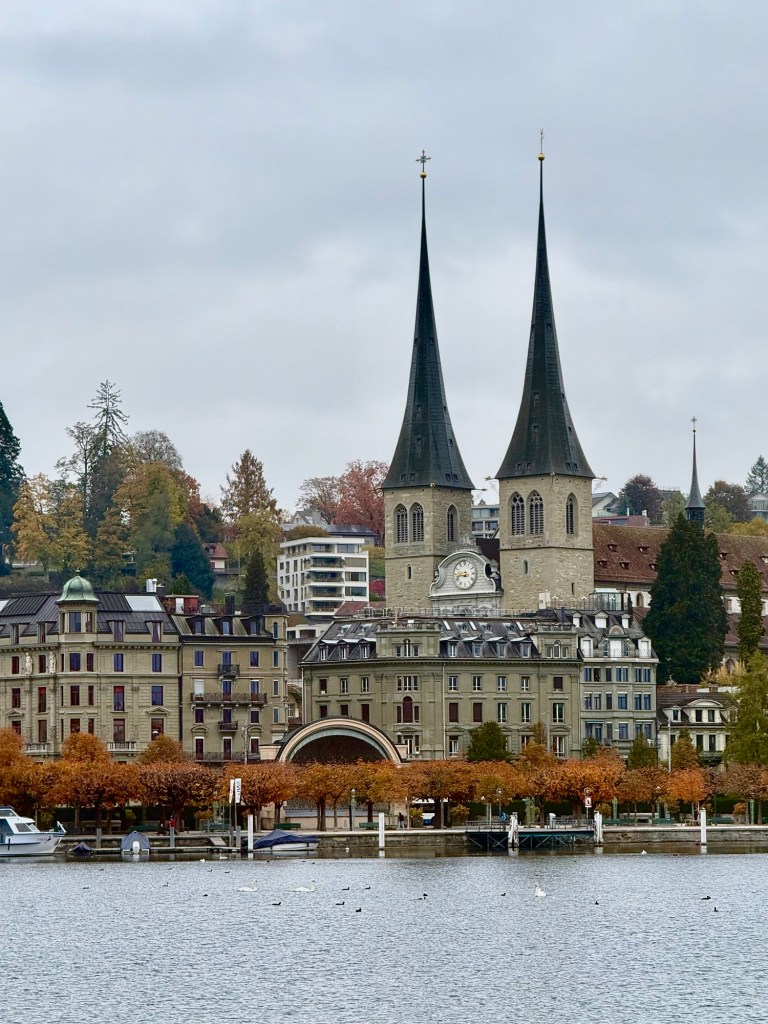
I had fond memories of Lucerne from 38 years ago, when I was teaching at Swiss Semester in Zermatt in 1987. I had visited with the students and remembered the lake, the swans, and the mountains surrounding the city. But it turns out I hadn’t seen very much of Lucerne itself.
We planned one full day hiking on Mount Rigi, followed by an afternoon and evening exploring Lucerne’s Old Town.
Arrival
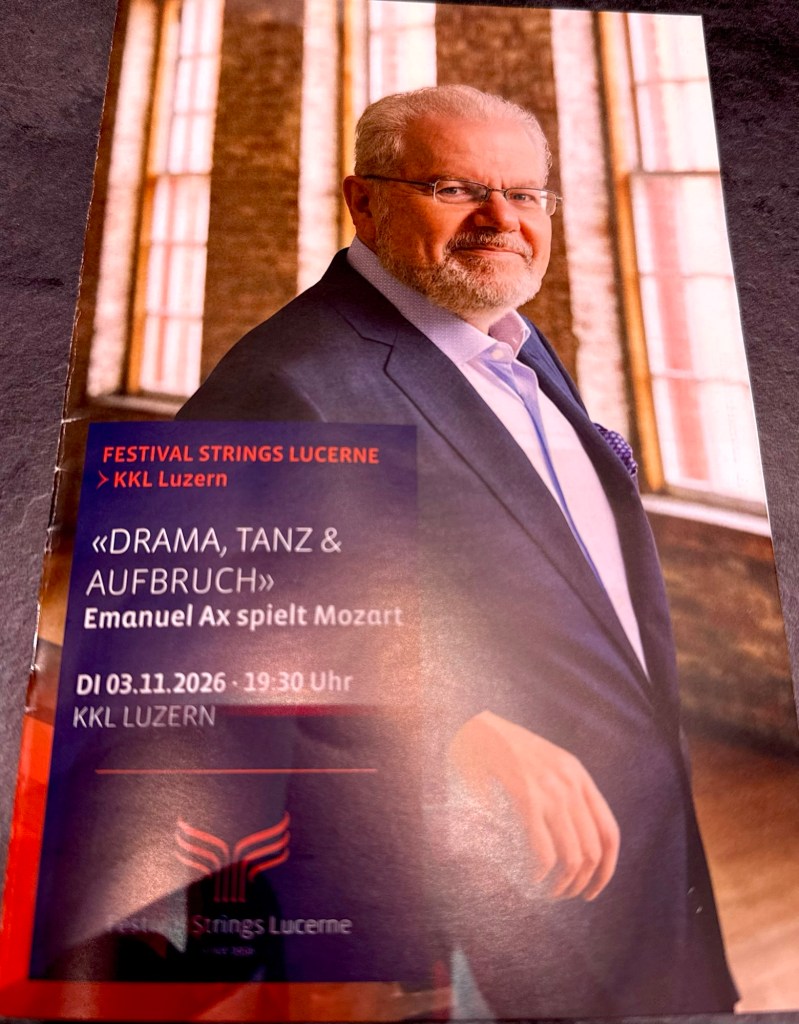
Our hotel was conveniently located for exploring the city, and we were delighted to discover that pianist Emanuel Ax was performing in Lucerne on the evening we arrived. We know his playing from summers at Tanglewood, where we’ve heard him perform with Yo-Yo Ma. It was a wonderful surprise to find such a familiar musician on the concert schedule so far from home. We had a full itinerary, but we were able to get tickets to enjoy a fantastic concert on our first night in Lucerne .
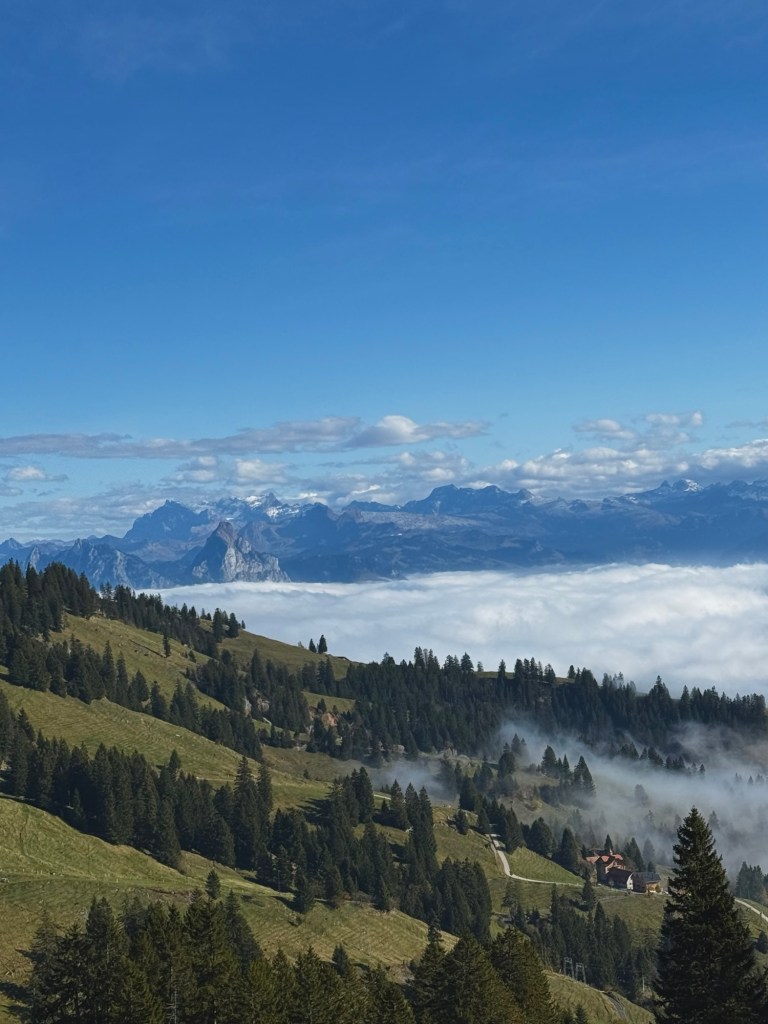
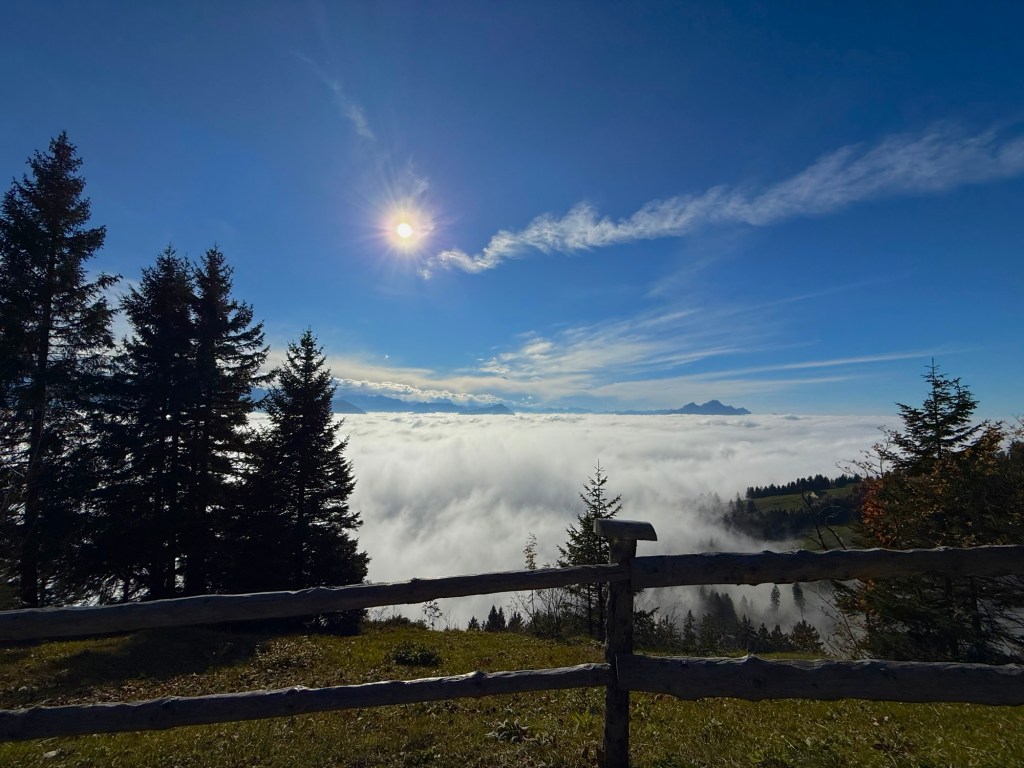
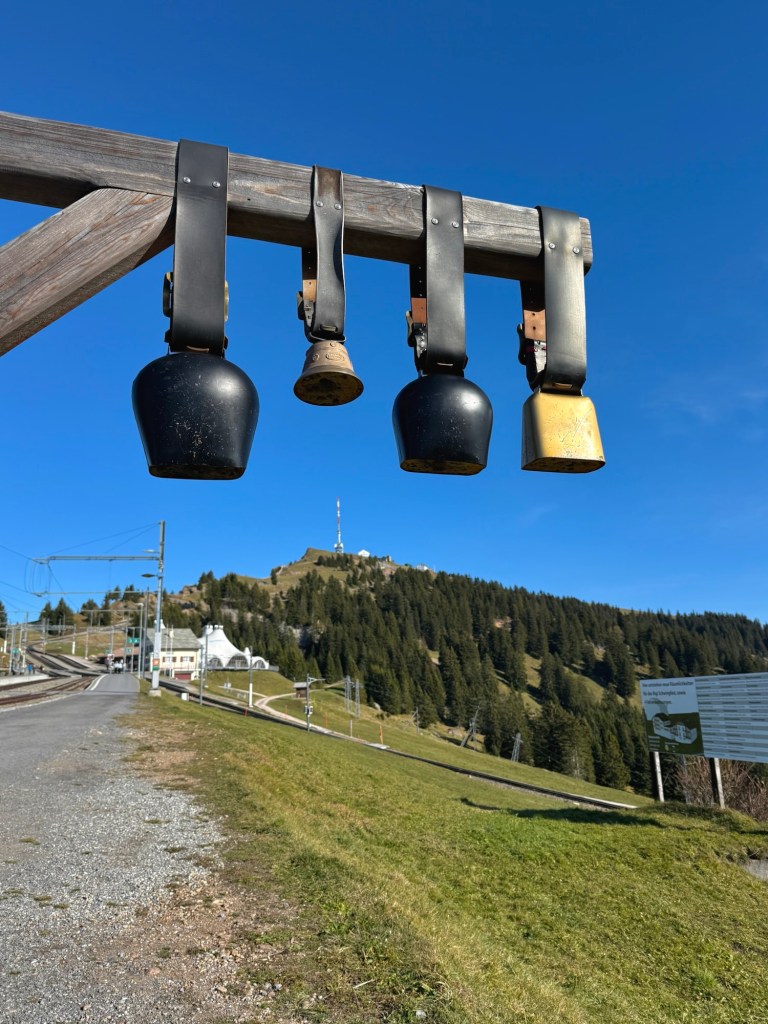
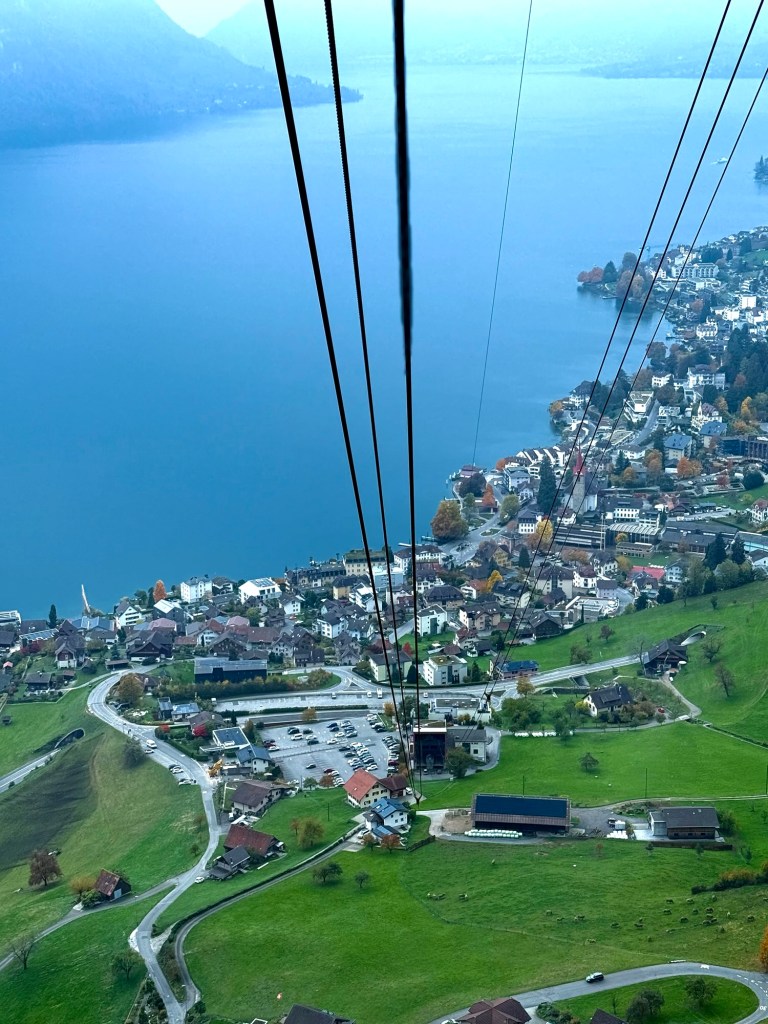
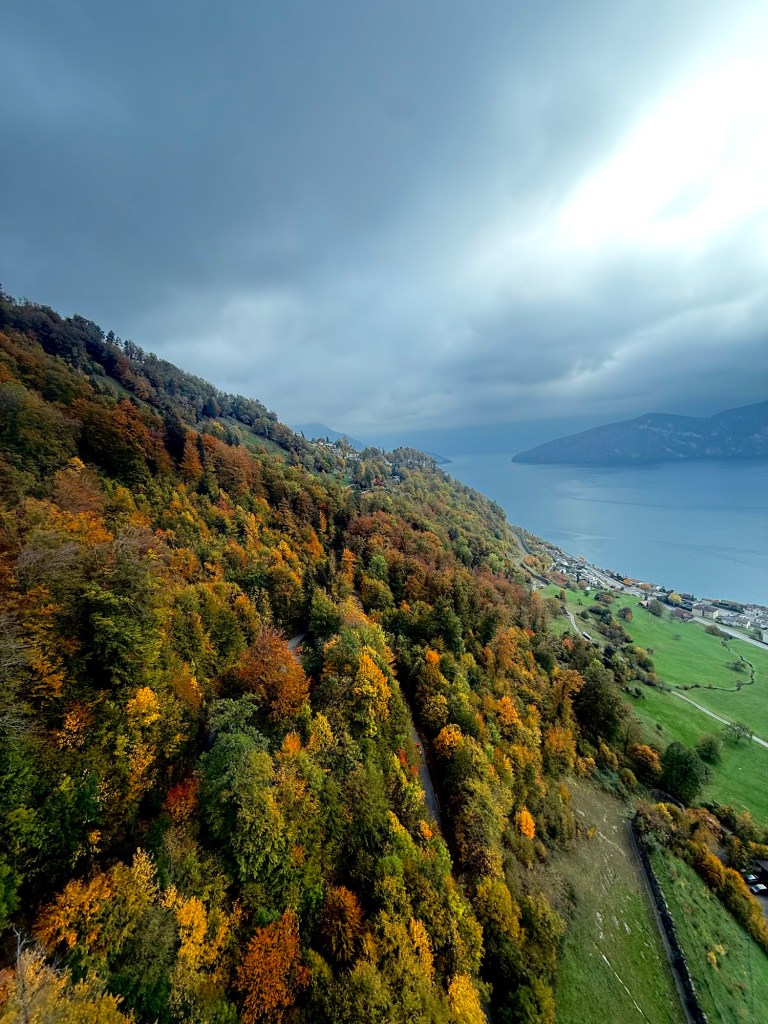
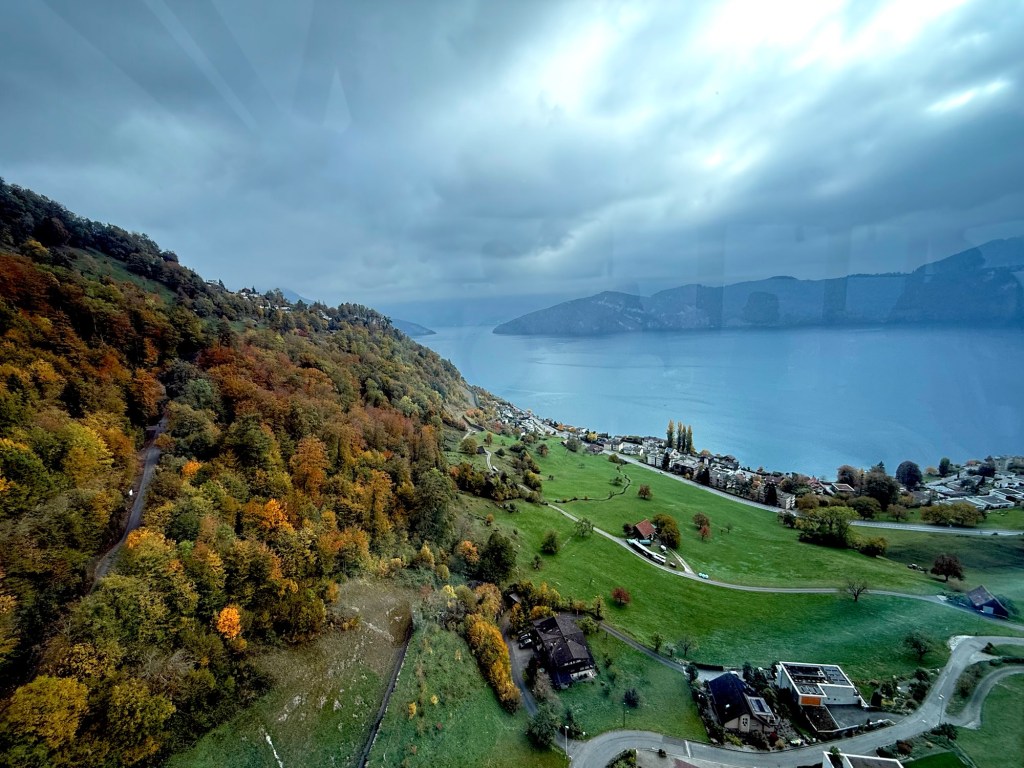
Mount Rigi: Boats, Trains, Trails, and Cowbells
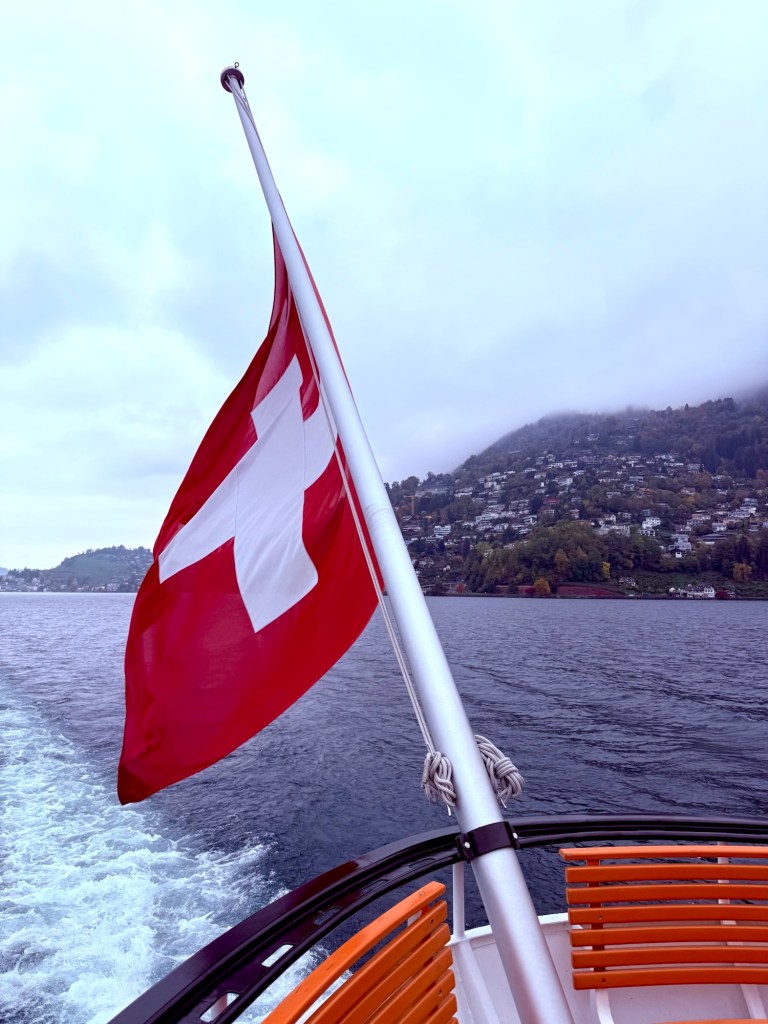
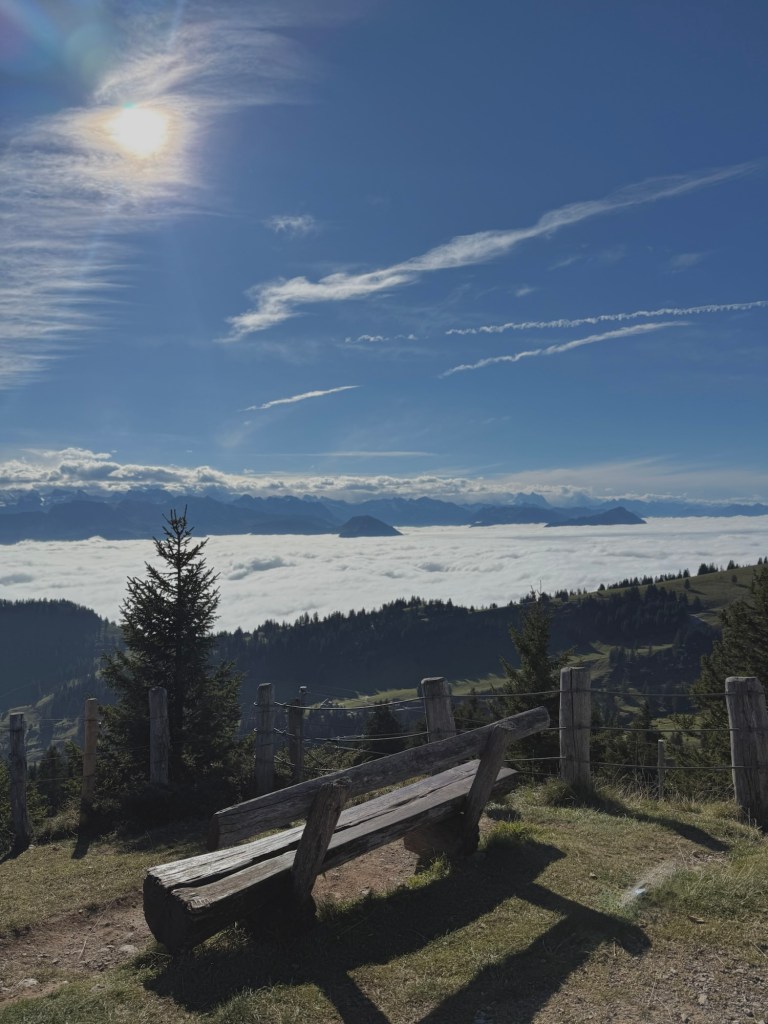
Mount Rigi, known as the Queen of the Mountains, is nearly 6,000 feet above sea level and has views across several lakes and the surrounding Alps. It’s also home to Europe’s first mountain cogwheel train that began operating in 1871.
The outing took most of the day, and we were happy to use every last minute before the final boat departure.
Exploring Lucerne’s Old Town
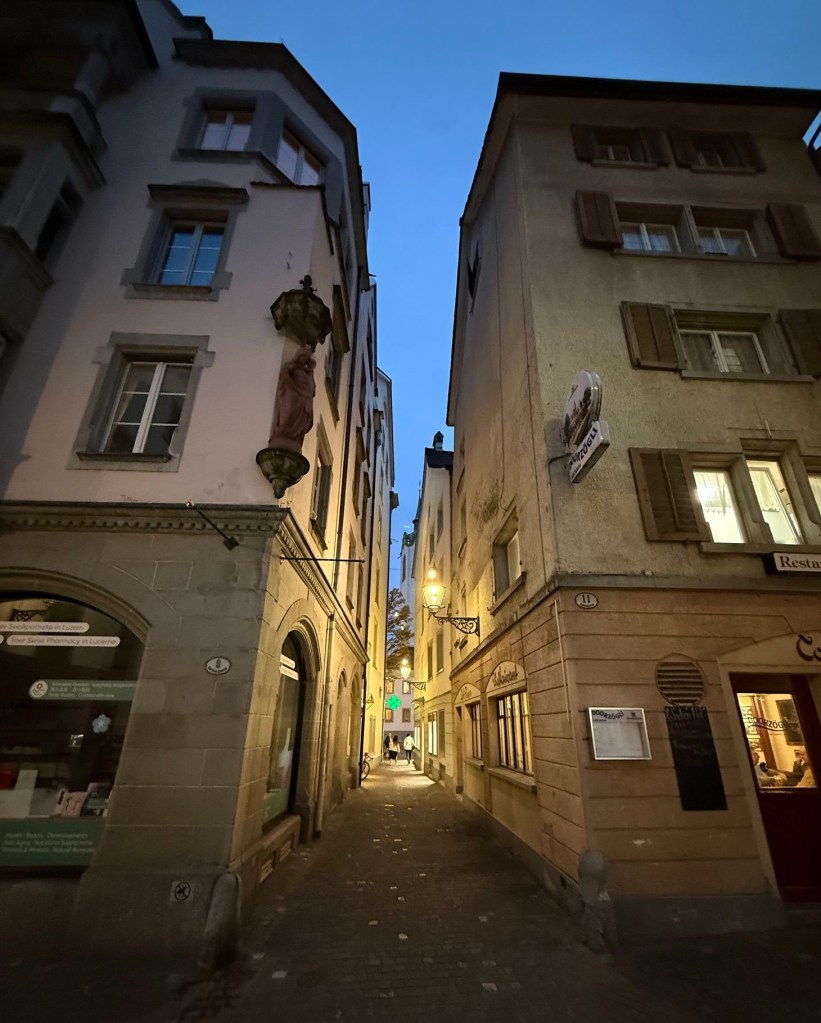
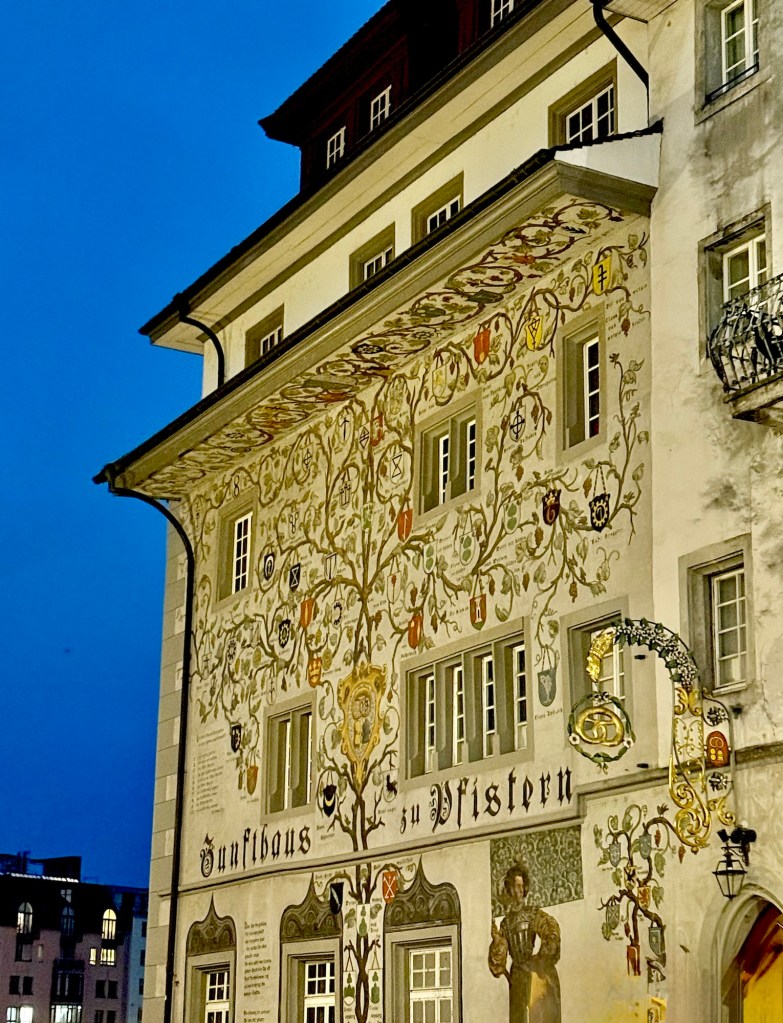
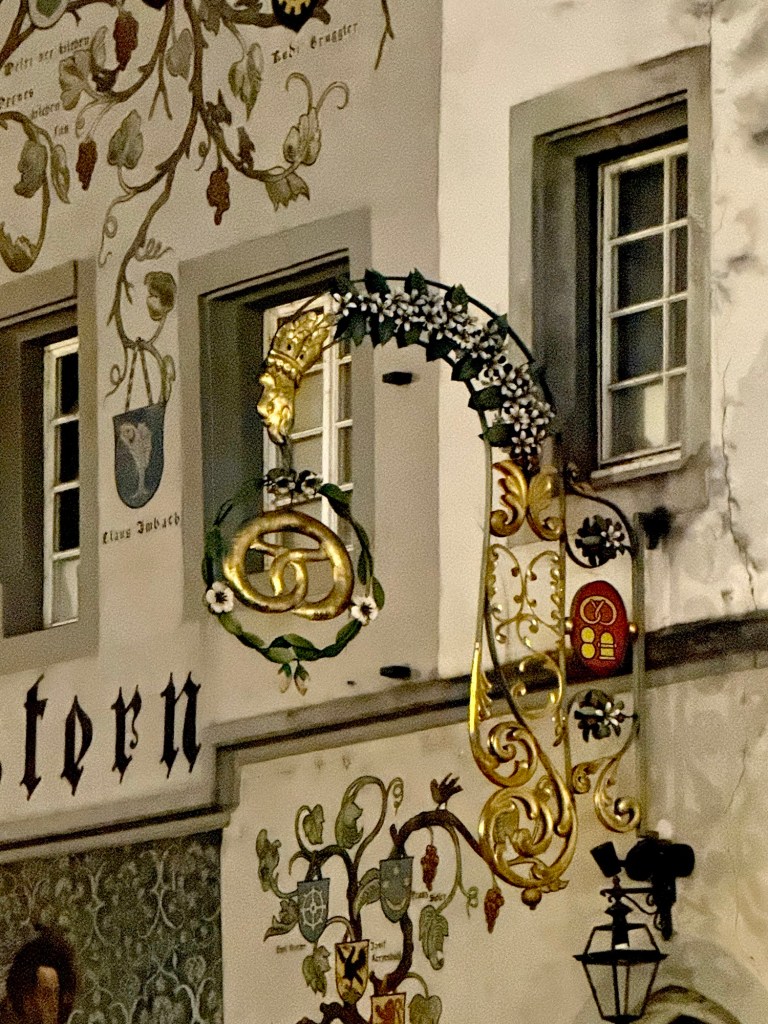
Back in Lucerne, we headed into the Altstadt, or Old Town, with its narrow streets, painted buildings, fountains, and squares.
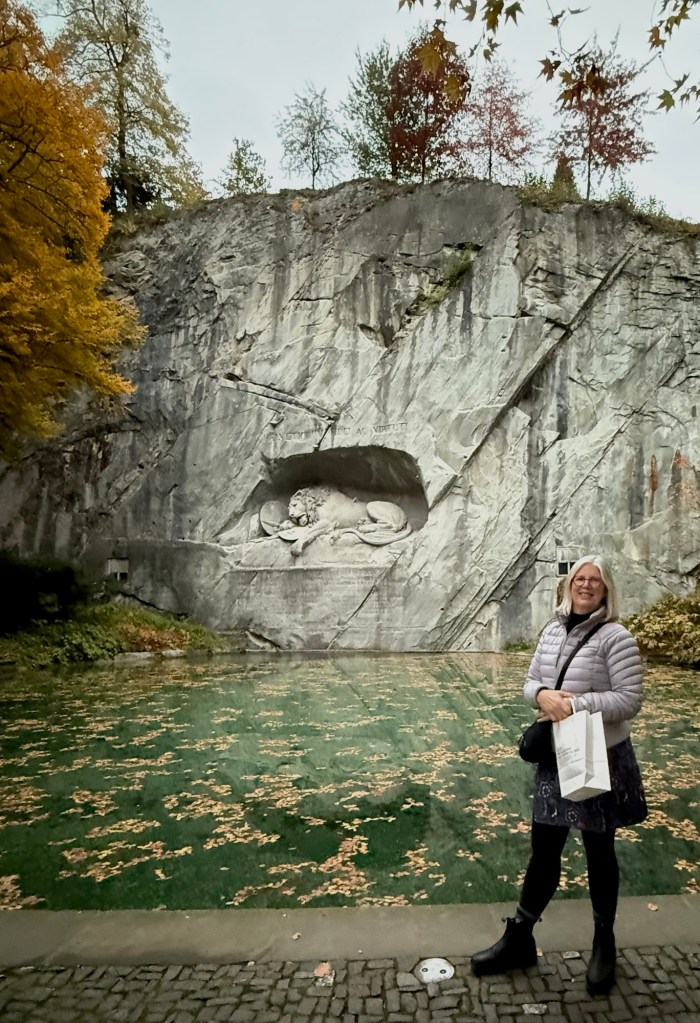
One of our first stops was the famous Lion Monument, a massive sculpture carved into a cliff. It shows a dying lion, pierced by a spear, and commemorates the Swiss Guards killed during the French Revolution in 1792.
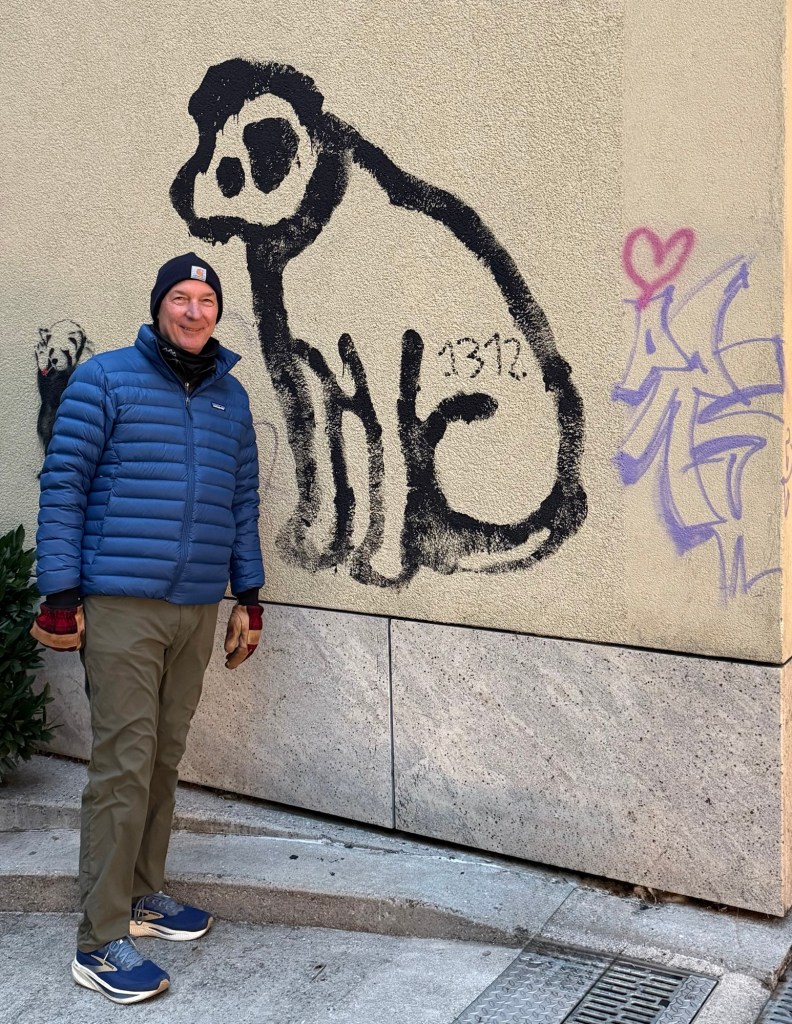
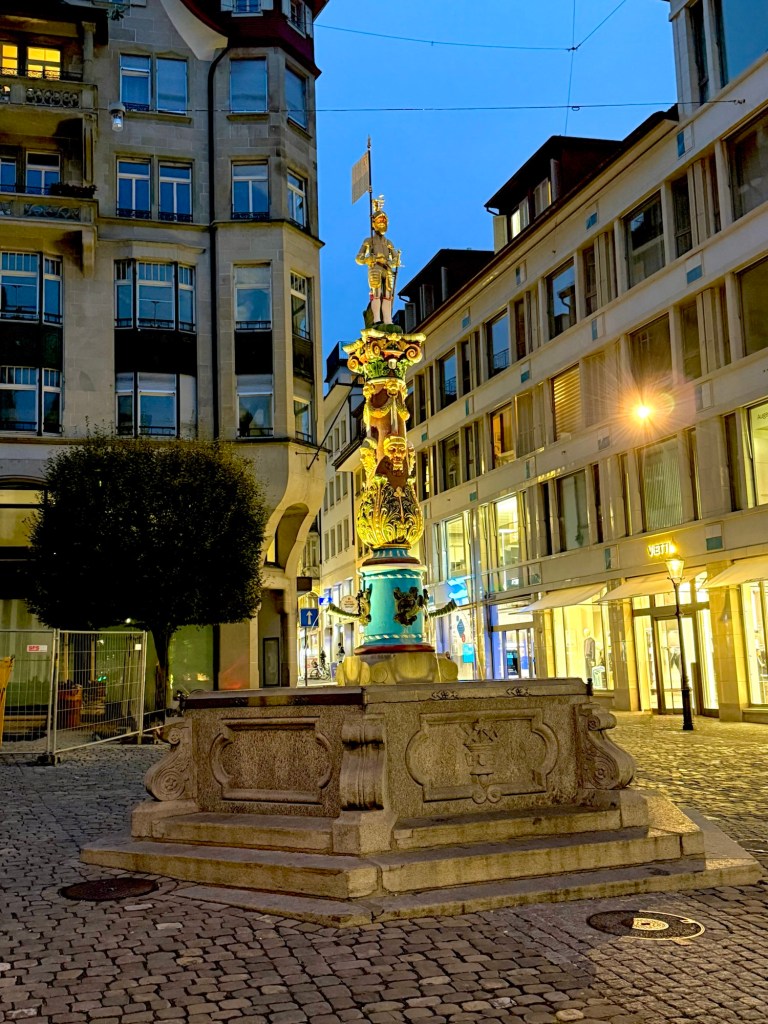
At Kapellplatz, we admired the Fritschi Fountain, decorated with figures associated with Lucerne’s Carnival, or Fasnacht. Brother Fritschi is a legendary character connected to the city’s centuries-old Carnival traditions, and the colorful fountain reflects the playful, sometimes mischievous spirit of the festival.
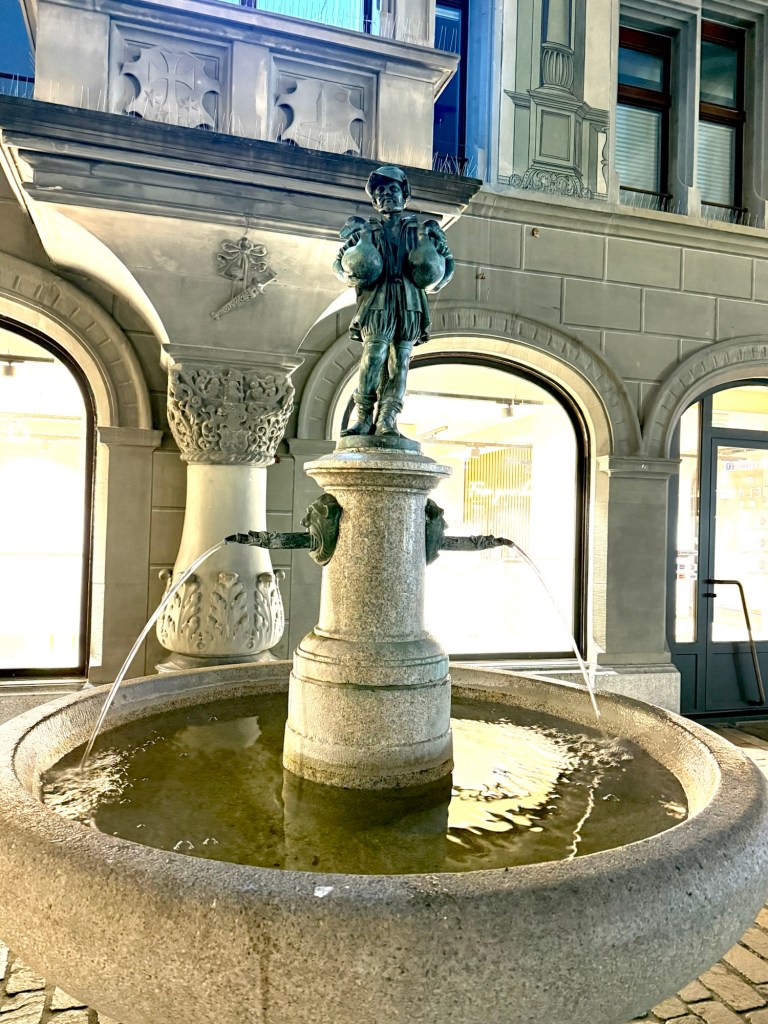
We also found the Gänsemännchenbrunnen, or Little Goose Man Fountain, with a bronze figure carrying two geese under his arms. The design comes from a Renaissance tradition depicting a man bringing geese to market, a small reminder of everyday life in earlier centuries.
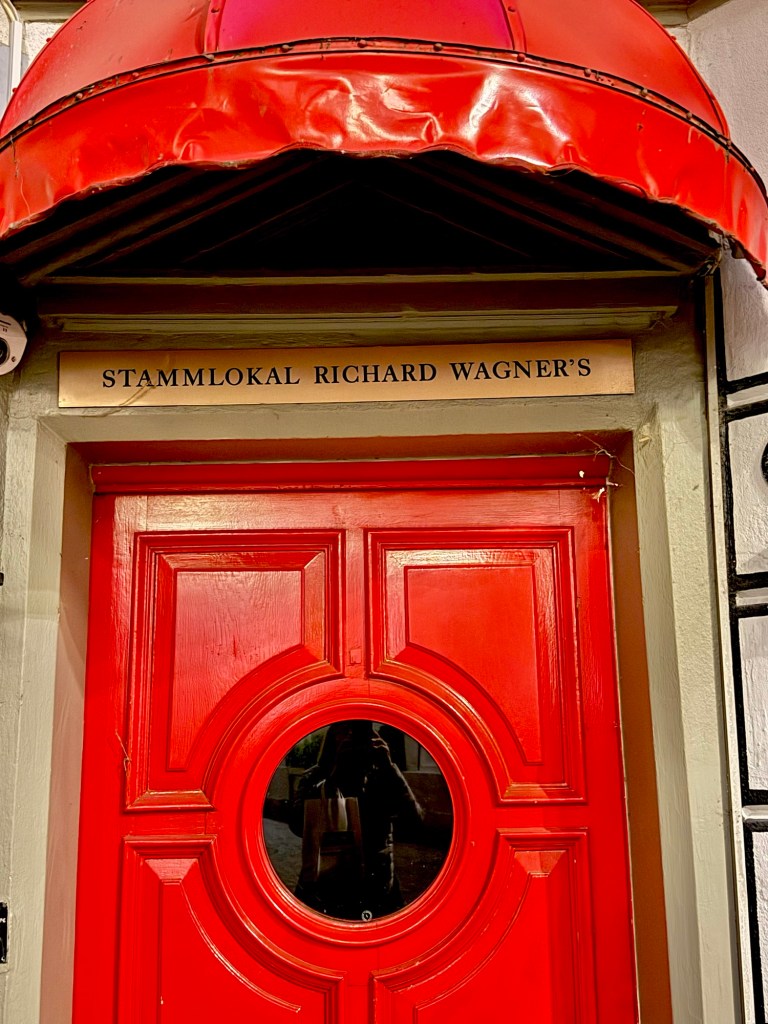
One of the more unexpected discoveries was a Chinese restaurant with a tribute to Richard Wagner above its entrance. Wagner lived in Lucerne from 1866 to 1872, at a villa in Tribschen overlooking the lake. During those years he worked on some of his major compositions, and the city became an important part of his musical life. The building we’d found had a connection to his favorite local drinking places. It was fun to encounter this bit of musical history above a Chinese restaurant!
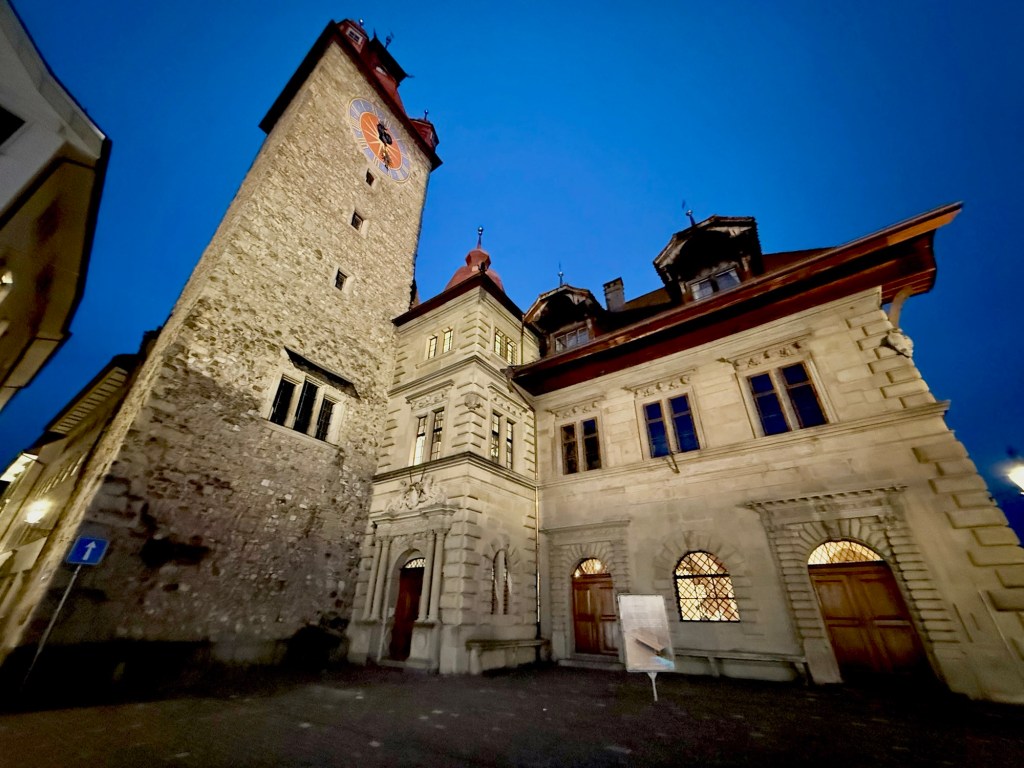
We wandered into Kornmarkt, where Lucerne’s historic Rathaus, or town hall, stands with its imposing roof and arcaded ground floor. The building dates to the early 17th century and reflects the city’s long history as a trading center. The square itself was once used for the grain market.
Two Wooden Bridges and Hundreds of Years of History
Lucerne’s two covered wooden bridges were among the highlights of our walk.
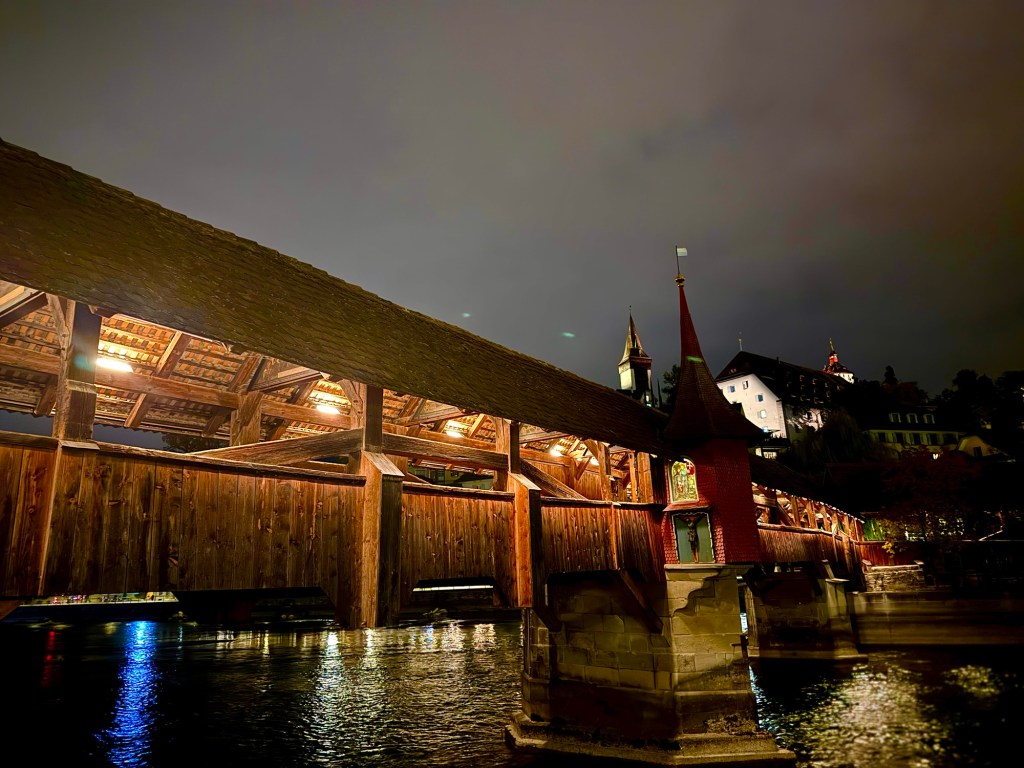
The Chapel Bridge, or Kapellbrücke, dates to the 14th century and crosses the Reuss River beside the city’s famous octagonal Water Tower.
The triangular spaces beneath the roof contain paintings dating largely from the early 17th century, illustrating episodes from Swiss history and the lives of Lucerne’s patron saints.
Farther downstream, we crossed the Spreuer Bridge, another covered wooden bridge with a very different collection of paintings. These depict the Dance of Death, a series of 17th-century images showing skeletons confronting people from all walks of life, from kings and clergy to ordinary townspeople.
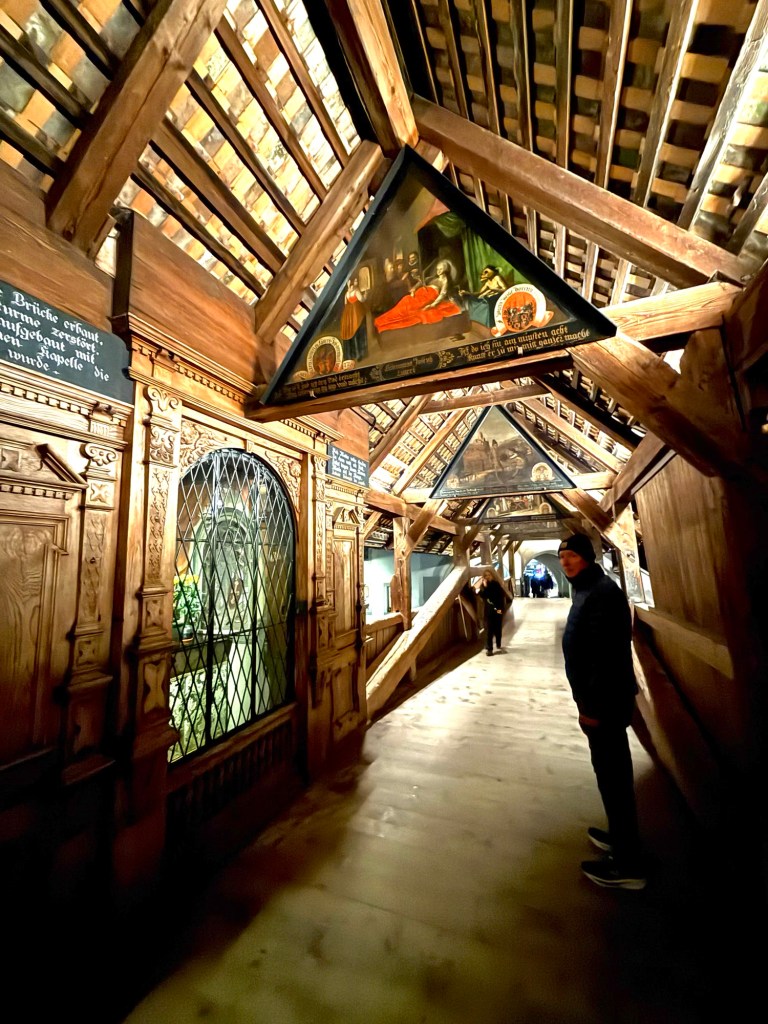
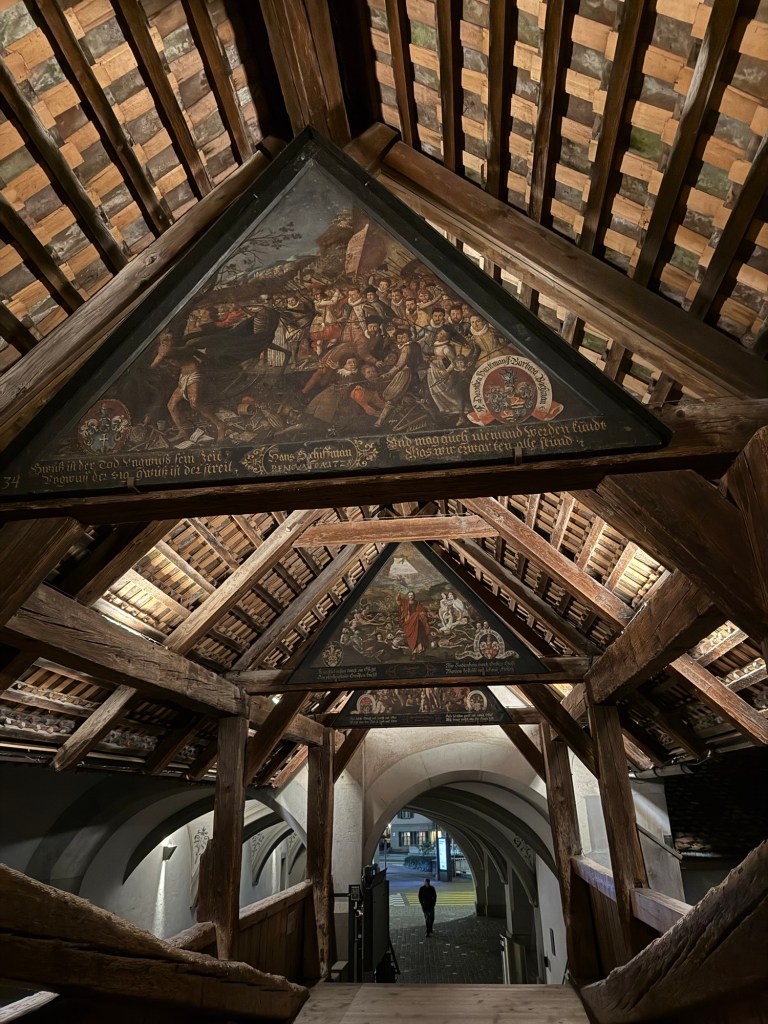
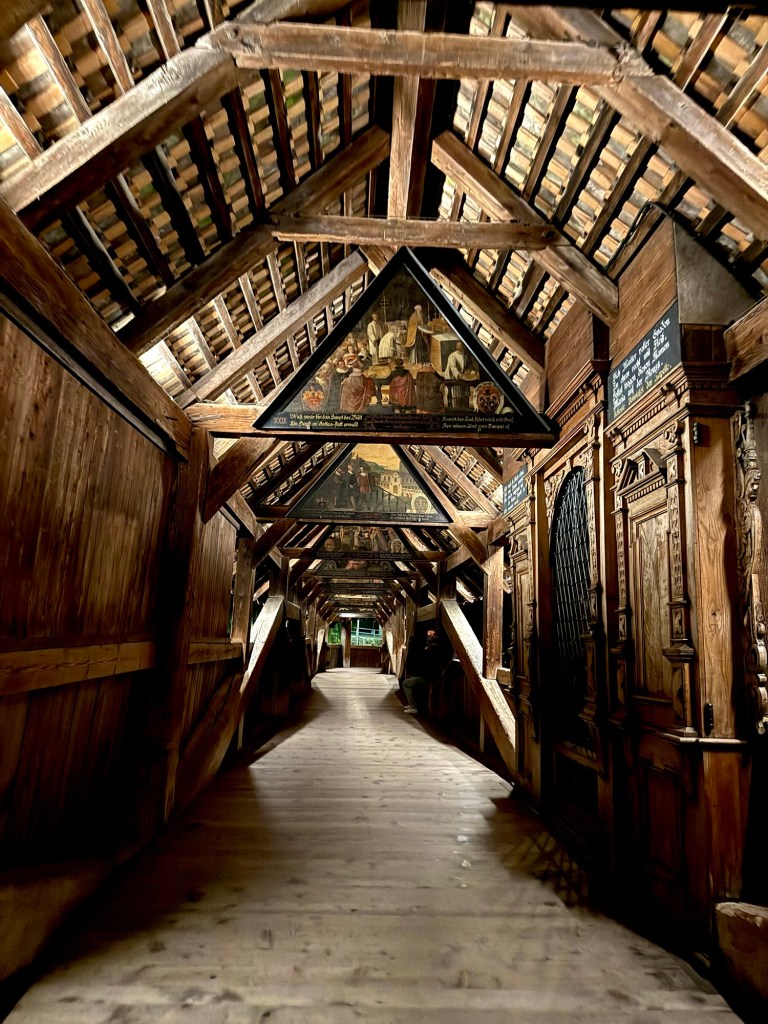
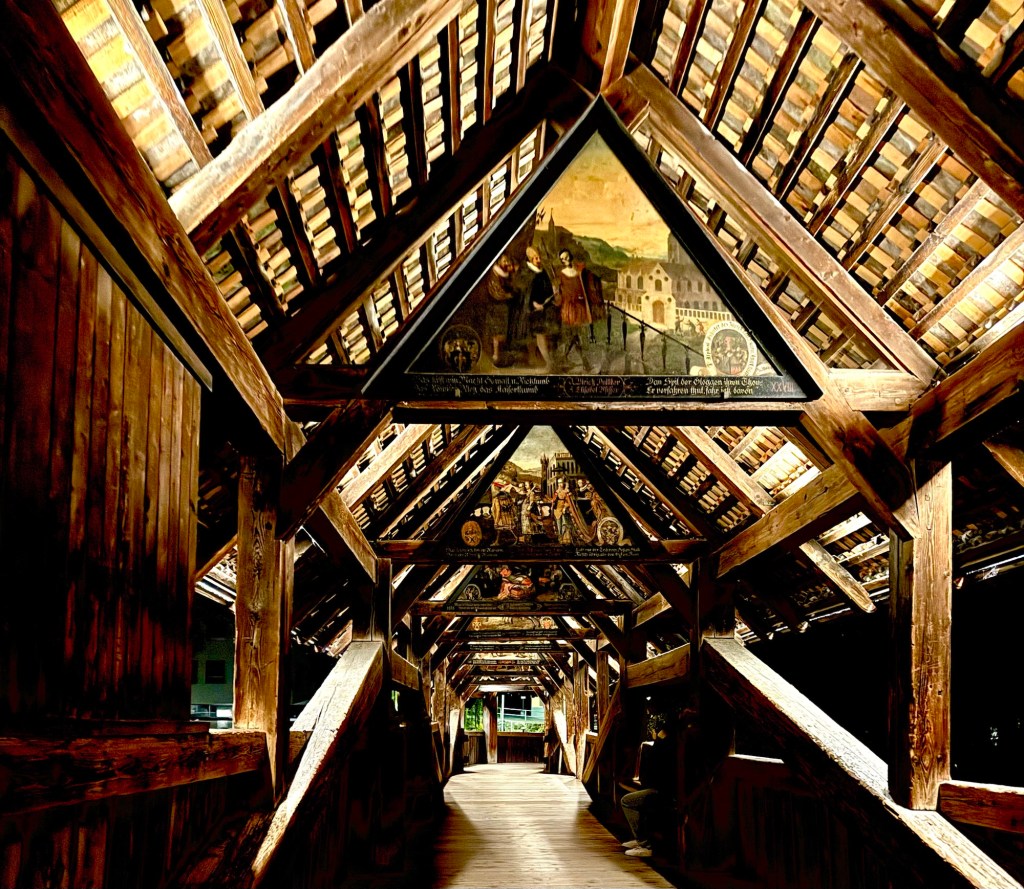
The message is that death comes for everyone, regardless of wealth or position. Some of the paintings are quite startling, especially when you remember that they’ve been hanging over this busy pedestrian crossing for centuries.
Lucerne After Dark
We continued walking long after sunset, enjoying the illuminated buildings and reflections on the water.
At one point, on the opposite side of the lake from the Old Town, we found a narrow passage behind a building that ran directly along the waterfront. It was tucked away from the streets, with almost no one around.
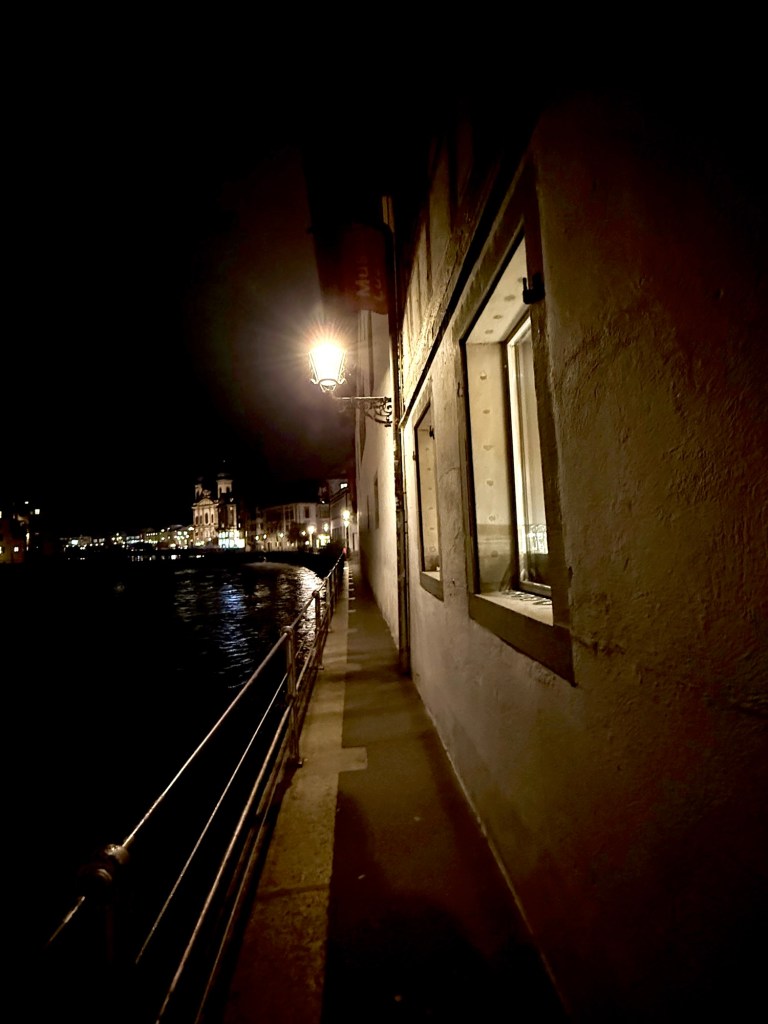
In another city, it might have seemed a little creepy. But Lucerne felt so safe and peaceful that walking along this hidden stretch of waterfront at night was a pleasure. Across the lake, the lights of the Old Town shimmered on the water, and we had the view almost entirely to ourselves.
Cheese, Chocolate, and Swiss Fondue
Of course, we couldn’t leave Lucerne without trying Swiss fondue.
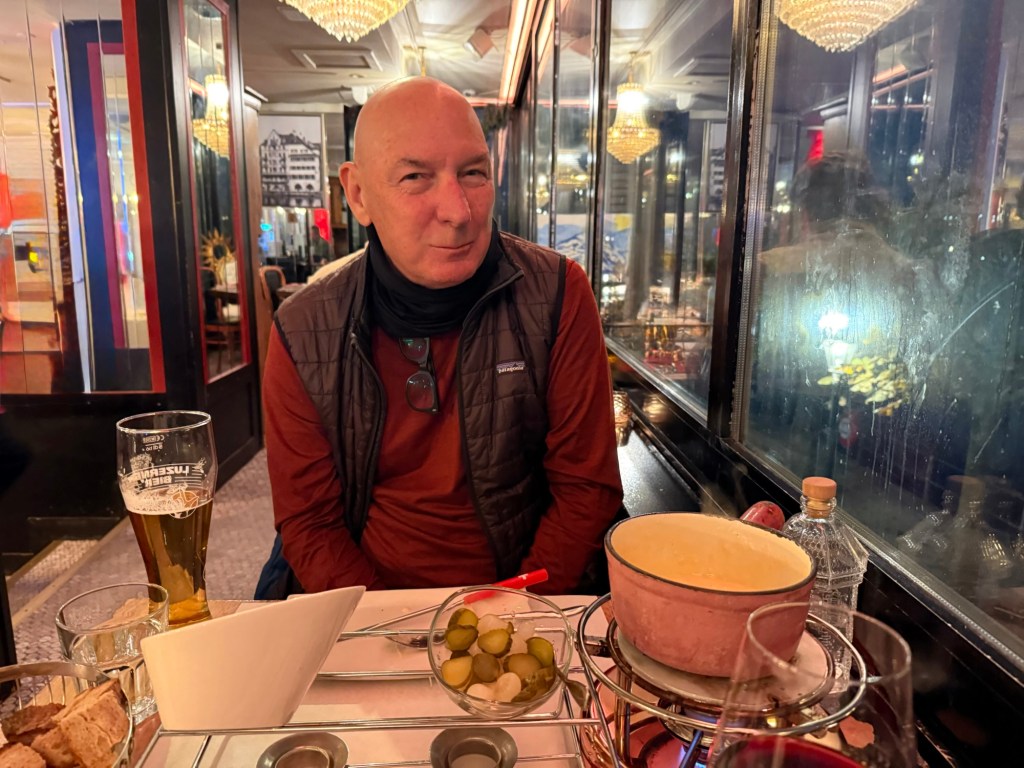
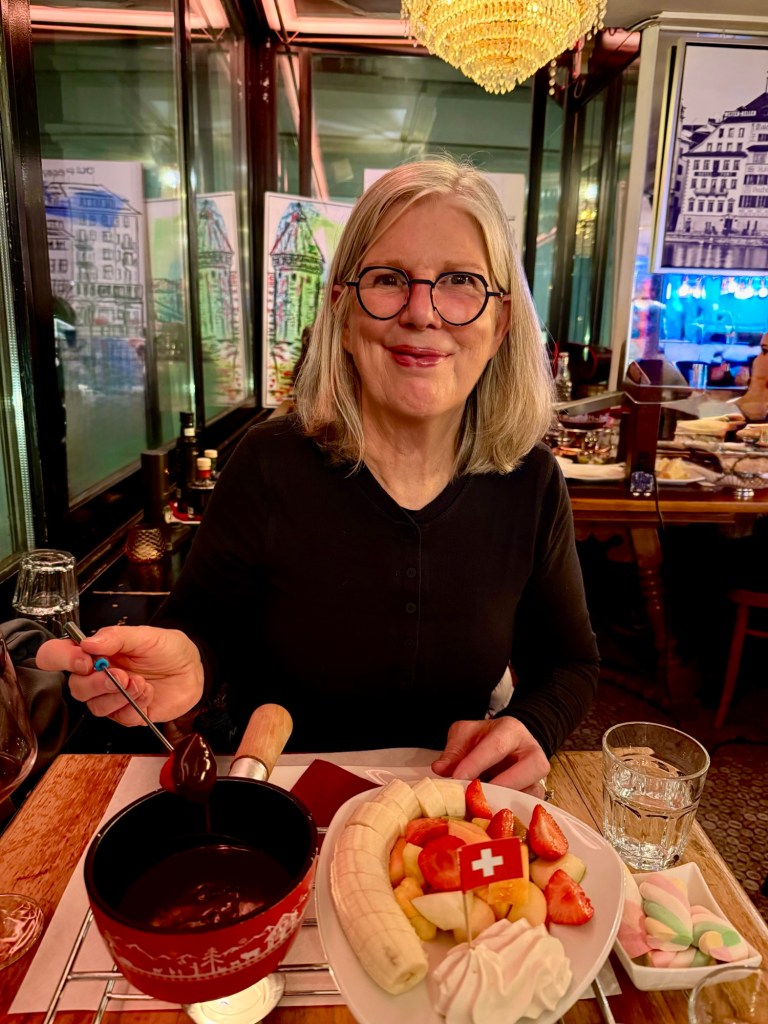
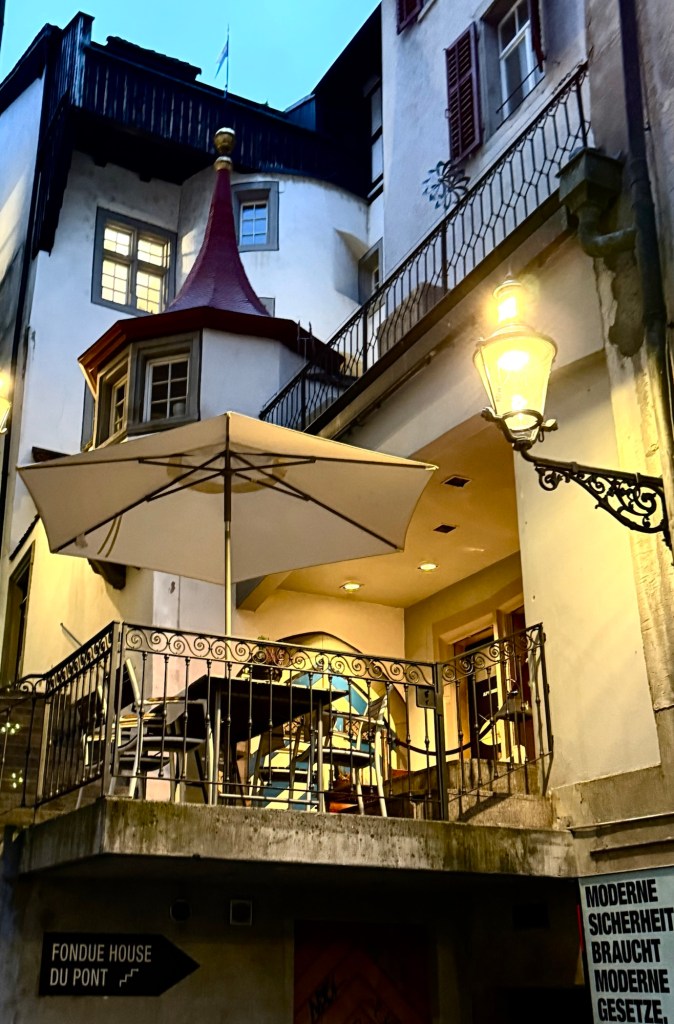
We ended our evening at one of the city’s well-known fondue restaurants. It was definitely tourist-oriented, but we were determined to have the full Swiss experience, so we ordered both cheese fondue and chocolate fondue.
The cheese arrived bubbling in its pot, ready for dipping chunks of bread, and the chocolate fondue followed for dessert.
After more than a week of Bavarian food, we were officially moving into Swiss culinary territory!
First Class to Zermatt
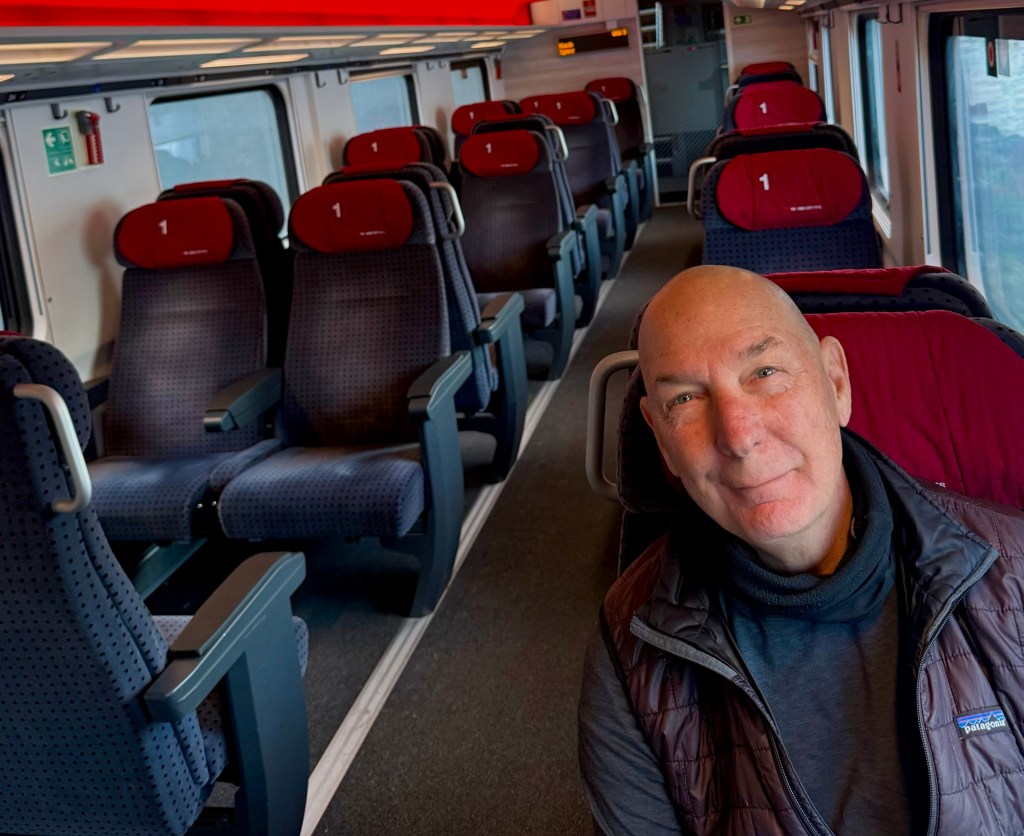
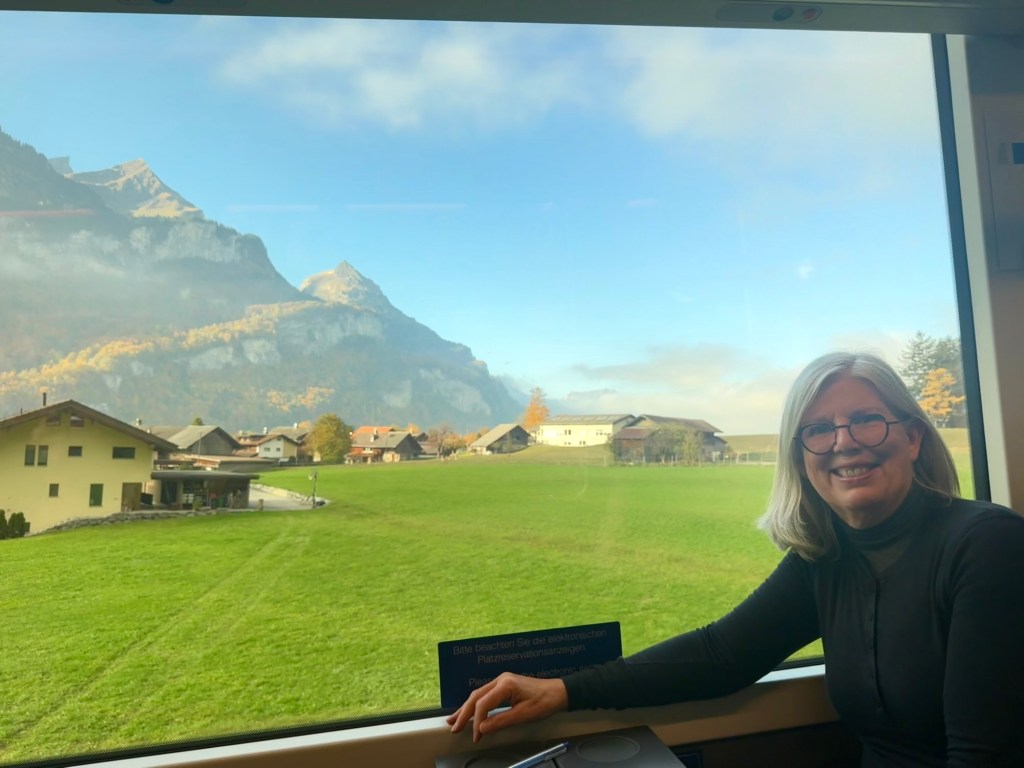
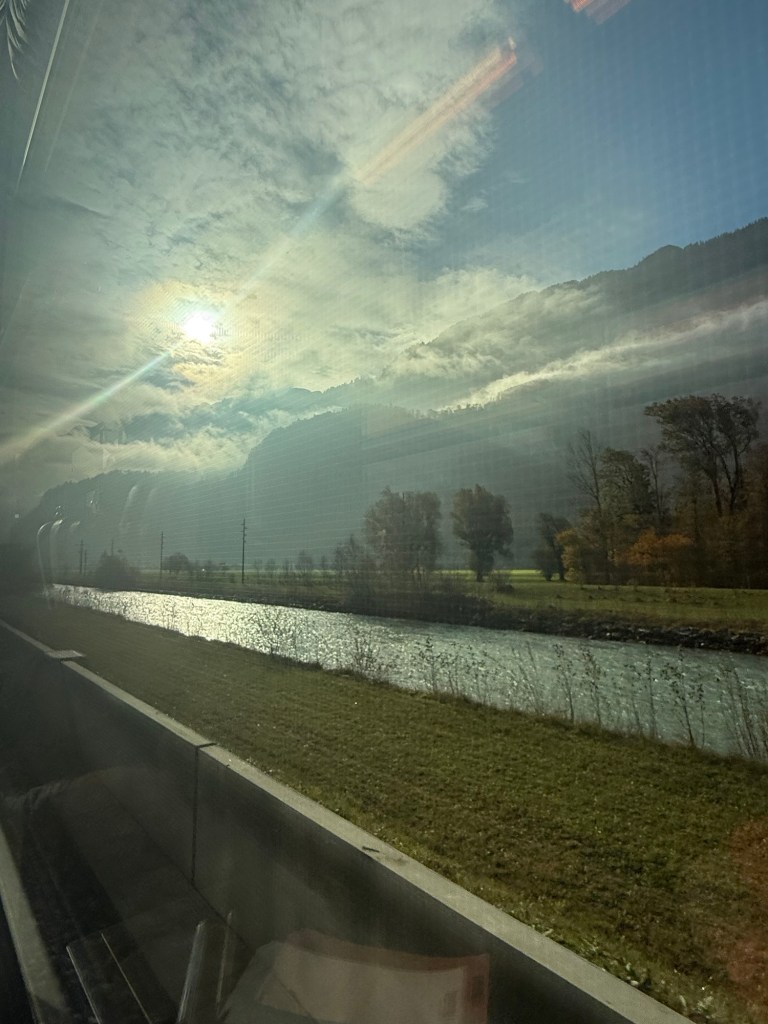
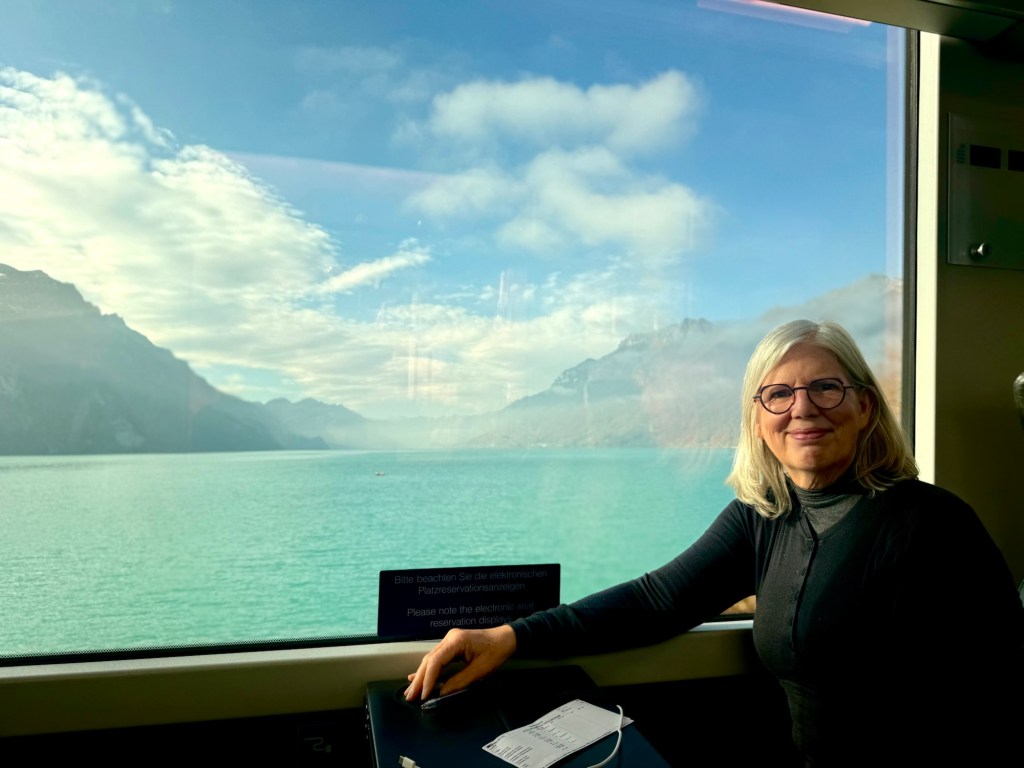
The following day, we boarded the train for Zermatt, a journey of several hours through some of Switzerland’s most impressive Alpine scenery.
As luck would have it, Swiss Rail was running a special promotion that allowed us to purchase two first-class tickets for the price of one. With such a long journey ahead, we were delighted to take advantage of it.
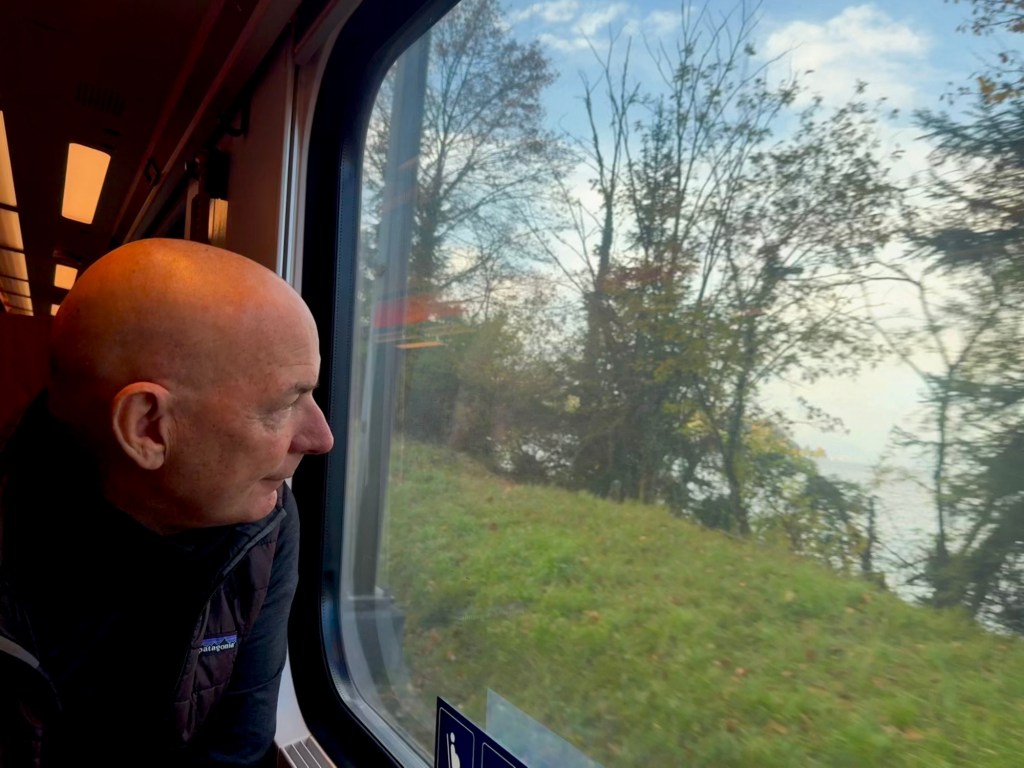
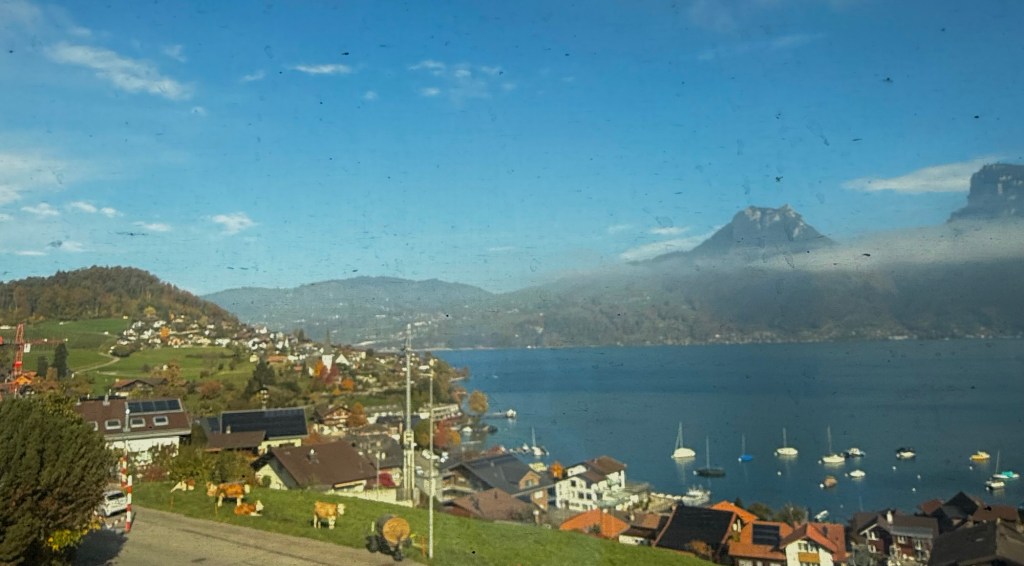
We settled into spacious seats beside enormous windows and watched the scenery unfold. The route took us past lakes, through valleys, and eventually into increasingly dramatic mountain country. The final stretch toward Zermatt followed the Matter Valley, with steep slopes rising on both sides and villages tucked along the valley floor.
At times, we had an entire first-class carriage to ourselves. November is not peak tourist season in Switzerland, and that’s one of the reasons we chose to travel at this time of year. We’ve enjoyed having fewer crowds, quieter trains, and plenty of space to take in the scenery.
The train journey was an experience in itself, and the scenery grew more dramatic as we approached Zermatt.
I had been back once since teaching at Swiss Semester in 1987, when Pete and I celebrated our 25th wedding anniversary, and I was curious to see how much had changed—and what I would remember.
I was returning to a place that had been an important part of my first European adventure.

