After a whirlwind day in Lisbon at the beginning of our trip, we were looking forward to returning to Portugal for a more leisurely visit. Porto would be our last city before heading home, and after weeks of hiking in the mountains of Germany, Austria, and Switzerland, we were ready to slow down a bit.
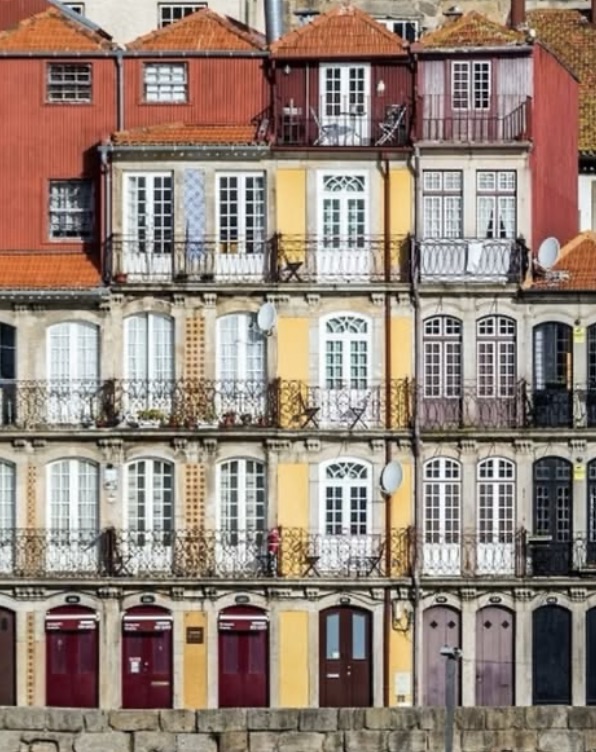
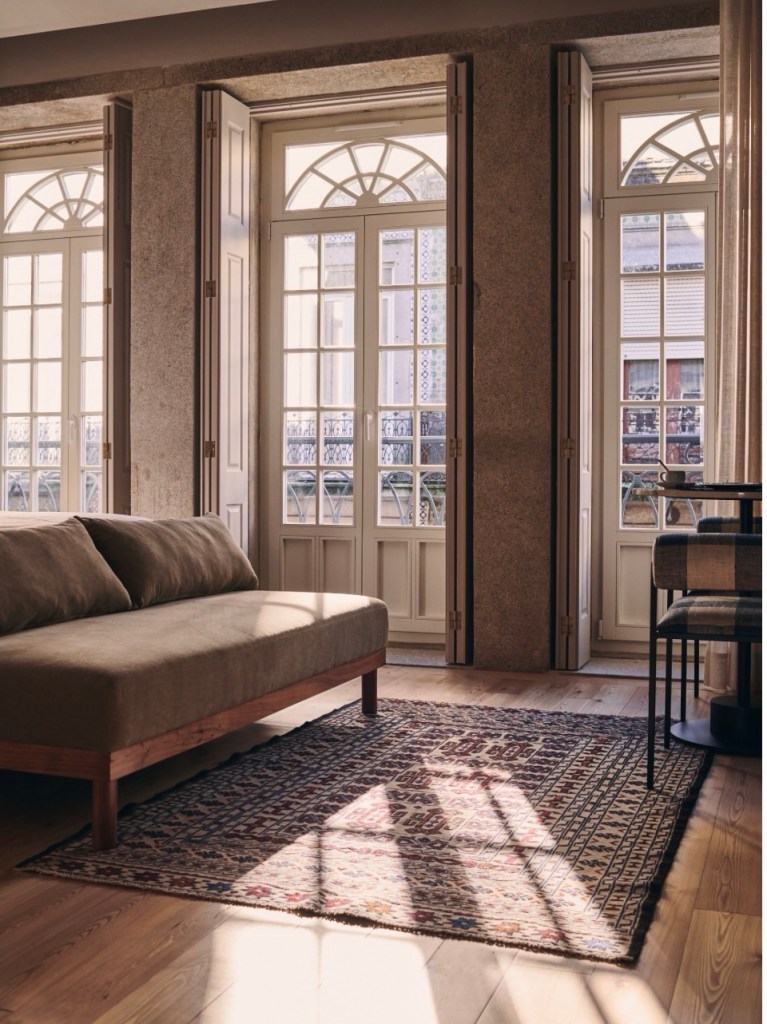
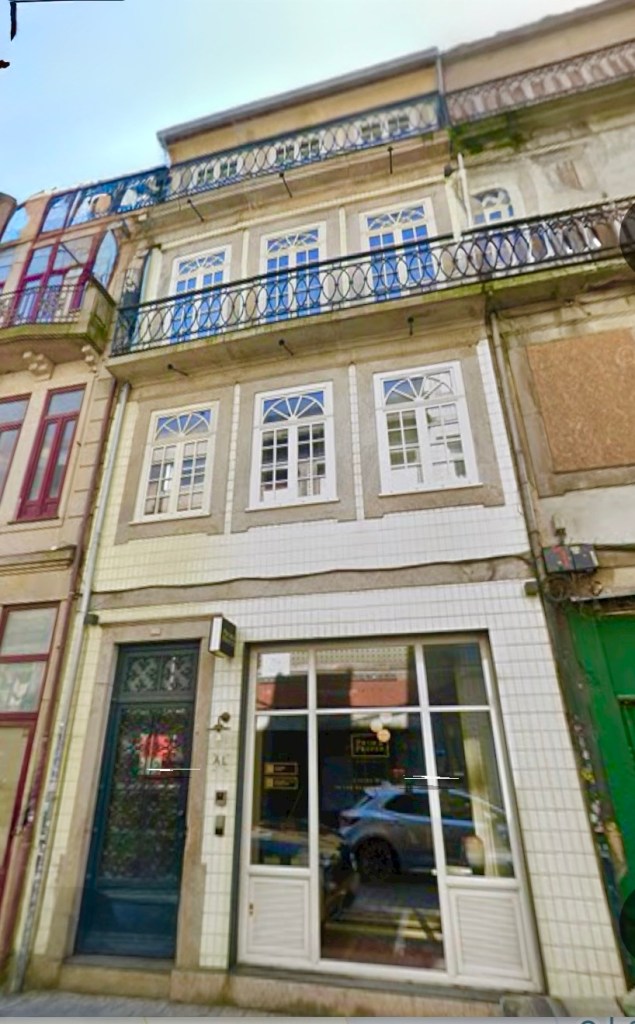
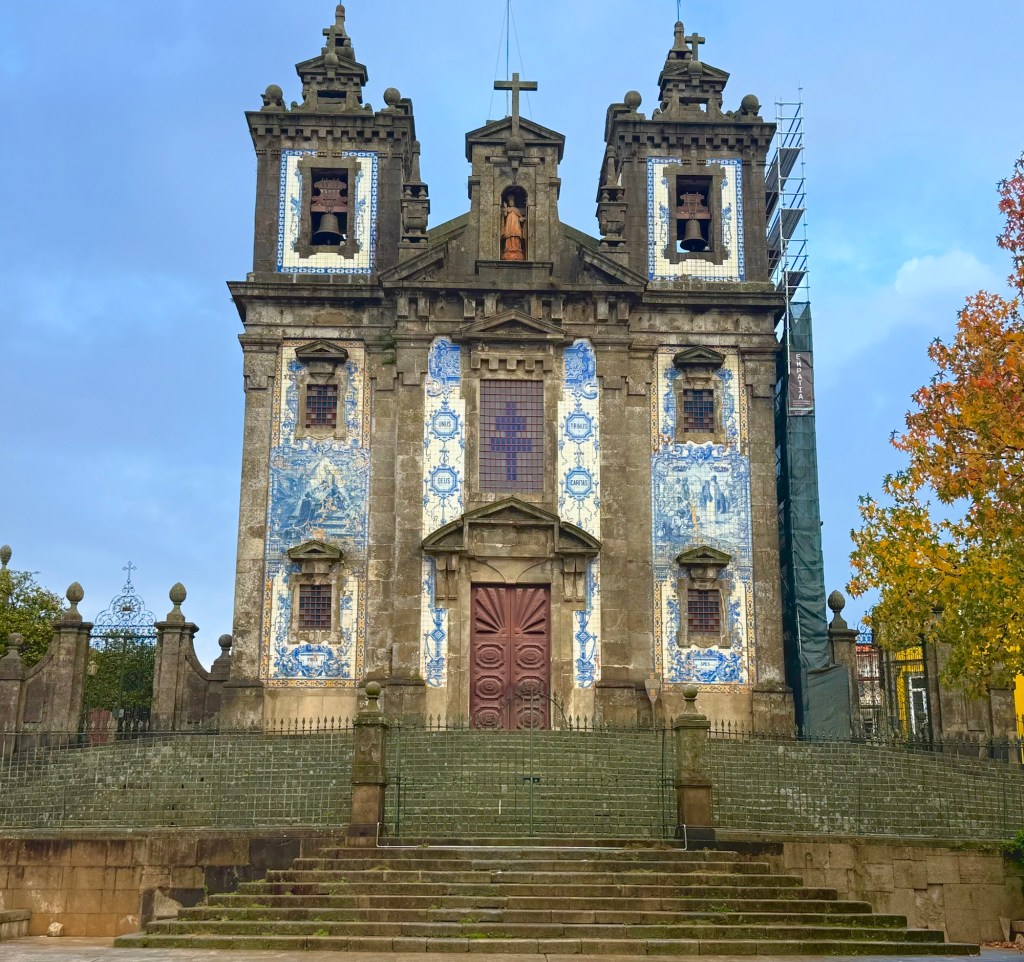
Just down the street from our hotel was the Church of Santo Ildefonso, its façade covered in typical blue-and-white Portuguese tiles. It was our first introduction to the wonderful colors of Porto.
And the streets! Narrow, winding, twisting in every direction, with little alleyways appearing out of nowhere. We gave up on the idea of following a straight route from one destination to another. Instead, we wandered. Whenever we came across an interesting church, an ancient wall, or an odd ruin, I pulled out my phone to discover what we were looking at. Porto’s history is fascinating, and we found ourselves stumbling on pieces of it around nearly every turn.
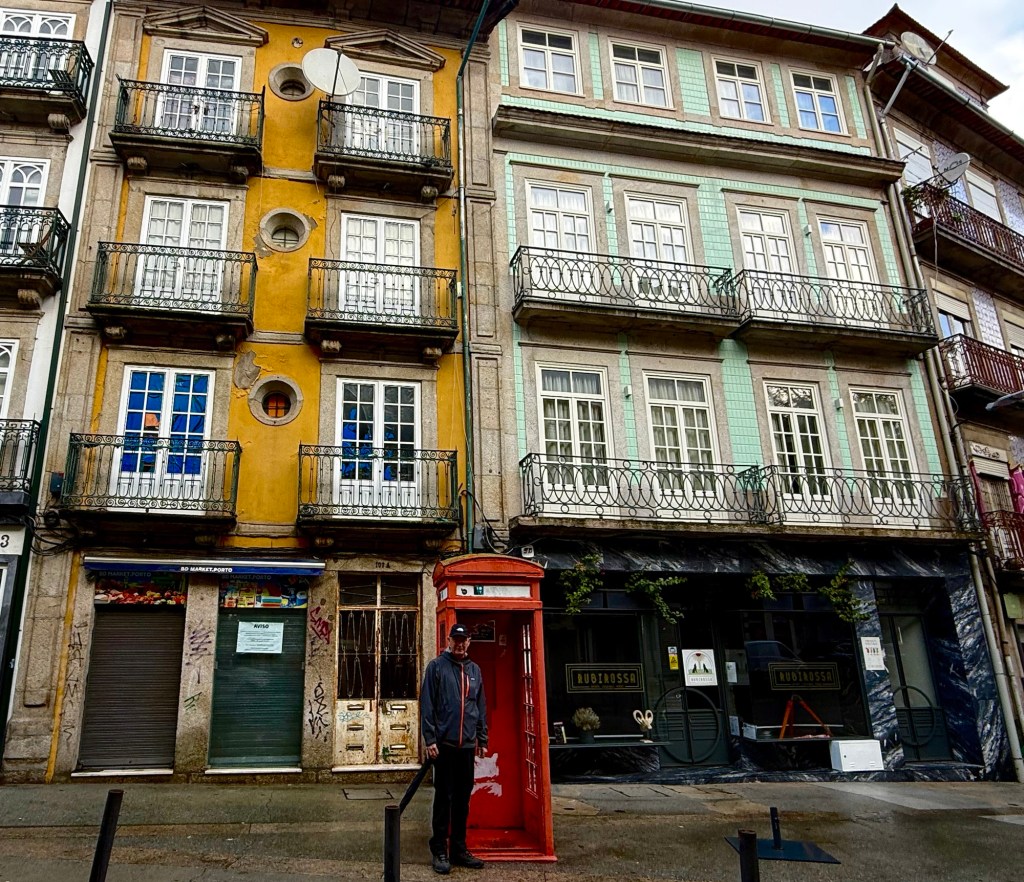
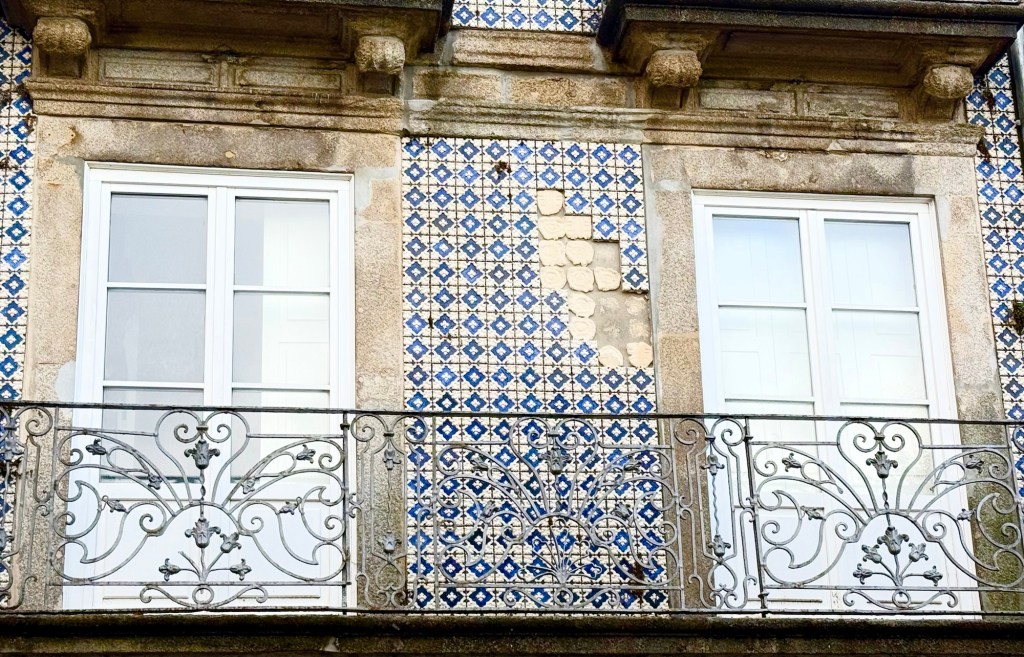
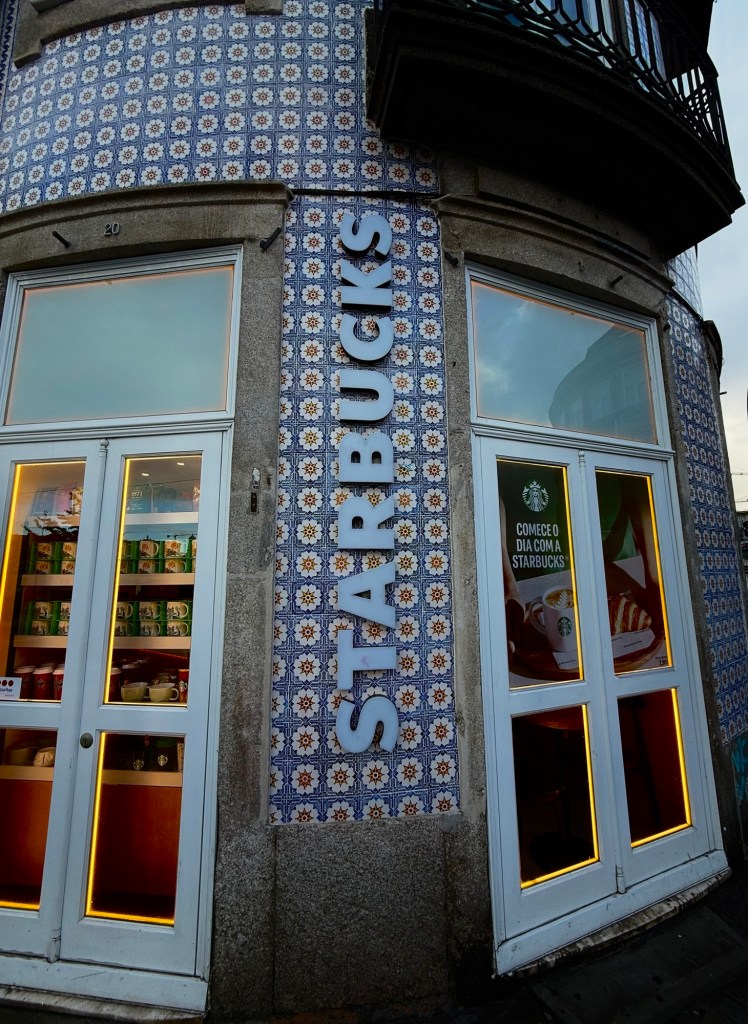
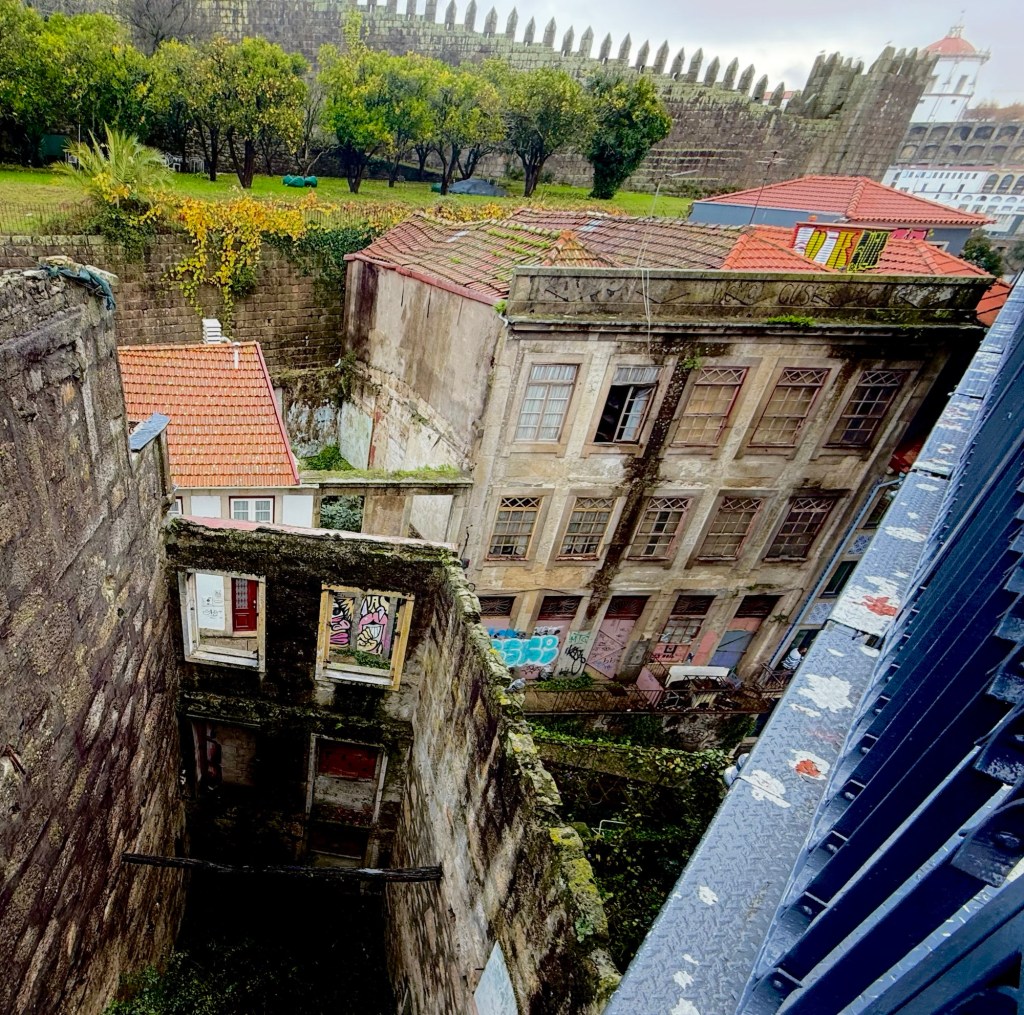
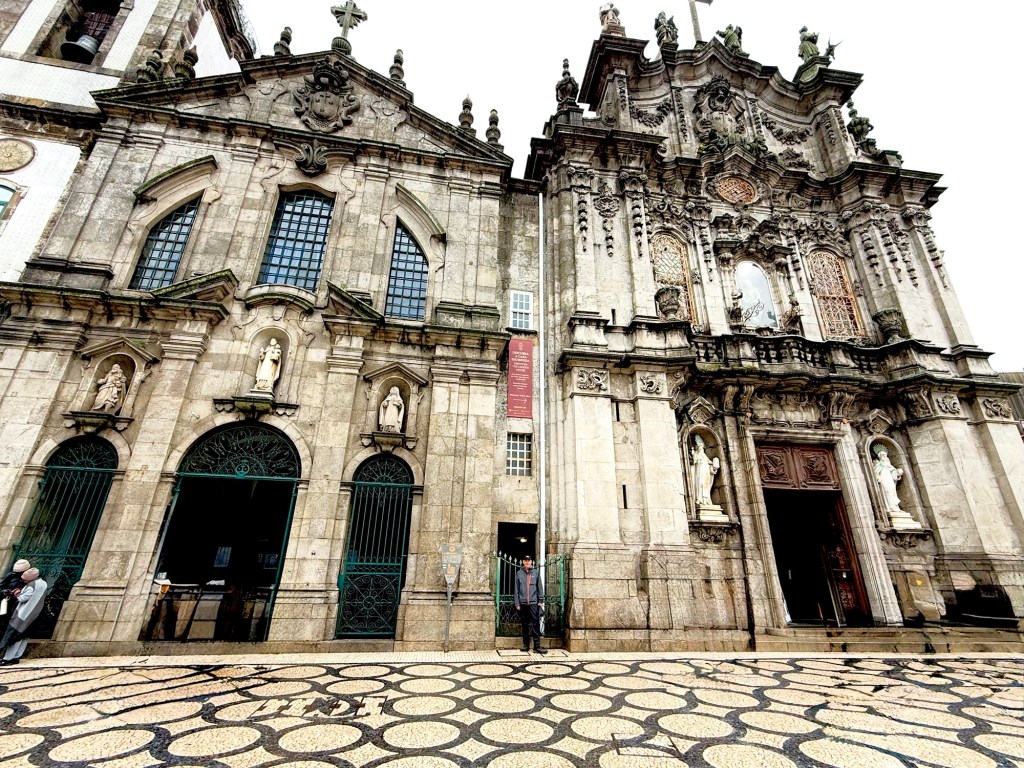
Porto doesn’t have the polished elegance of an Italian showpiece or the grand boulevards of Paris. It is a little weathered around the edges, and that’s part of its charm. It feels authentic, a city where people actually live and work, and where they are genuinely proud to share their history and traditions.
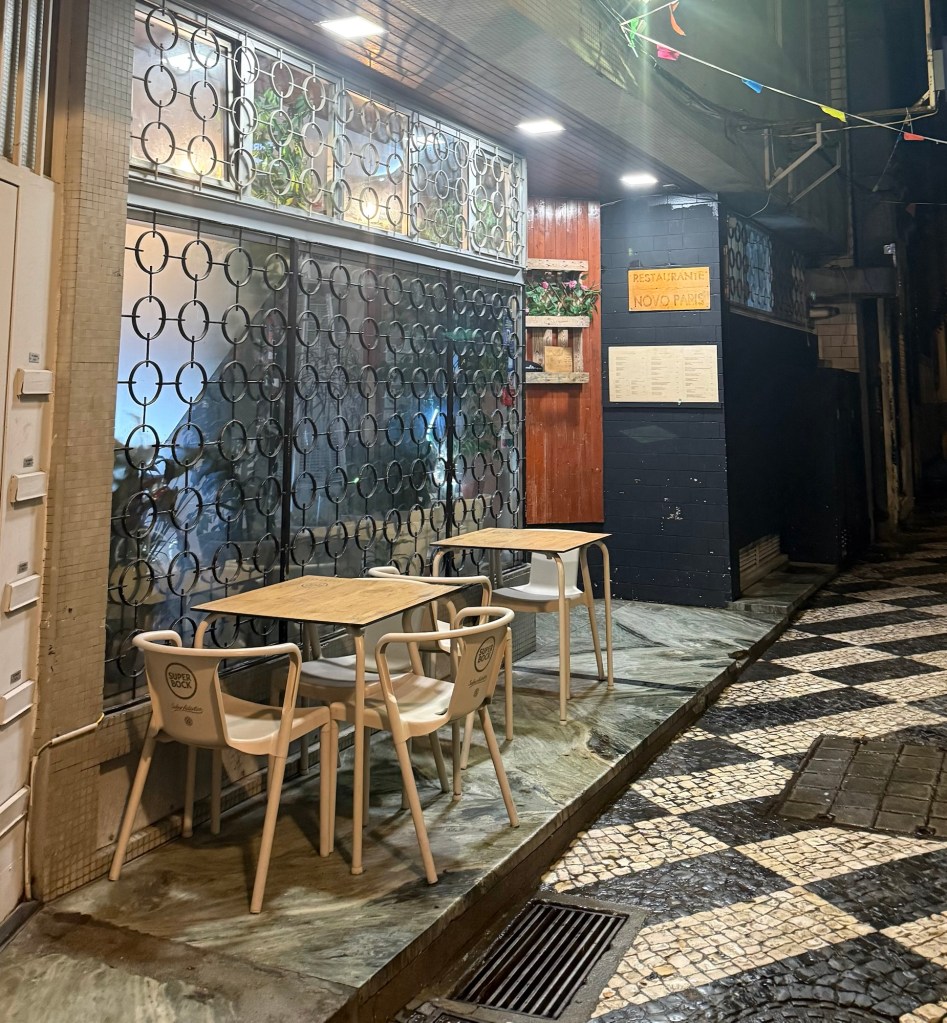
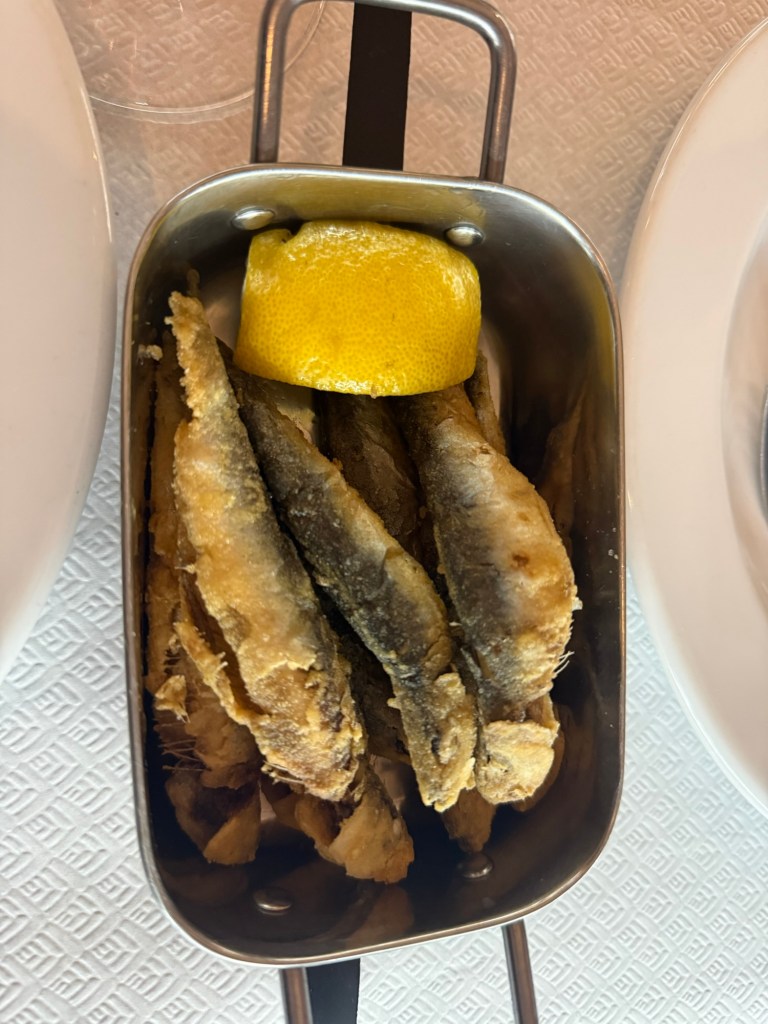
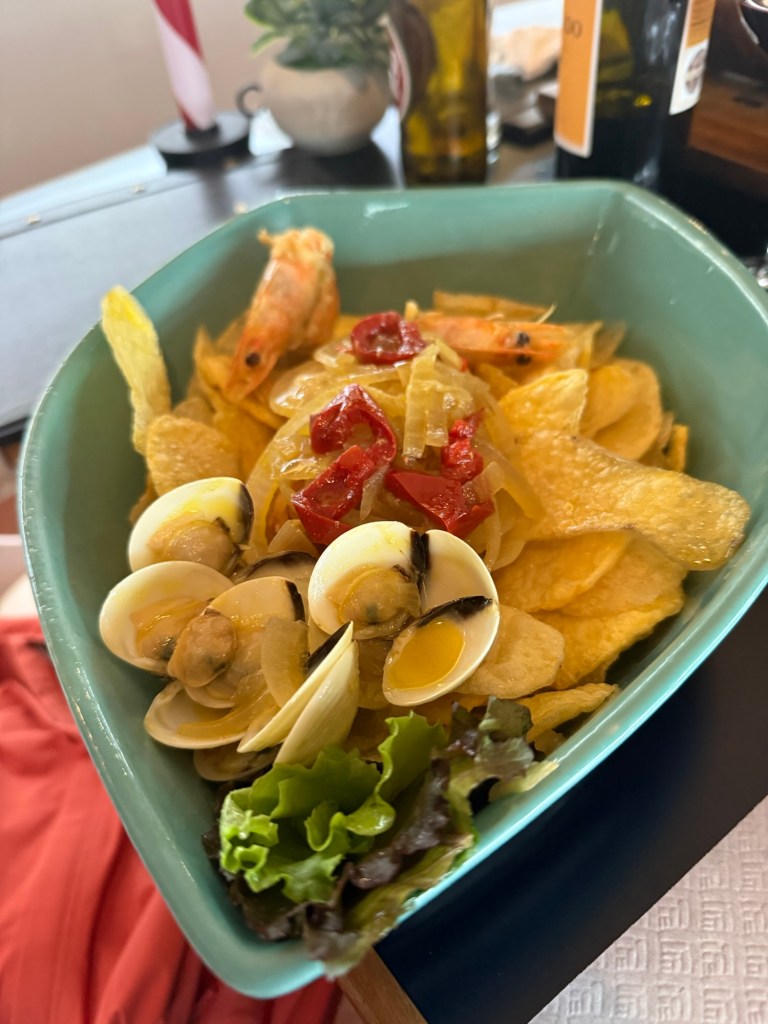
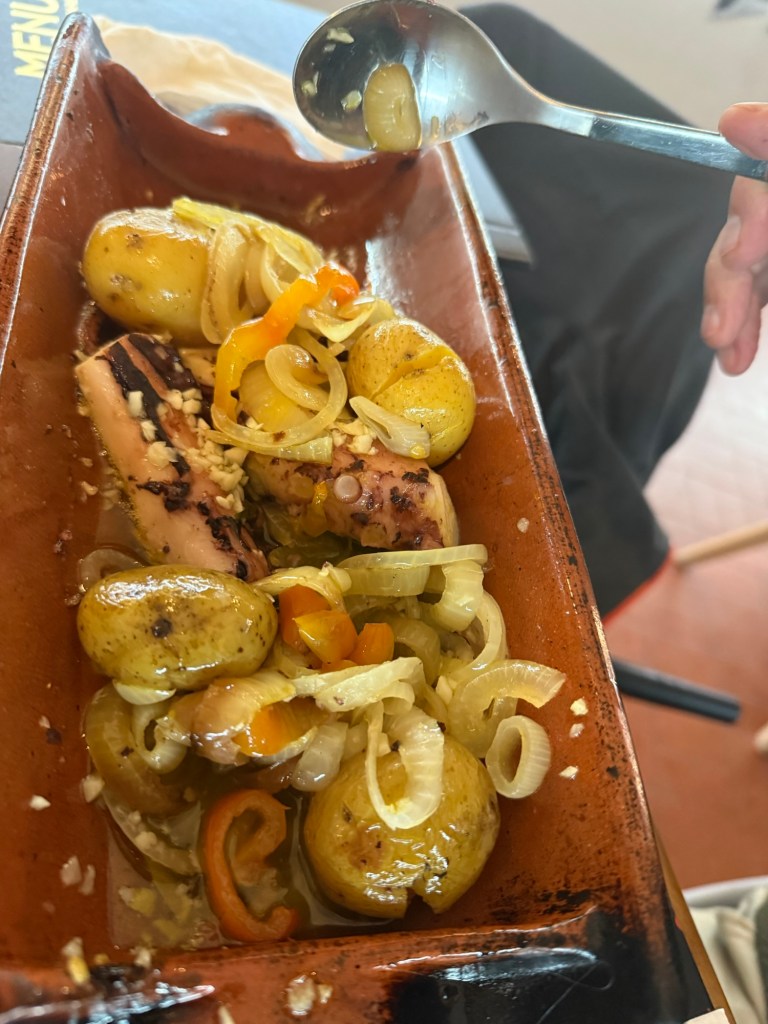
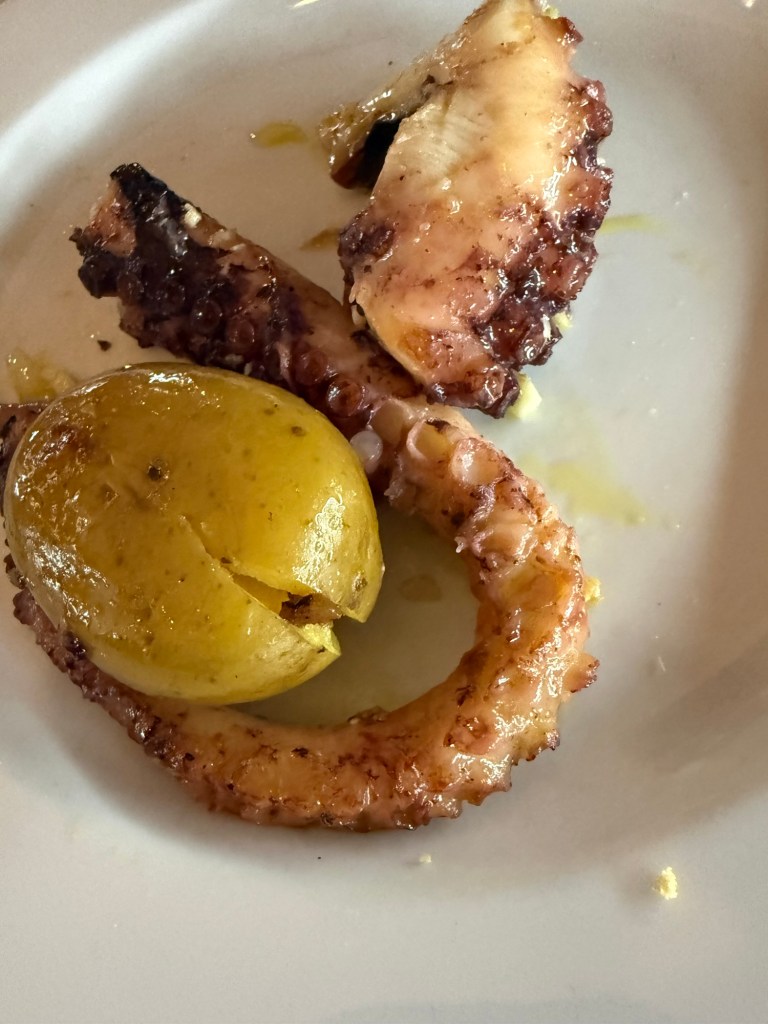
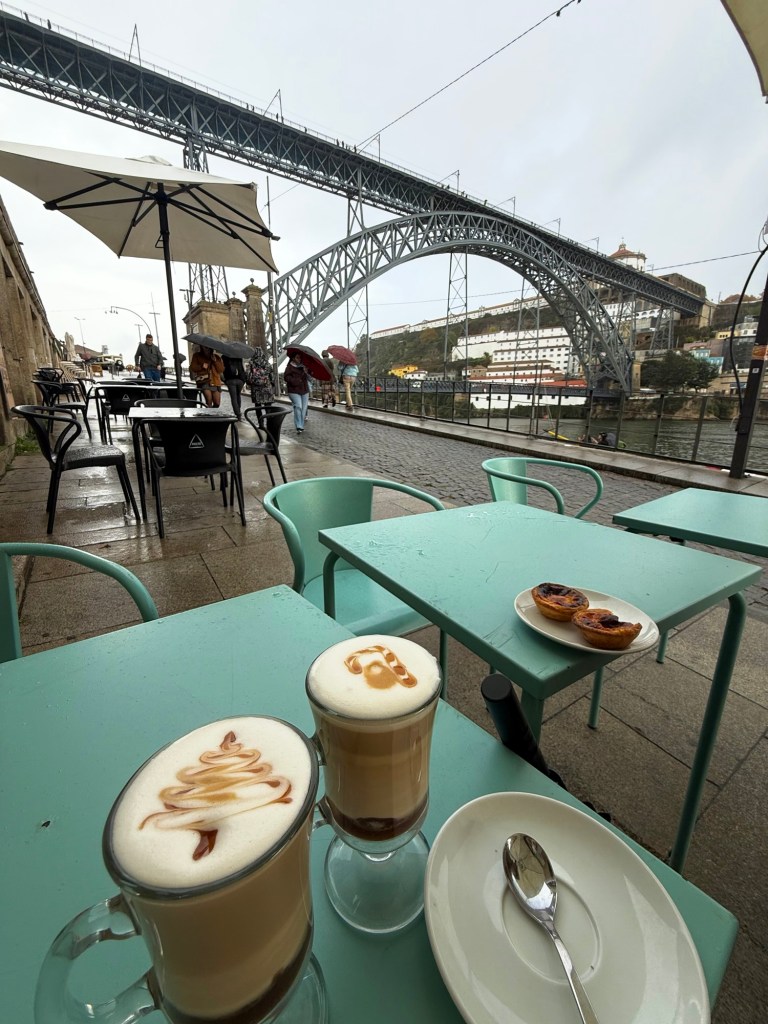
We found that same pride everywhere, from the cooks preparing traditional Portuguese dishes to the baristas who took their coffee making very seriously.
Across the Douro to the Port Lodges
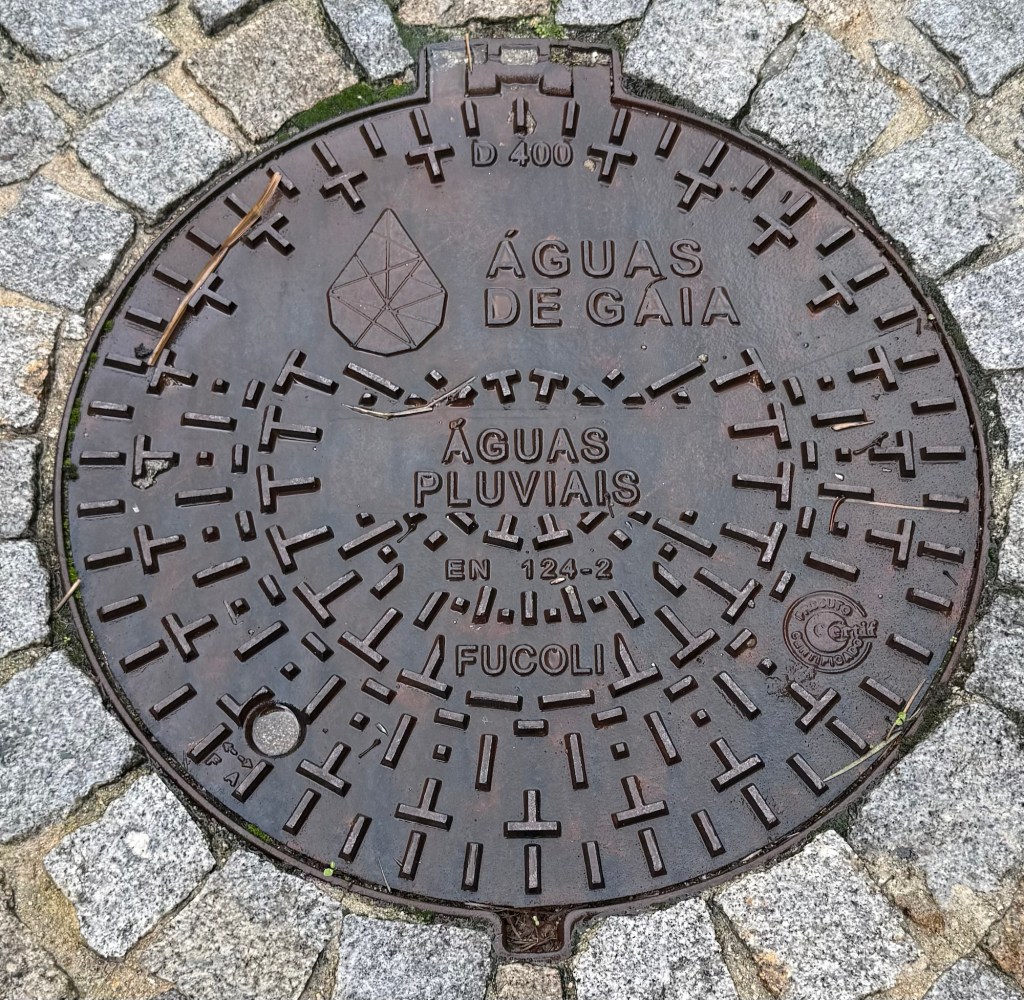
No visit to Porto would be complete without crossing the Douro River to Vila Nova de Gaia, where the great port wine houses have stored and aged their wines for centuries.
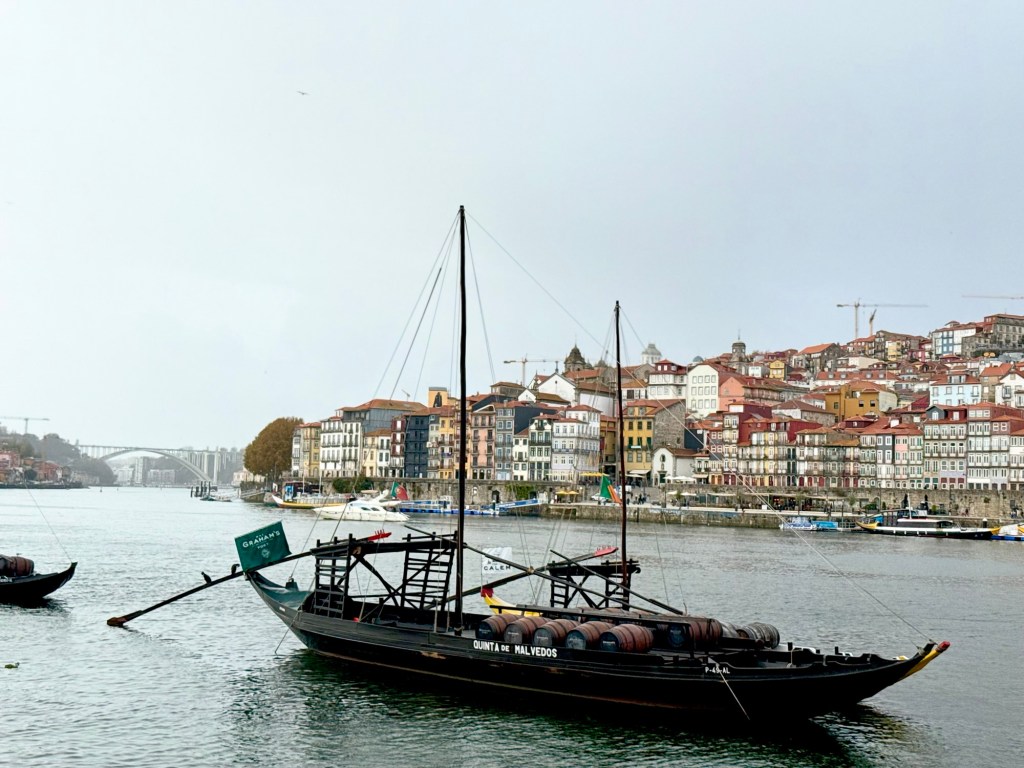
The grapes are grown upstream in the steep, terraced vineyards of the Douro Valley, one of the oldest officially demarcated wine regions in the world, dating to 1756. Historically, barrels of young port were brought downriver in flat-bottomed rabelo boats to Gaia, where the cooler, more humid Atlantic-influenced climate was better suited to aging the wine than the hot valley where the grapes were grown. The merchants established their great lodges along the Gaia waterfront, and many are still there today.
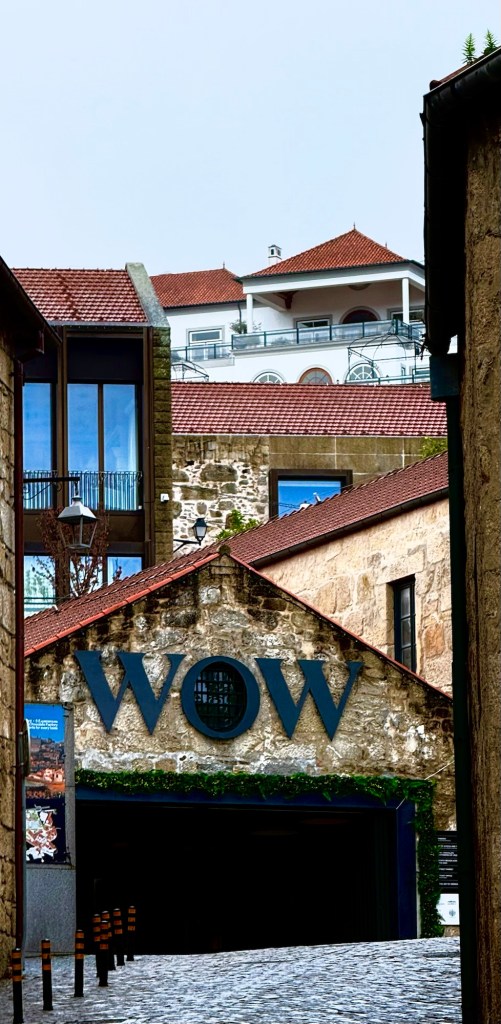
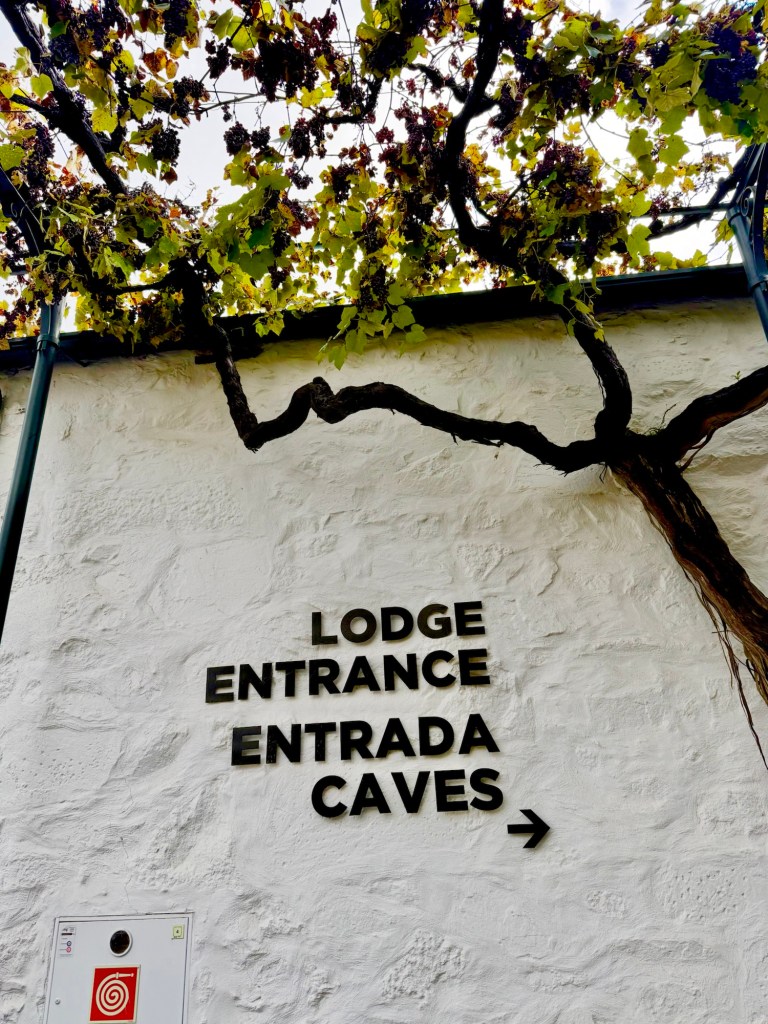
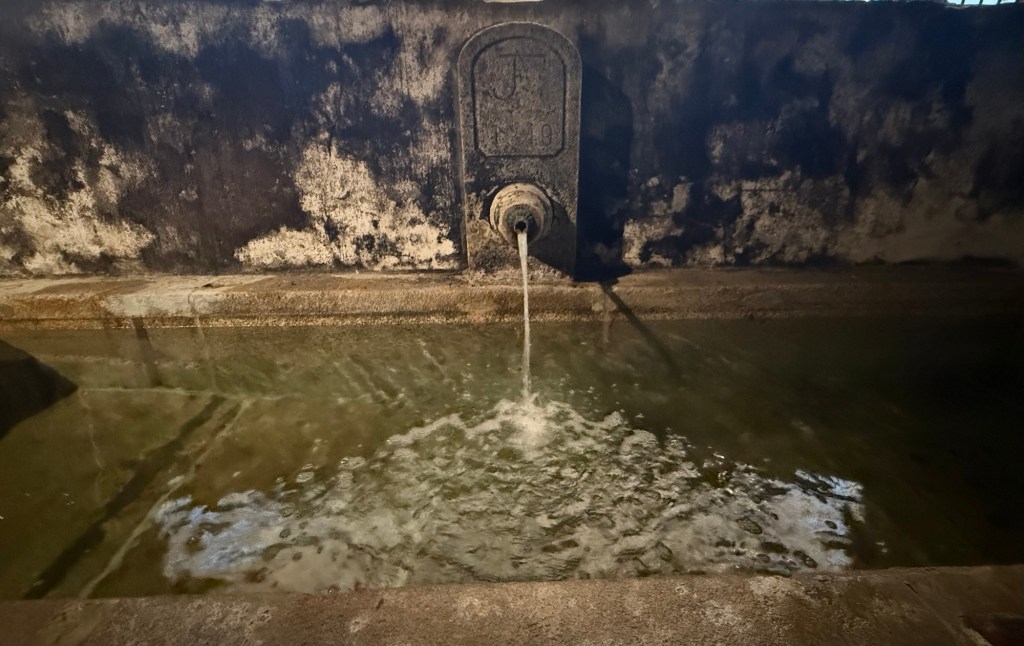
I had reserved a tour and tasting at Graham’s, one of the oldest and most respected port houses, founded in 1820. It was quite a climb up the hill, but worth every step.
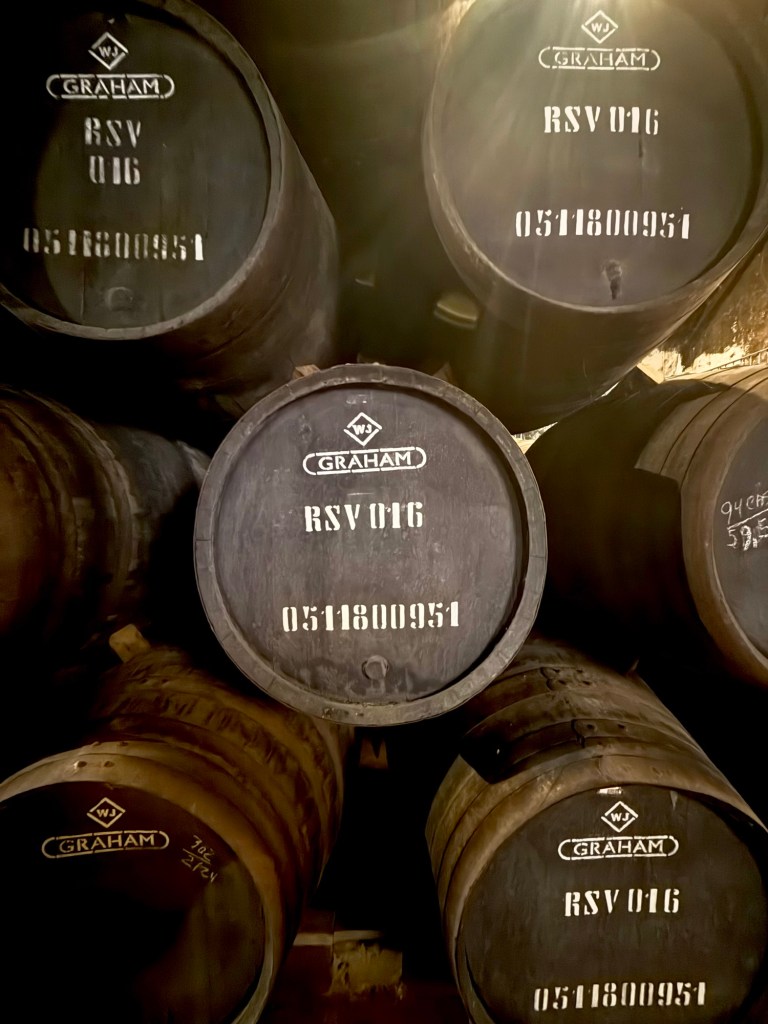
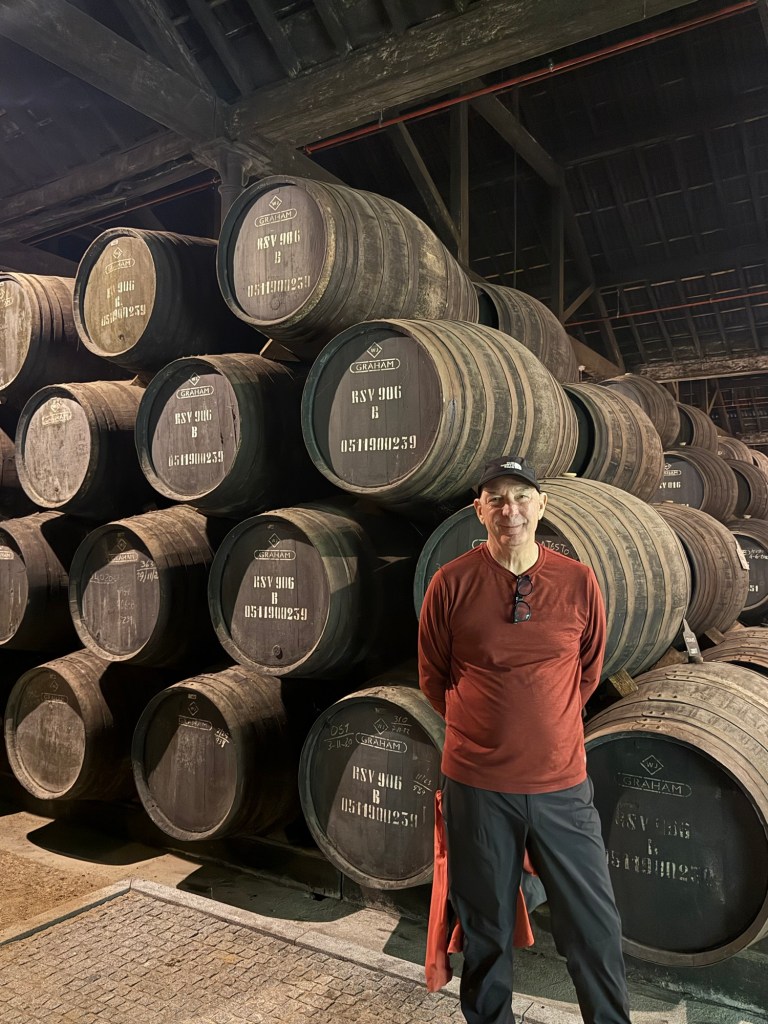
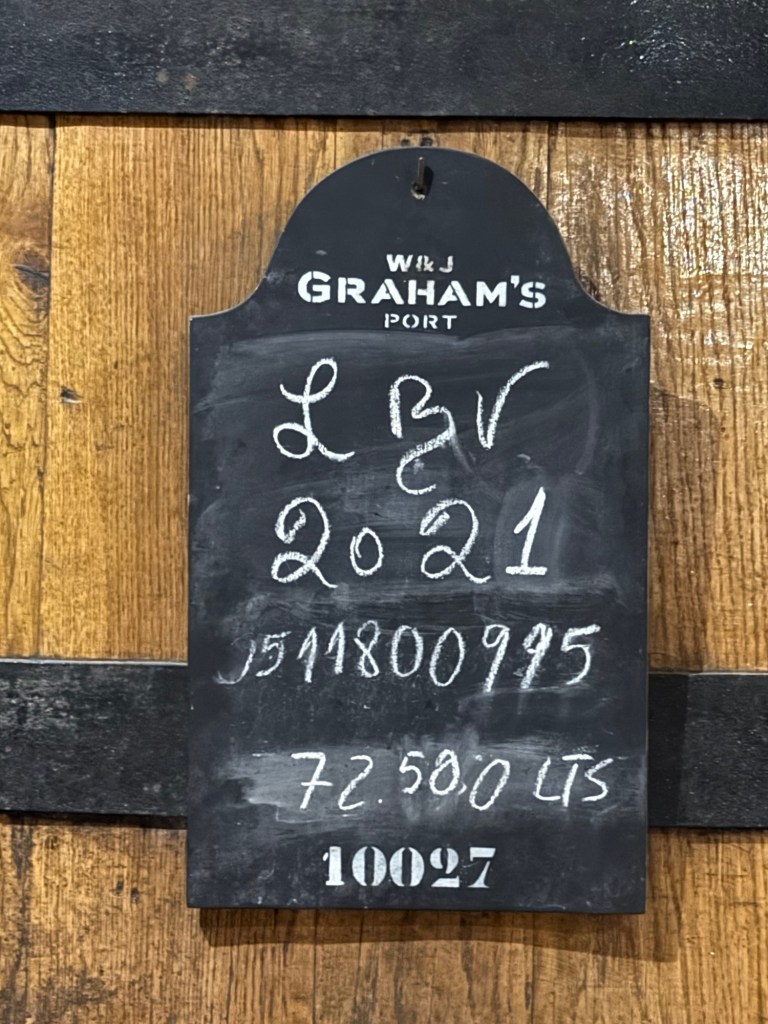
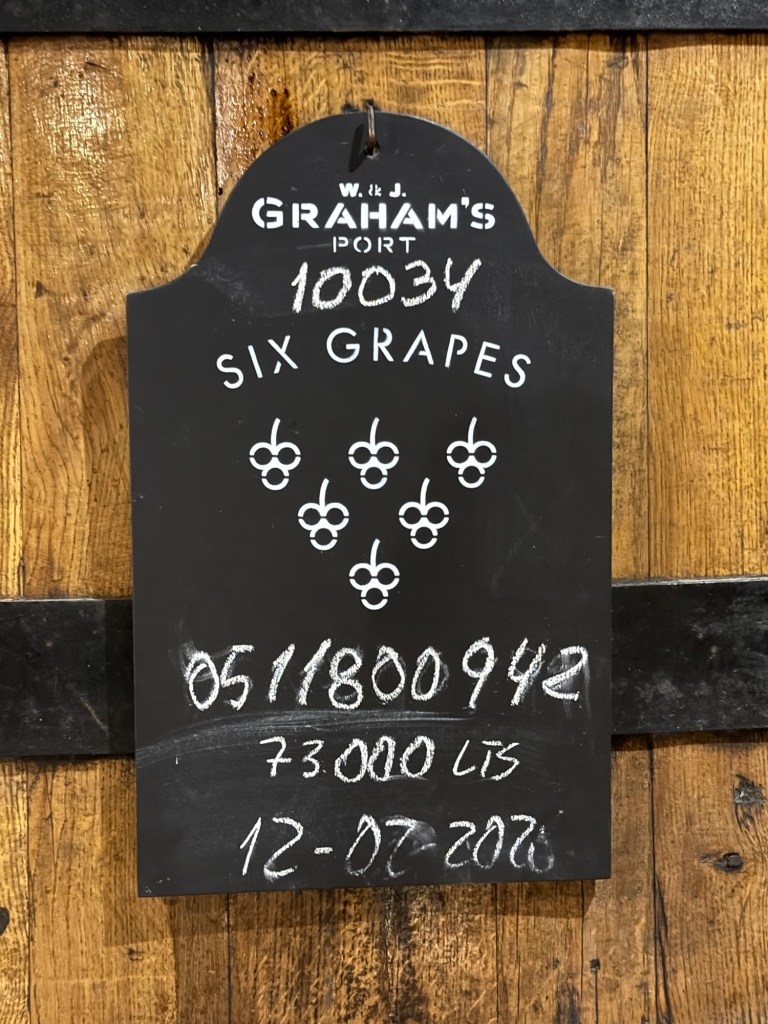
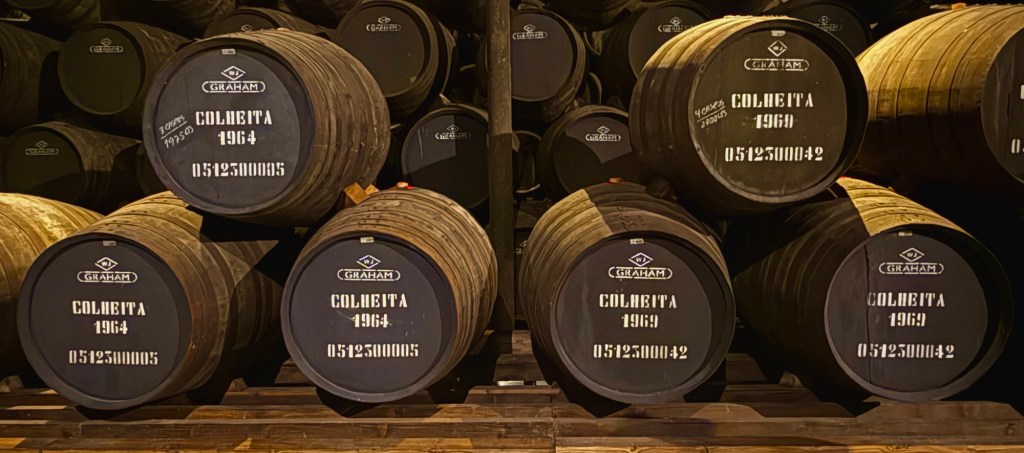
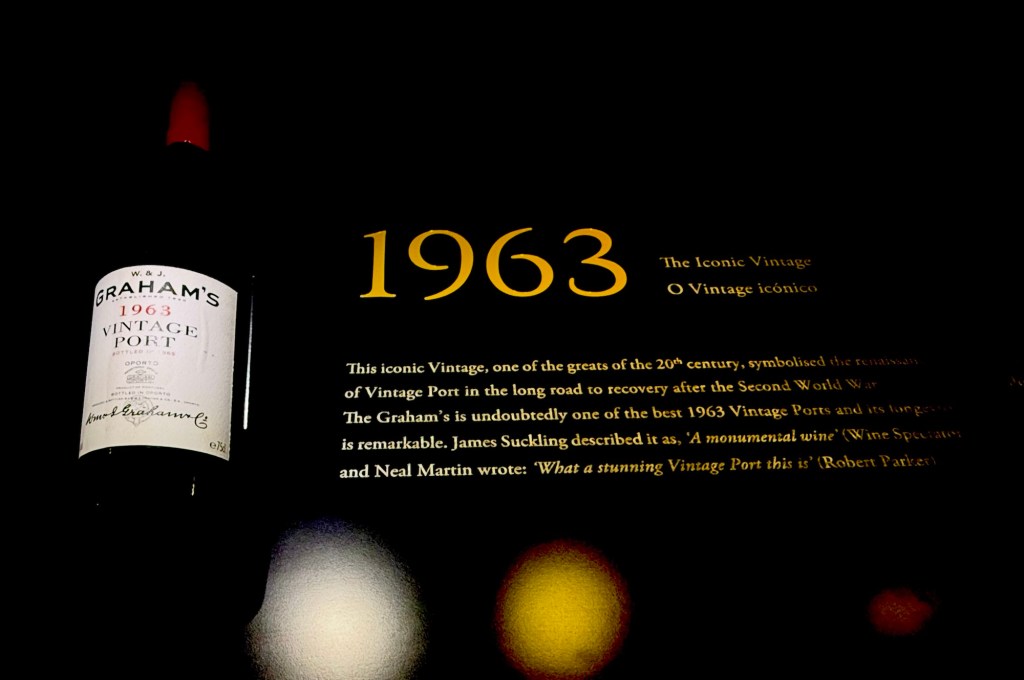
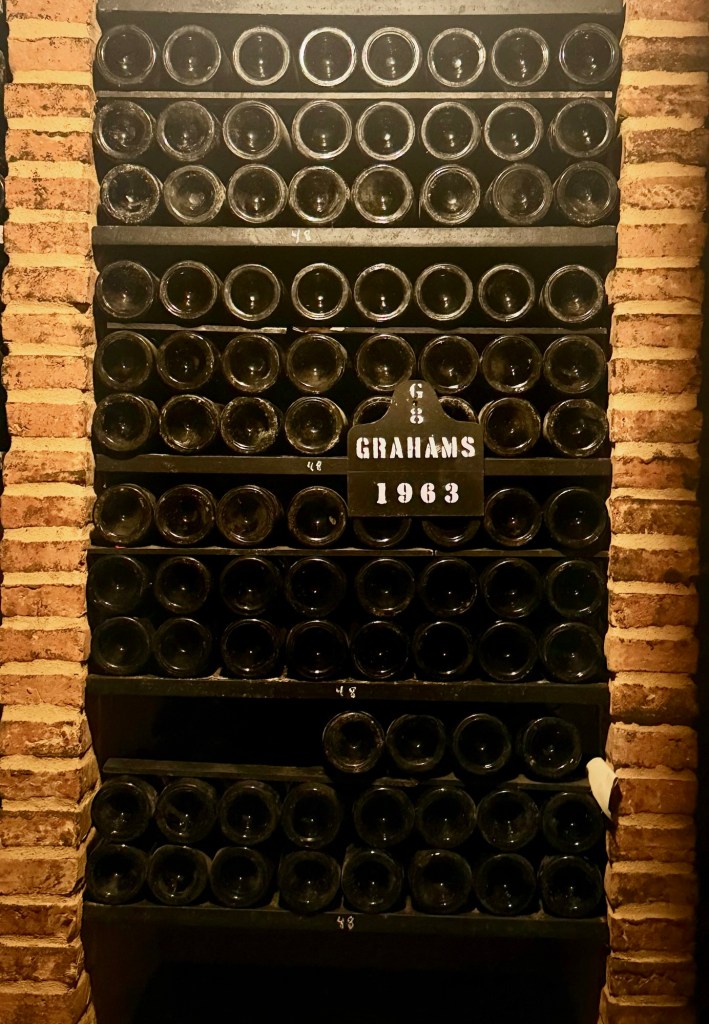
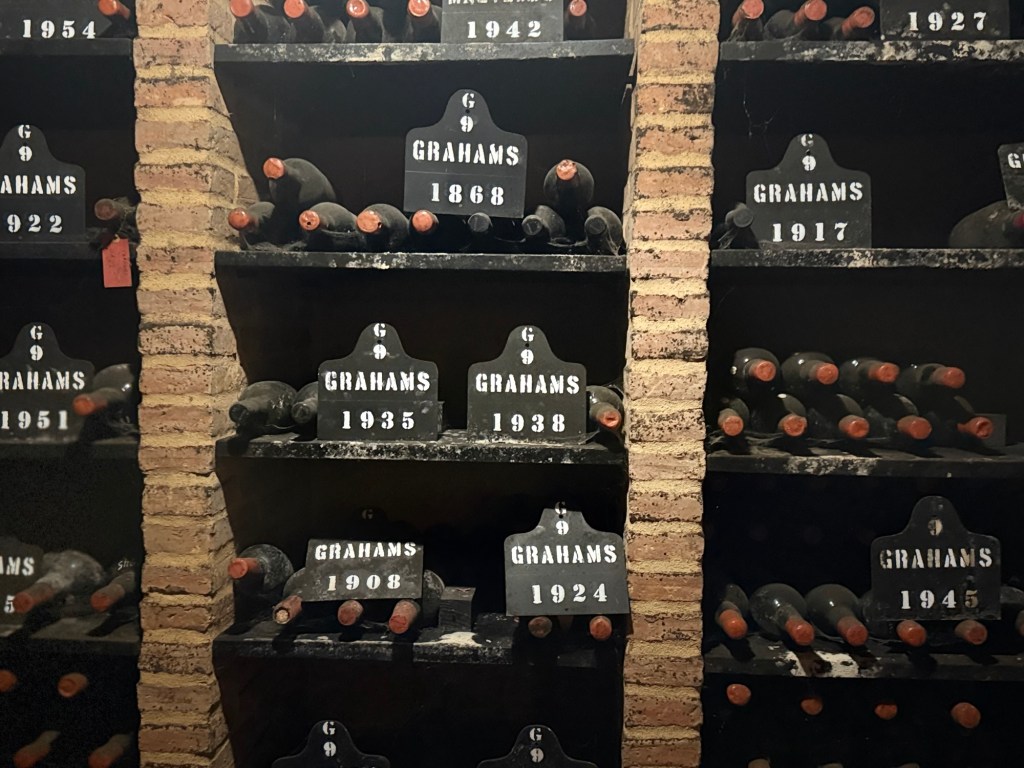
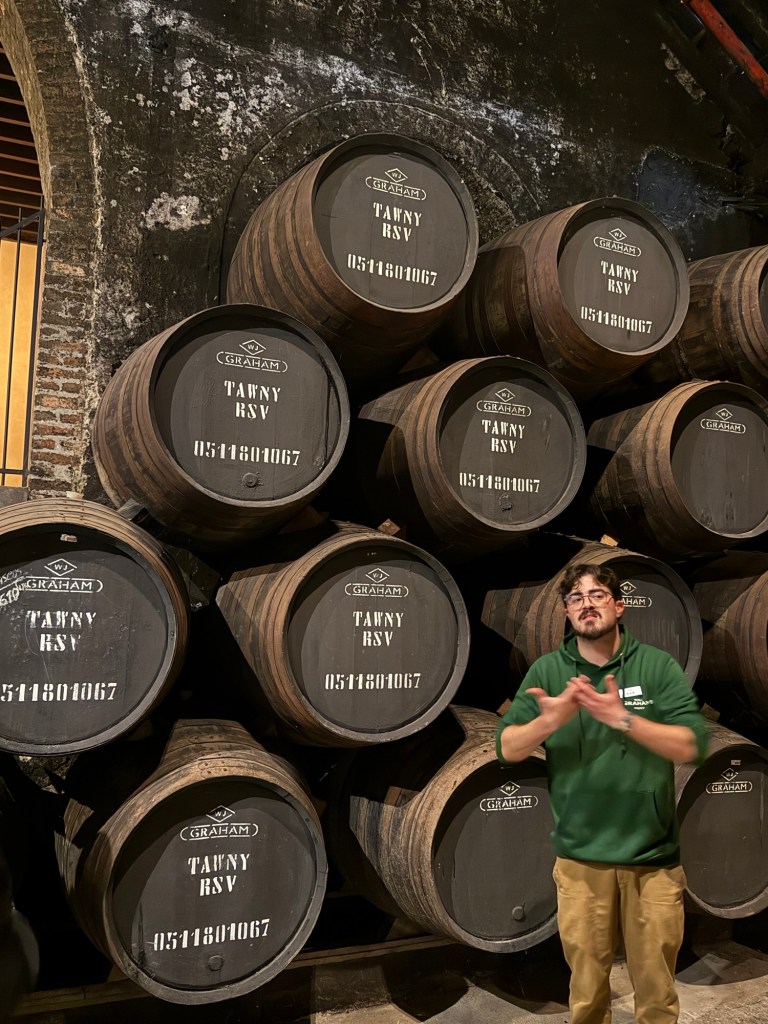
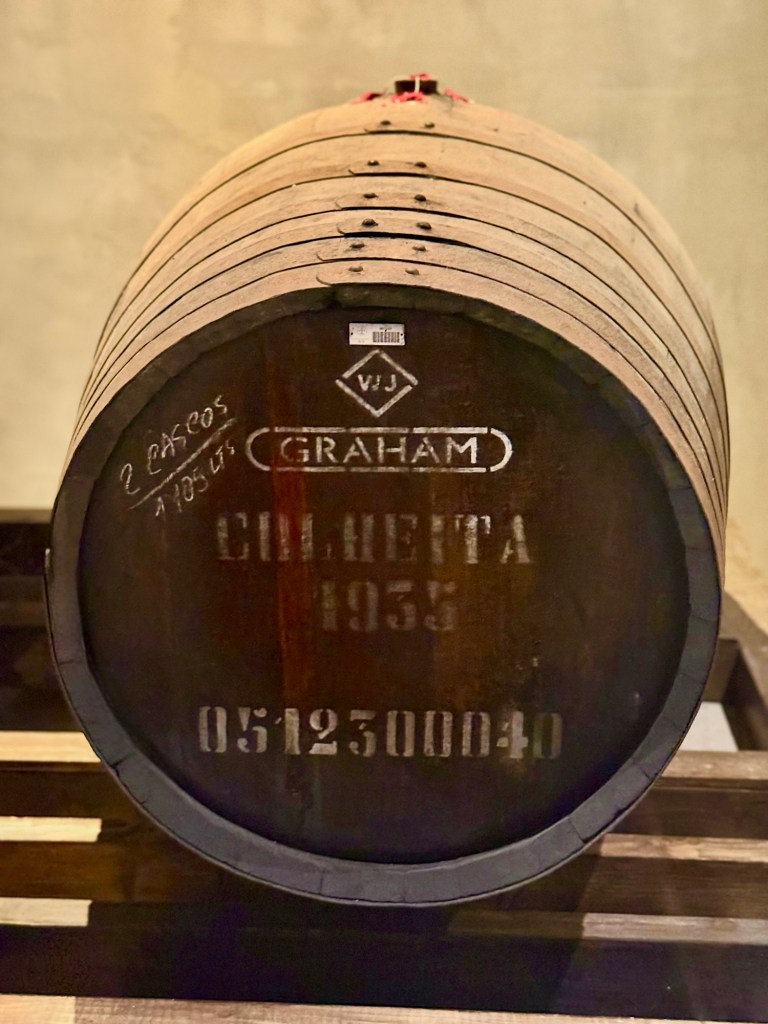
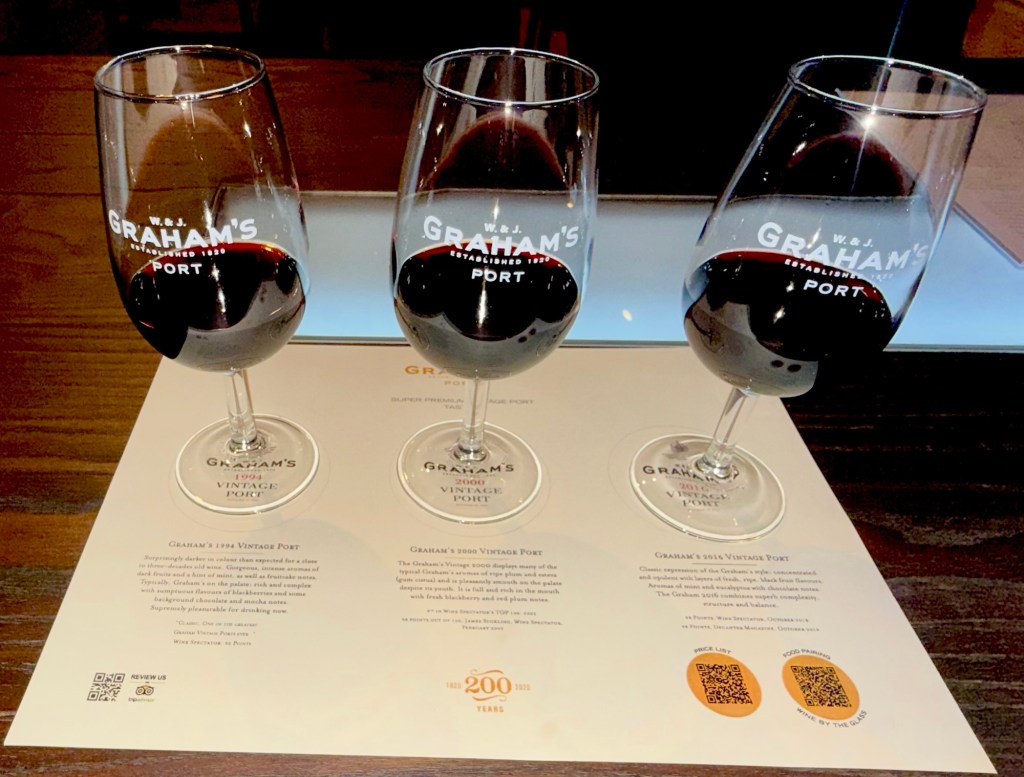
The tasting at the end was fun, and delicious. By the time we finished, our taste buds were nicely prepared for a relaxed seafood lunch high above the river.
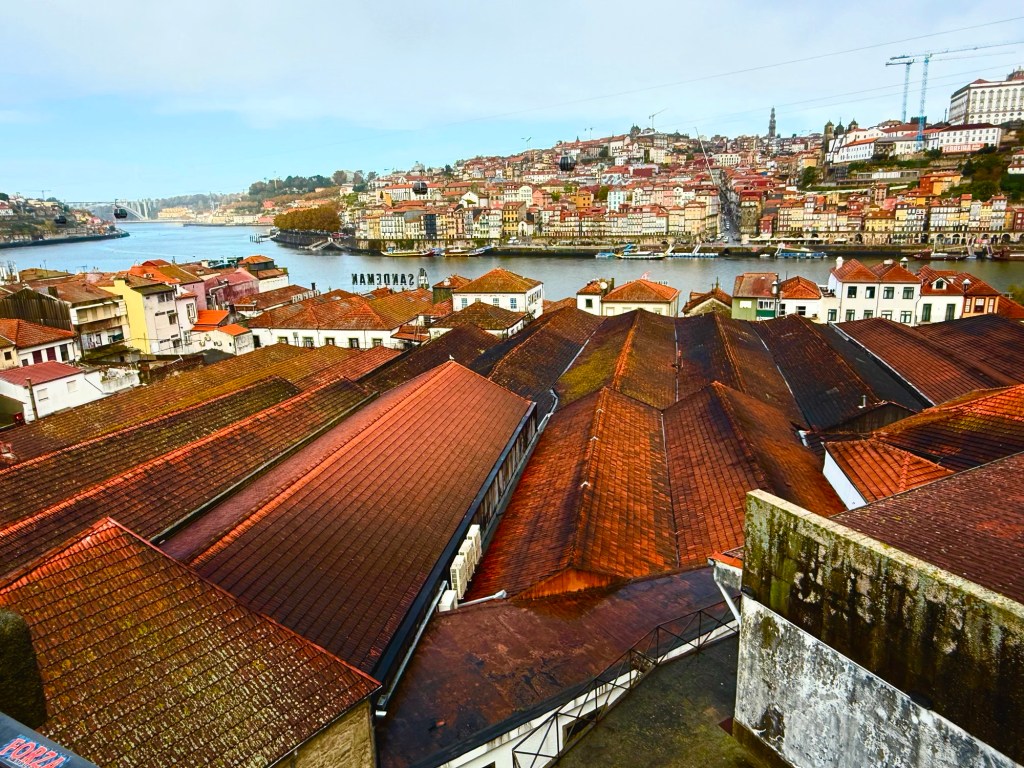
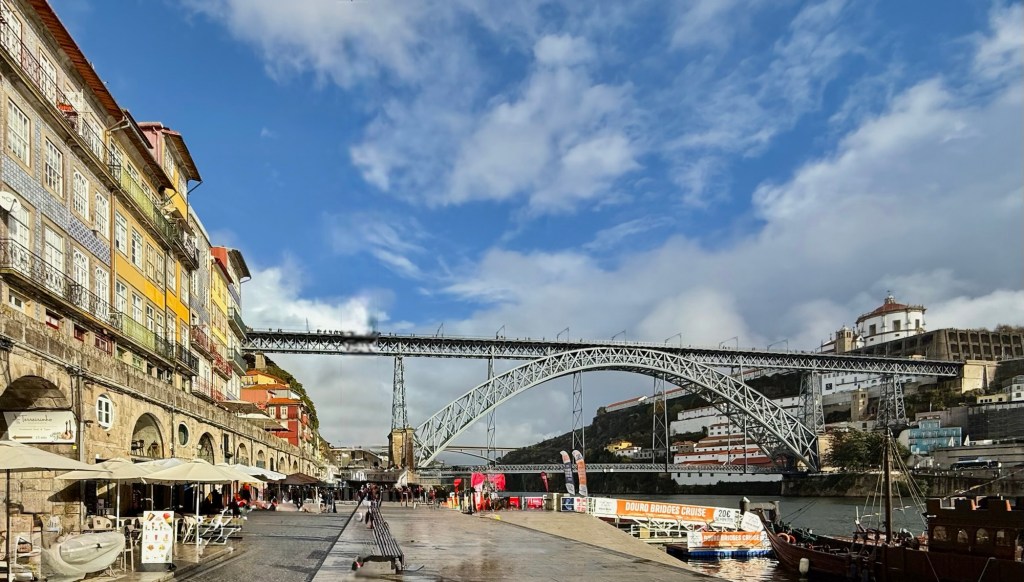
The views during our walk to Gaia were spectacular. The Douro curves through the city, lined on both banks with colorful buildings stacked one above another. Small boats carried tourists along the river, while the traditional rabelo boats recalled the days when wine barrels made the journey from the vineyards. And framing it all were Porto’s magnificent bridges.
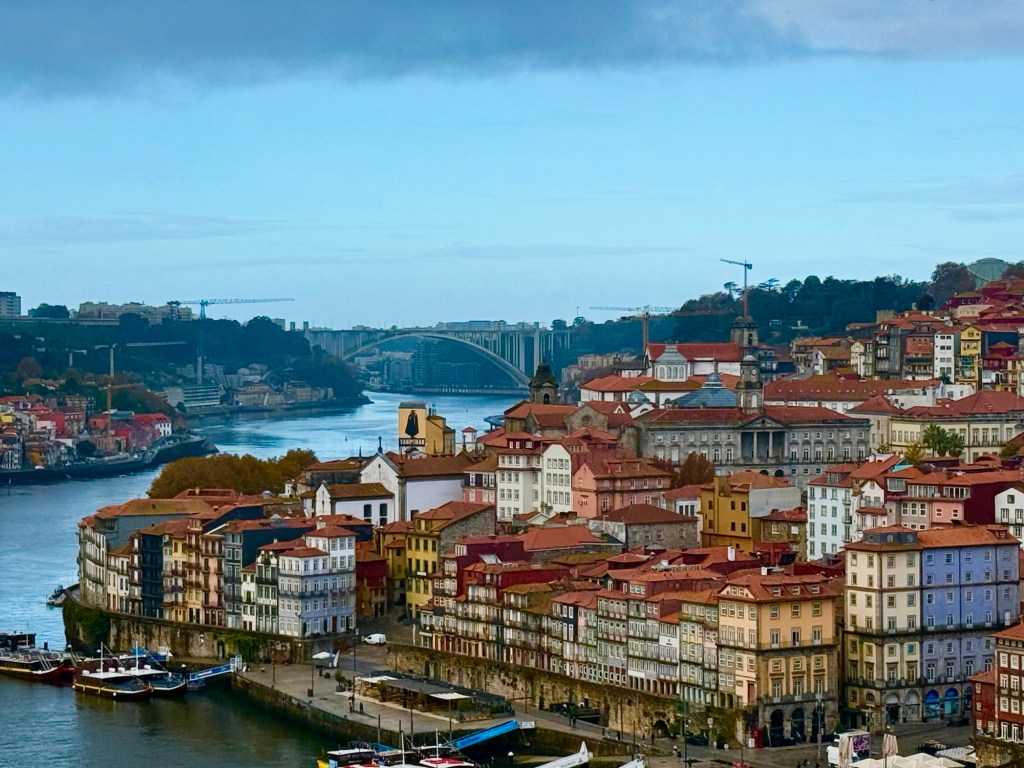
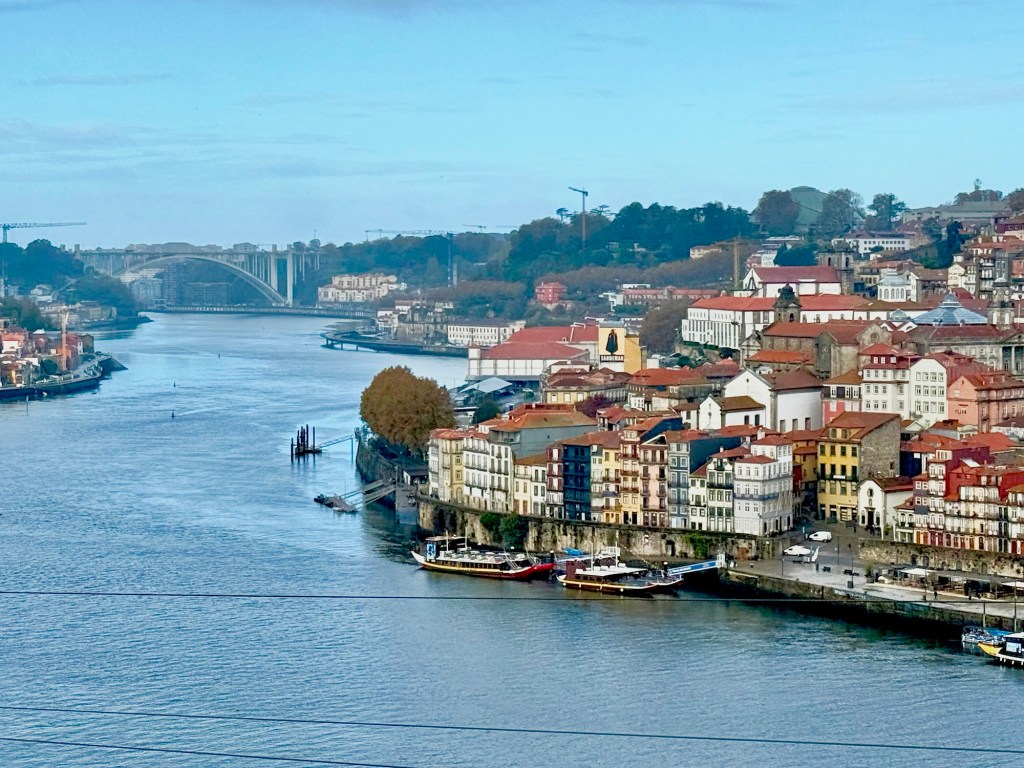
The most famous is the Dom Luís I Bridge, completed in 1886 and designed by Théophile Seyrig, a German engineer who had worked with Gustave Eiffel. Its enormous iron arch connects Porto and Gaia on two levels, with the upper deck soaring high above the river. It’s a remarkable piece of engineering and one of the city’s most recognizable landmarks.
But there was still so much more to see.
Palaces, Bookshops, and More Winding Streets
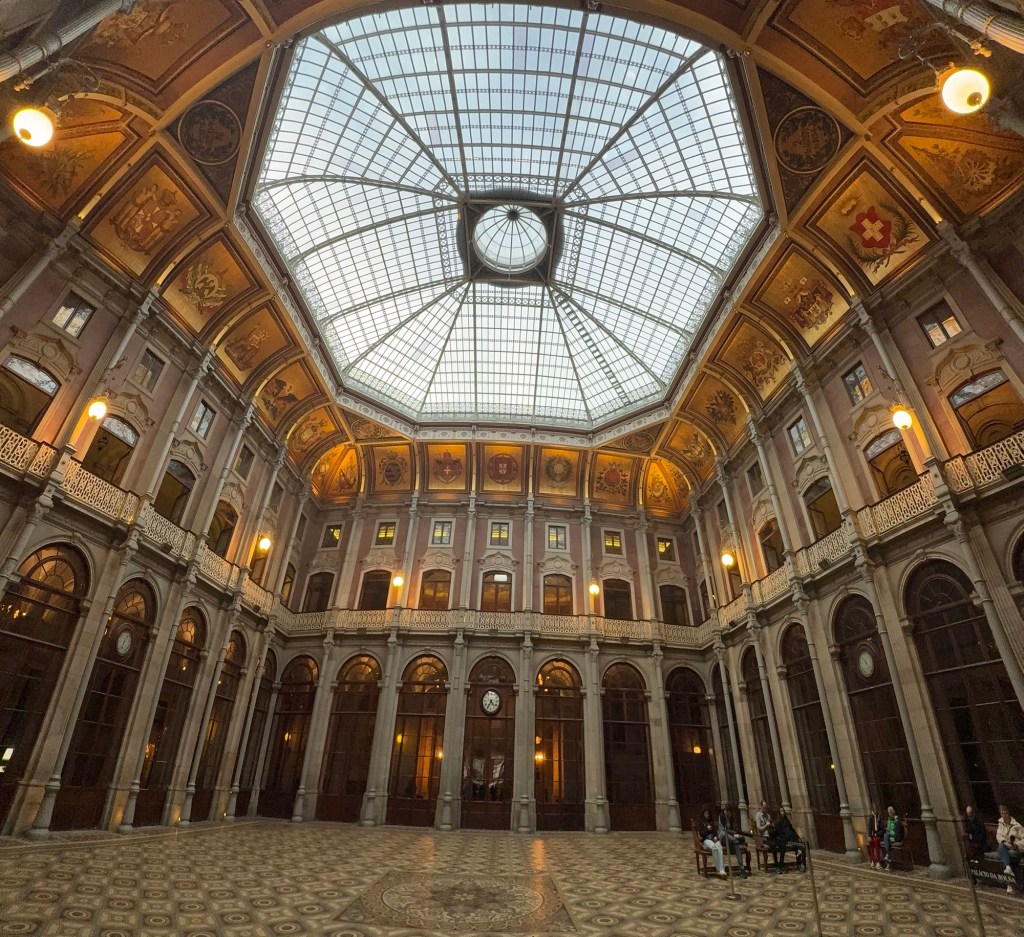
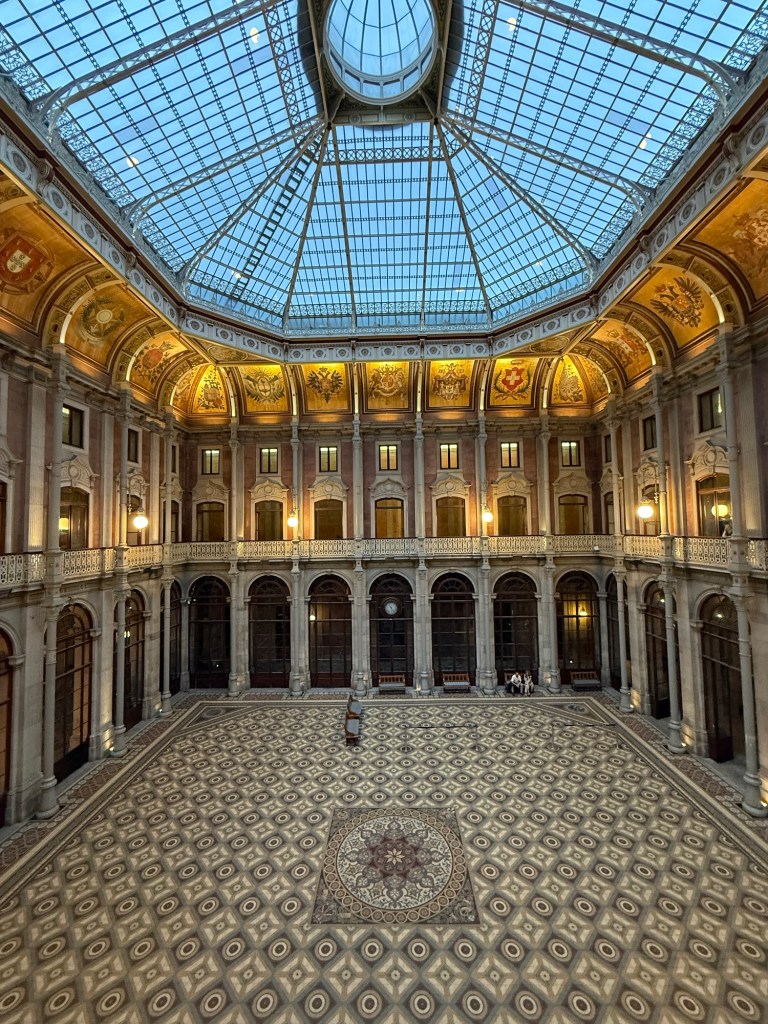
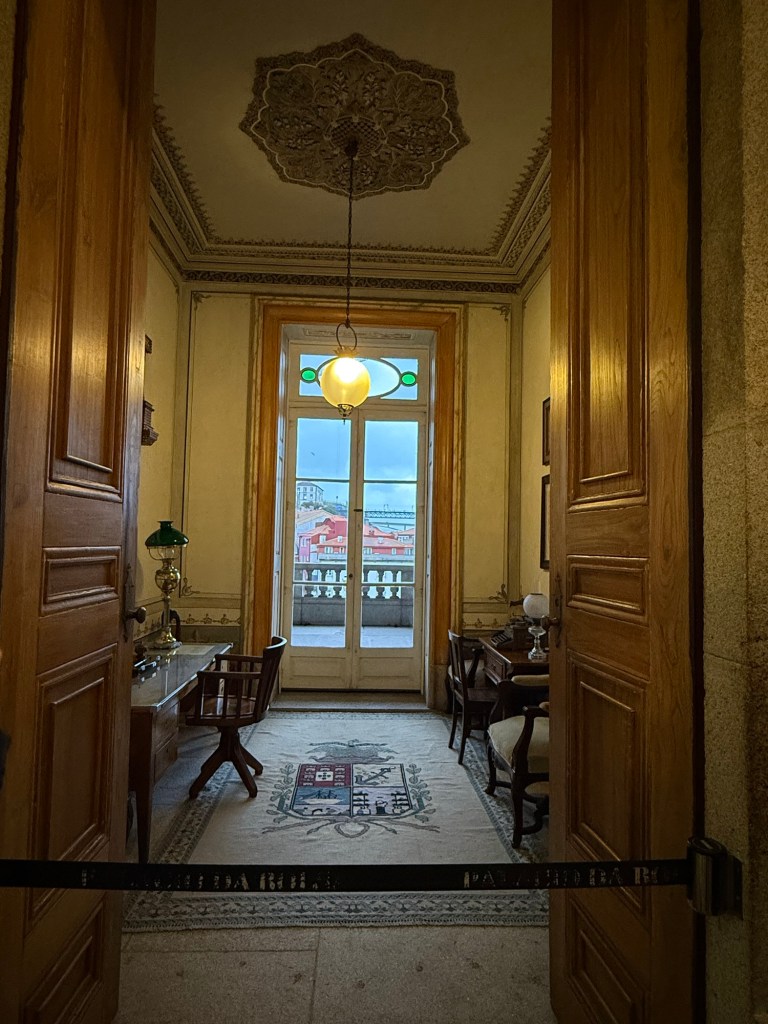
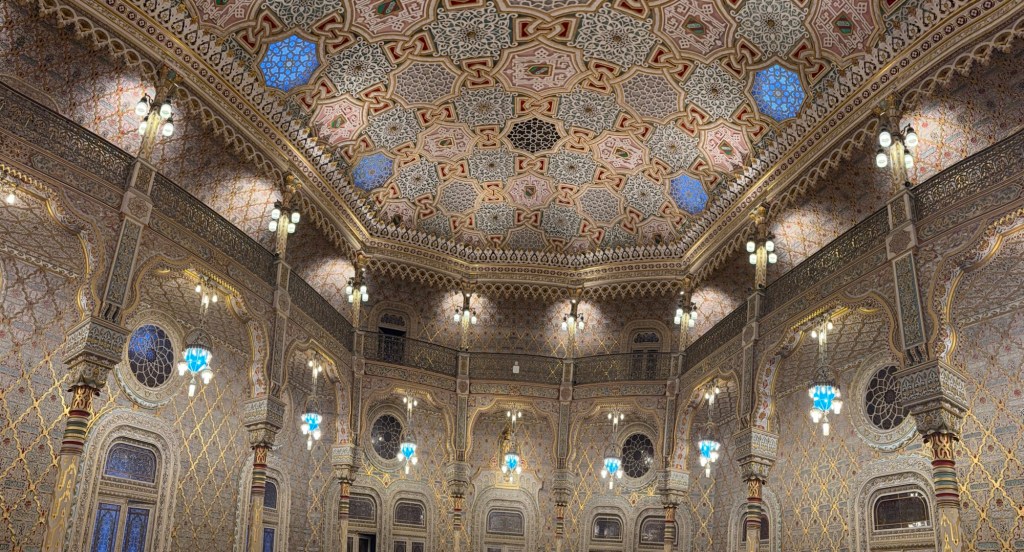
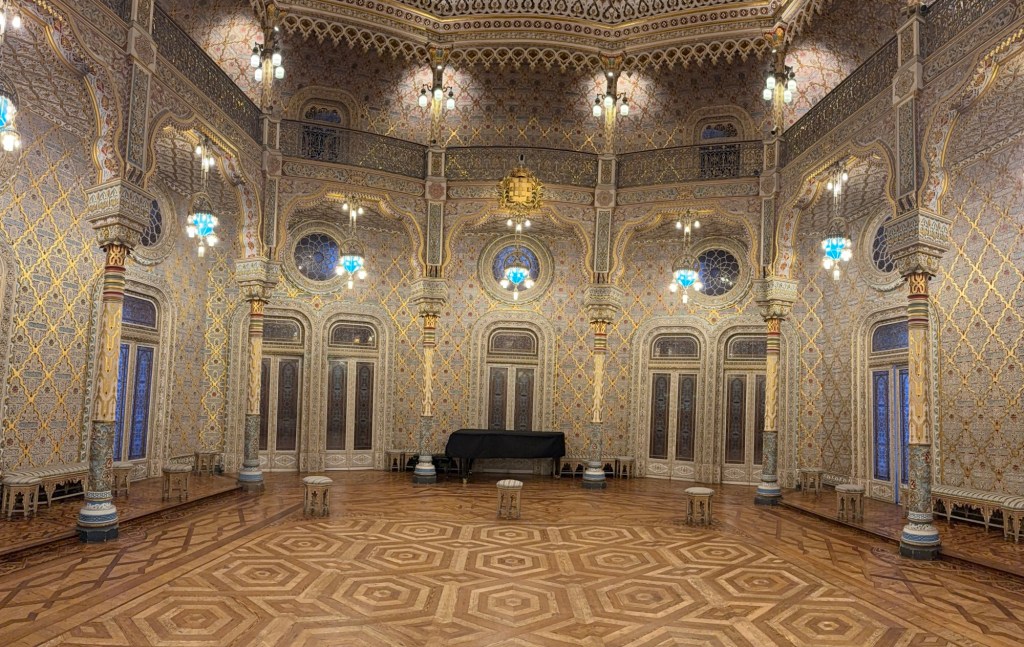
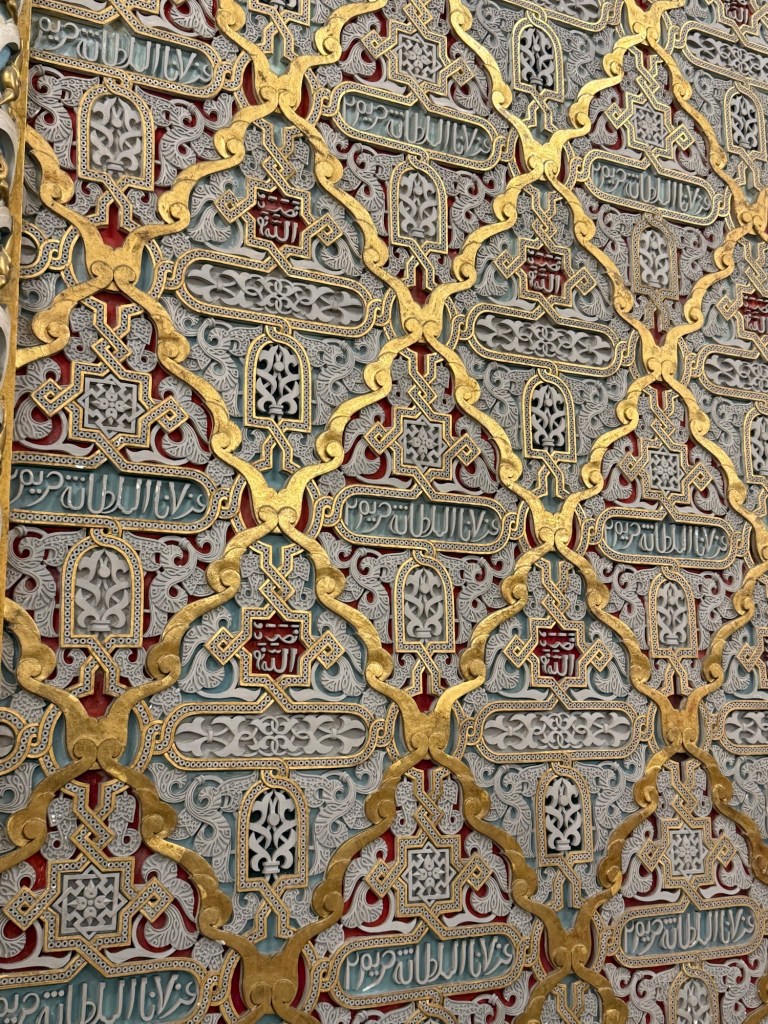
Back up the hill in the old town, we visited the magnificent Palácio da Bolsa, Porto’s nineteenth-century Stock Exchange Palace. Built by the city’s Commercial Association on the site of a former Franciscan convent, the palace was intended to impress visiting merchants and dignitaries with Porto’s wealth and commercial importance.
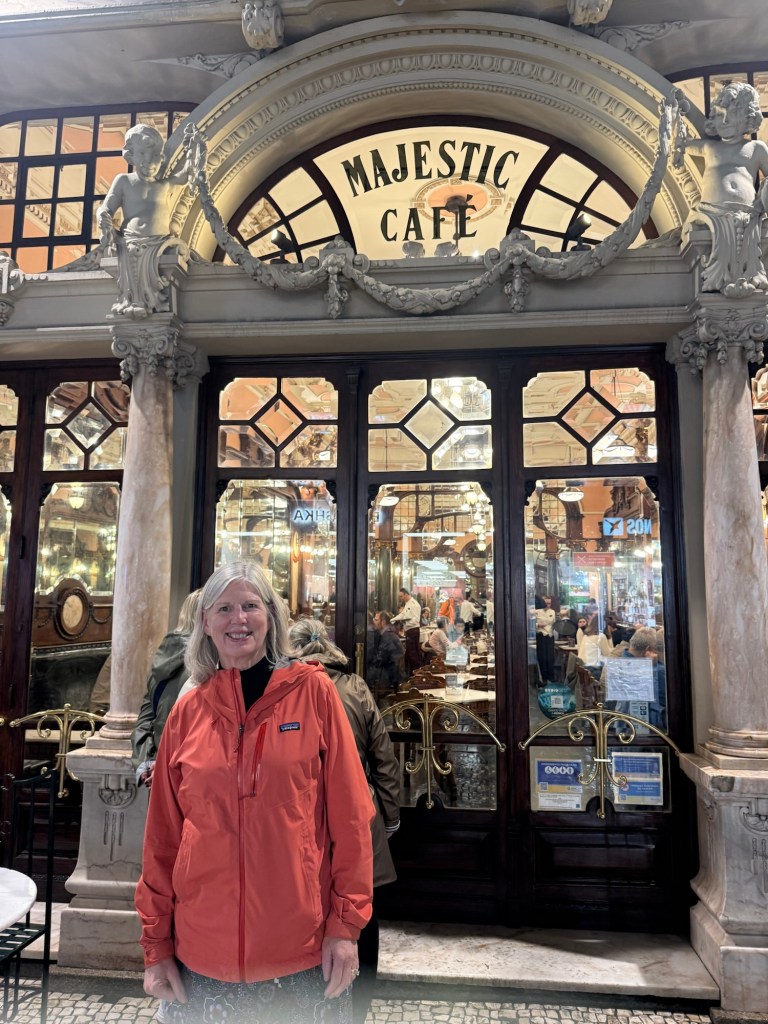
We also stopped to admire the Majestic Café, a beautiful Belle Époque coffeehouse opened in 1921. With its carved woodwork, mirrors, chandeliers, and elegant interior, it feels like a step back into another era.
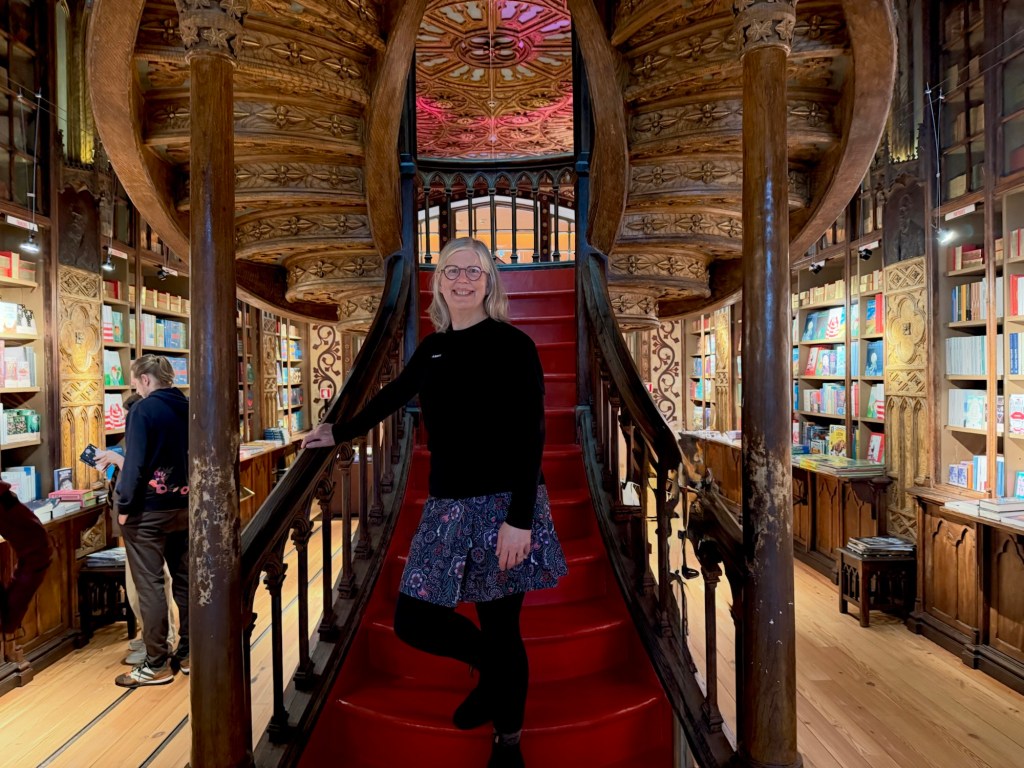
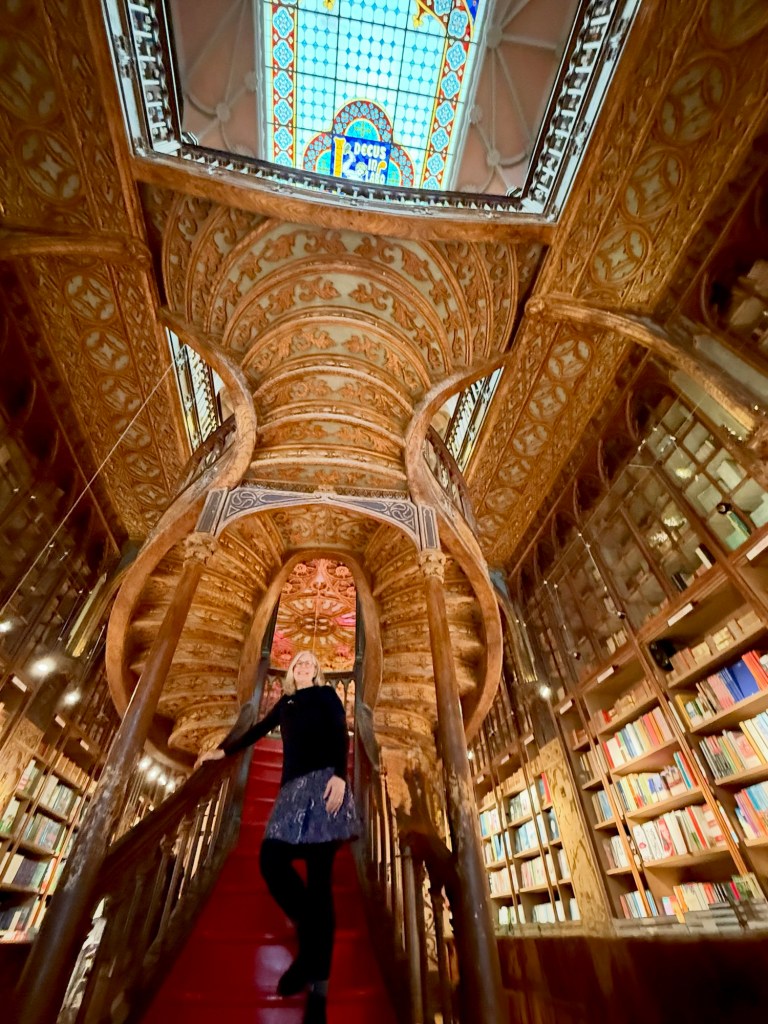
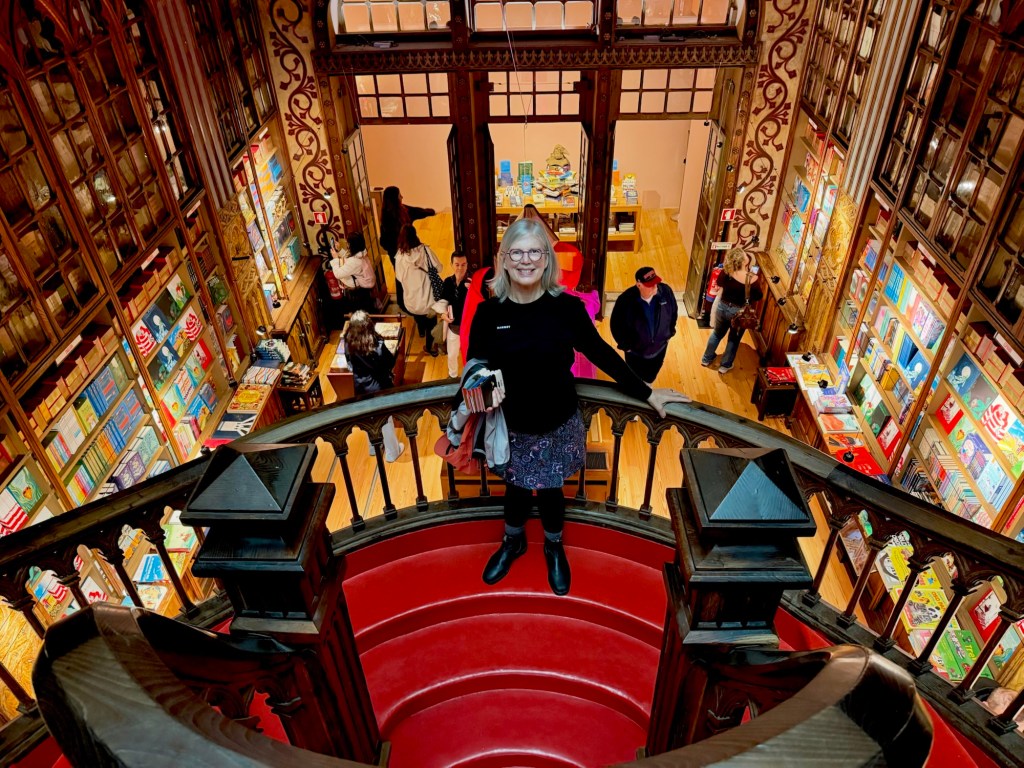
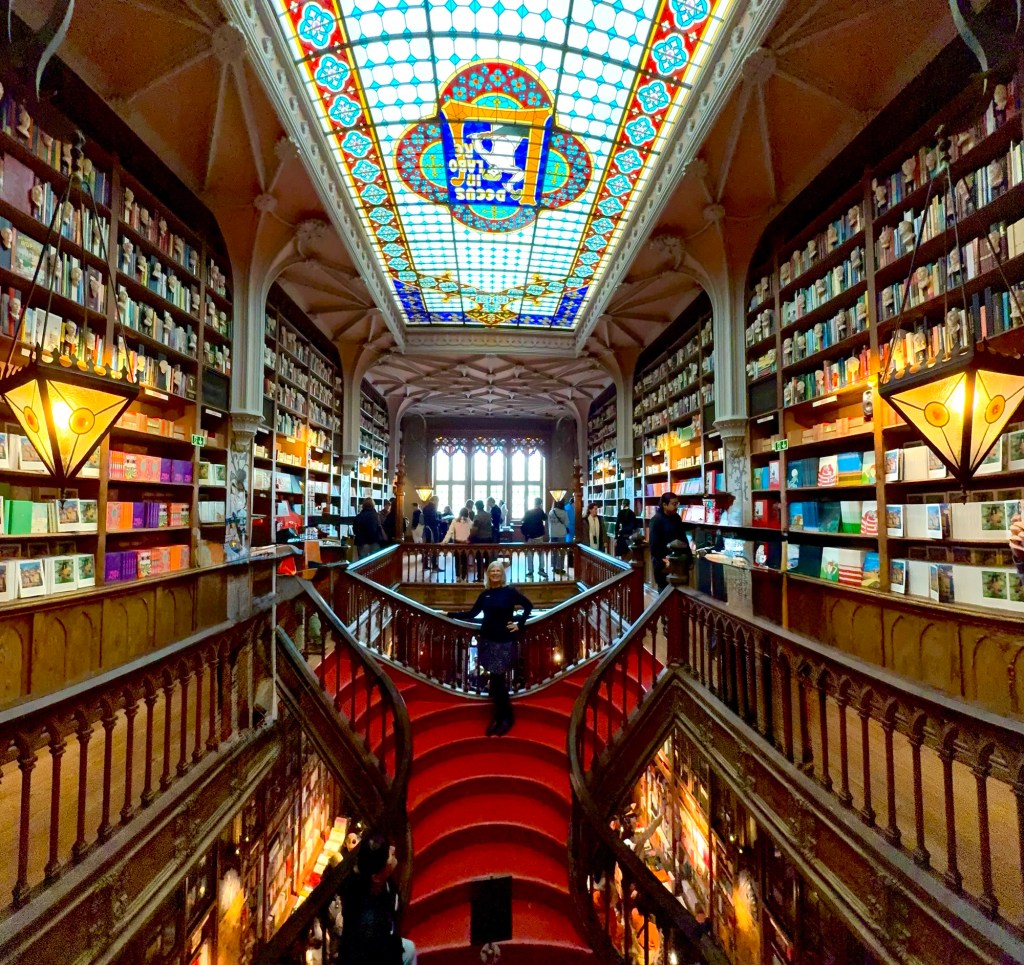
The book shop opened in 1906, and its extraordinary interior features a sweeping red staircase, carved wooden shelves, stained glass, and elaborate decorative details. Rowling began working on the Harry Potter story during her years in Portugal, and the bookstore’s magical atmosphere has long been linked to the world she created. Whether or not it actually inspired Hogwarts, it certainly looks as though it could have!
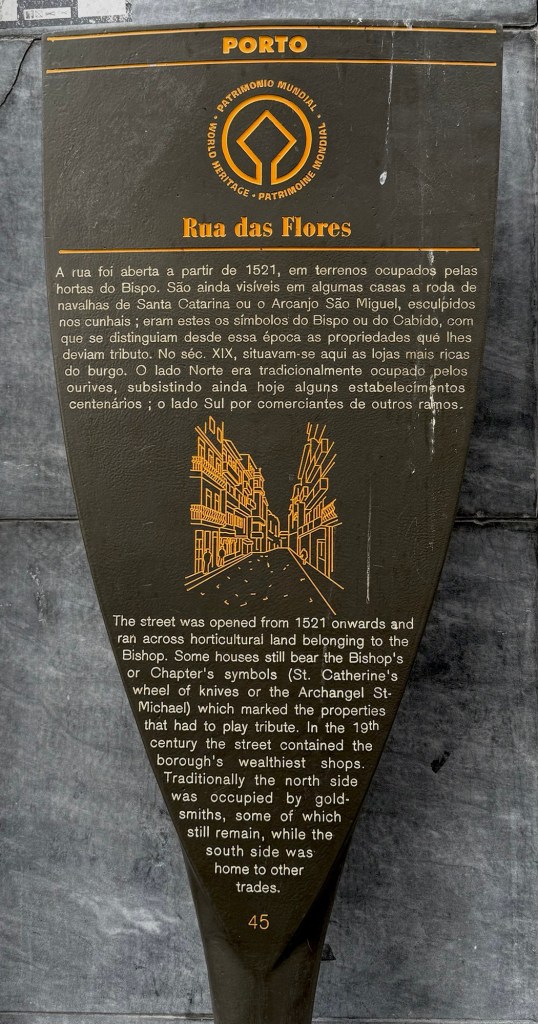
From there, we wandered down Rua das Flores, a street laid out in the sixteenth century that became home to wealthy merchants, goldsmiths, and some of Porto’s most fashionable shops. Today it is a fun mix of old storefronts, cafés, and little shops selling Portuguese specialties.
We discovered one of Portugal’s beautifully old-fashioned soap shops, with its gorgeous packaging and wonderfully fragrant soaps. Portugal has a long tradition of fine soap making, and even something as ordinary as a bar of soap becomes a little work of art.
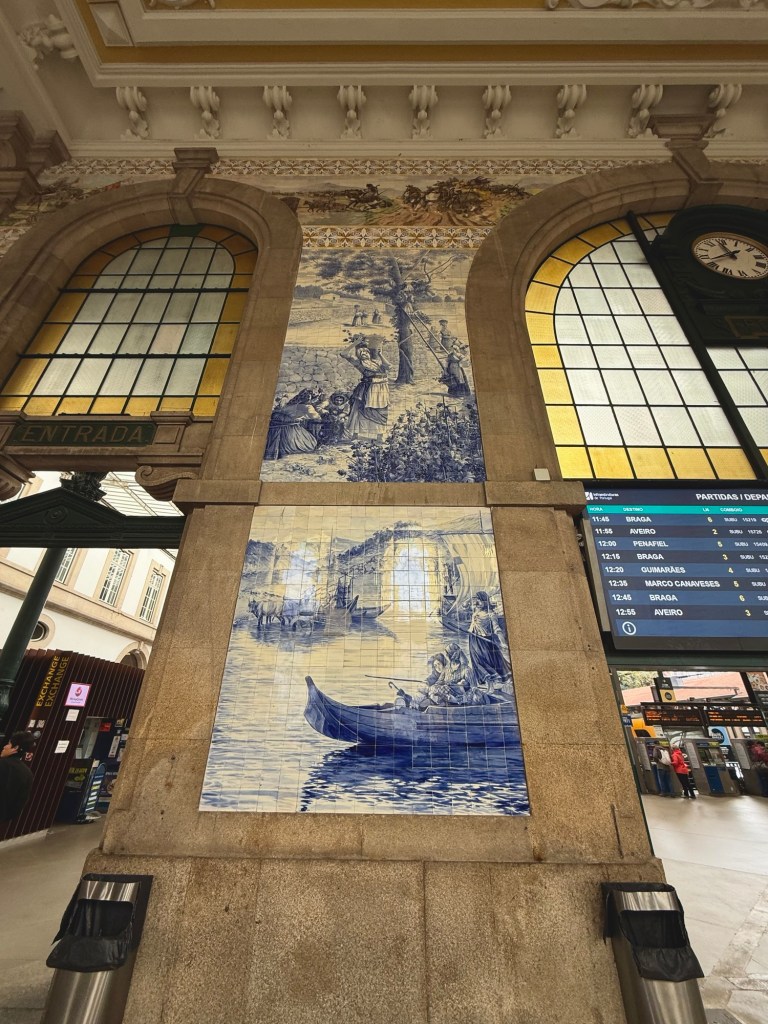
Eventually, our wandering brought us to São Bento railway station, which has to be one of the most beautiful train stations anywhere. Its entrance hall is covered with approximately 20,000 blue-and-white azulejo tiles, created by artist Jorge Colaço in the early twentieth century. The enormous panels tell stories from Portuguese history, including battles, royal processions, and scenes of everyday rural life. Imagine arriving to catch a train and walking into a history lesson painted across the walls!
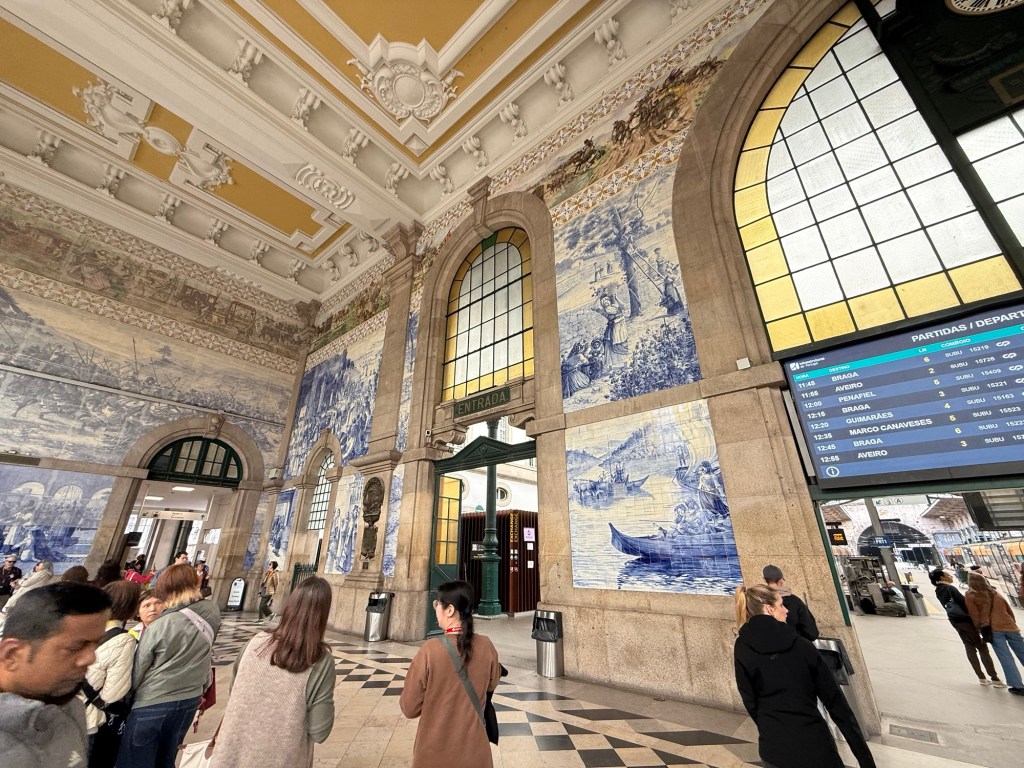
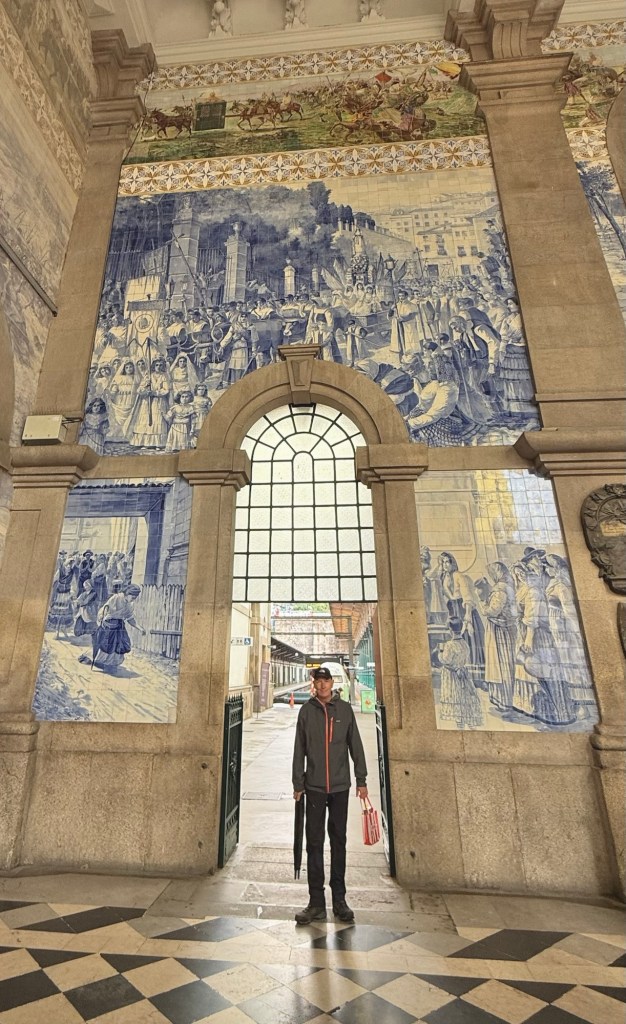
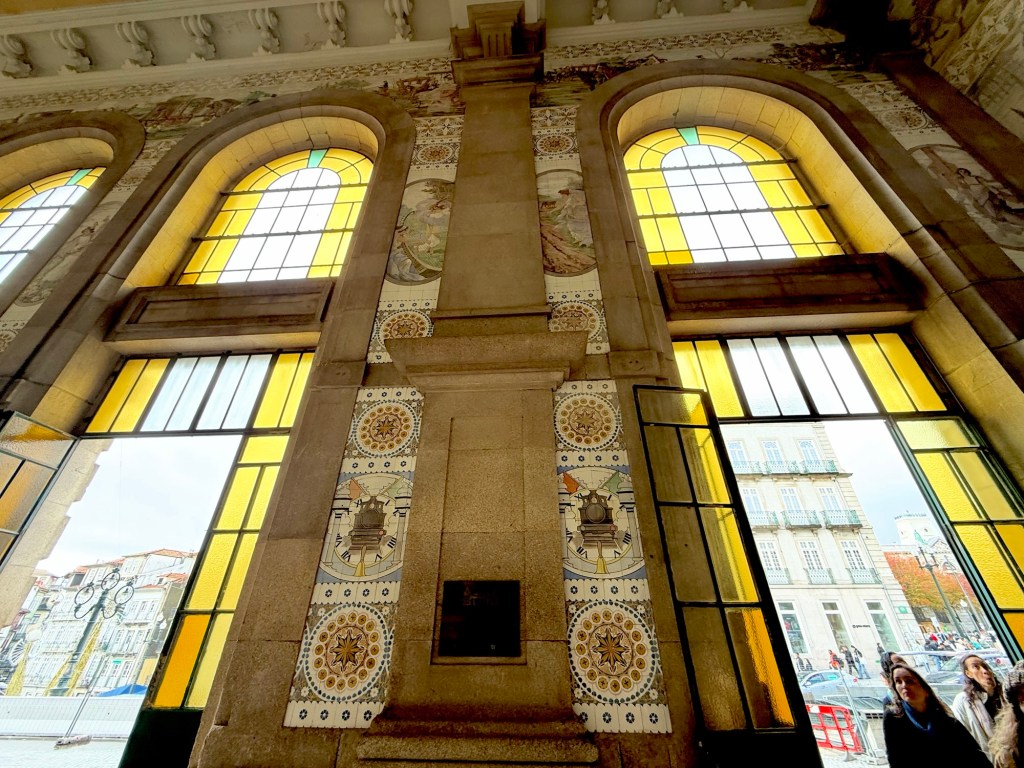
It rained for much of our time in Porto, sometimes quite heavily, but it hardly mattered. There were always more churches to peek into, more cafés to discover, and more little shops and historic buildings to investigate.
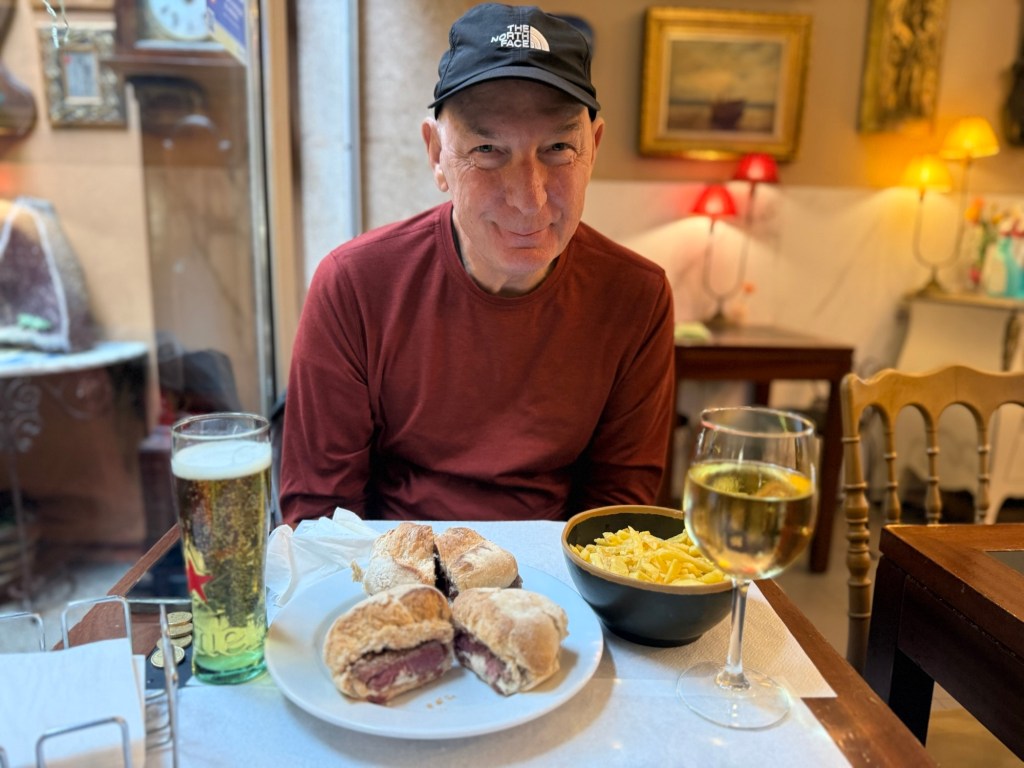
Porto is full of wonderful corners, although calling anything a corner implies a ninety-degree turn, which is rather ridiculous in this city. The streets seem to cross and recross at every possible angle, and tiny alleyways emerge where you least expect them. We loved it.
Two Nights in a Monastery
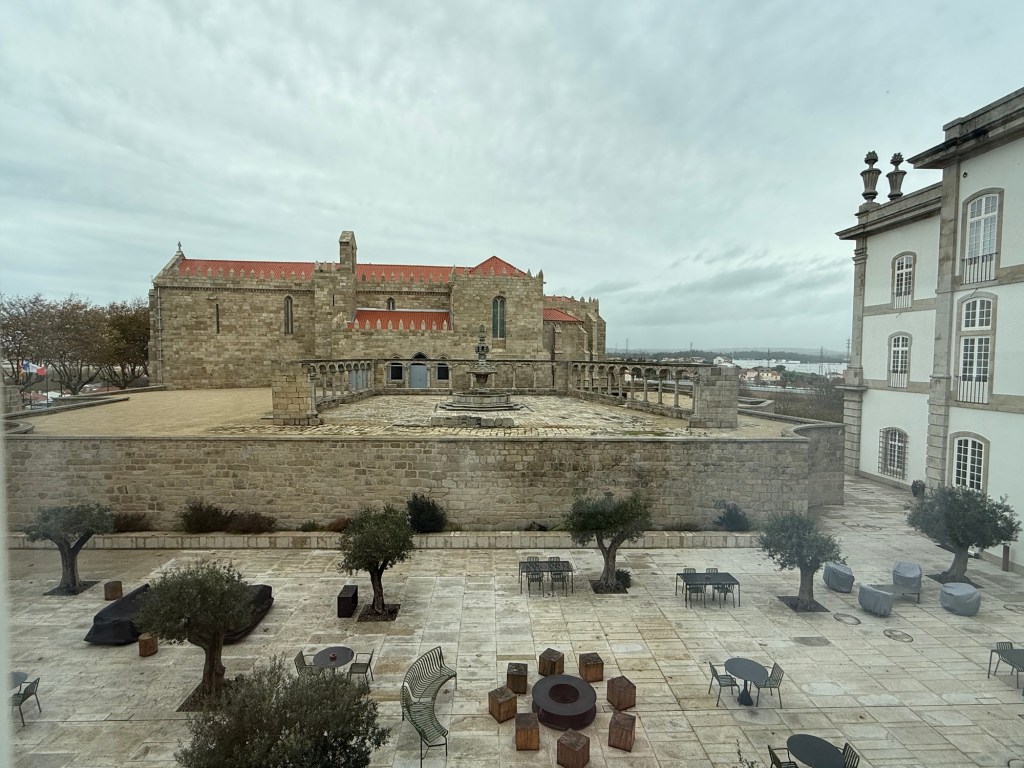
I had planned one final treat for the end of our adventure: two nights at The Lince Santa Clara, a beautifully restored former monastery in Vila do Conde, a small coastal town north of Porto.
And what a treat it was!
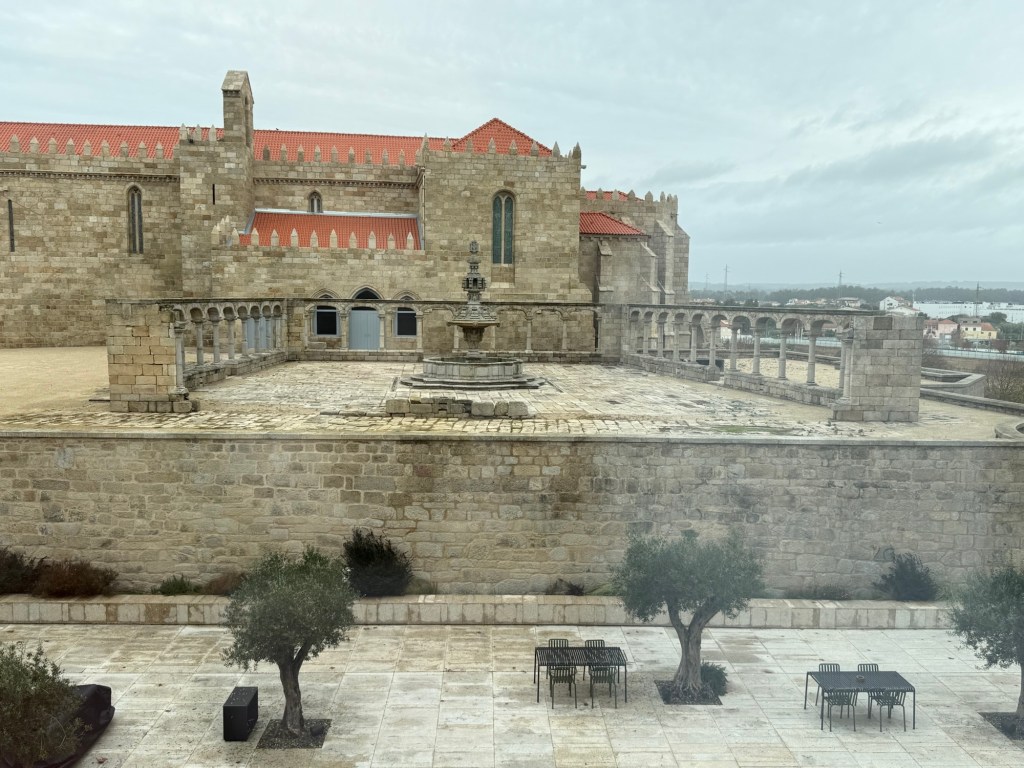
The hotel occupies the former Monastery of Santa Clara, founded in 1318 on a hill overlooking the Ave River. For centuries it was home to a community of Franciscan nuns, and the enormous building became one of the town’s most important landmarks. After the religious orders were dissolved in Portugal in the nineteenth century, the monastery eventually passed into other uses before its remarkable transformation into a luxury hotel.
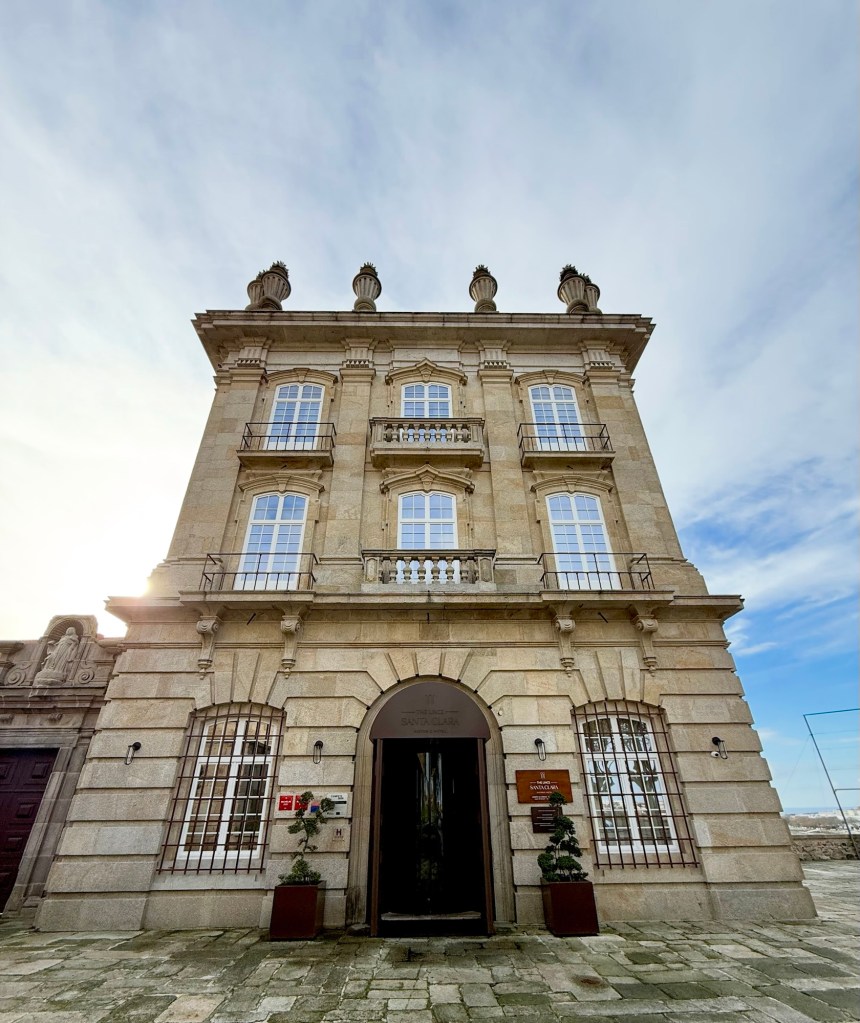
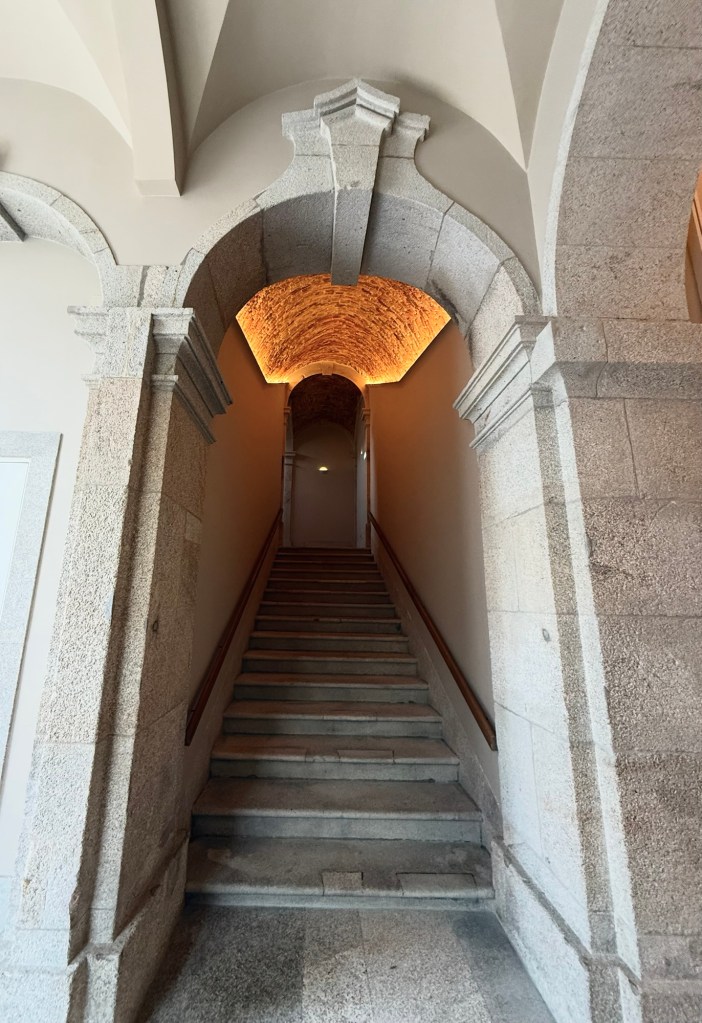
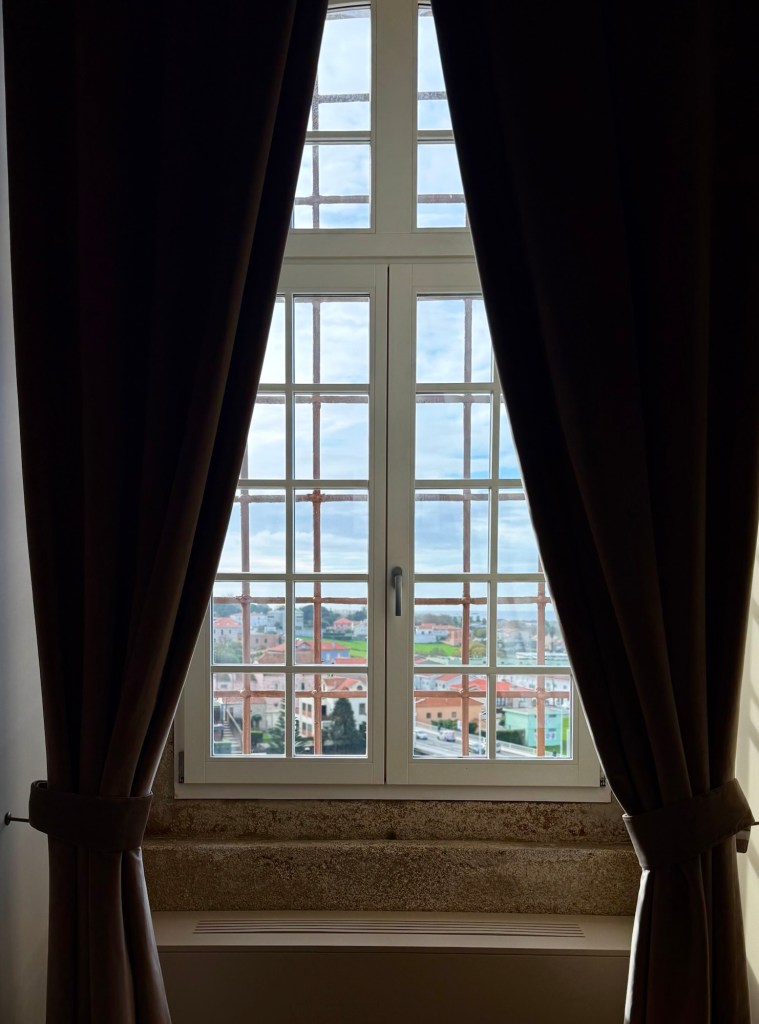
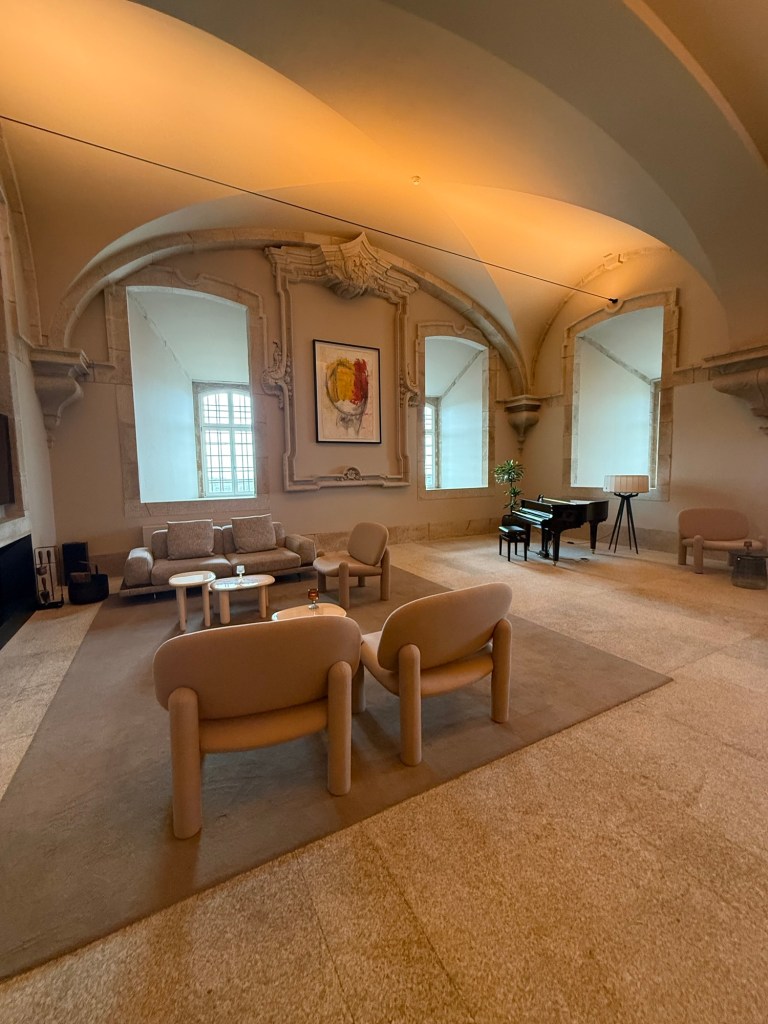
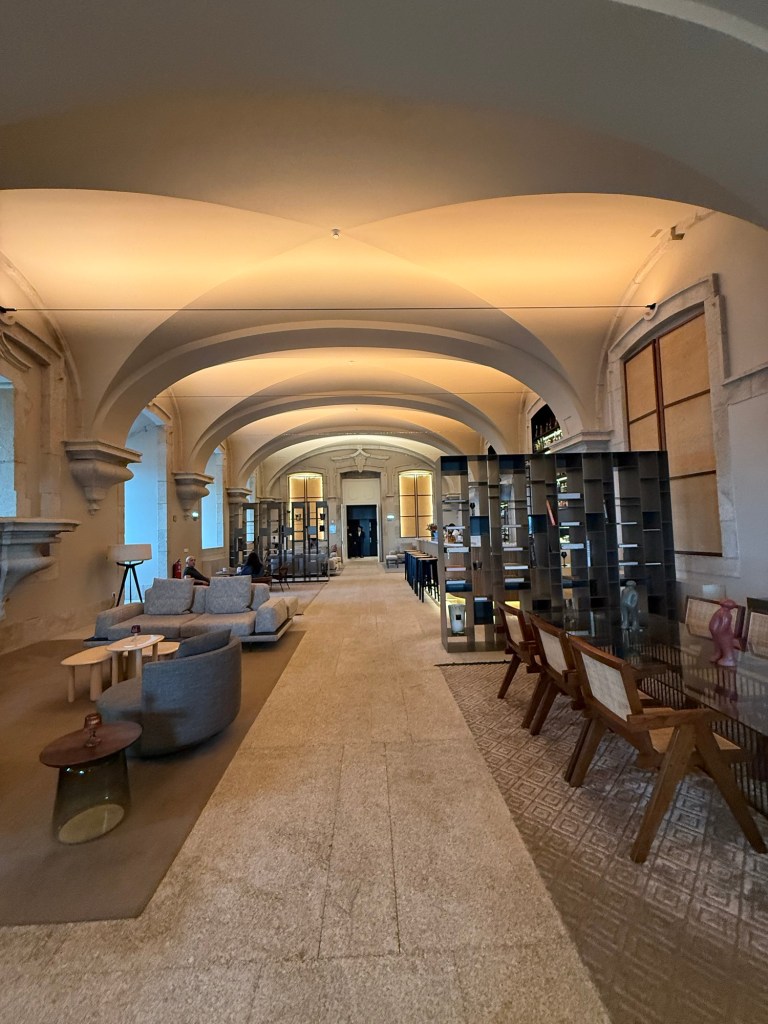
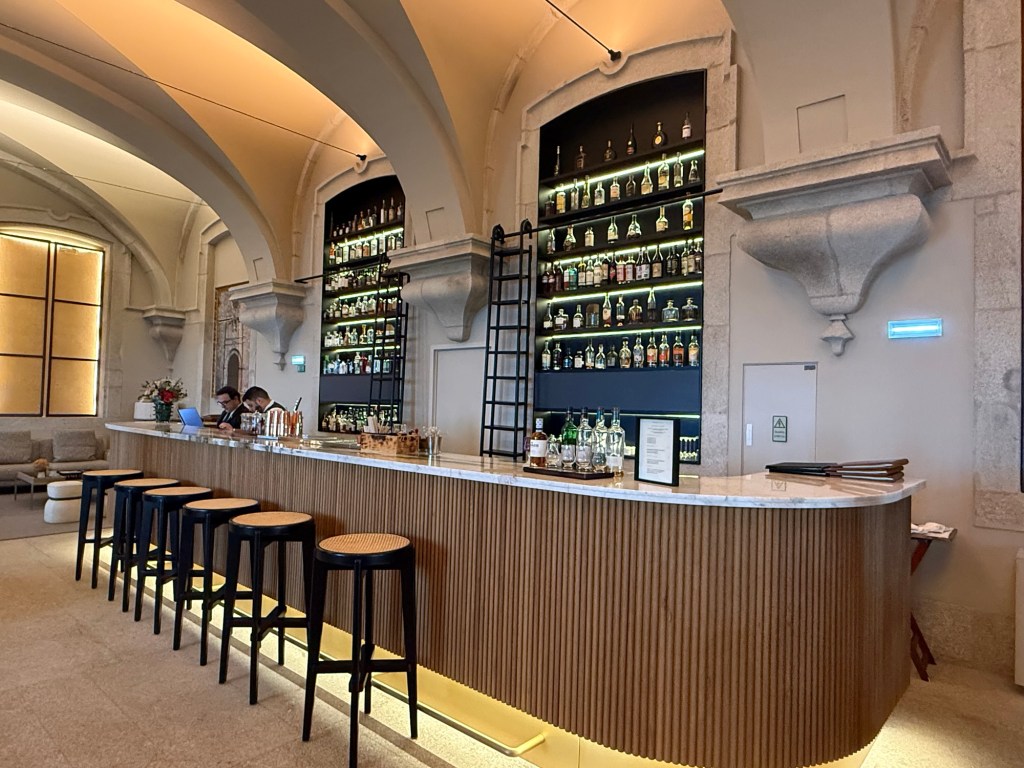
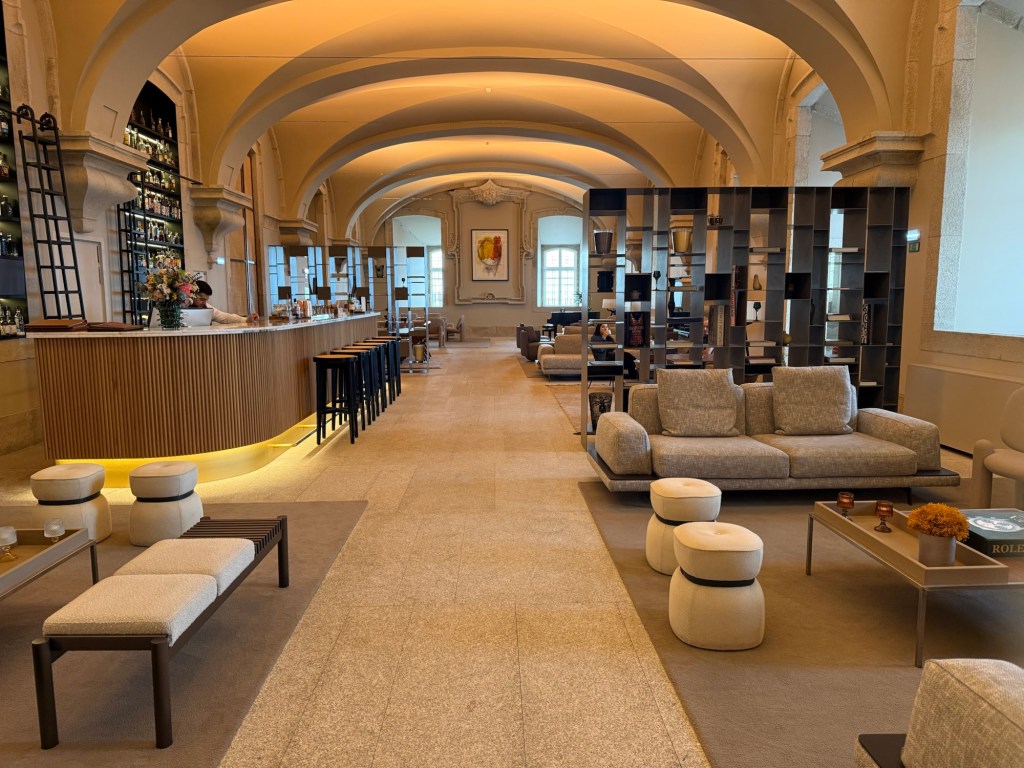
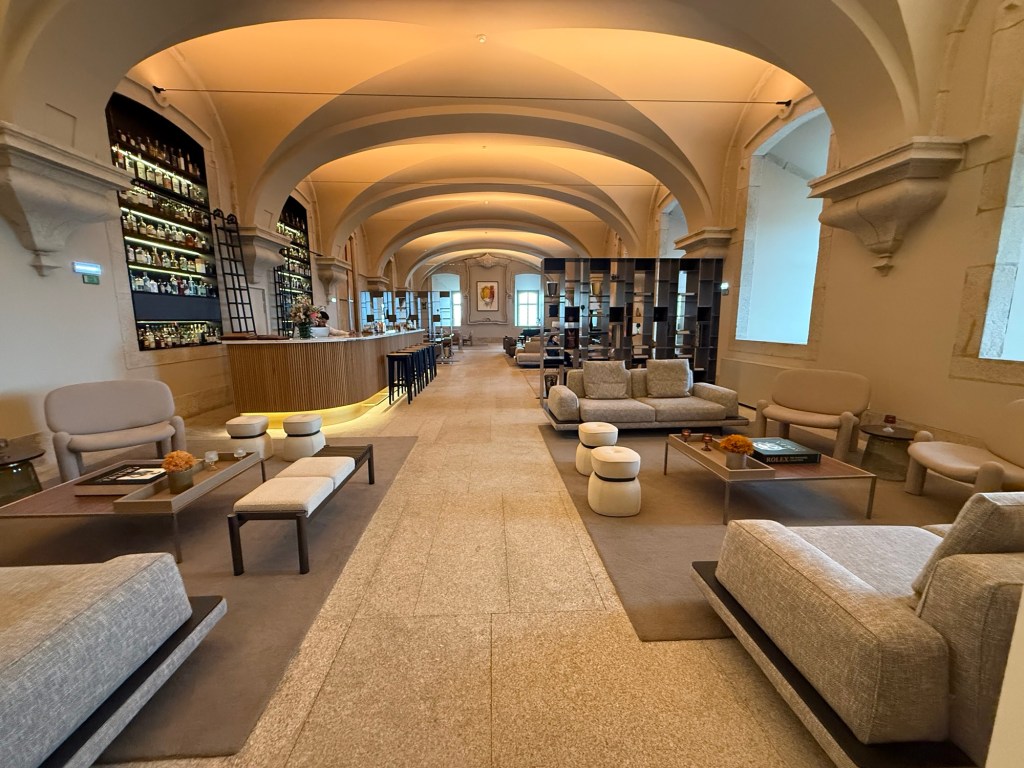
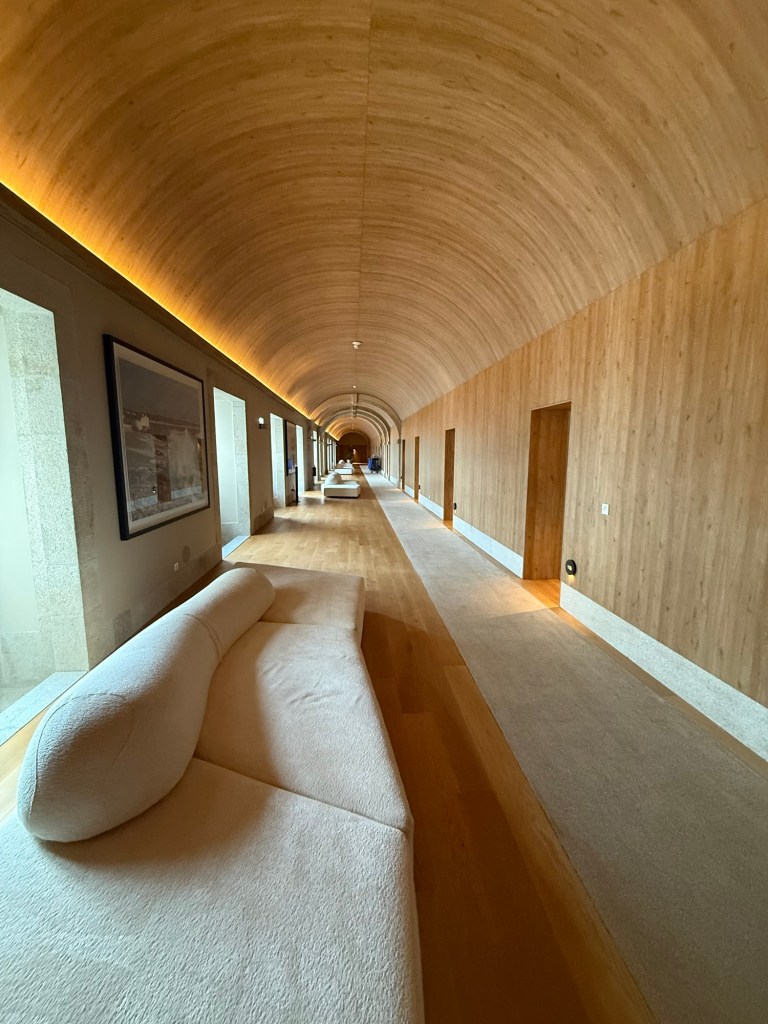
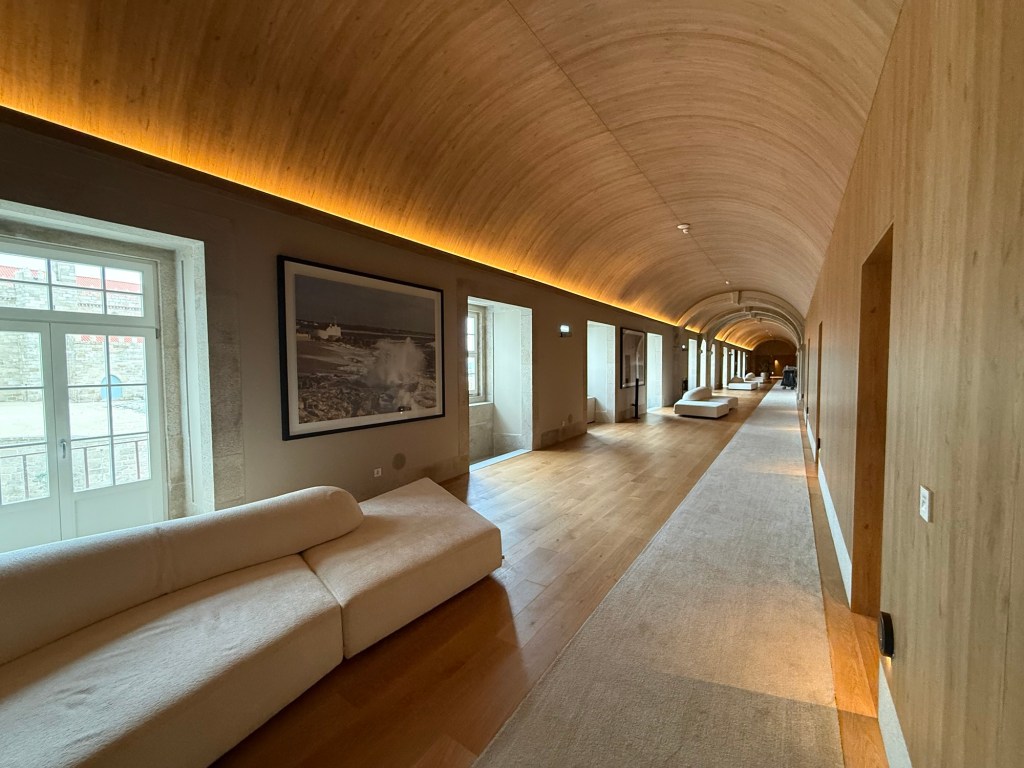
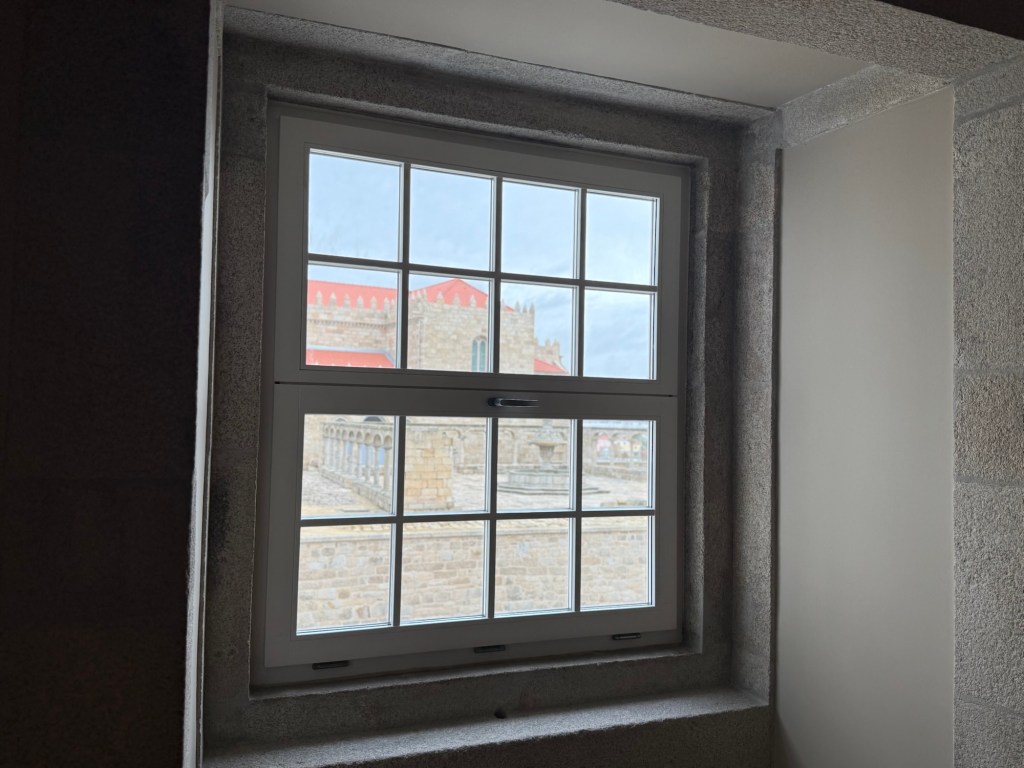
The restoration is extraordinary. The architects preserved the massive stone walls, vaulted passages, cloisters, and historic character of the building while introducing beautiful contemporary interiors. The result is grand without being stuffy, elegant but wonderfully peaceful.
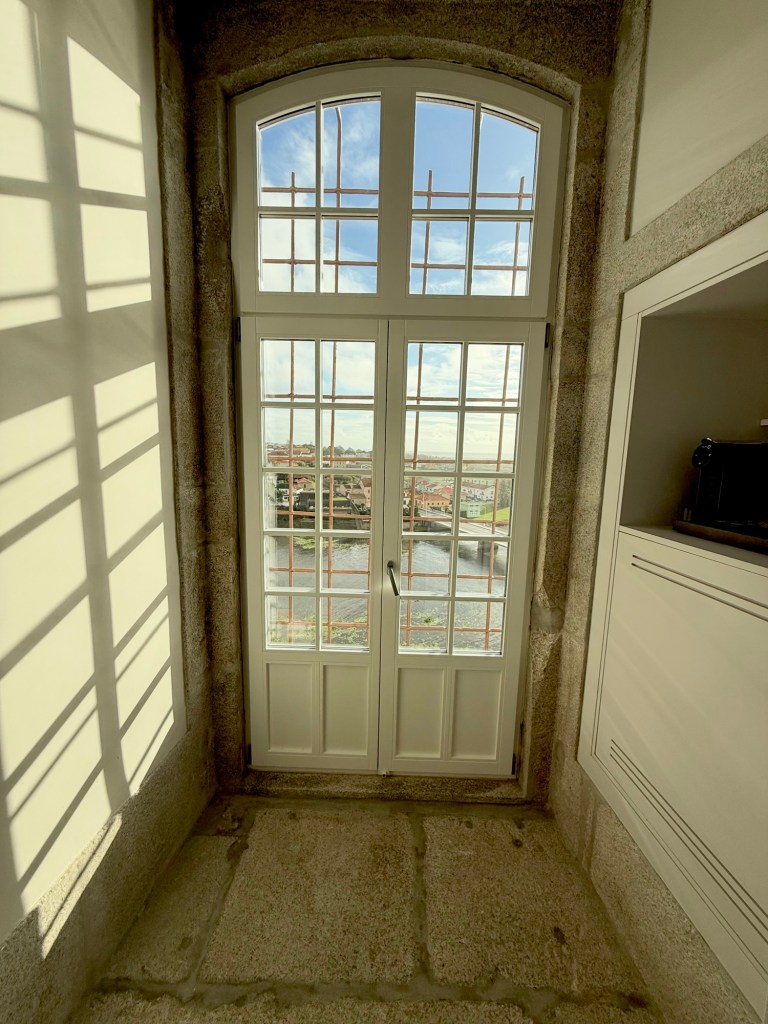
The spa was spectacular, and because we were visiting in the off-season, we had it almost entirely to ourselves. What luxury! After weeks of hiking, our tired legs were very happy indeed.
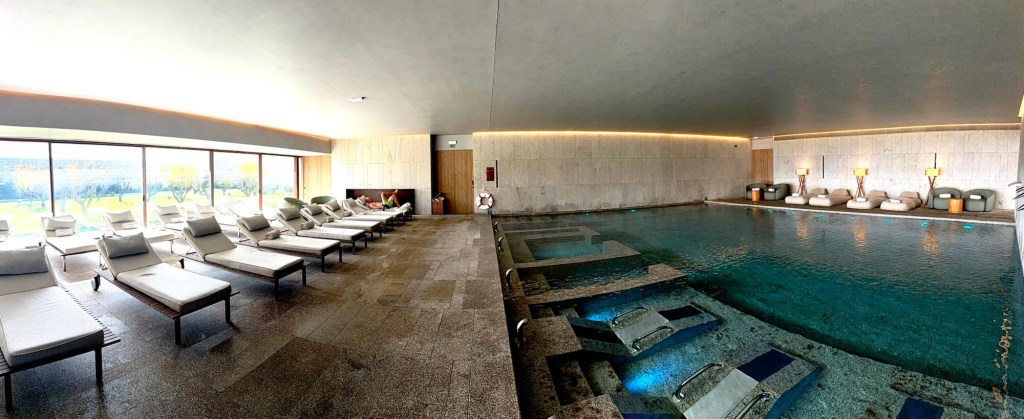
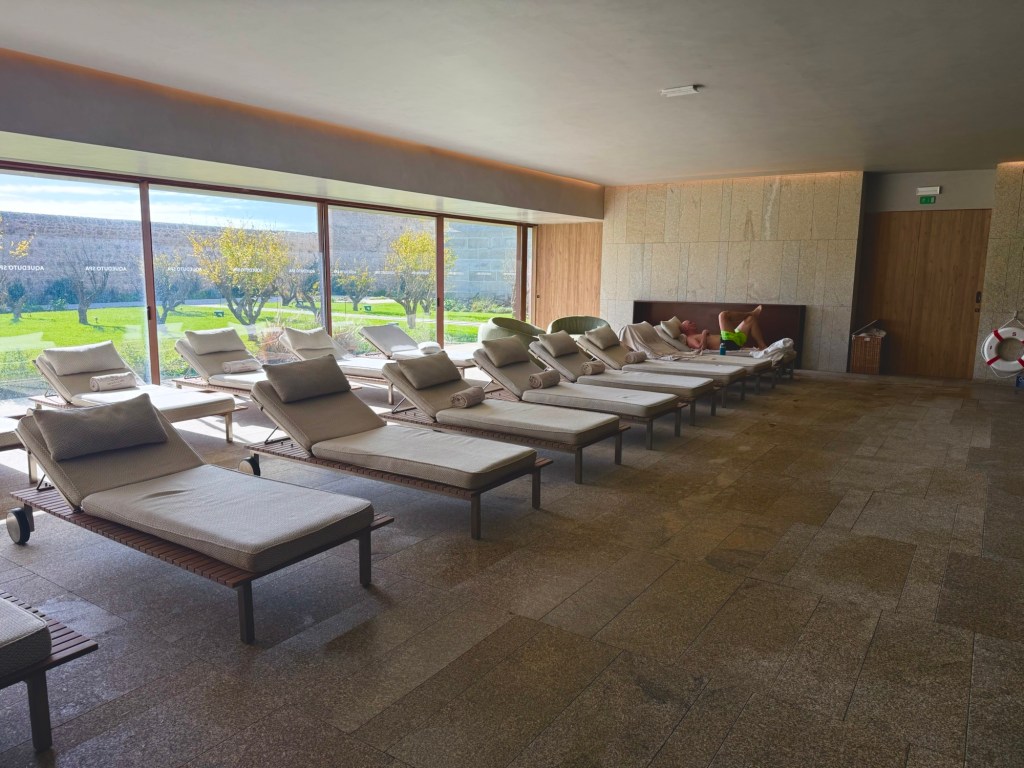
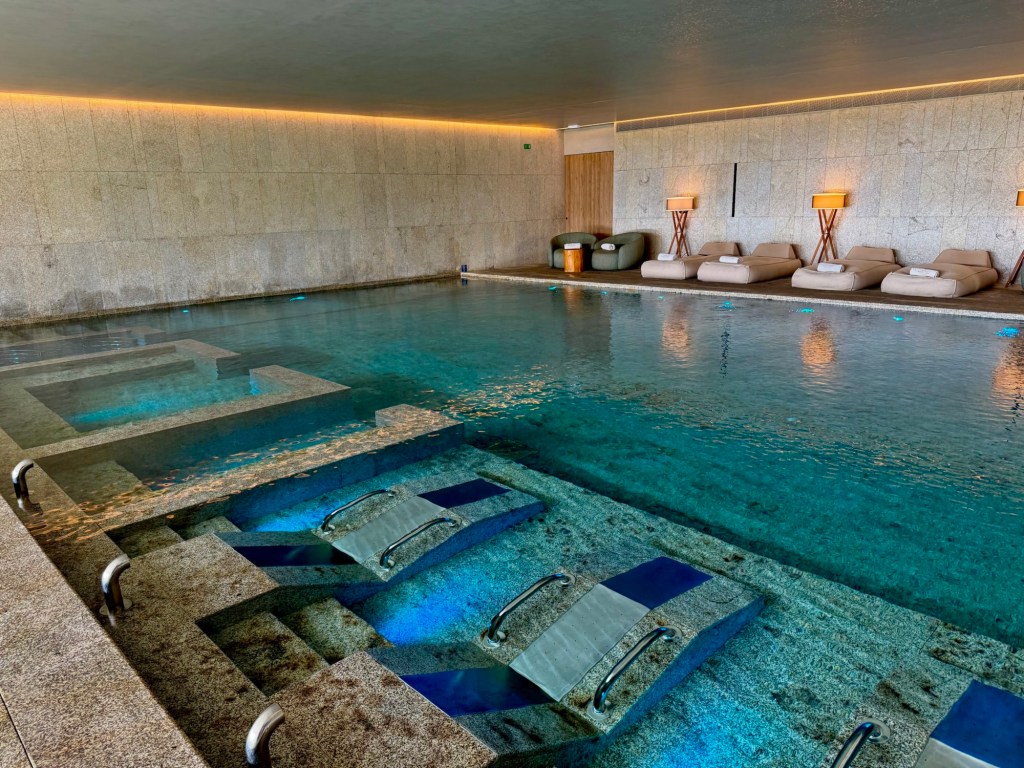
The hotel interiors were equally wonderful, with soaring spaces, beautiful furnishings, and quiet corners that seemed designed for doing absolutely nothing. We took full advantage.
And then there was breakfast.
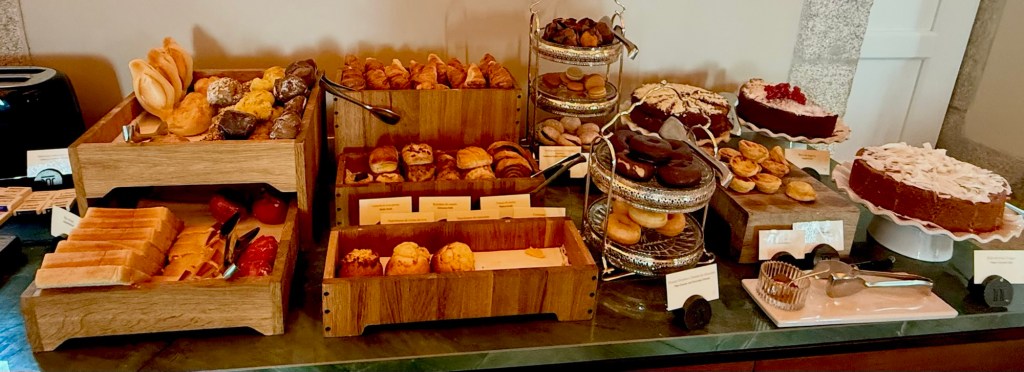
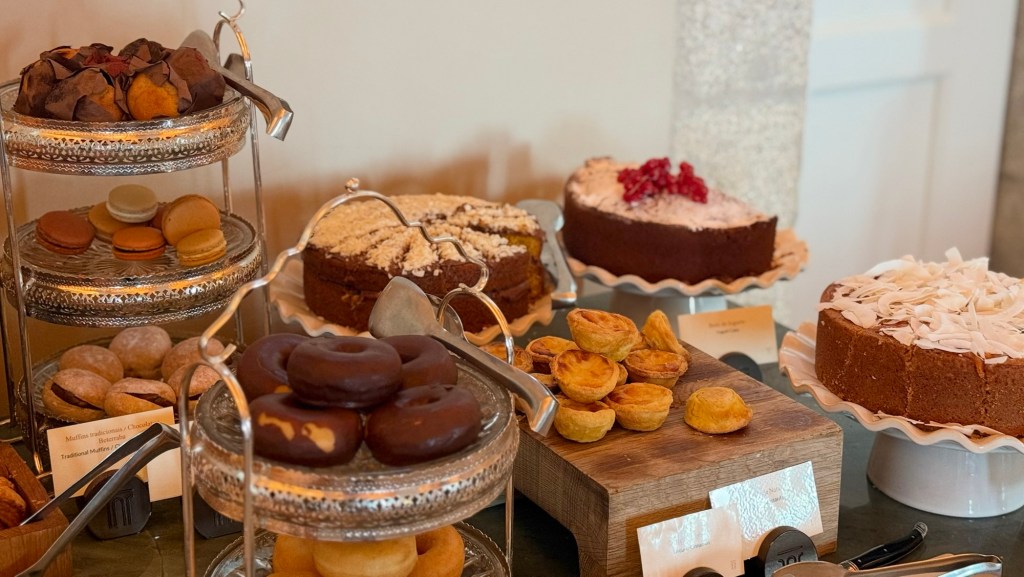
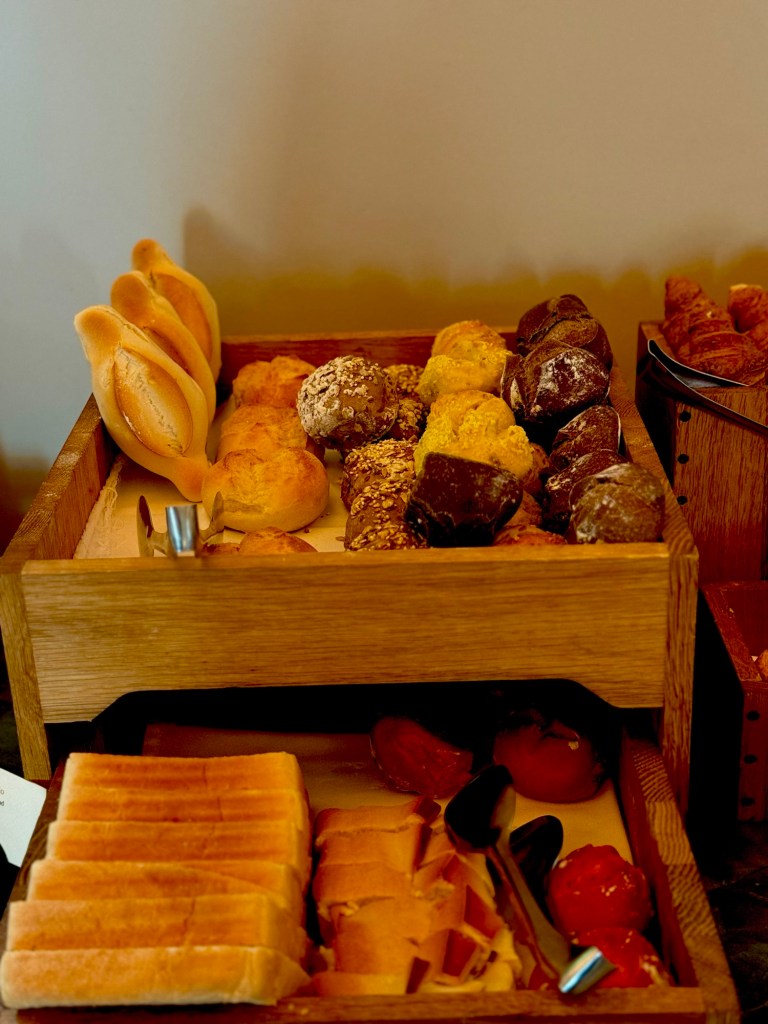
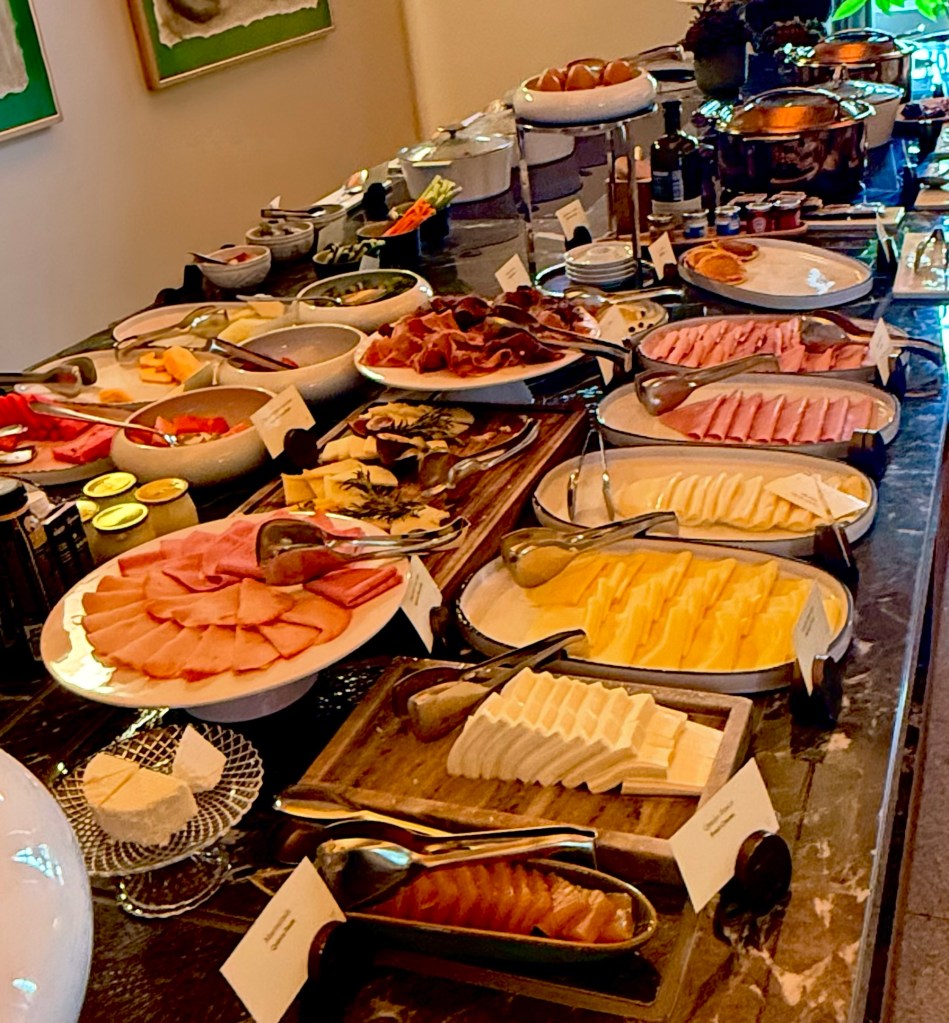
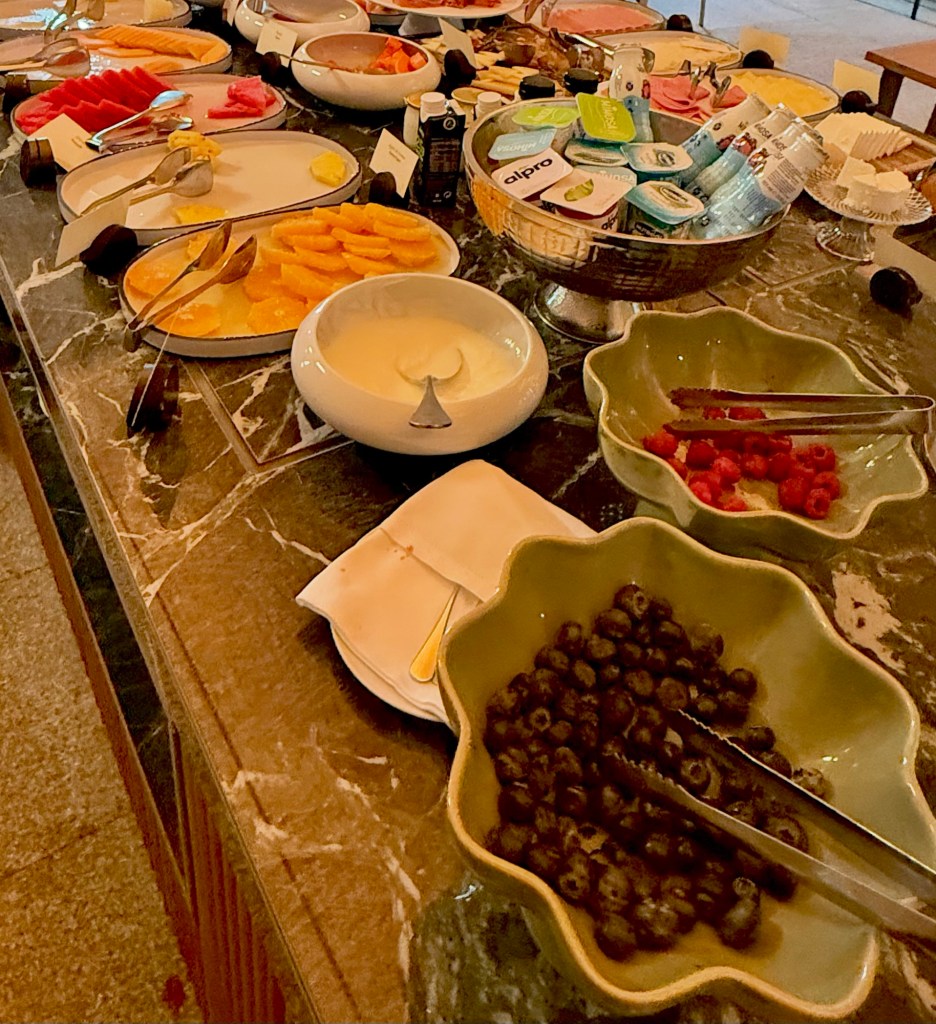
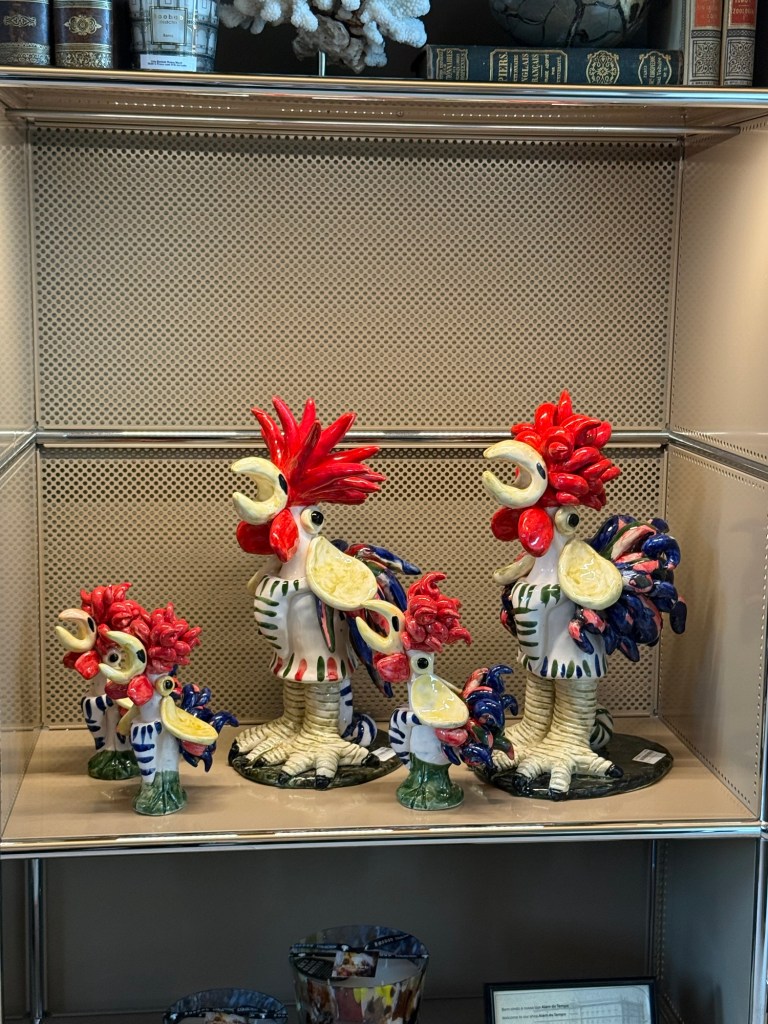
Nearly every European hotel we stayed in included breakfast, whether modest or luxurious, but this was in a class of its own. An amazing selection of beautifully prepared dishes, fresh fruit, breads, pastries, cheeses, and all sorts of delicious things kept appearing. We settled in, enjoyed our coffee, tried a little of this and a little of that, and somehow breakfast stretched well into a second hour.
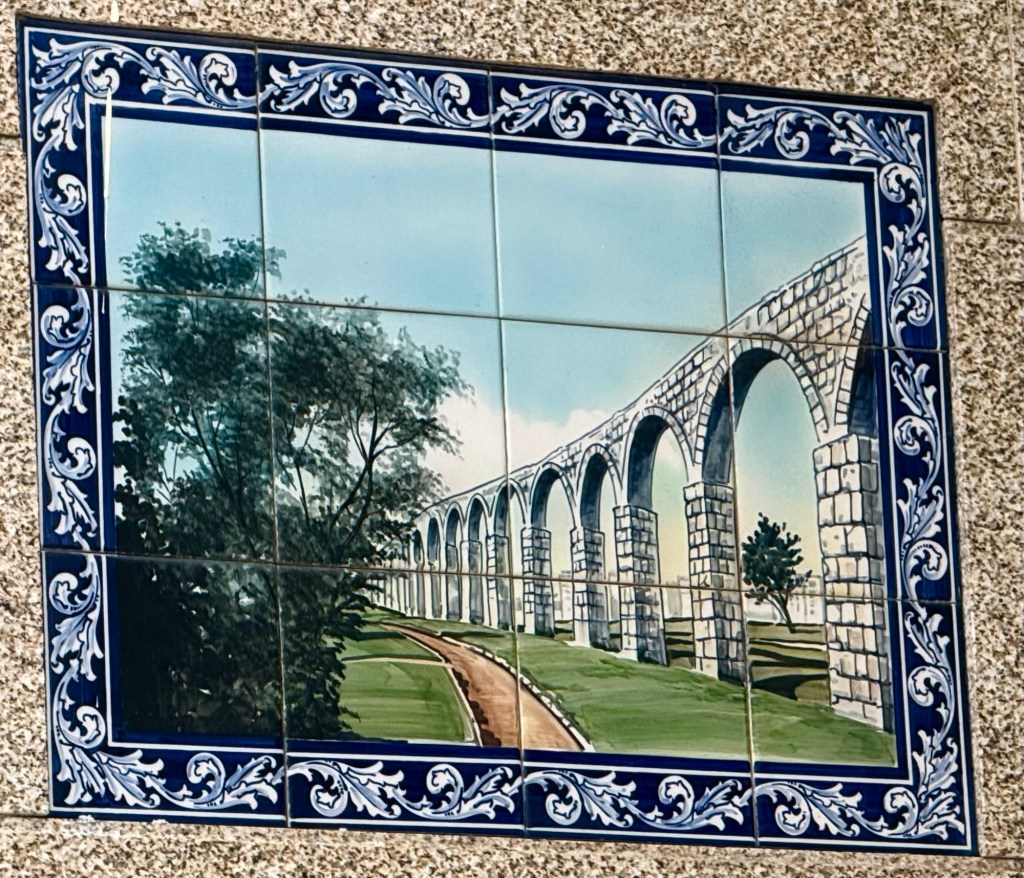
One of the most beautiful sights in Vila do Conde was the extraordinary Santa Clara Aqueduct, its stone arches moving across the town toward our monastery. I took way too many photographs of it, but it was hard to resist! The aqueduct was built to bring fresh water from a spring more than six kilometers away to the monastery, which had struggled with its water supply since its founding in 1318.
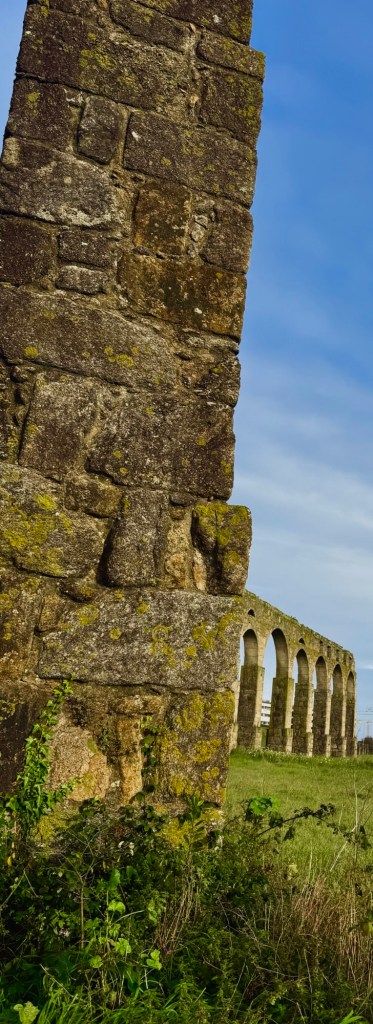
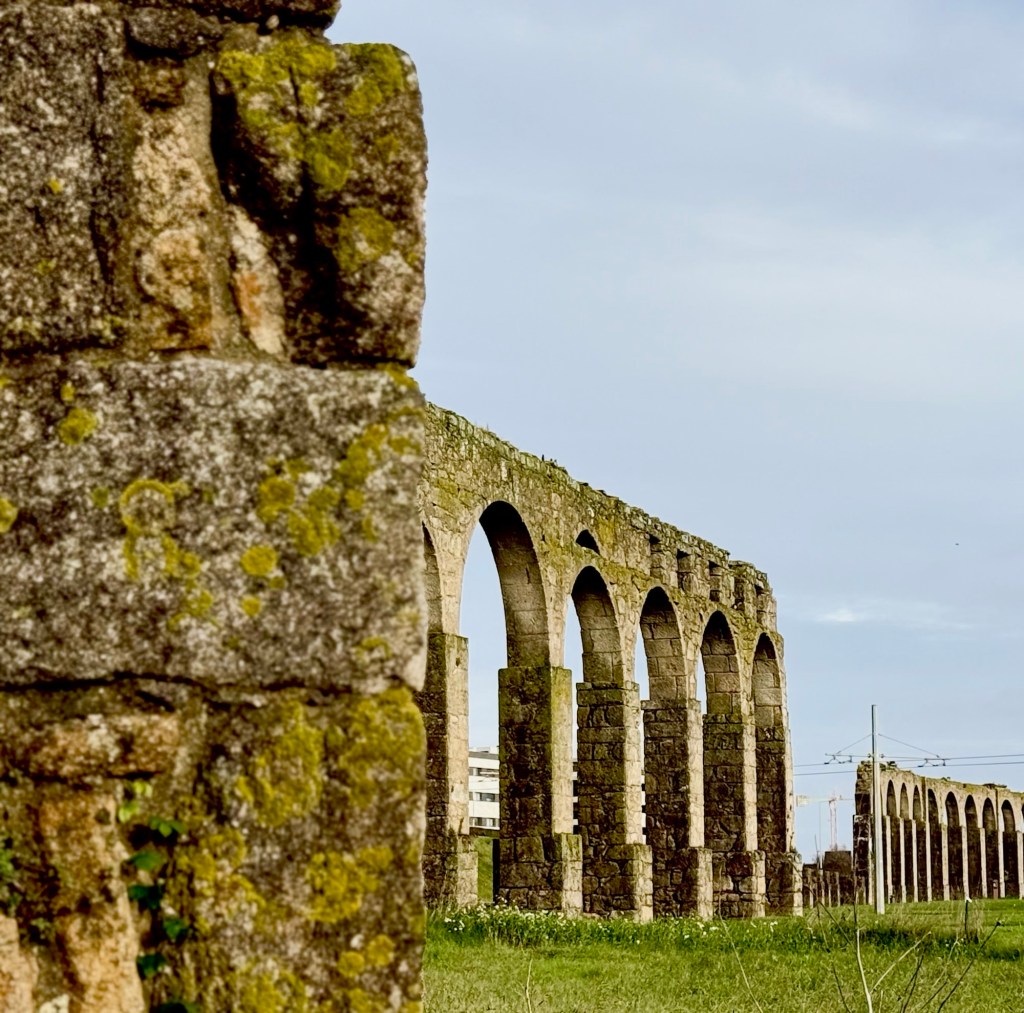
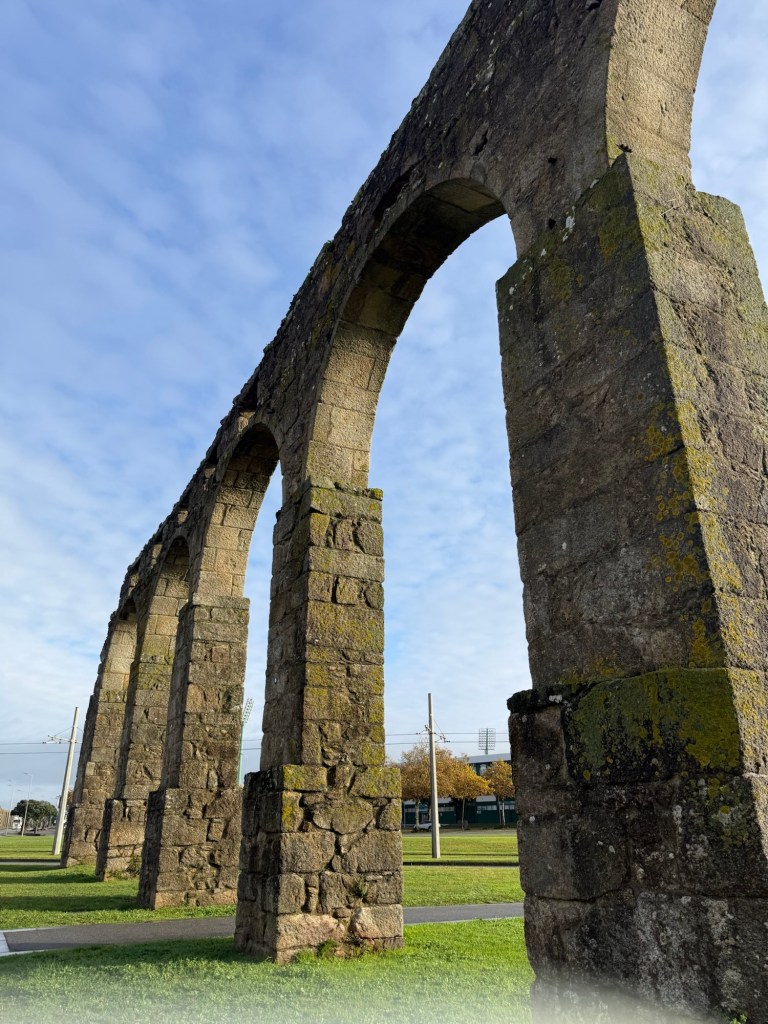
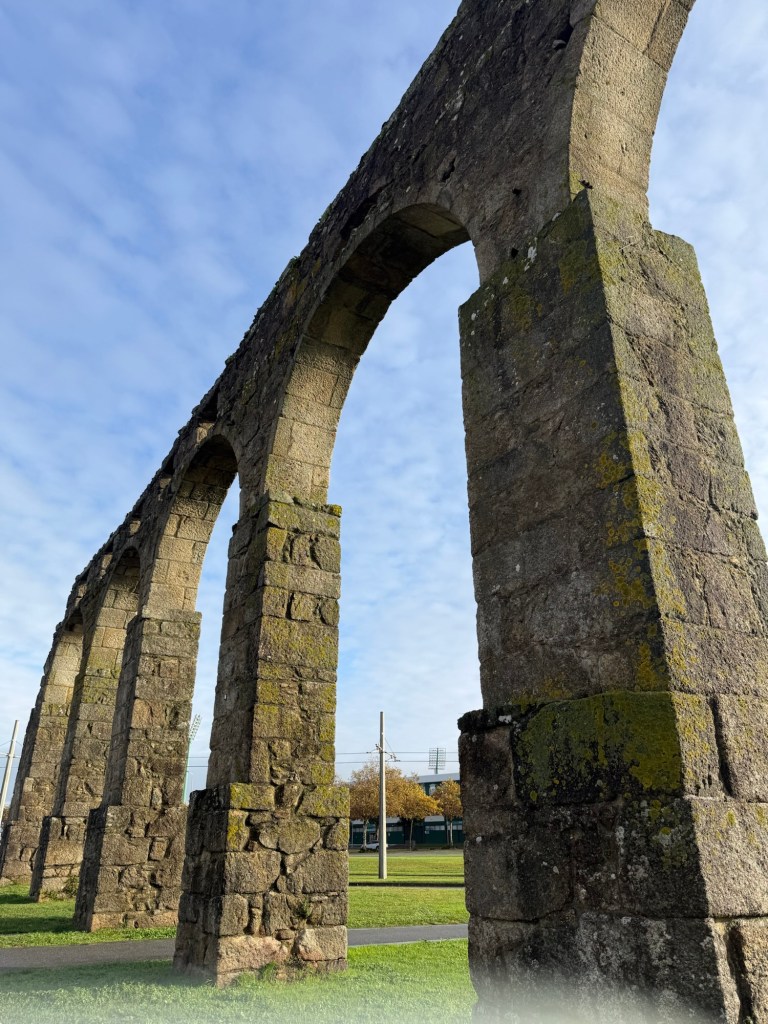
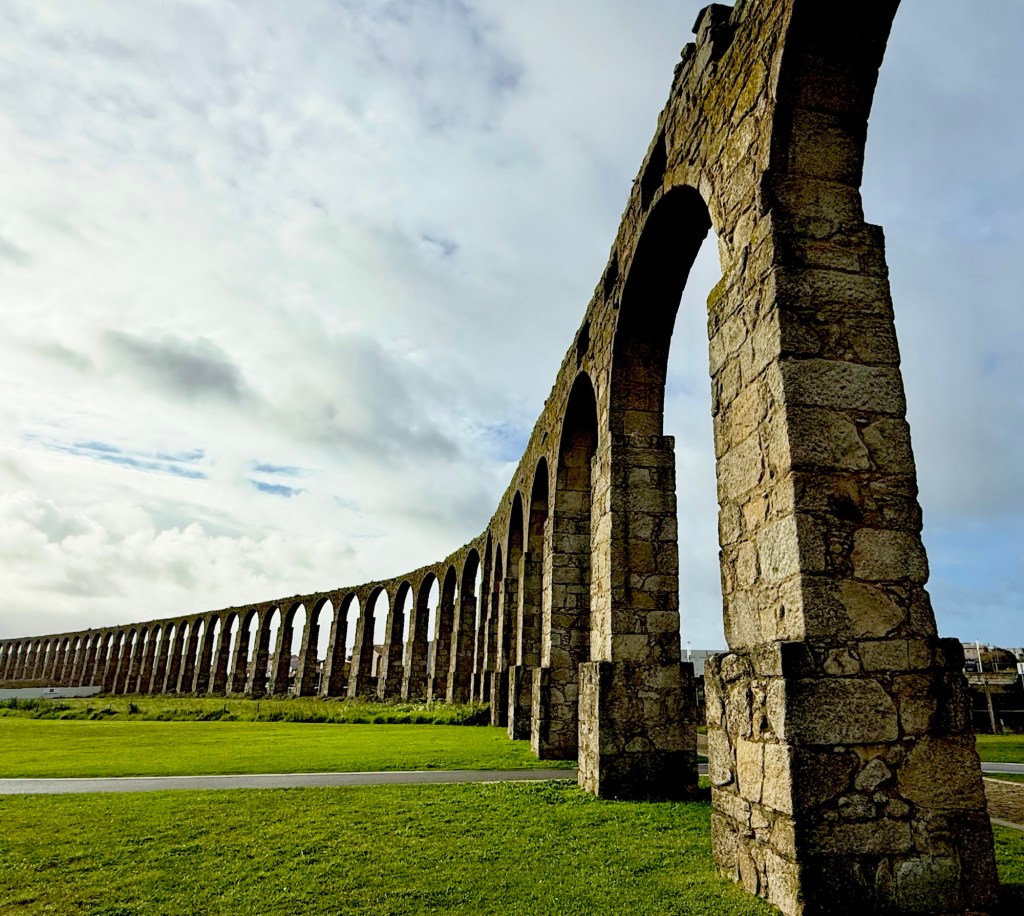
The aqueduct had an 999 arches, going for miles across the countryside. Some have disappeared, but the surviving sections are magnificent, especially where the arches go across the landscape toward Santa Clara. I couldn’t help thinking about the original builders. Imagine, after years of work, that you’d gotten the slope wrong!
We did venture out and explore Vila do Conde, a cute town with a long history and a beautiful waterfront. One of our best discoveries was Humble Café, a small coffee shop where the owner was friendly, knowledgeable, and clearly delighted to share recommendations.
On his advice, we headed north along the coast one evening to Apúlia, a fishing village popular with Portuguese families and seafood lovers. The area is known for its fishing traditions, wide sandy beaches, and distinctive wooden fishing boats. It’s the kinda ne jut of place locals go for fresh fish and a relaxed meal by the sea, and we were glad to have been pointed in its direction.
We loved our time at Santa Clara. It was peaceful, luxurious, and such a wonderful contrast to the rugged mountains where we had spent so much of the previous month. A perfect ending.
One Last Portuguese Adventure
Finally, it was time to head to Porto’s airport for our flight home.
We had allowed plenty of time, which turned out to be a very good thing, because our final new European experience was discovering an airport security system that appeared to have absolutely no system at all.
There were people everywhere, moving in different directions, and no obvious lines or orderly way to get through security. We watched, puzzled, trying to determine where one queue ended and another began. Since we were early, we could mostly laugh at the absurdity of it all.
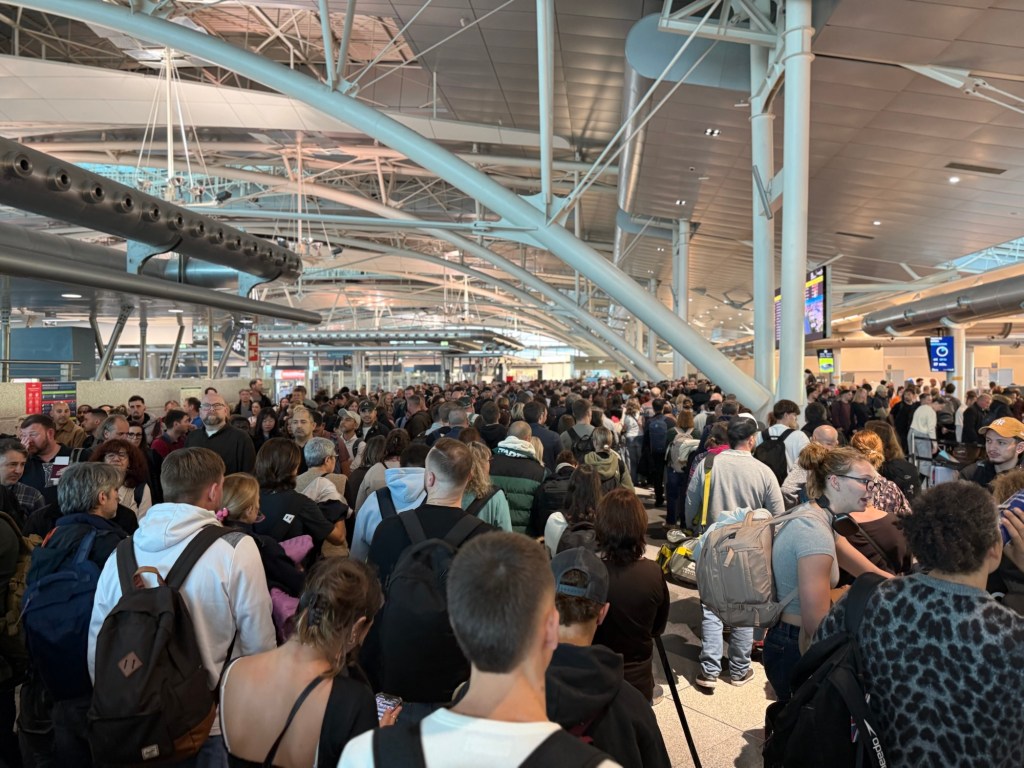
That is, until a French woman firmly informed us that it was important to wait our turn.
We thought we were waiting our turn. In fact, we were fairly certain we understood the Porto system, or lack thereof, better than she did!
And so ended our wonderful autumn adventure. From the soaring peaks of Bavaria and the Austrian Alps to the glaciers and mountain villages of Switzerland, and finally to the colorful streets, wonderful food, and warm hospitality of northern Portugal, it had been an extraordinary few weeks.
We had hiked, climbed, wandered, explored, eaten very well, learned an enormous amount, and collected more memories than we could possibly have anticipated.
And after all those mountains, it was rather nice to finish with a glass of port, a long breakfast, and absolutely nowhere we needed to climb.

