Hokitika sits on the West Coast of the South Island, wedged between Greymouth to the north and Fox Glacier to the south, with the Tasman Sea on one side and the Southern Alps on the other. It’s a bustling little vacation town with shops and restaurants, and we found ourselves puzzled — along with our host — by how many people were milling around town when there was so much else to explore just outside it.
We didn’t mill around for long.
Hurunui Jacks
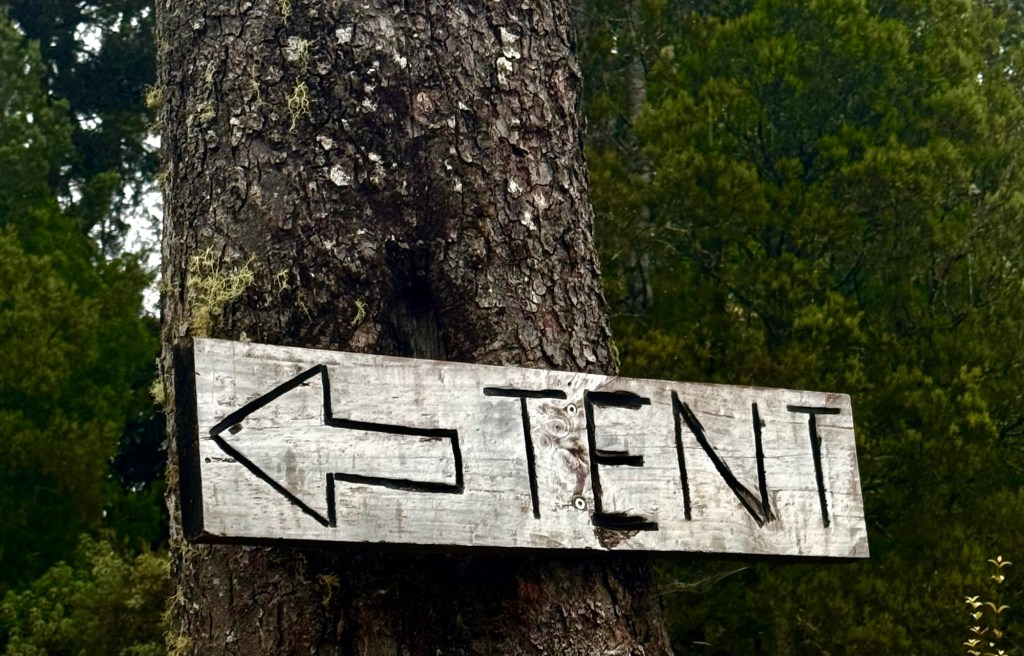
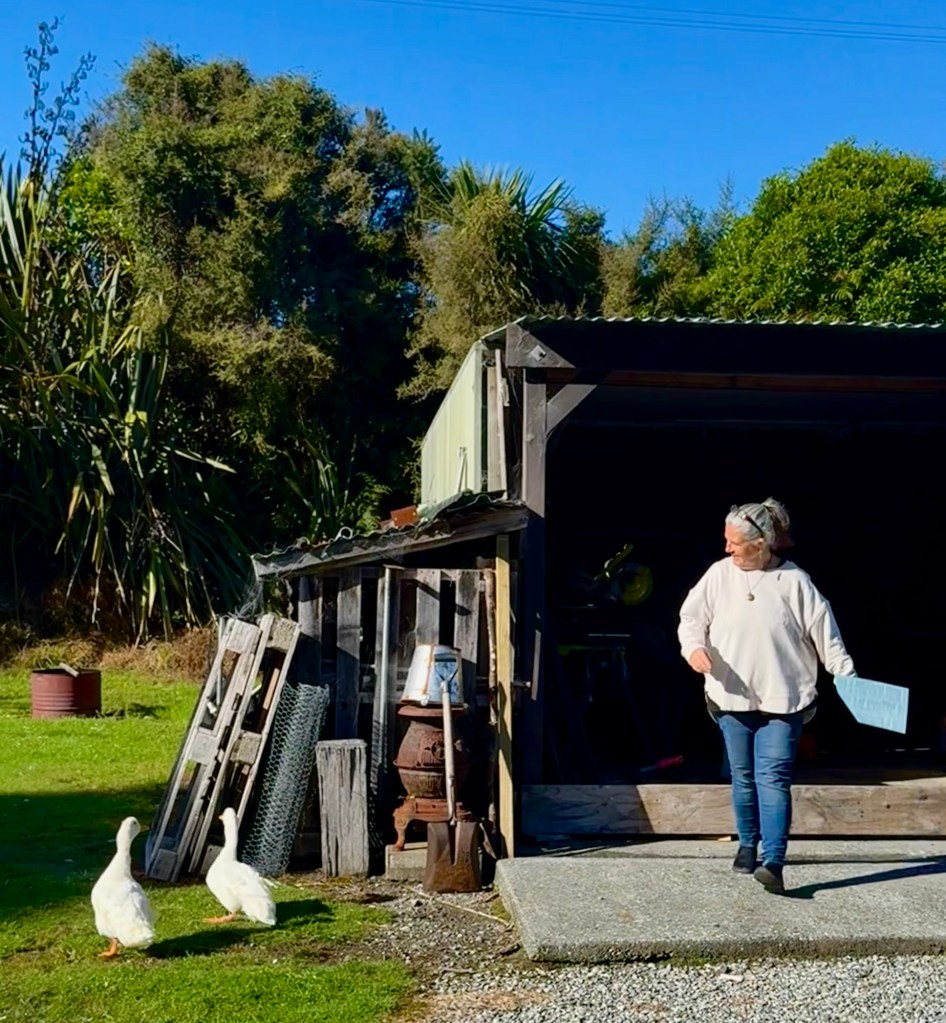
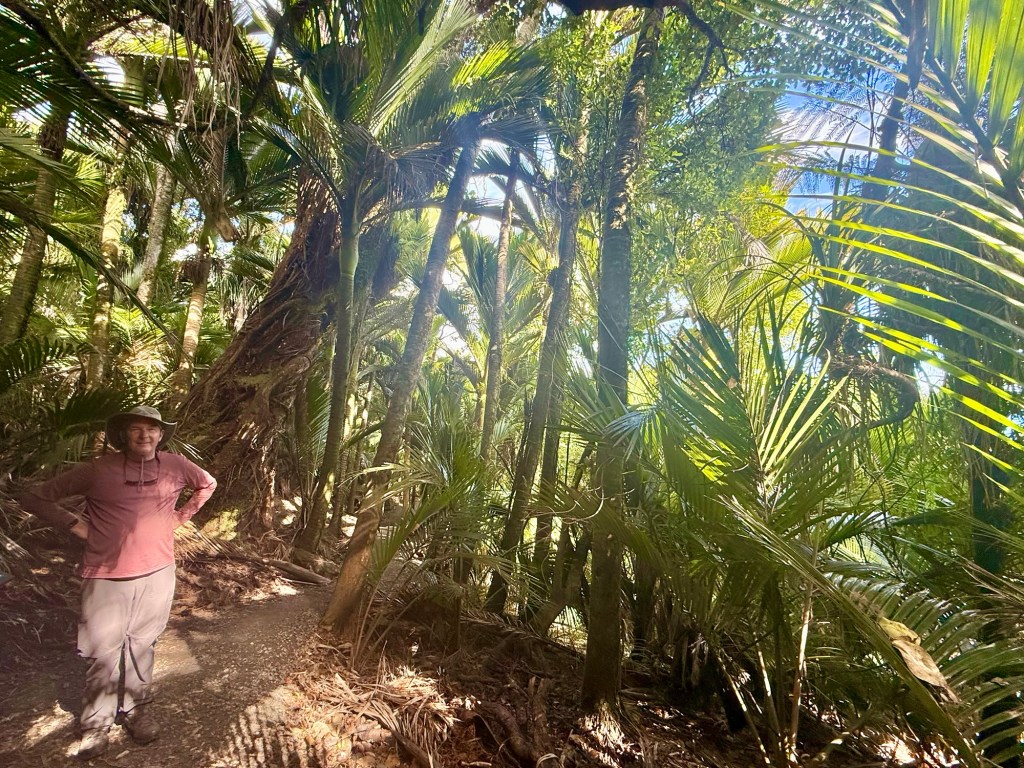
Finding our accommodation was itself a small adventure. We drove miles from the main road, passed a cluster of houses, and then — nothing. Just bush. Then a small hand-painted sign appeared next to the West Coast Wilderness Trail, pointing us down a narrow, precarious track. At the end of it was a little world of its own: a home, a duck patrolled shed where Wendy roasts and grinds fresh coffee beans, a small vacation cabin next to their beautiful home, a large pond ringed with tropical plants, and hand-painted signs to direct guests. As soon as we pulled in, Wendy and Fletch came out to help us with our gear. Fletch loaded our bags into a wheelbarrow without complaint and trundled them off into the bush. Wendy gave us the full tour with the enthusiasm of someone who genuinely loves the place she’s built.
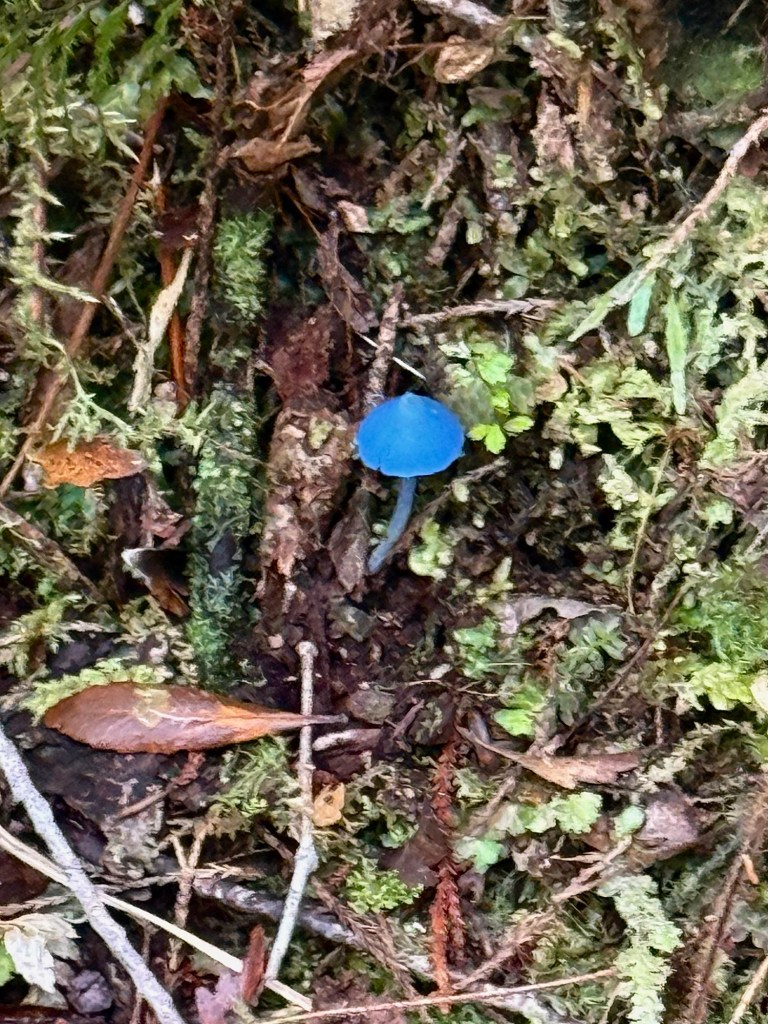
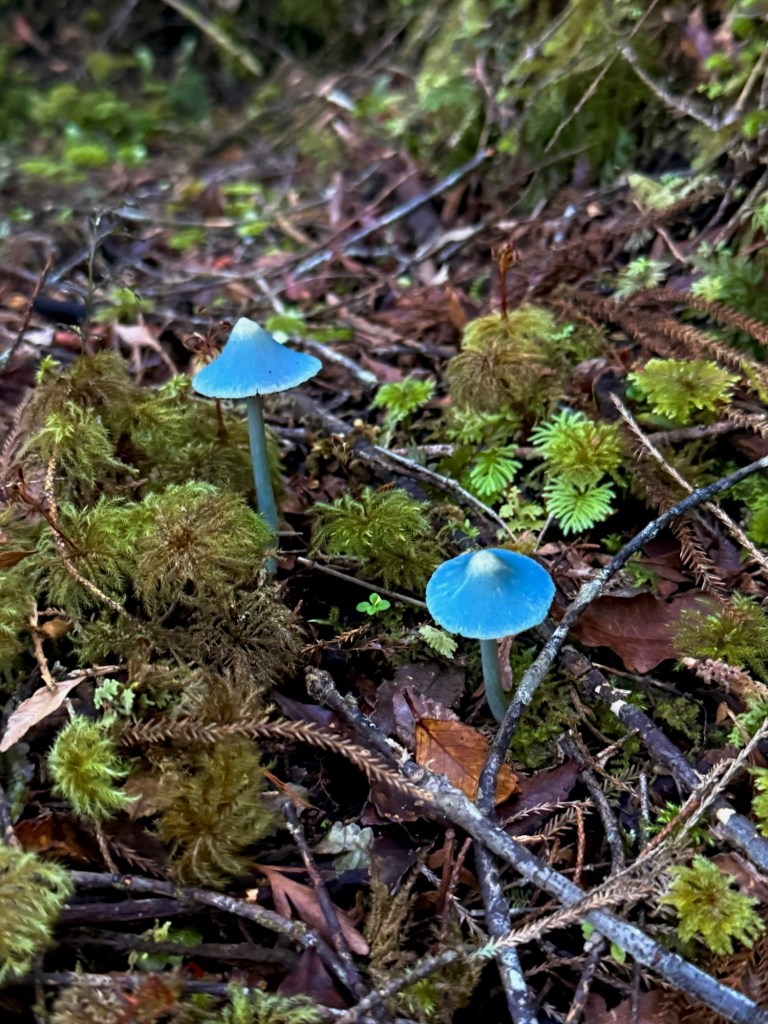
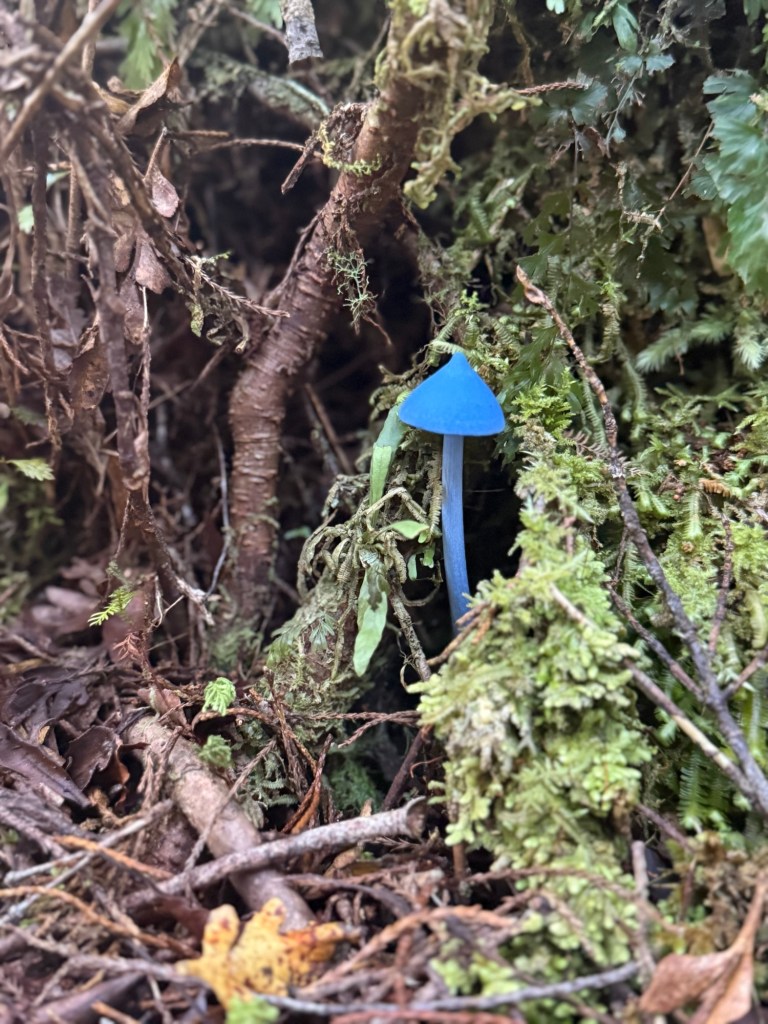
We walked about a hundred meters through dense forest, alongside a full-flowing river, past painted signs and a bench perched right on the water’s edge. Then Wendy stopped and crouched down. She’d spotted a blue mushroom — Entoloma hochstetteri, known in Māori as werewere-kōkako, named for its resemblance to the blue wattle of the kōkako bird. It’s found only in New Zealand, and it is genuinely, improbably blue — the kind of blue that looks like someone made it up. It’s so distinctively New Zealand that it appears on the country’s fifty-dollar note, making New Zealand the only country in the world with a mushroom on its currency. Wendy took me back into the bush a few days later to find half a dozen more. We were thrilled every single time.
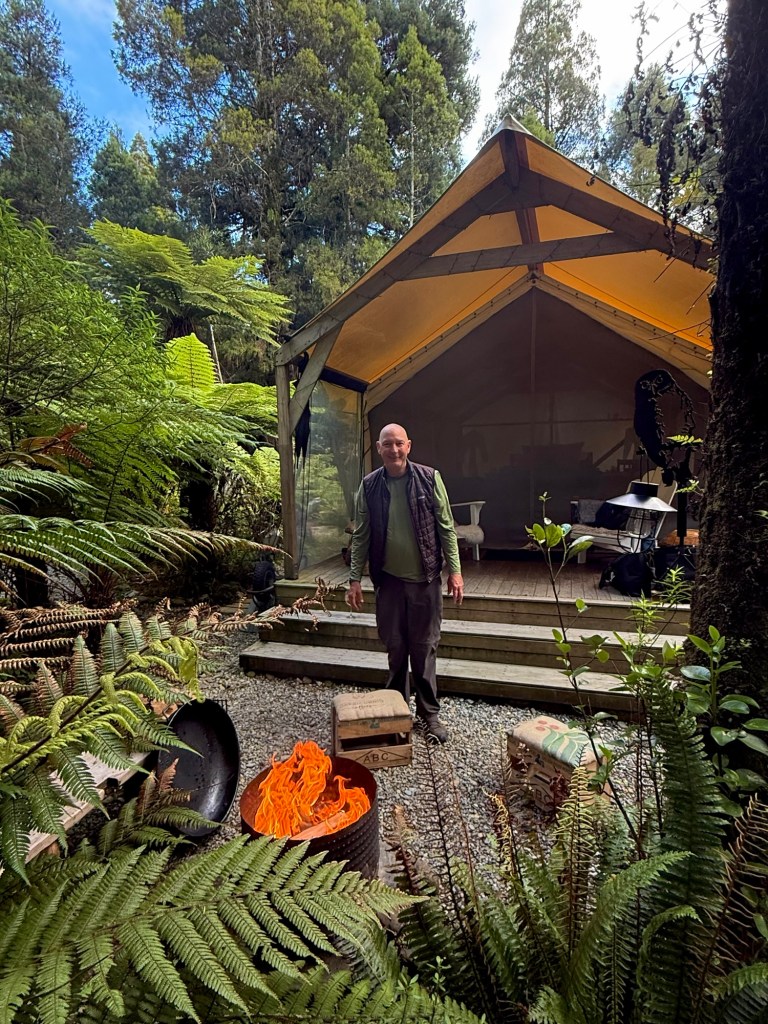
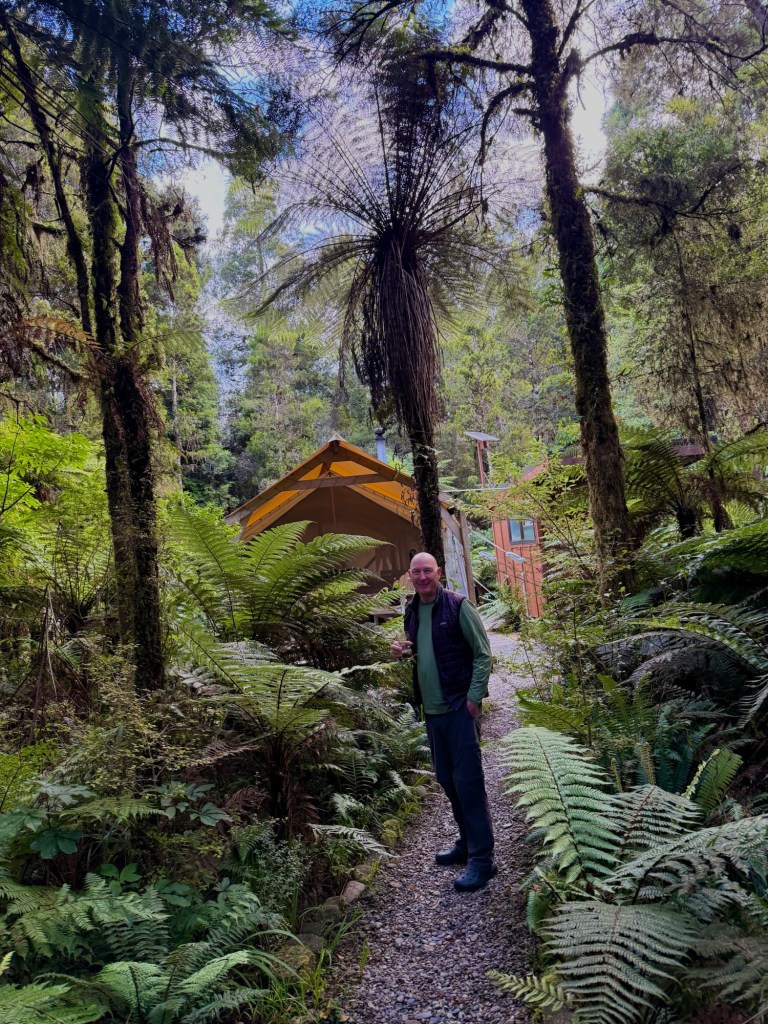
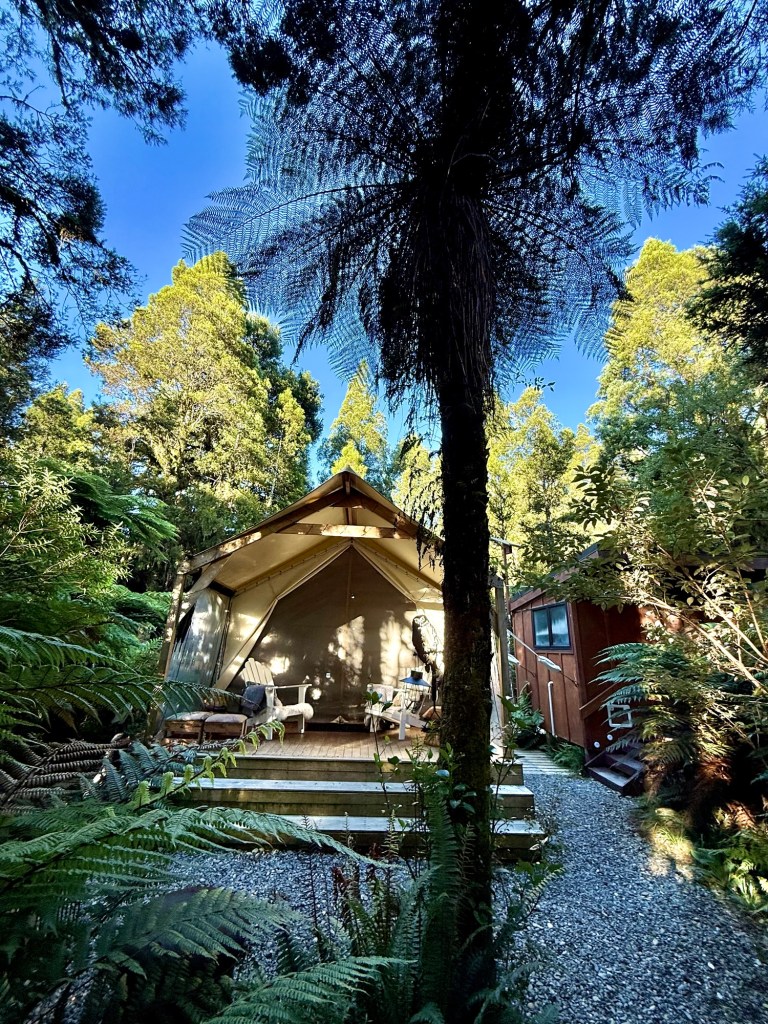
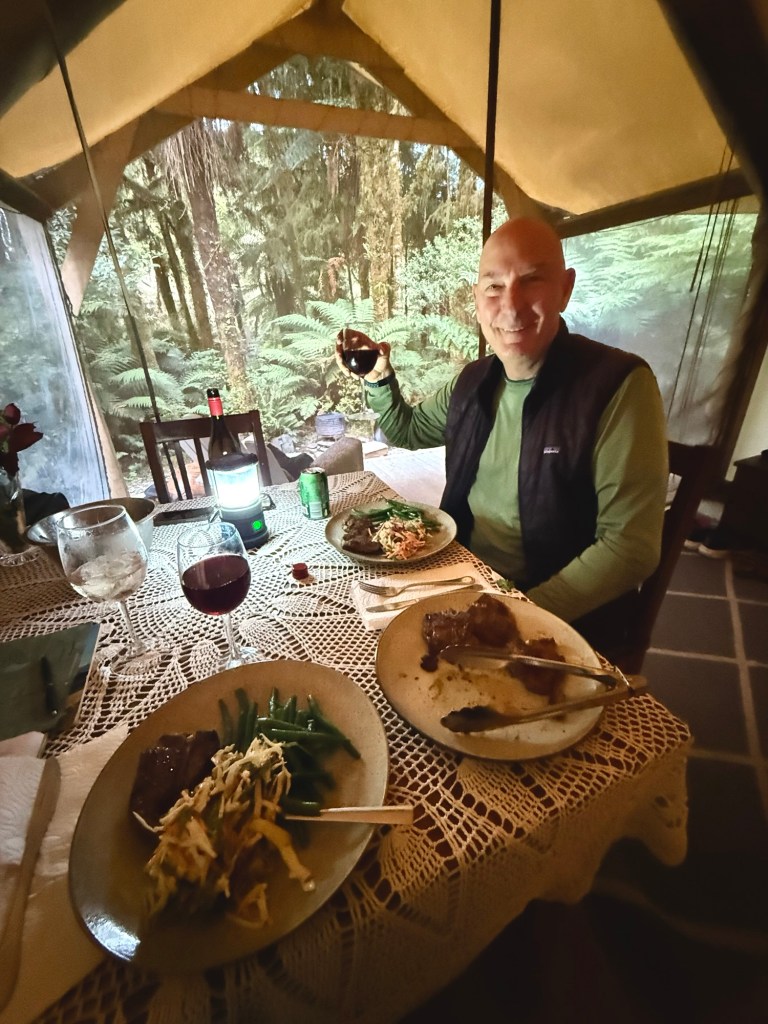
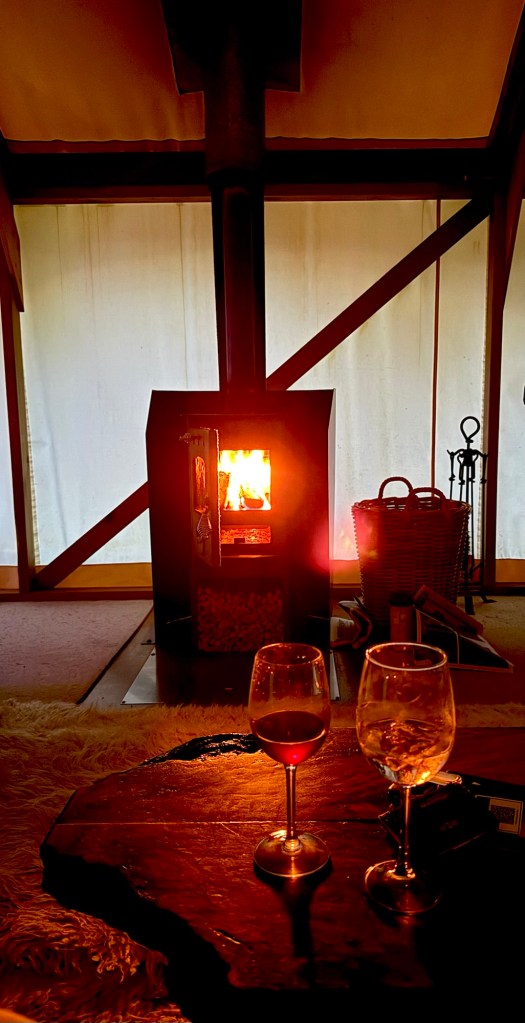
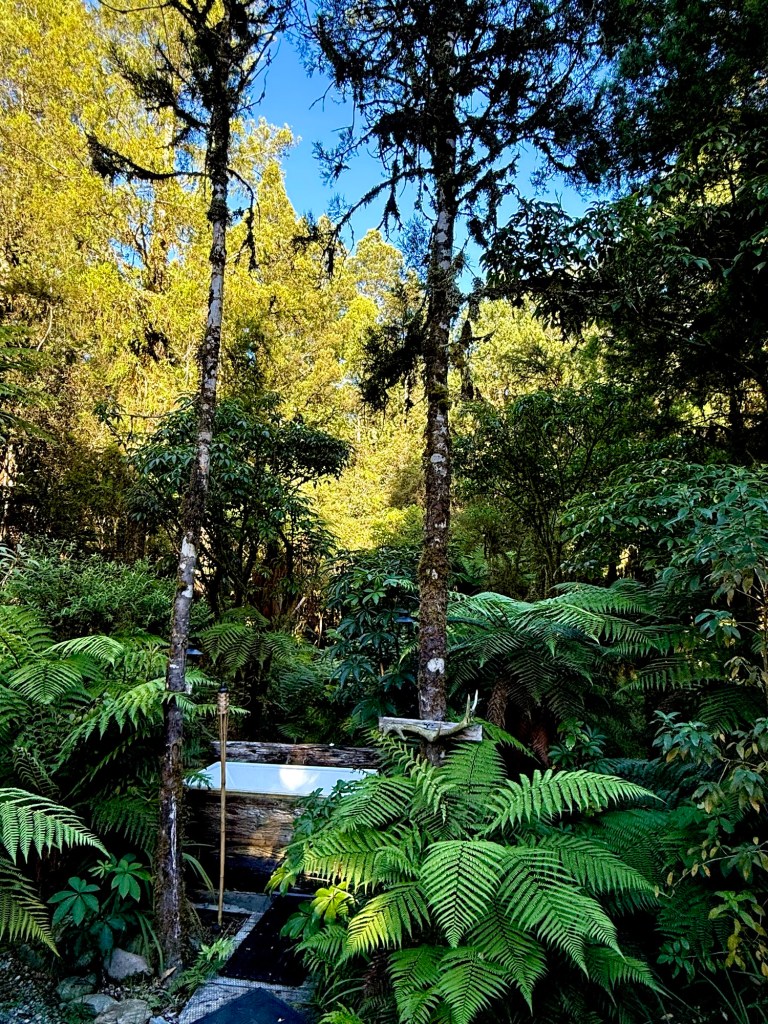
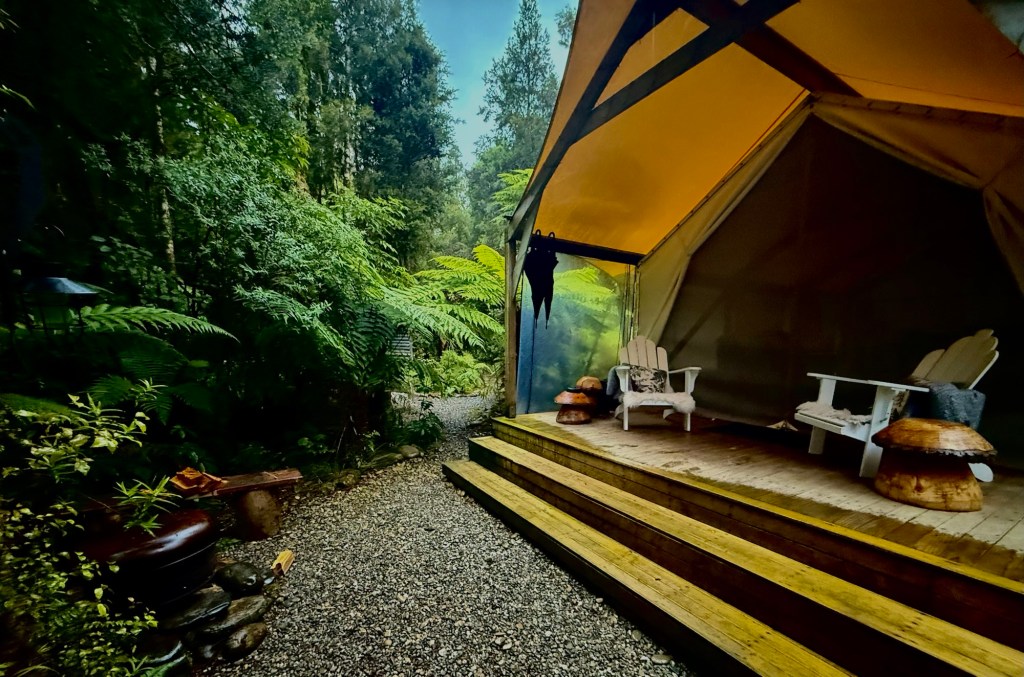
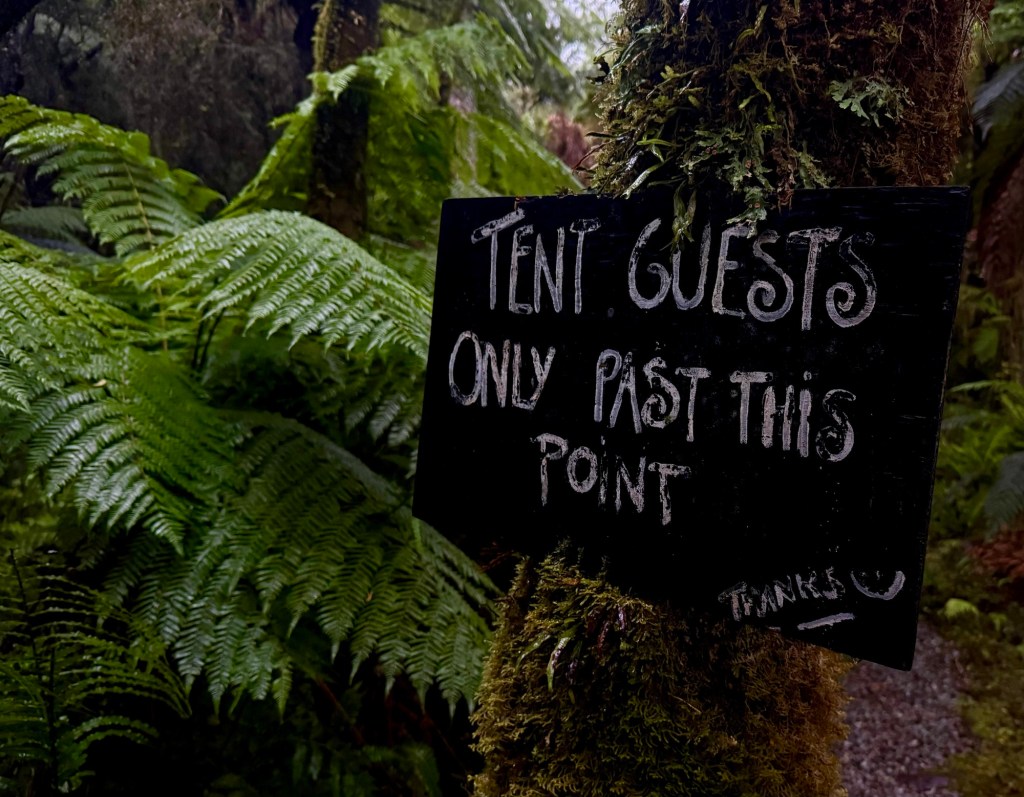
Past the last sign — tent campers only beyond this point — our home for the next four nights came into view: a large canvas tent with a proper kitchen, bathroom, fire pit, and an outdoor soaking tub tucked into the trees. Fletch gave Pete the rundown on firewood. Wendy showed me the extra blankets, board games, and a cooler stocked with milk, pancake mix, and fresh eggs. We set up camp, got the fire going, and grilled the lamb chops we’d brought with us. It was a very good first night.
Eels at the Pond
On our last morning at Hurunui Jacks, Wendy met us at the pond to feed the eels. These are large, ancient longfin eels — some of them upward of eighty years old — and they came right up out of the water to meet us, drawn by bacon bait and, we suspected, Wendy’s infectious laugh. Pete was fascinated and got closer than most people probably would. Standing there in the sunshine, surrounded by birds, ferns, and flowers, with an eighty-year-old eel nosing around your feet — it’s not something you plan for, and it’s exactly the kind of thing you don’t forget.
Zip-lining and the Treetop Walk
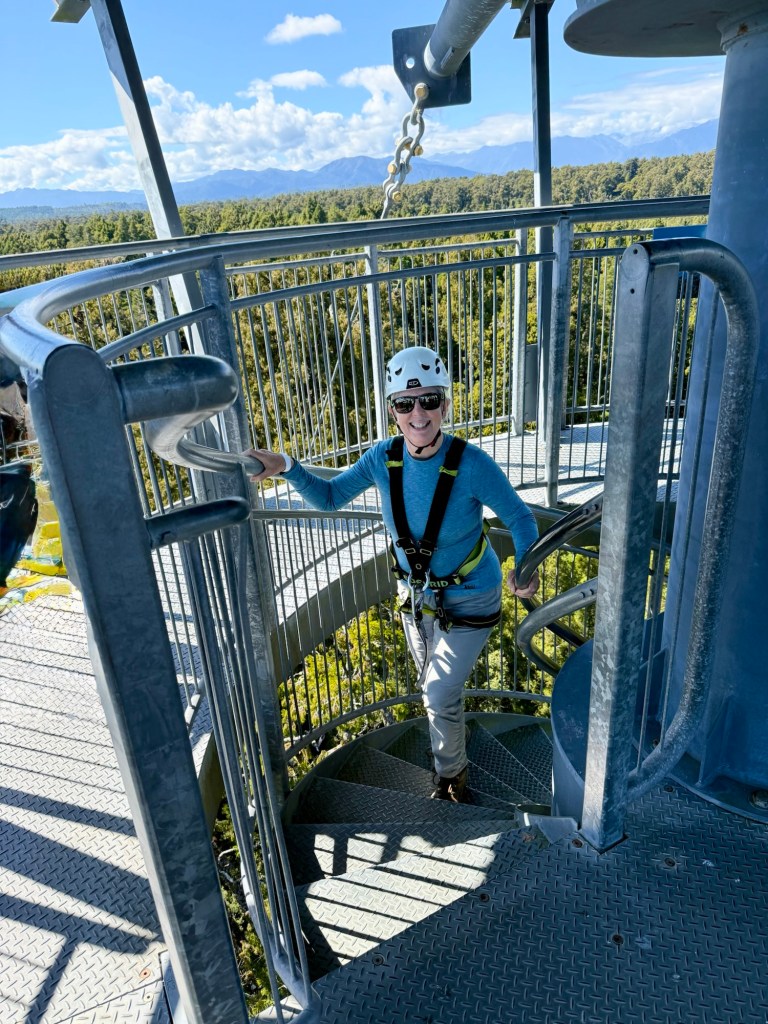
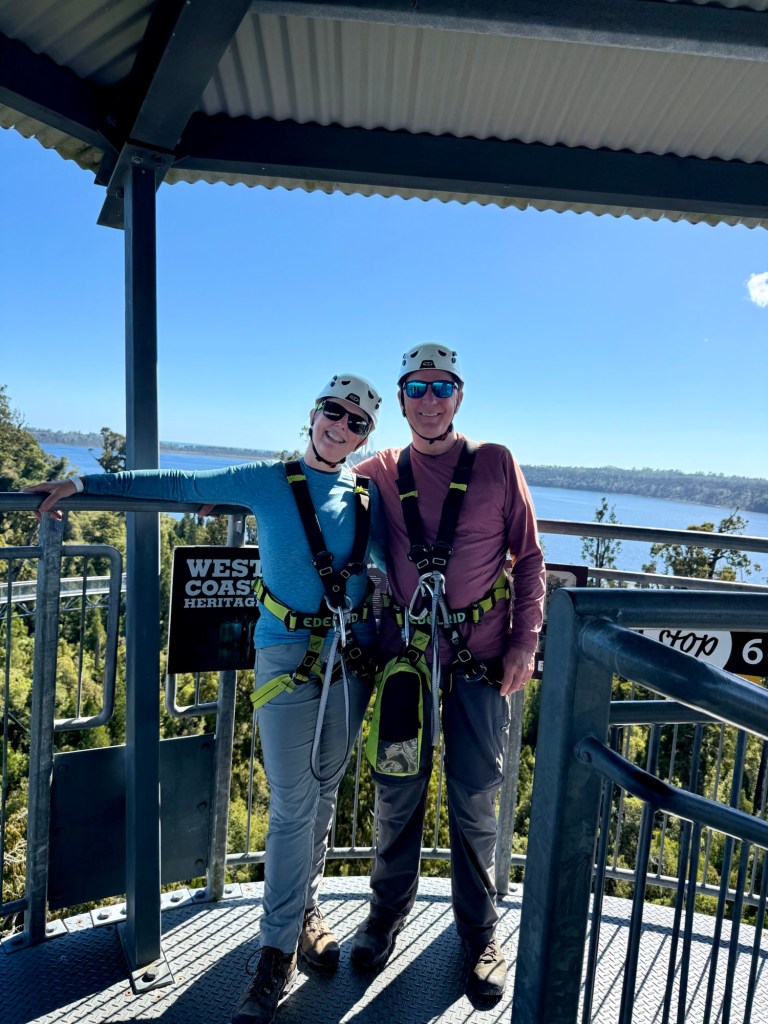
Our first full day began with something neither of us had done before: zip-lining through an ancient rimu rainforest canopy at speeds approaching forty miles an hour at West Coast Treetops, located in the Mahinapua Scenic Reserve. The staff were methodical about safety — checking and re-checking harnesses to a degree that was either reassuring or alarming depending on how you looked at it. Probably both. Each run lasted less than a minute, but with the Southern Alps behind us and the Tasman Sea glinting in the distance, the views alone were worth strapping in for. After the zip lines, we went back up into the canopy on the treetop walk — a 450-meter elevated steel walkway that winds through the forest twenty meters above the floor — getting a proper look at the ancient trees, birds, and the whole green world we’d just been flying through.

Hokitika Gorge
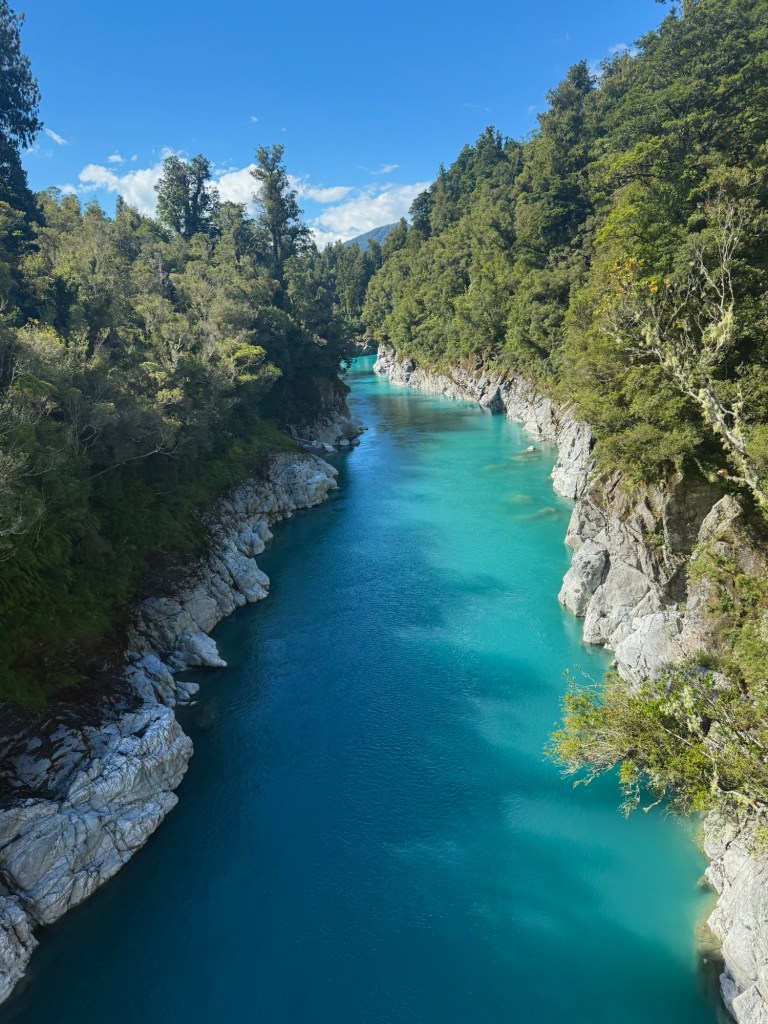
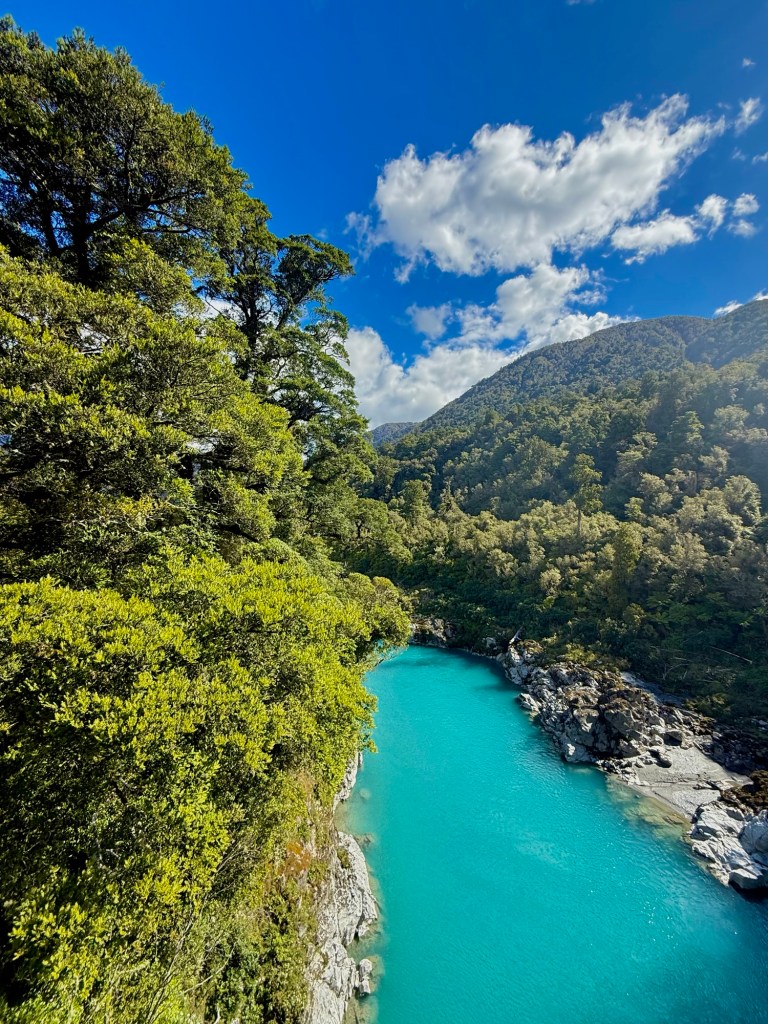
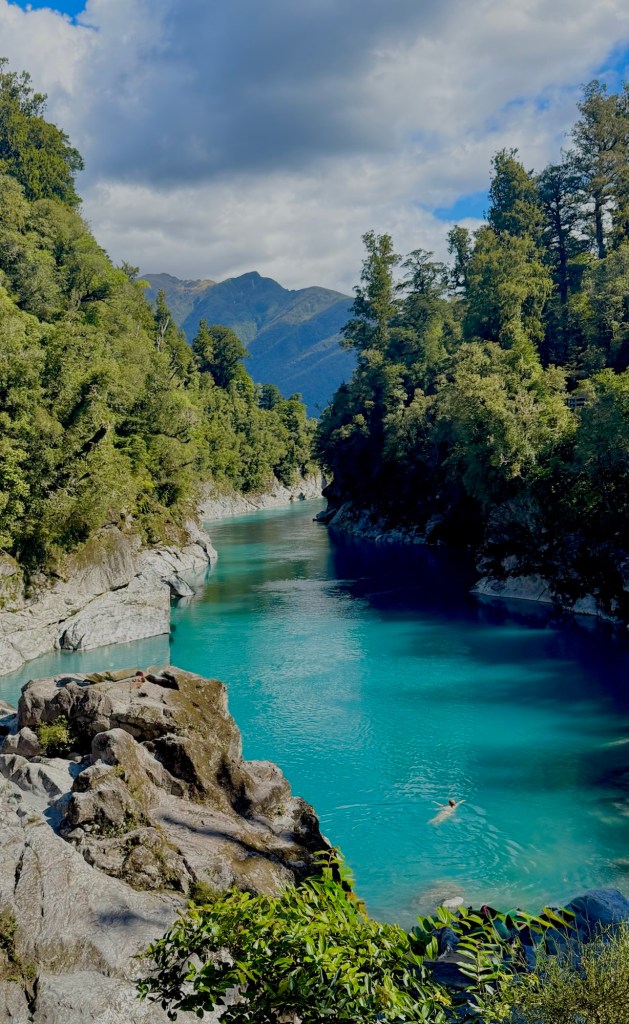
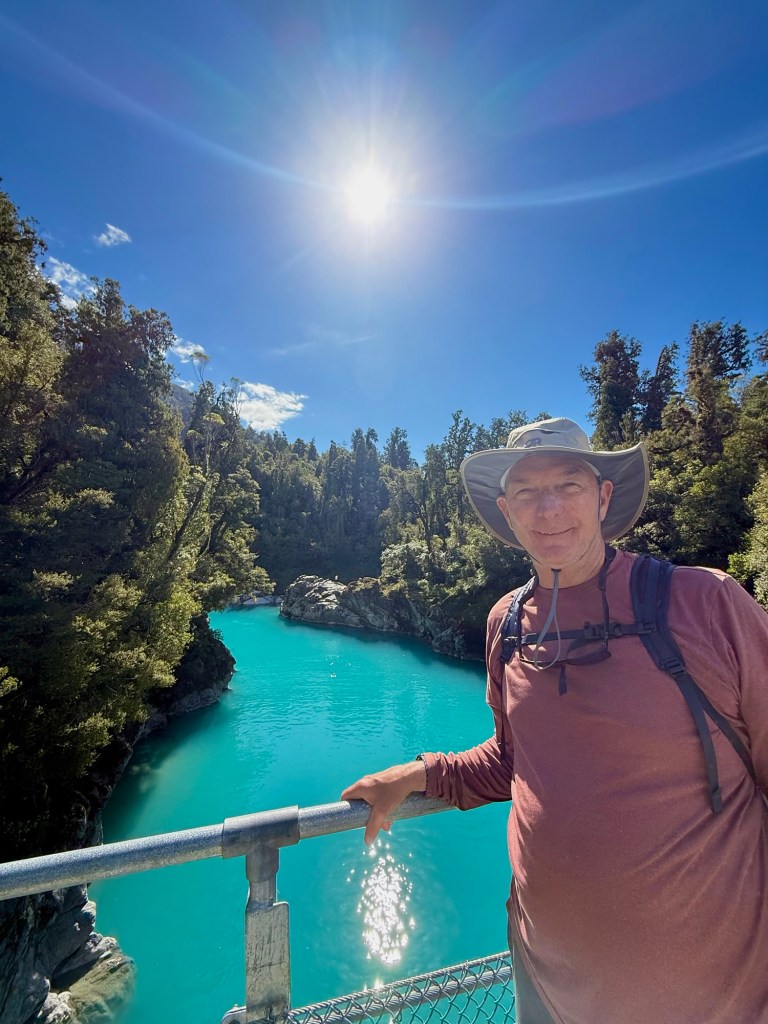
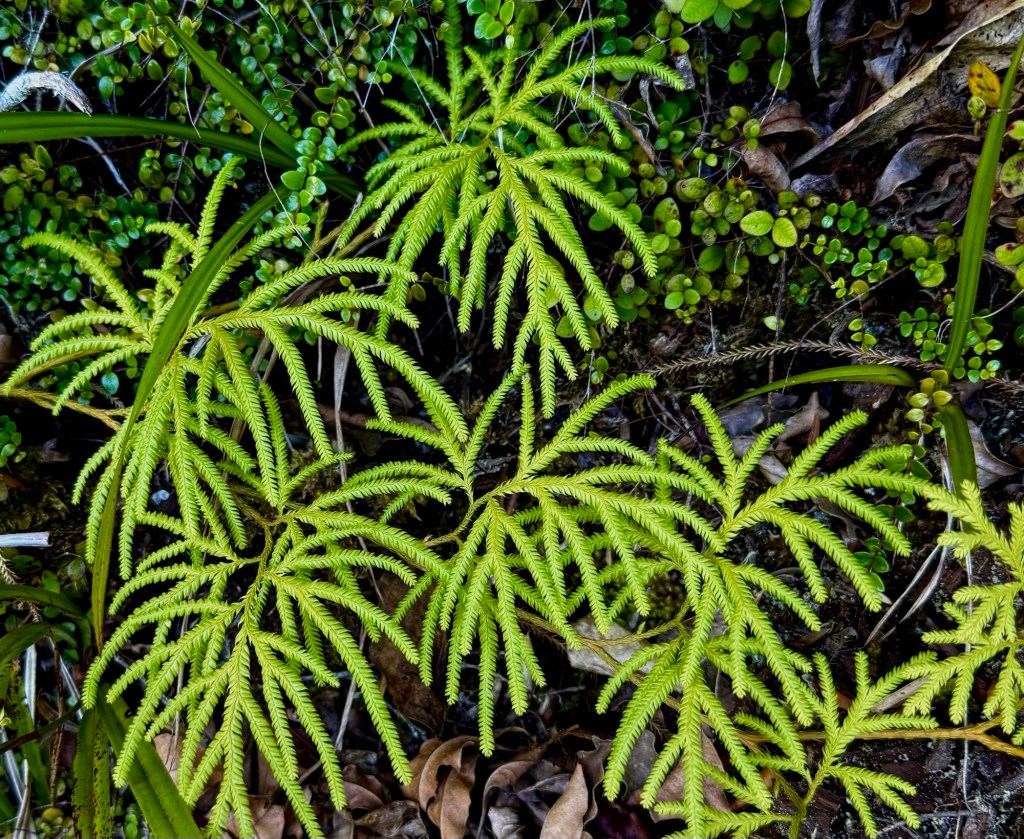
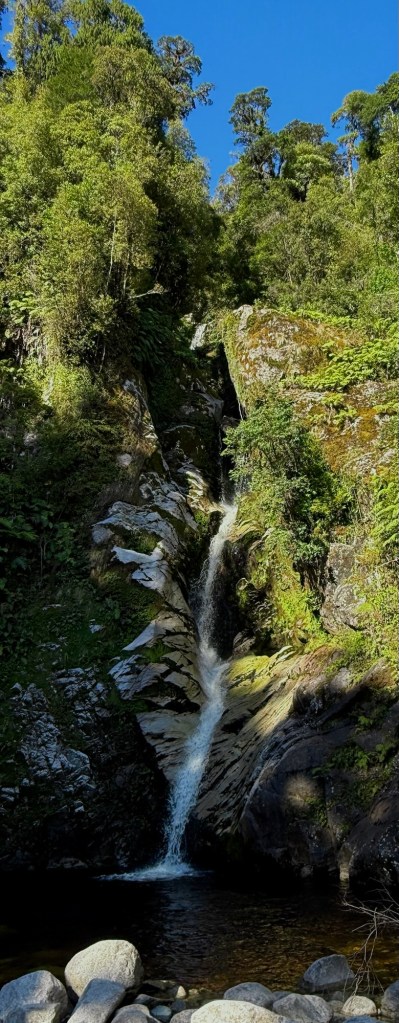
A few kilometers down the road, the Hokitika Gorge stopped us in our tracks. The water running through it is a color that doesn’t look natural — a vivid glacial turquoise that almost glows in good light, and we had a perfect sunny day to see it at its best. The walk follows the gorge along fast-moving water, crossing two suspension bridges that each give a completely different perspective on the canyon. We took our time. On the drive back to Hurunui Jack’s, Wendy had marked a special detour on our map — past Dorothy Falls and along to Lake Kaniere, where she’s been doing her daily swims since Christmas. We made the stops and understood immediately why she keeps going back.
North to Pancake Rocks, the Truman Track, and the Paparoa Track
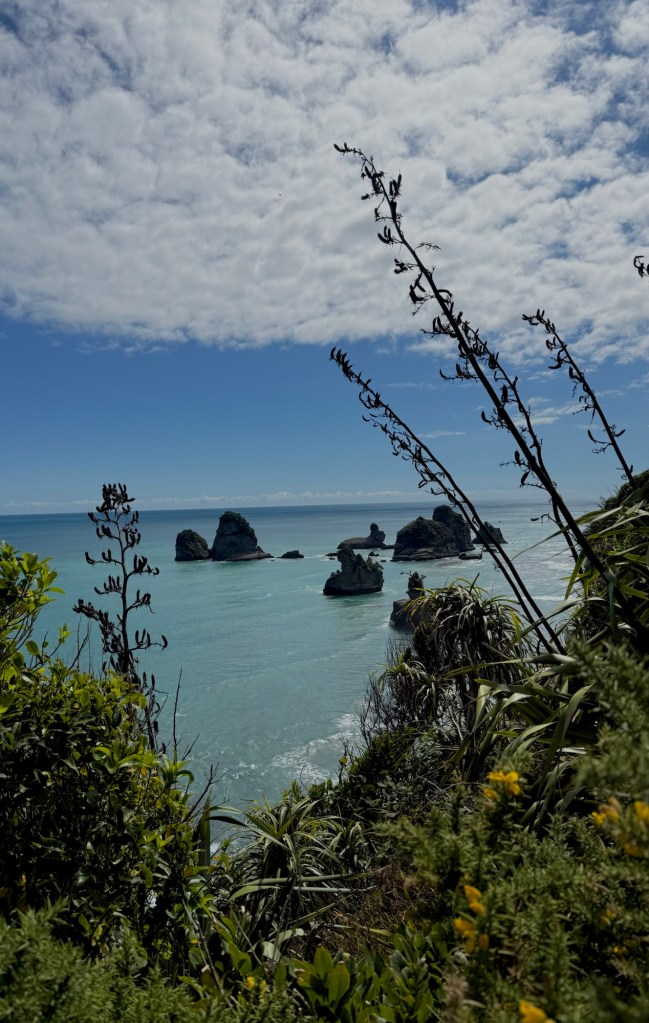
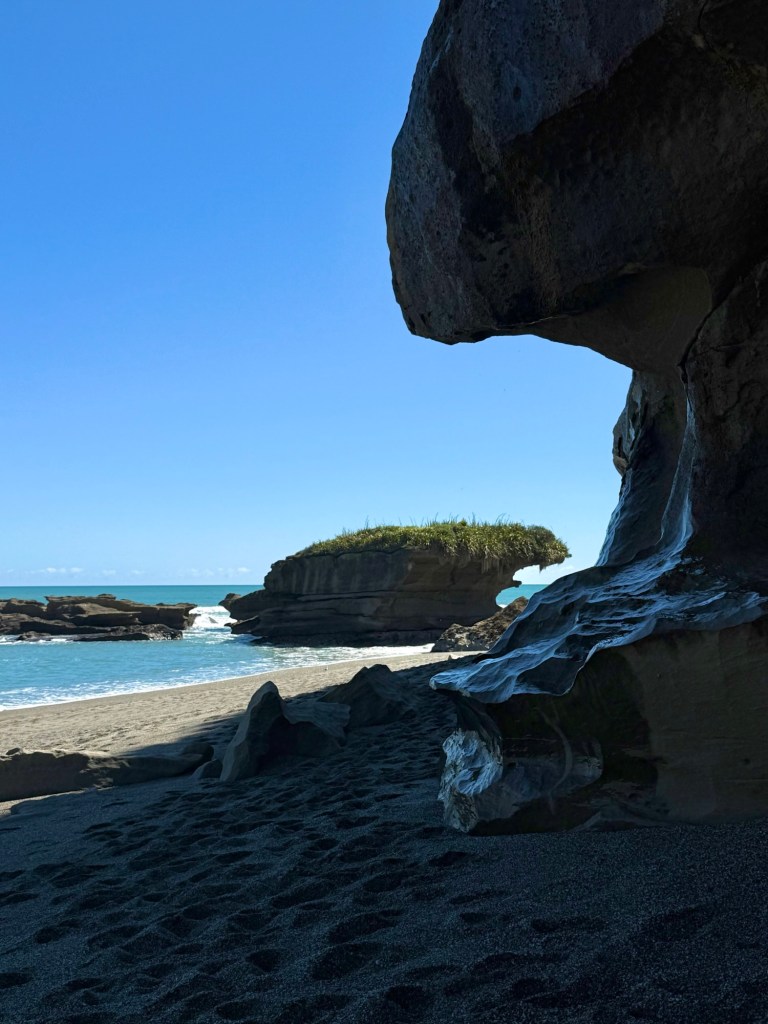
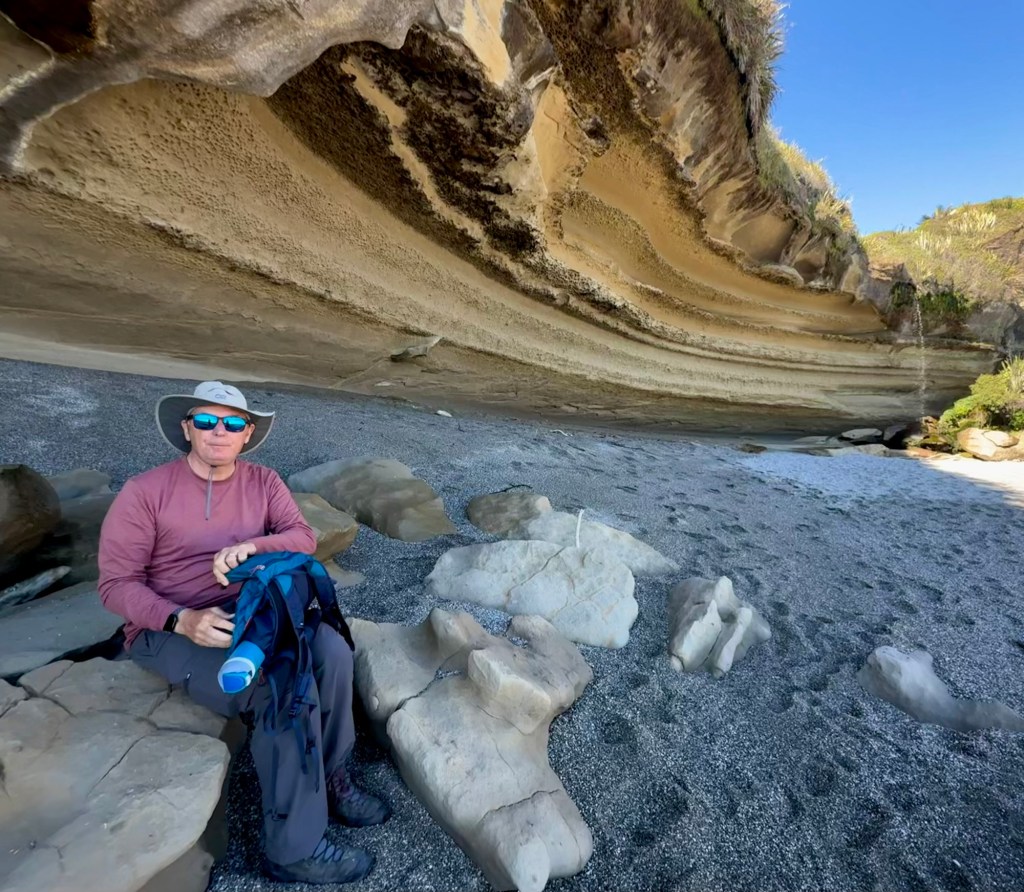
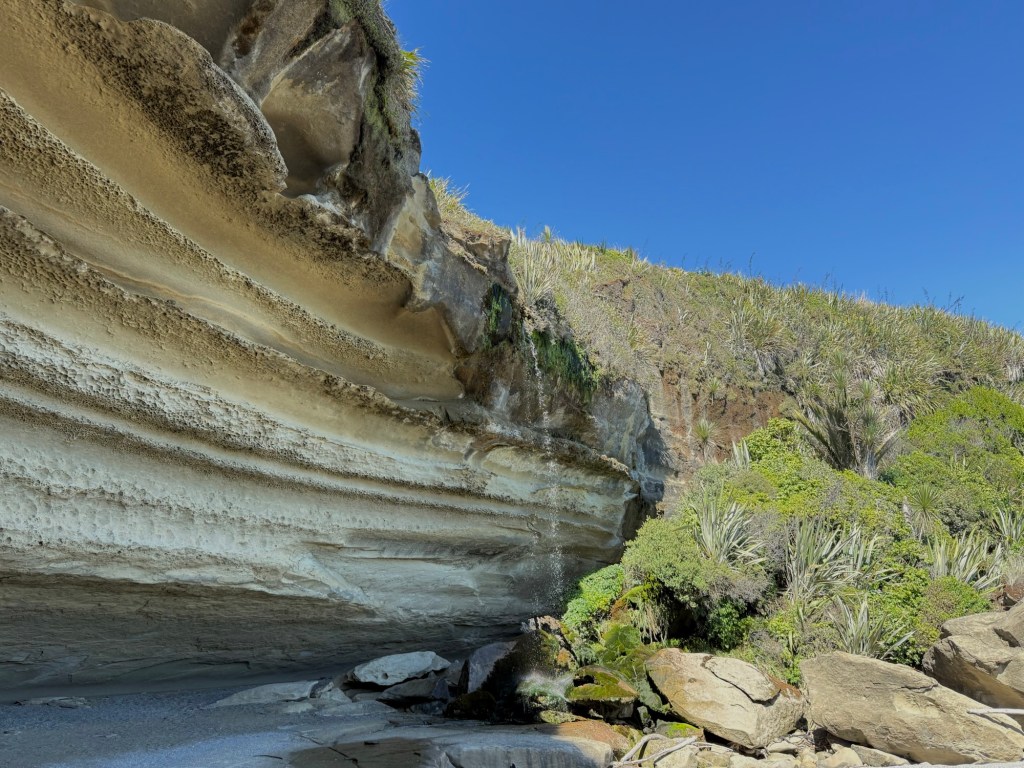
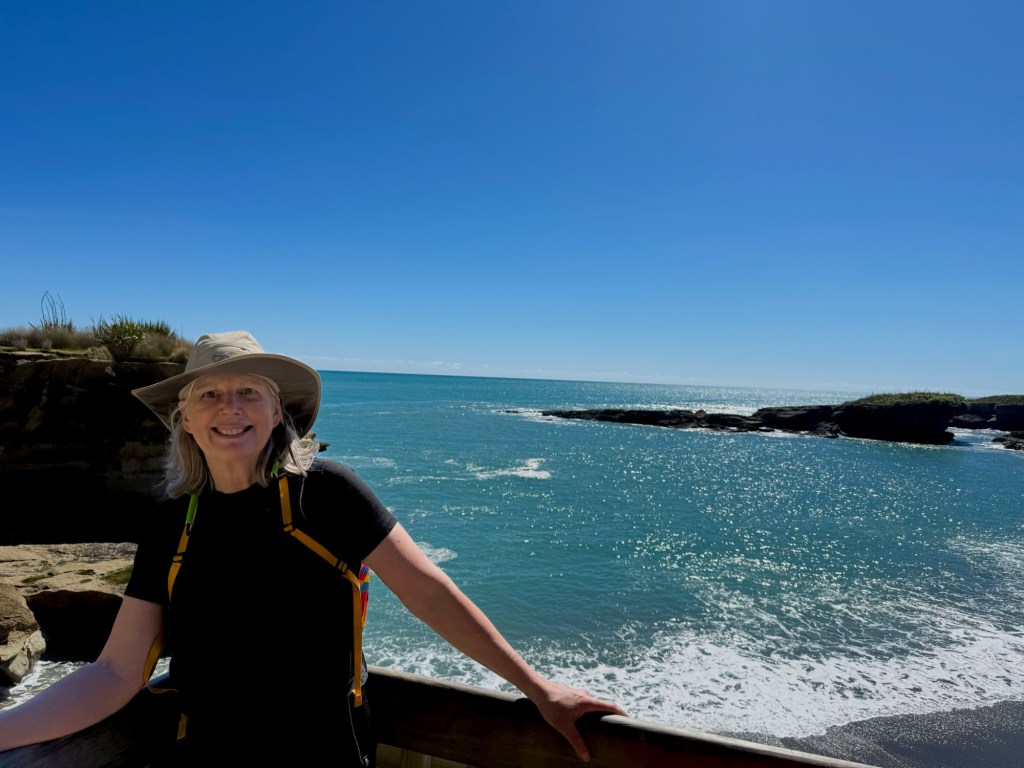
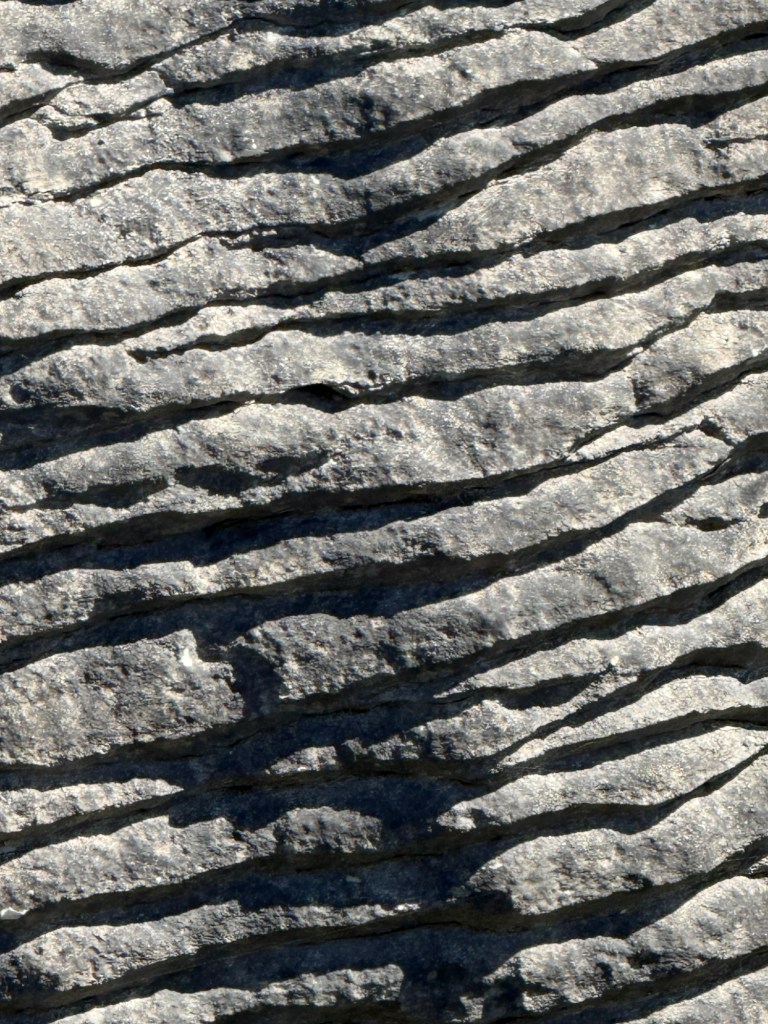
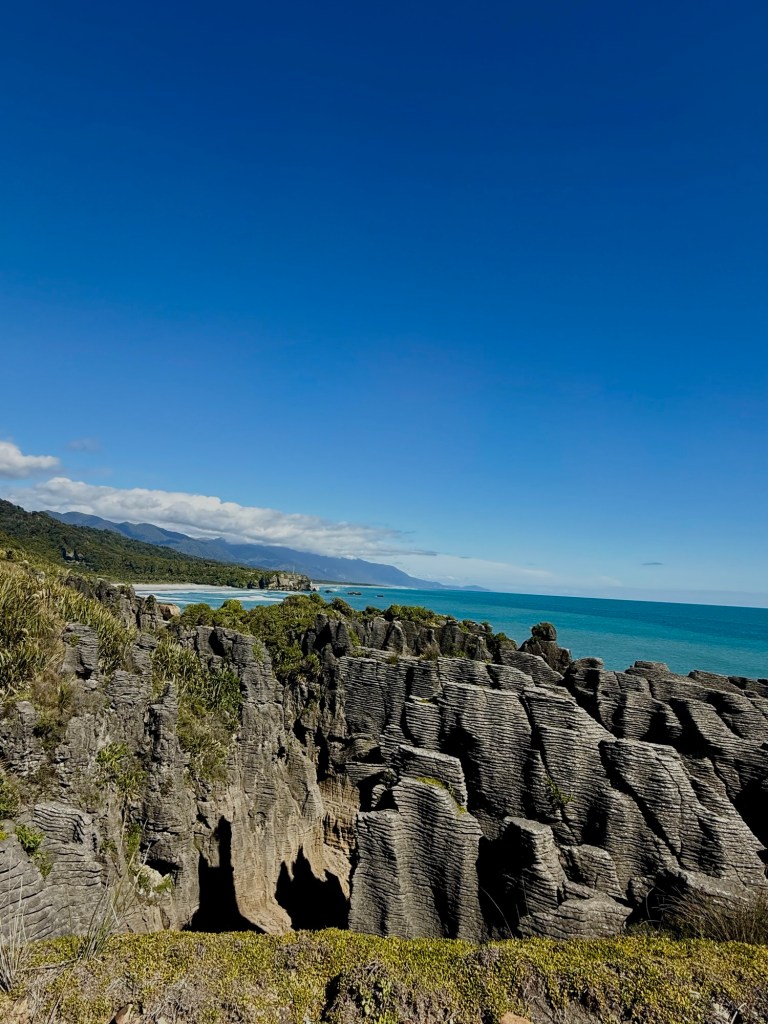
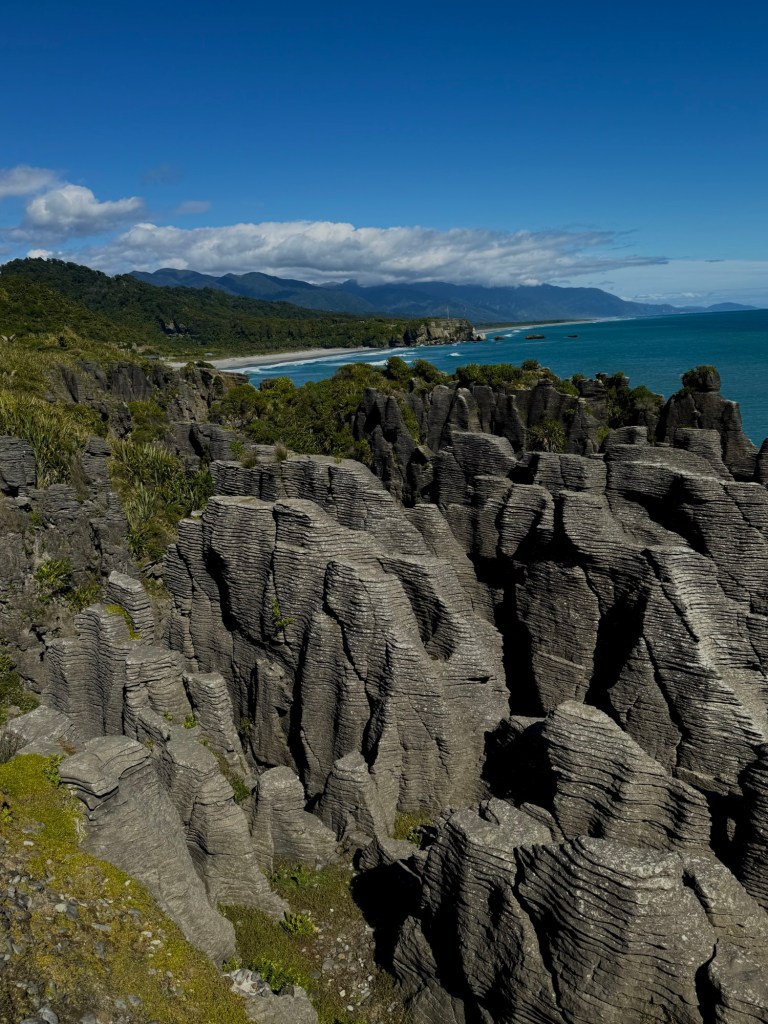
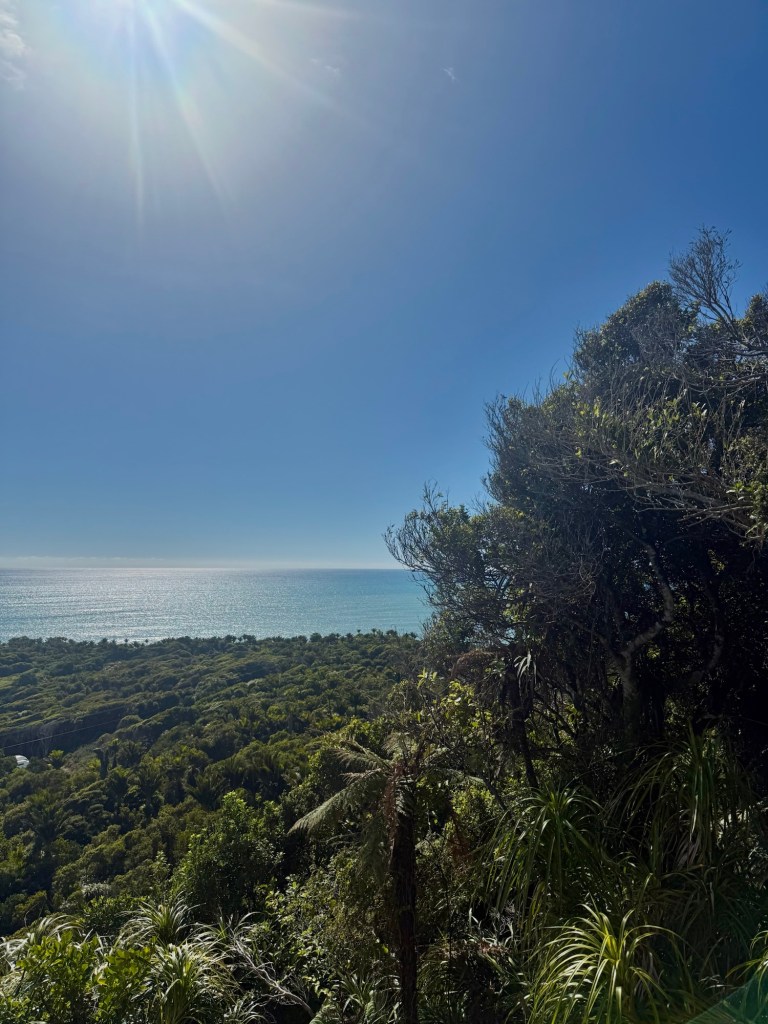
The next morning we were up early for the drive north up the coast. The road itself is a highlight — it curves along clifftops, drops over bridges, and winds through sharp switchbacks with the Tasman Sea on one side and dripping green hills on the other. We stopped at the Truman Track first — a short walk through lush coastal forest that drops you right onto a wild beach where the Tasman crashes against rock platforms and stacks. It’s a fifteen-minute walk that feels like it should cost something. Then on to Pancake Rocks at Punakaiki, where layered limestone formations stack up like — well, pancakes — right at the ocean’s edge. Rain had forced us to cancel our hut booking on the Paparoa Track, but we got onto the trail long enough to get a taste of what we’d missed — and filed it away for another trip.
Reefton
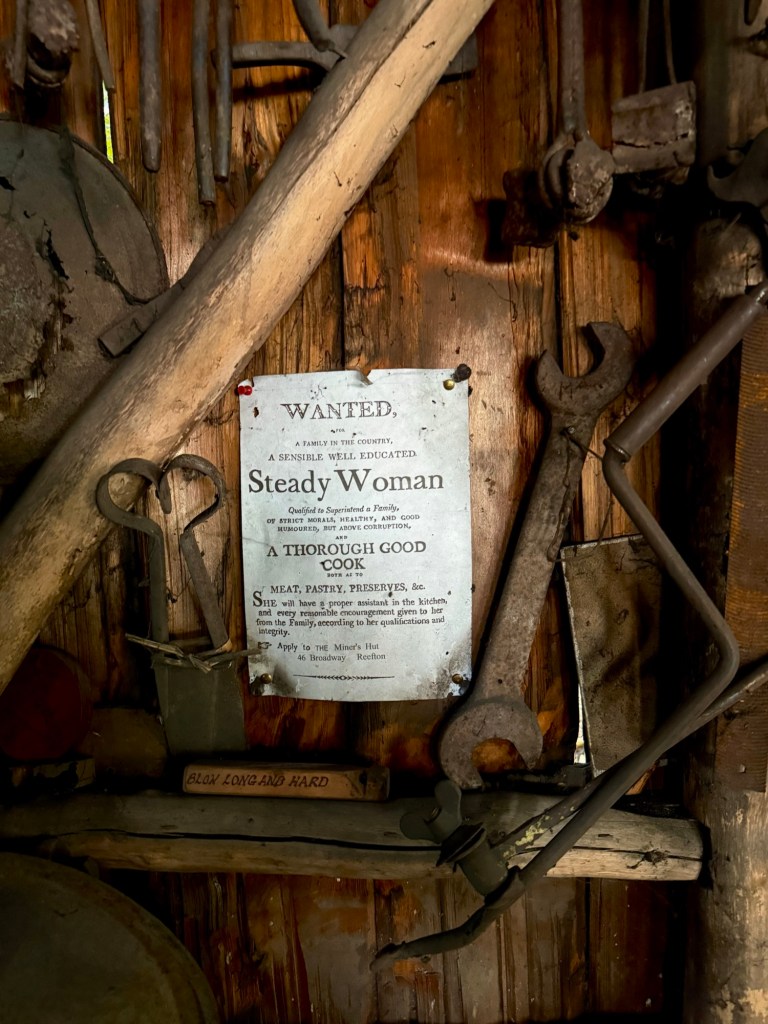
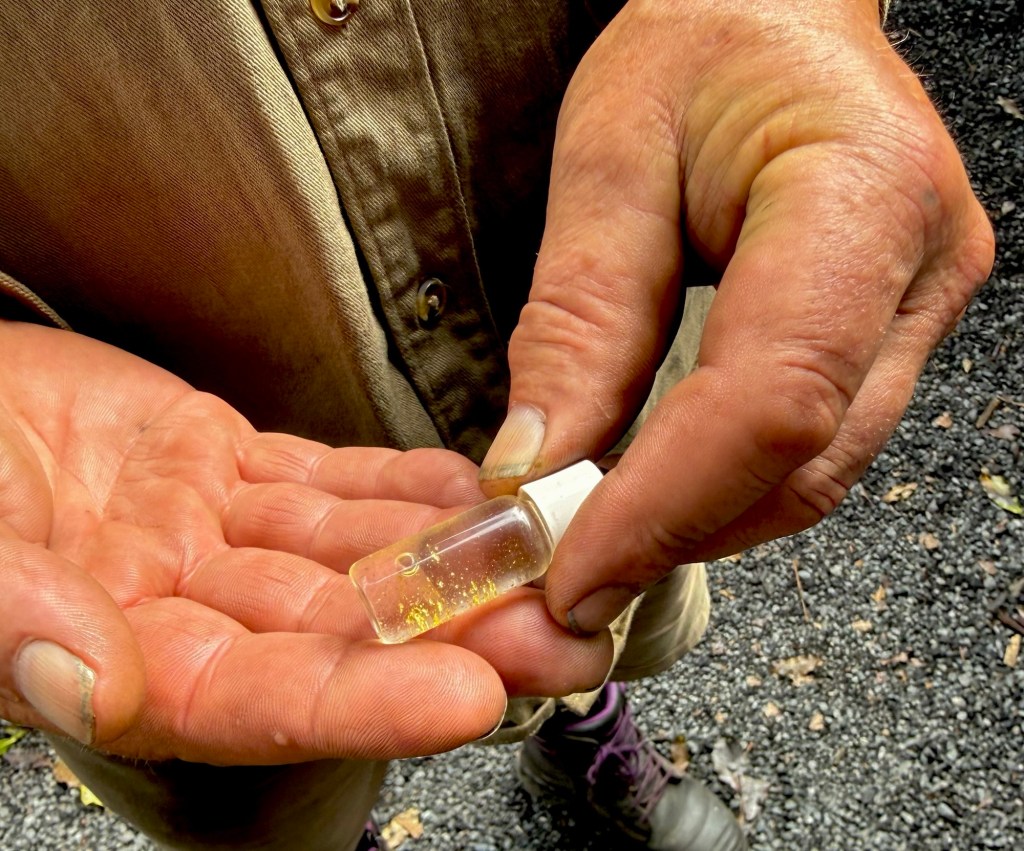
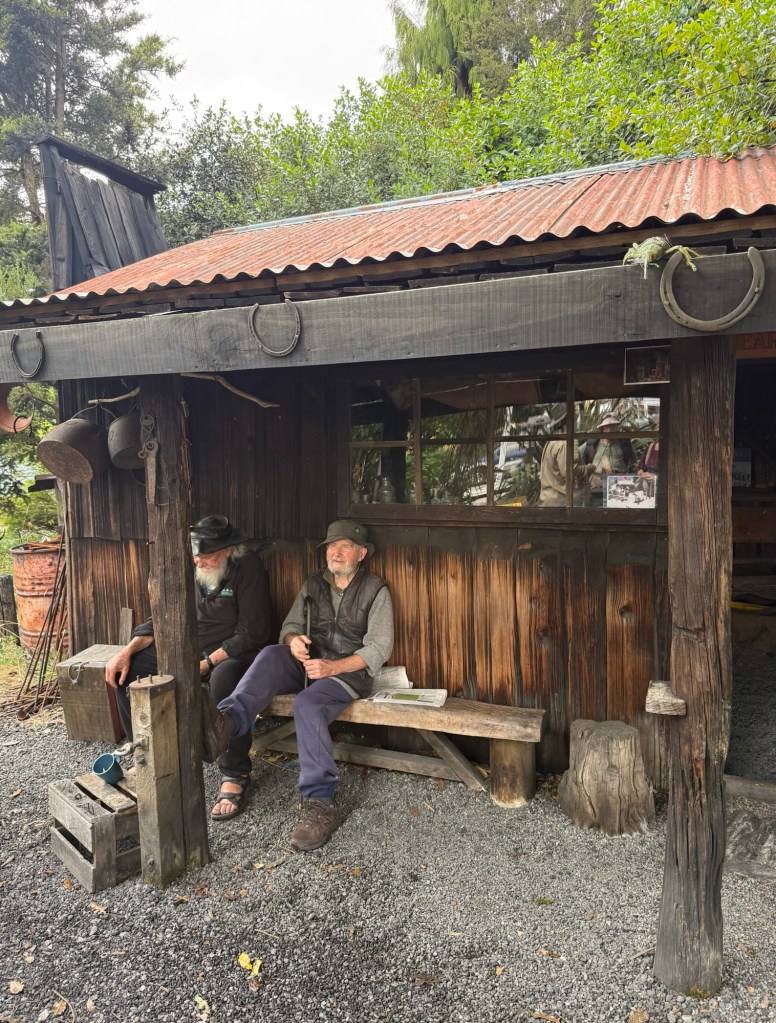
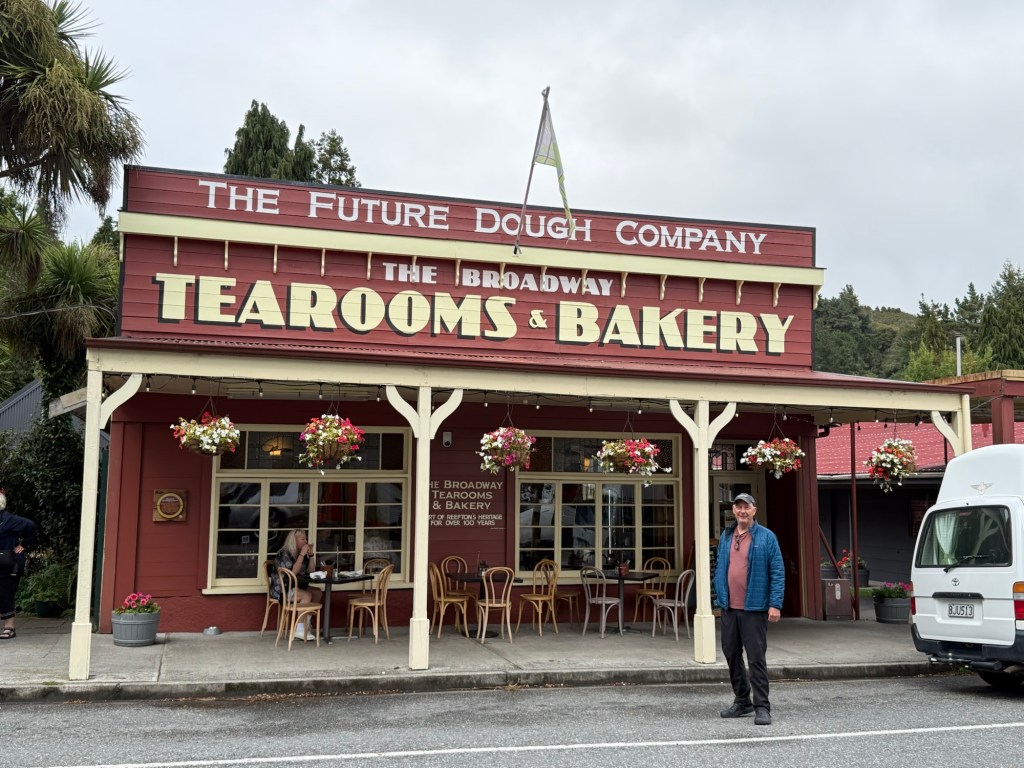
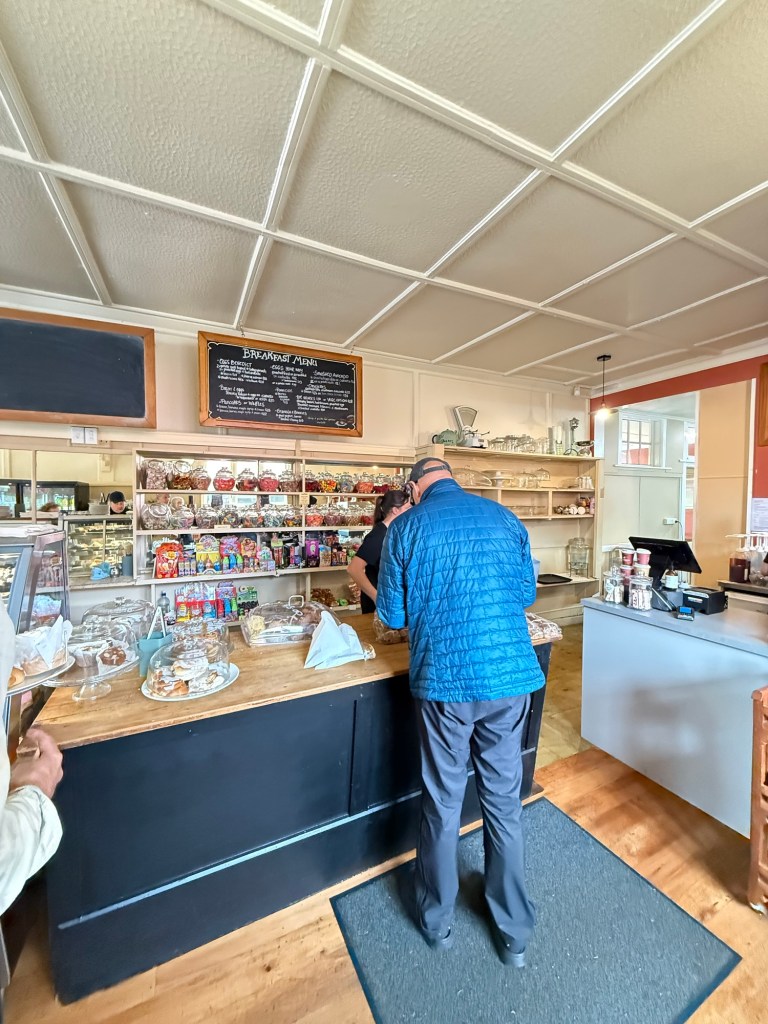
With a free afternoon, we stopped at the visitors center for rain-day ideas and were pointed toward a rafting trip on the Buller River with Ultimate Descents, based in Murchison. On the way, we passed through Reefton — a small gold rush town that punched well above its weight. Gold-bearing quartz reefs were discovered here in 1870, and at its peak the area had 59 operating mines producing gold for nearly eighty years. More remarkably, in 1888 Reefton became the first town in the southern hemisphere to have electric street lighting — ahead of fashionable neighborhoods in London and New York, as locals are happy to point out. We listened to a short talk from a local gold mining historian, grabbed a quick lunch, and pushed on to Murchison.
The Buller River
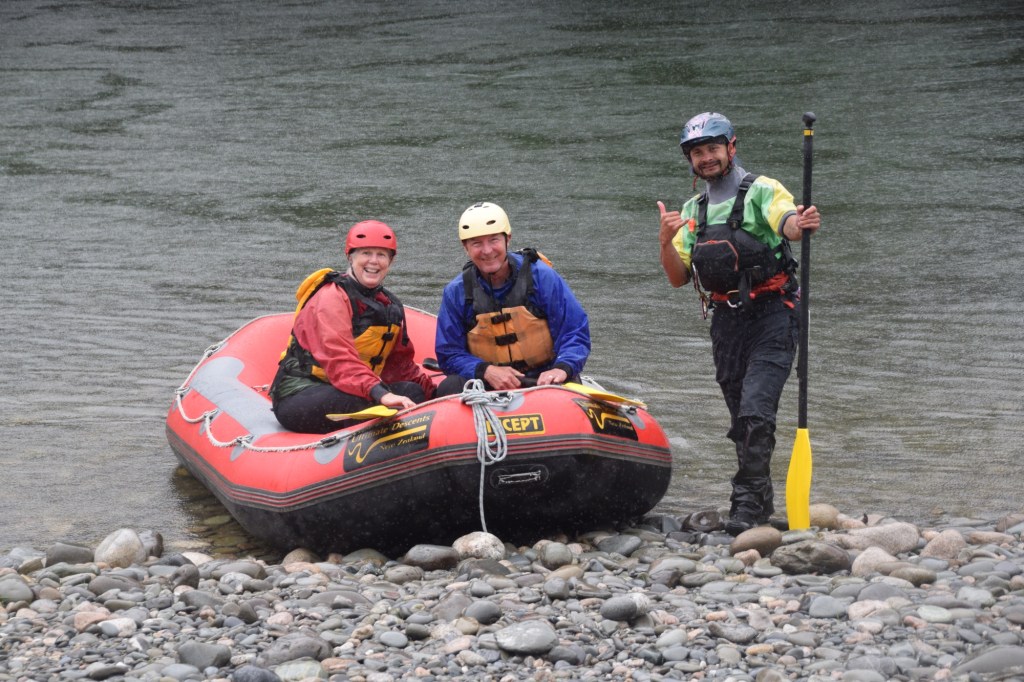
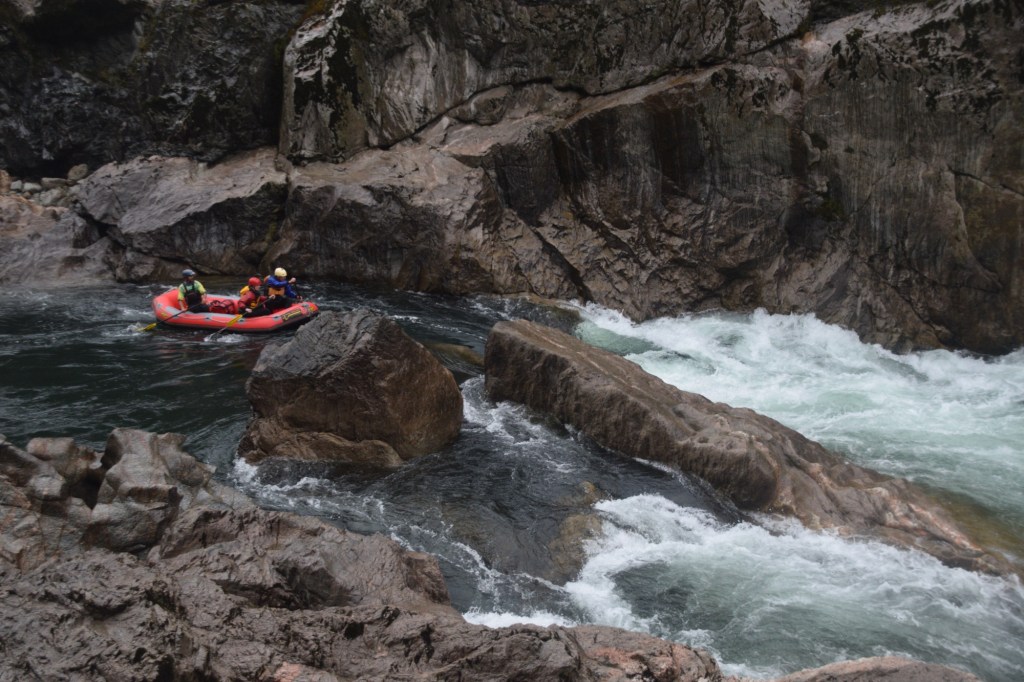
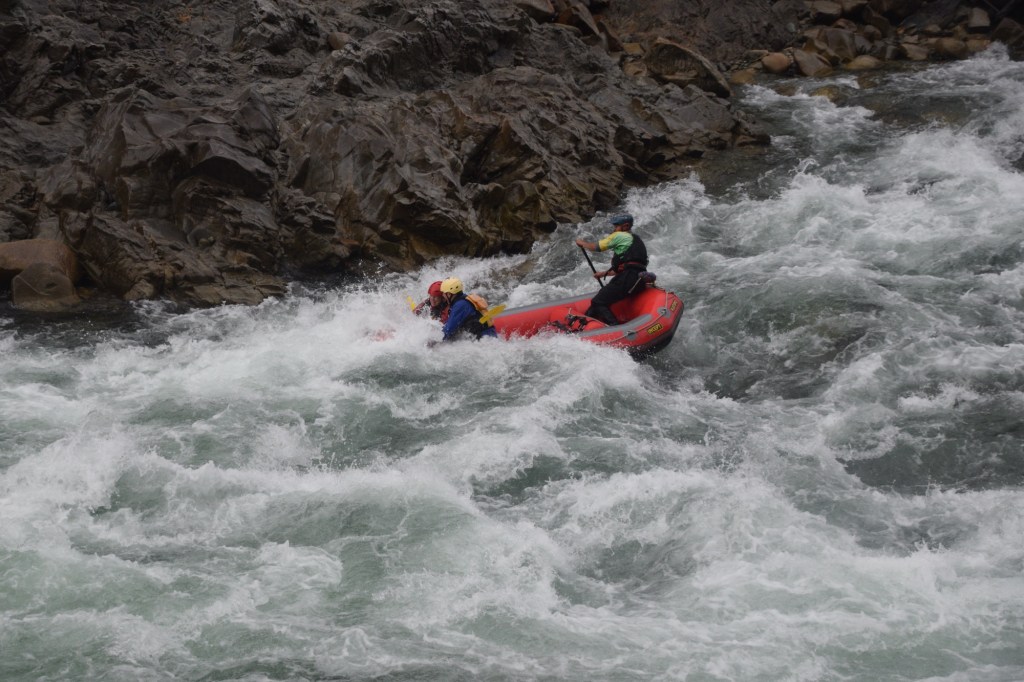
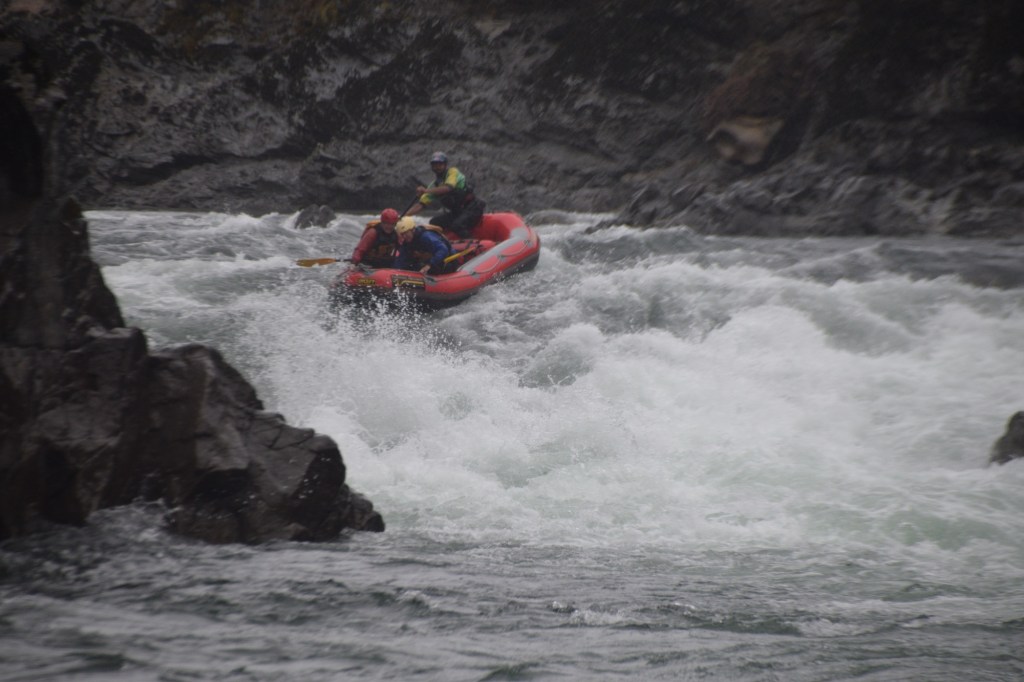
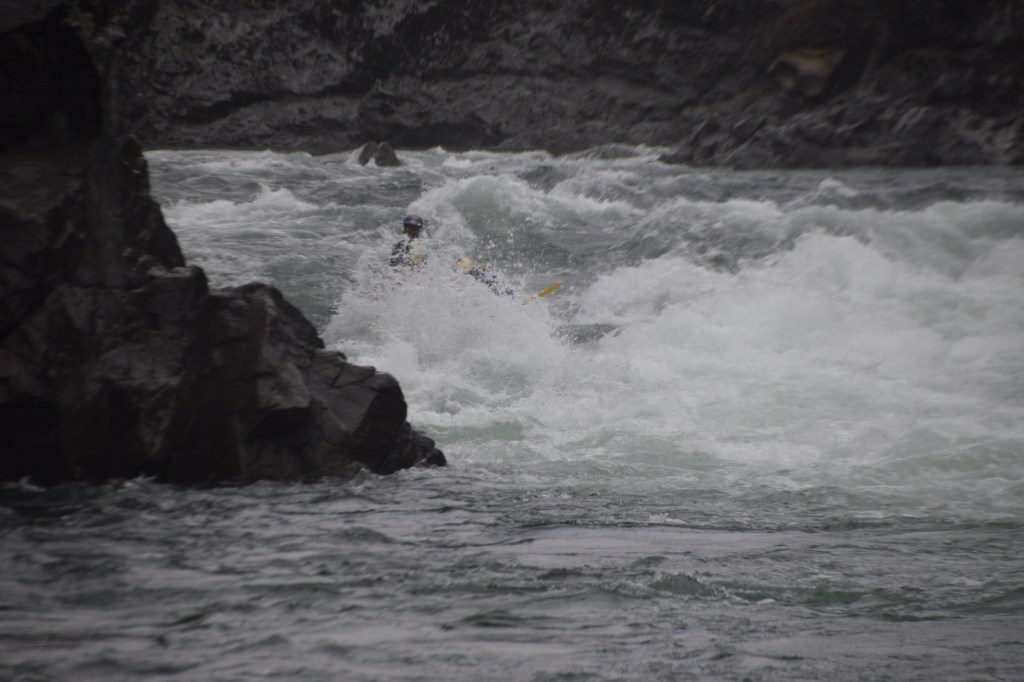
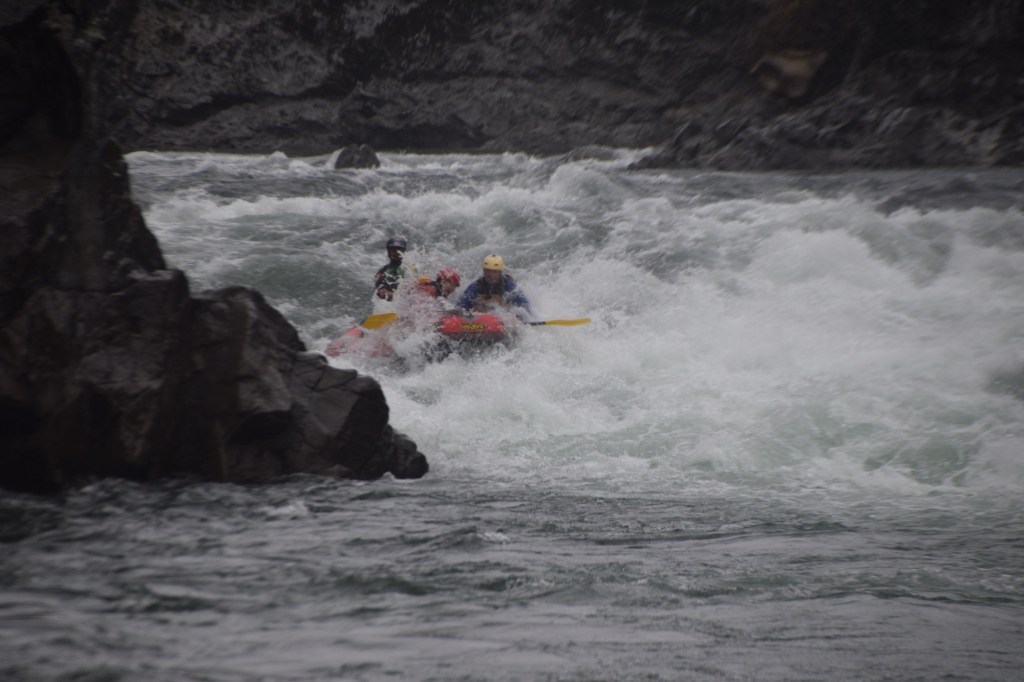
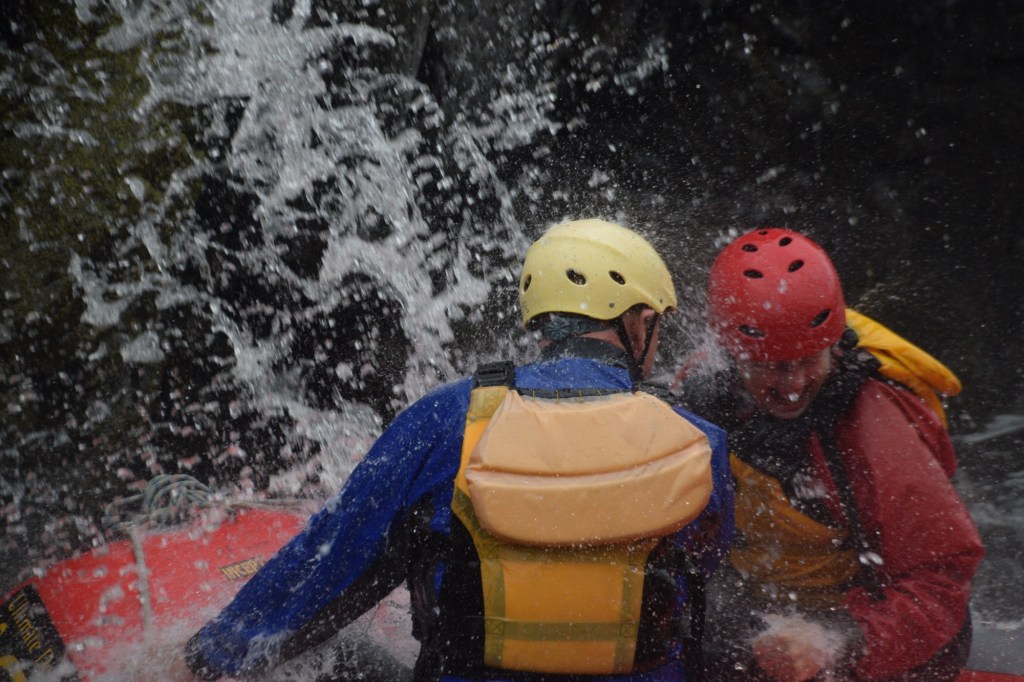
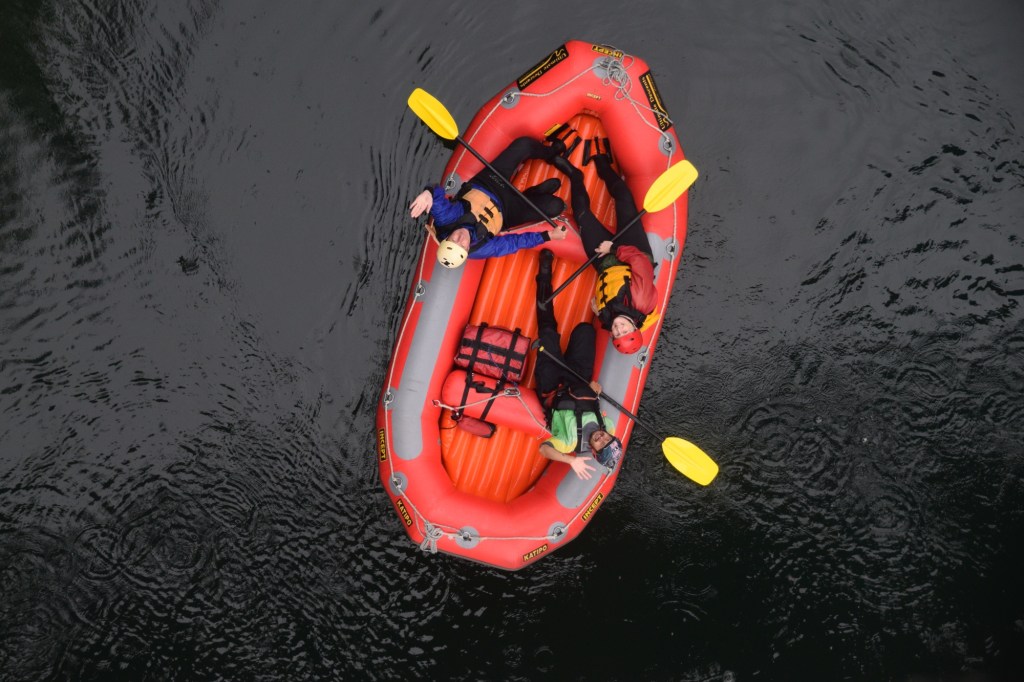
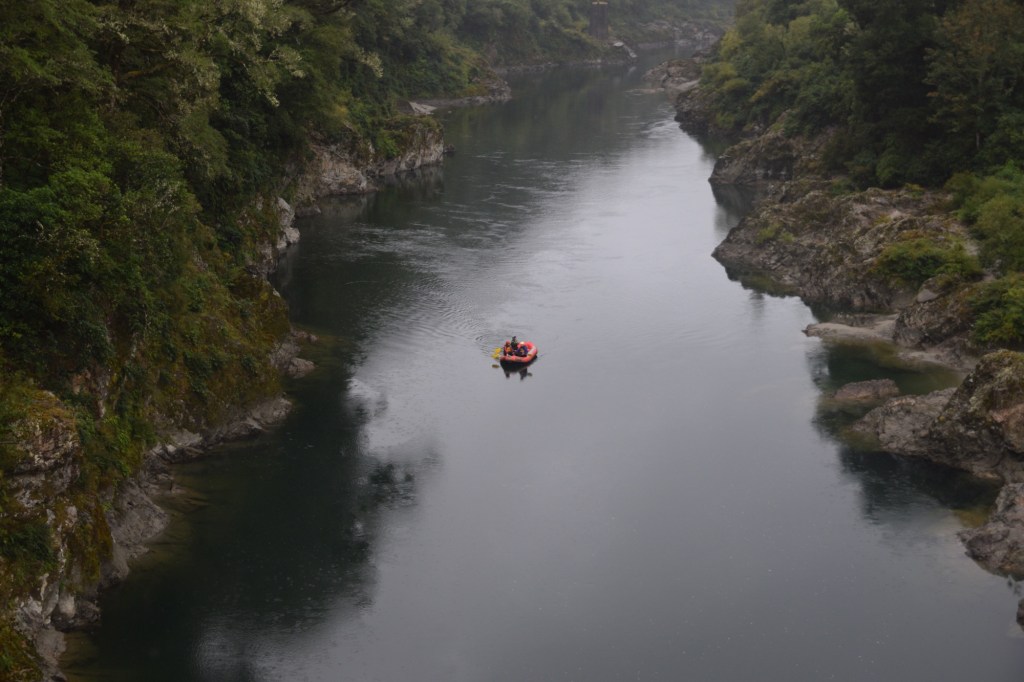
We arrived for our afternoon float with Ultimate Descents to find that it would be just the three of us — our guide Jon-o, Pete, and me — plus a photographer named Chris. Three people in a raft on the Buller Gorge, which runs through deep pink granite canyons on Grade 3-4 rapids. We hadn’t exactly researched what Grade 3-4 meant before booking, and we learned on the water.
There were three serious rapids. Then we came to a waterfall. Jon-o had us climb out of the raft, scramble over the rocks alongside it, and get back in — while the raft itself hung on a rope tied to a boulder. That was the moment Pete and I looked at each other and understood that this trip had exceeded our original ambitions by a comfortable margin. The guides were calm and focused on safety throughout, which helped considerably. The trembling was real, but so was the thrill.
Between the white water, on the peaceful parts of the river, Jon-o shared the Māori history of the gorge — the names, the stories, the relationship between the people and the river — and it gave the whole experience a texture that went beyond just hanging on. By the time we pulled out, we were soaked, wide-eyed, and grinning.
It was still a couple of hours to Mapua on Tasman Bay, north of Nelson, where a farmstay Airbnb and a good dinner on the wharf were waiting. We fell asleep quickly. Abel Tasman National Park was next.
 Pete & Lori's Retirement adventures